









Clouds and topiary blocks in holm oak or kermes oak
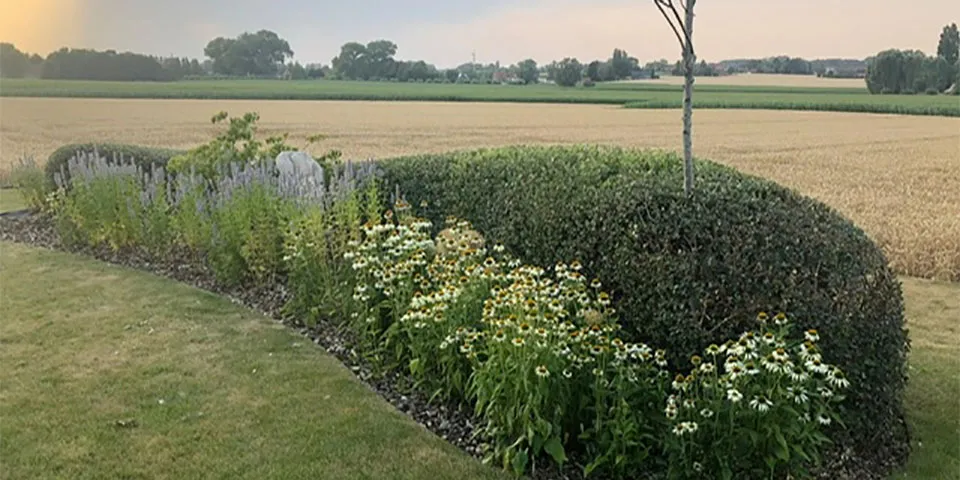
Robust yet elegant, hardy clouds and topiary blocks have long secured their place in modern garden and park design. To ensure they continue to fulfil their decorative role with distinction for years to come, Hugo Maes grows holm and kermes oaks with small, fresh green leaves in Waregem, giving them plenty of care and attention.
Decorative and hardy: an eye-catching feature in gardens and parks
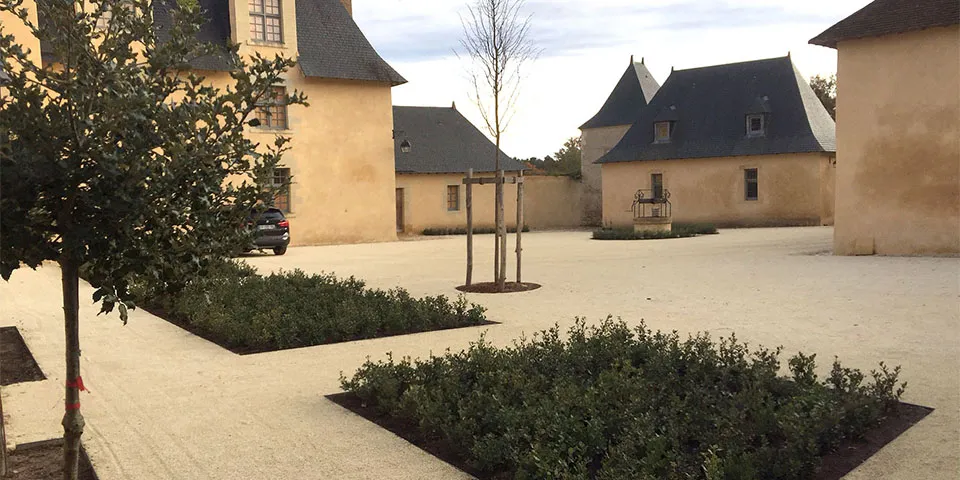
For topiary blocks, plant 5 to 7 plants per m2.
Holm oak, or Quercus ilex, like its smaller relative Quercus coccifera (kermes oak), grows mainly in Southern Europe and North Africa. It is one of the region’s most widespread woody plants, perfectly suited to calcareous soils and mild temperatures. It is characterised by a dense canopy of leathery, smooth or holly-like, serrated leaves, with felt-grey to silvery undersides. Depending on the growing conditions, leaves in this natural habitat grow to around 3 to 8 cm. Hugo Maes has a marked preference for plants from southern France with the smallest leaves. Each year, he carefully selects the finest acorns in the garrigue, then germinates and grows them on in Waregem.
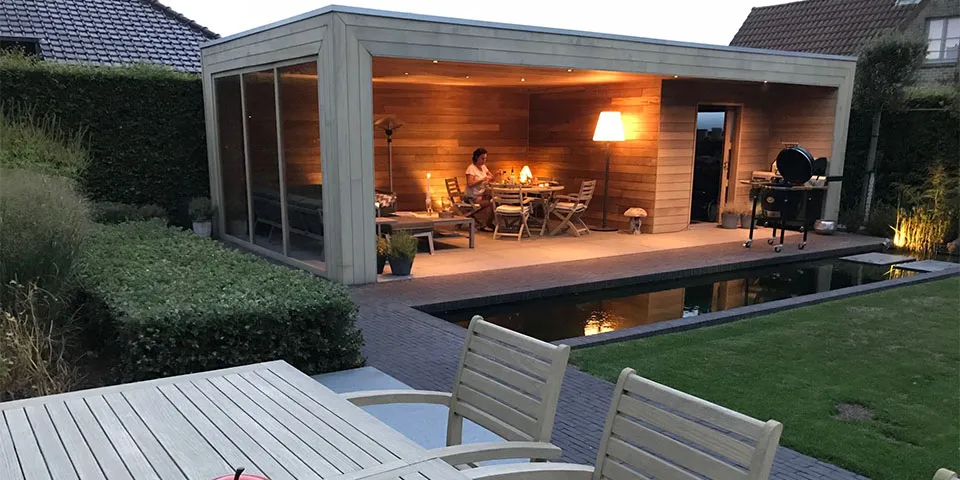
Quercus ilex can also be used to create clean-cut planes and lines in modern garden design.
Compact and dense
Choosing acorns of French origin, combined with the regular pruning and extensive care they receive during cultivation in Belgium, produces compact, bushy, well-branched plants with small, evergreen leaves. Planting five to seven per m2 creates a completely dense, durable topiary block. Thanks to the full, sturdy canopy, you need never worry about gaps appearing in your perfectly sculpted ornamental hedge.
If, exceptionally, holm oak loses some leaves after prolonged and extreme cold or drought, new growth soon follows. Fresh young leaves appear almost immediately where the leaves were lost.

As holm oak is relatively slow-growing, topiary blocks stay in perfect shape for a long time.
Suited to every shape
For the same reasons, Quercus ilex is ideal for a wide range of pruning styles. Undulating topiary blocks along a footpath or natural pond, decorative clouds as a contrast to an otherwise flat lawn, or clean-cut lines and planes to define garden rooms in a modern design: the possibilities are endless.
As holm oak is relatively slow-growing, topiary blocks also stay in perfect shape for a long time. Two pruning sessions a year, one in late spring and one in early autumn, are enough to maintain even the sharpest contours. If you opt for a looser shape, one pruning session will suffice.
Tough as nails
Maintaining topiary blocks of holm oak is straightforward in other respects too. Unlike other hardy species traditionally used for this type of planting, Quercus ilex is not susceptible to diseases, pests or damage. Thanks to its southern origins, it tolerates sun, drought, wind and even salt well. Meanwhile, through local cultivation and attentive care, Hugo Maes has perfectly adapted the plant to our own winters and soil conditions. As a result, one annual application of lime is enough, alongside one or two pruning sessions.
However, planting topiary blocks does require a little extra care, particularly during hot, dry summers. For the plants to establish properly, it is essential that they receive enough water at this time. If there is not enough rain, they will need to be watered by hand. Once established, they no longer need watering, even in extreme weather conditions.
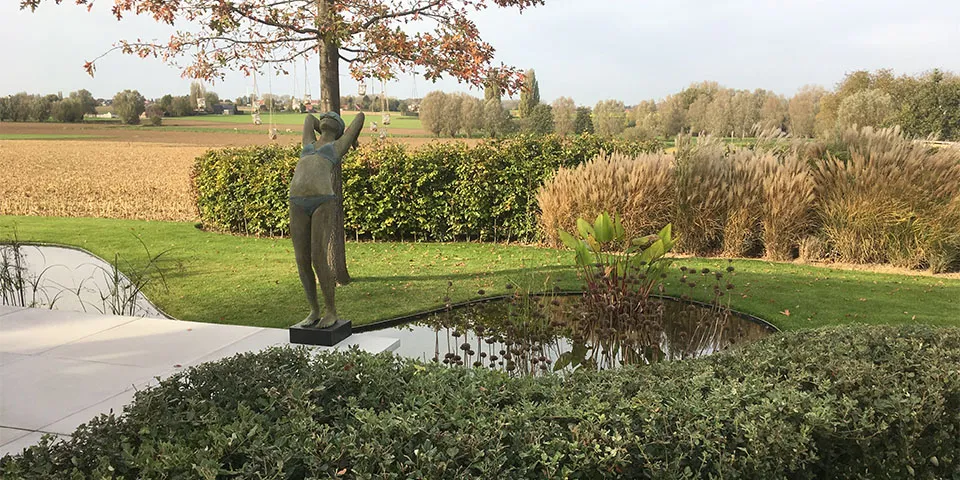
Thanks to its southern origins, Quercus ilex tolerates sun, drought and wind well.
For small gardens too
In principle, Quercus ilex can be used to create clouds and topiary blocks up to around three metres high, although lower clouds and planes are generally preferred in practice.
There is also demand for miniature topiary blocks, particularly in smaller gardens. Quercus coccifera, or kermes oak, is especially well suited to this. These plants grow no taller than one and a half metres, and are even slower-growing and more compact than holm oak. They are so drought-tolerant that they can also be planted in gravel, for example.
As an added attraction, the hard, spiny leaves of this miniature version turn a warm, soft bronze in spring, creating an unexpected spectacle in the garden throughout the year.
Question about this story? Ask your question
Keep following this
Get an email when a new story is published. No account needed.
- SubjectGeneral







