









Evelien de Mey (EDM Tuin & Landschap) on the new role of the landscape architect
Text Kris VandekerckhoveImage EDM Tuin & Landschap
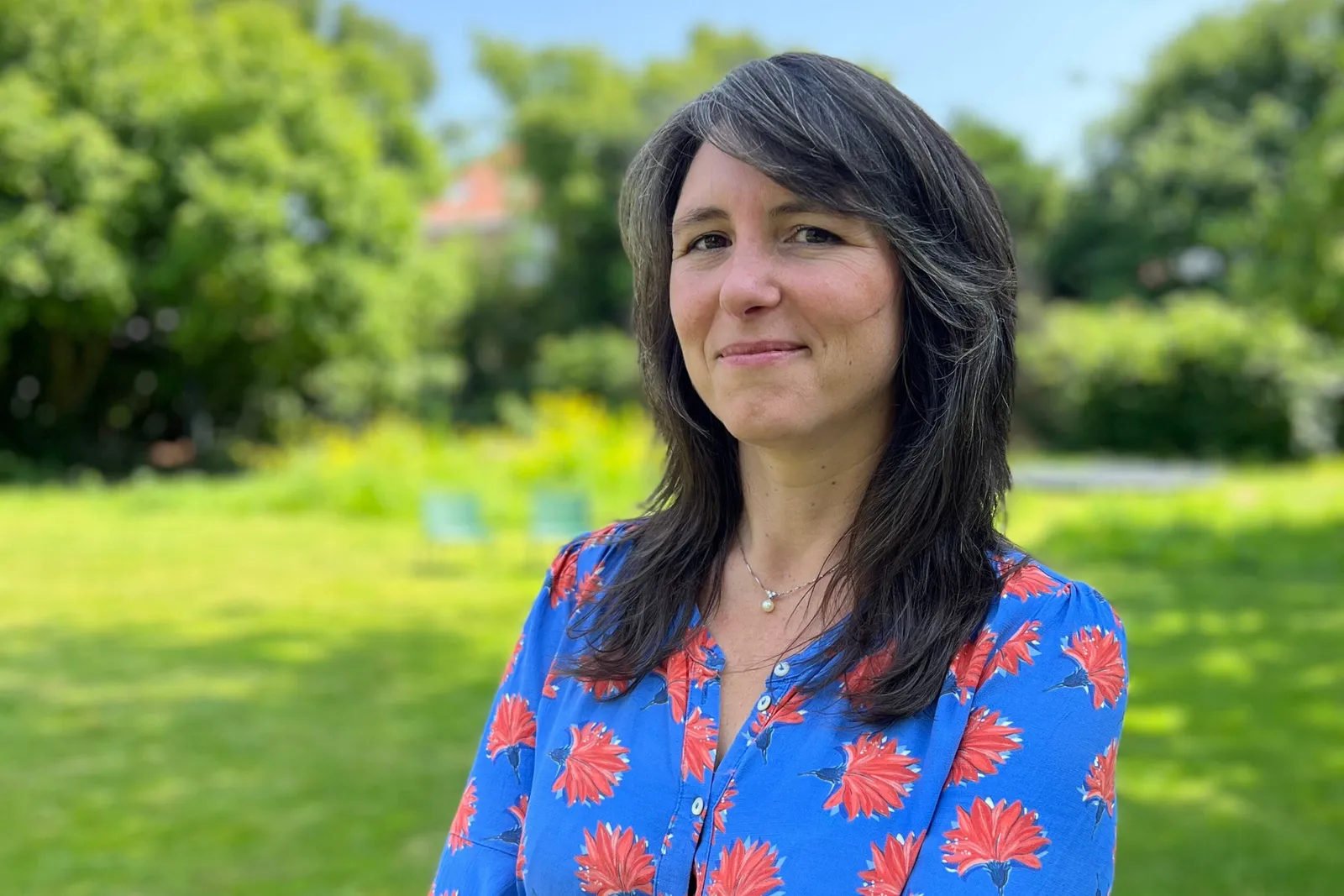
Evelien de Mey is a landscape architect and managing director of EDM Tuin & Landschap. She works on public and semi-public projects in the Netherlands and Belgium, focusing on sustainability, user experience and maintenance. Her work reflects a love of space, people and nature, with collaboration as a common thread. “We enjoy creating beautiful projects with great people.”
At a time when every square metre is assessed for water storage, biodiversity and safety, landscape architect Evelien de Mey argues for a renewed appreciation of the experience of a place. “Sometimes I just want to create a really pleasant outdoor space,” she says. “A place where people want to spend time. Where they can find peace and meet one another. That is where quality of life begins.”
The new role of the landscape architect
According to de Mey, the designer’s role has changed considerably. “In the past, it was often about producing an attractive plan with a good story. Today, as a landscape architect, you have to be a kind of puzzle solver, balancing policy objectives, regulations, permits and competing interests. A great deal is now expected of outdoor spaces. Above ground, we want room for all kinds of functions, while underground, more and more technology and infrastructure are competing for space. This can make design complex. We are constantly talking to clients to make the right choices, explaining why certain elements are essential and others have to go, even when that does not tick every box.”
Even so, she remains positive. “There is a lot of energy in our sector. I enjoy working with a wide range of people. Urban planners, architects, planting specialists, heritage experts, maintenance teams… You can’t do anything alone. The best projects emerge when disciplines reinforce one another.”
The new reality of project briefs
De Mey has also noticed major changes in project briefs. “They no longer say: draw up an attractive plan for a site and we’ll find a contractor later. These days, the brief is: deliver everything from A to Z within this budget. That means we have to work much more with the numbers, even though we do not always know what we will encounter along the way.”
The growing complexity means landscape architects are more than ever acting as process facilitators. “There is so much policy, so many rules. You are constantly negotiating between requirements, interests and visions. At the same time, you want to bring something of yourself to the project. That takes conviction. Sometimes you have to dare to say: this is what we will do, and this is how it will succeed. And we will not do this, and this is why that matters.” For her, it is essential to leave room for a pleasant atmosphere and a certain beauty. That too matters for the future. “We have to make choices and dare to say that not everything is possible. A design must continue to move people.”
What makes a good public space?
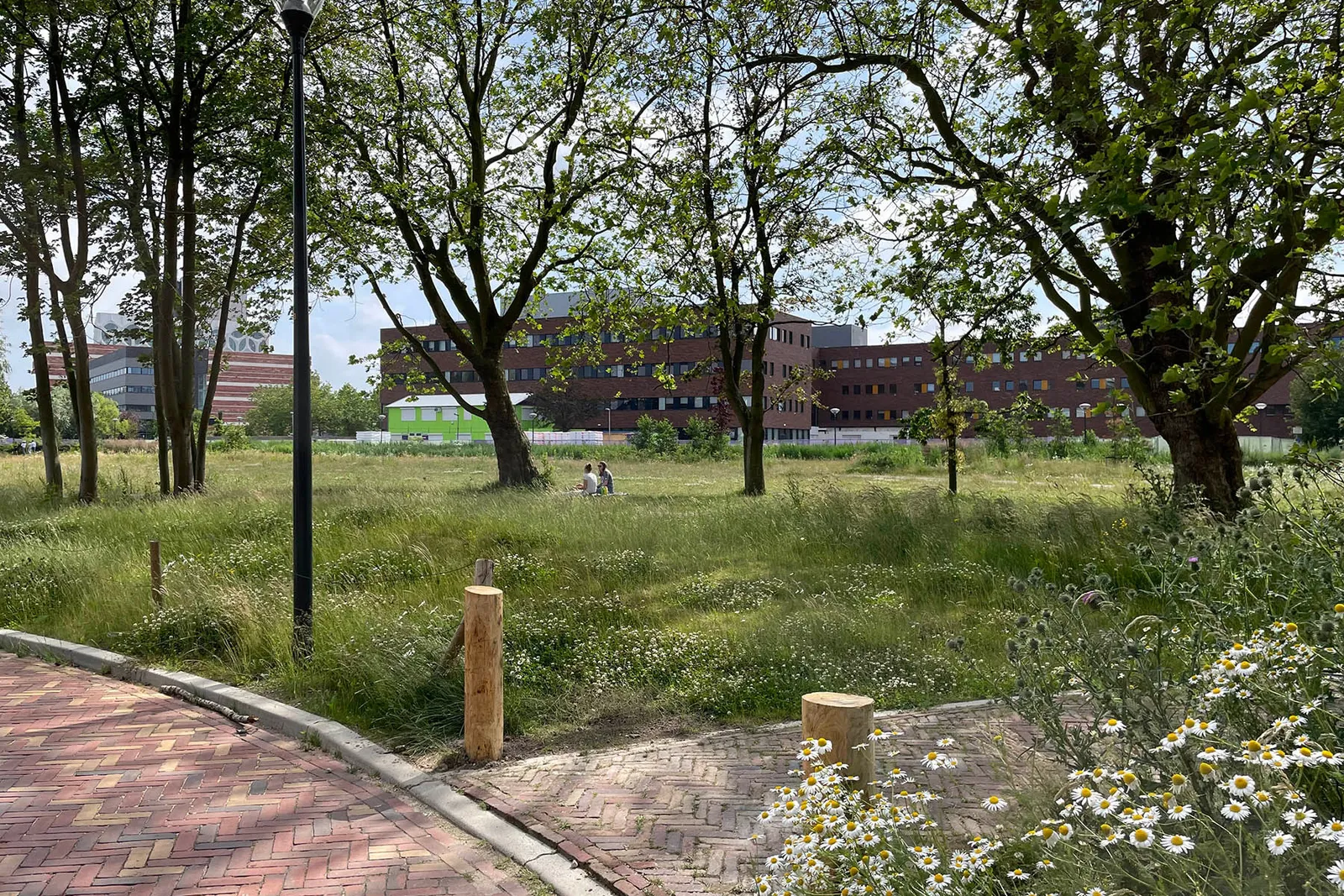
For de Mey, a good public space works on every level. Not just on paper or in a rendering, but also in how it is used and experienced. “A pleasant public space only comes about when the design encourages the intended use and creates an experience with a compelling story.” At the same time, she sees positive change. “Awareness is growing. Local authorities increasingly understand that a paved-over space is not the future. The value of more green space is increasingly recognised, not only ecologically but emotionally too. But we are not there yet, there is still work to be done.”
Designing for people and society
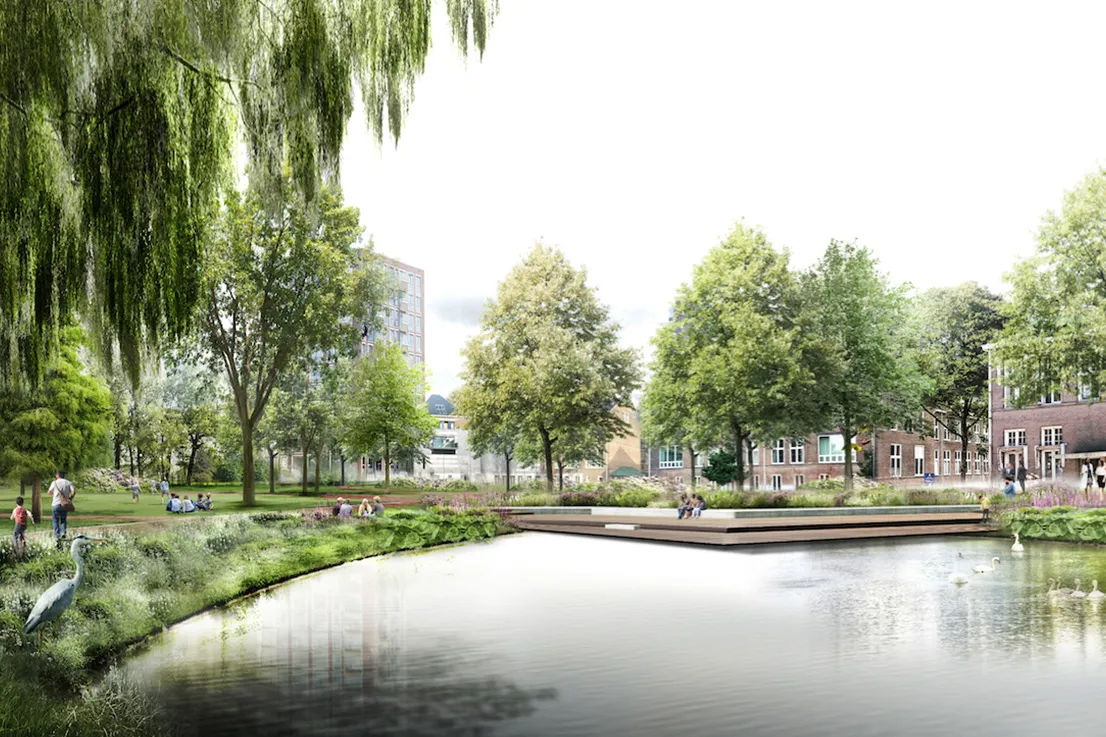
De Mey sees her work as about far more than just form. “We design behaviour and society. How people use a place, how they meet there or can spend some time alone. That affects the wellbeing of a neighbourhood.” She laughs: “Sometimes I think I should have studied environmental psychology. But a lot of what you learn comes simply from experience, looking back at your own work and observing how a place is actually used. That is how you become an expert through experience.” In her projects, she is always looking for a balance between meeting and quiet reflection, always in relation to nature. “You need places where people can meet, but just as much, places for contemplation. Silence is also a public asset.”
Activist or adviser?
De Mey has no doubts about the future of her profession. “We have to dare to be a little activist. Not with banners, but by planting seeds with clients. Someone once told me: you have to make them believe the idea was theirs. Then you know you have done a good job.” She does not see activism as being loud, but as a gentle resistance to mediocrity. “We have to keep defending what is valuable: beauty, nature, room to breathe. And at the same time, go along with policy, because otherwise you achieve nothing.”
Data and feeling
What about the rise of data, AI and algorithms in design? De Mey is sceptical, but not dismissive. “We once received a plan generated purely from figures. Everything added up on paper. But the soul was gone. You could feel it was lifeless. Data can help you take the first step, but human feeling remains decisive. A computer cannot create layers of meaning in which feeling plays an important role. You get to know a place by walking through it, looking and listening.”
Time as a design factor
While architects can proudly photograph their building at handover, landscape architects often have to wait years before their work truly becomes visible. “We depend on the years that follow, and therefore on maintenance too,” says de Mey. “Our materials are living things. They grow, change and die. You cannot judge a design on the day it is handed over, and it needs to be cared for properly.” For de Mey, that is precisely what makes the profession so fascinating: time itself is a design factor. “A garden or landscape comes to life through the seasons and through the people who use it. You have to learn to let go, while also safeguarding a sustainable future. Finding that balance: that may be one of the most rewarding challenges in our profession.”
Question about this story? Ask your question
Keep following this
Get an email when a new story is published. No account needed.
- ThemeGreen space for everyone
- SubjectGeneral







