









Flemish Government commits to more green routes for cyclists and pedestrians travelling to work and school
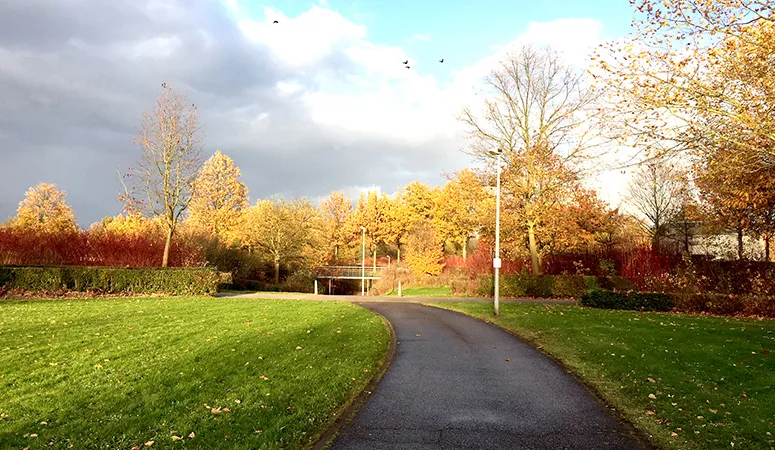
Getting more people to leave the car at home for their commute is the challenge facing the Flemish Department of Environment. Faster, more pleasant cycling and walking routes could help achieve this. The initiative now comes under the updated name ‘Green Functional Experience Routes’, or ‘GFB routes’ for short, to help vulnerable road users get to work or school safely, pleasantly and comfortably. The Department of Environment has now drawn up a step-by-step plan and guide to help local authorities develop a spatial plan featuring green experience routes.
Cycling or walking to school or work has many benefits, not least for health and the environment. Many commuters are put off because they consider their route too dangerous or unpleasant. Green experience routes could be the answer: these are routes where the rational choice is to cycle or walk, because it is more enjoyable and quicker than travelling by car.
Green
The routes run alongside natural areas and waterways, avoiding car traffic as much as possible. They link parks, playgrounds and woods. Where there are ‘missing links’, municipalities are encouraged to fill the gaps with natural surroundings, strengthening the municipality’s green-blue network. Natural solutions such as hedges and low-maintenance green verges replace grey infrastructure such as bollards and concrete structures. Ecological management of the routes helps keep maintenance costs down.
Municipal character
GFB routes can help a municipality showcase its strengths. In an area rich in water, the blue network can take centre stage. A municipality with many sunken lanes can highlight them, while one in a fruit-growing region can feature its orchards. If your municipality has a wealth of cultural or landscape heritage, this can be incorporated to the fullest extent.
Missing links
Many existing cycle networks can serve as, or form part of, green experience routes. The aim is to create a safe and pleasant green-blue network of cycling and walking routes that avoids cars as much as possible. It may therefore be enough to address ‘missing links’, bottlenecks and barriers, and, above all, to approach route planning from the perspective of cyclists and pedestrians. The end result is a closely connected network linking the green and blue spaces in a city or municipality, such as parks, playgrounds and waterways, enhanced where necessary with functional green links.
Find out more: visit www.omgevingvlaanderen.be/beleef-mobiliteit
Green building, from niche to must-have
The Flemish Construction Confederation has long championed green building and the development of a knowledge centre to promote the use of ecological and nature-based materials and practices in construction. A better understanding of products and techniques should build confidence in them and further encourage their use. Combining infrastructure or buildings with green elements and water features is vital to enhancing the appeal of the living environment and boosting biodiversity. In major public-private projects, construction companies are also involved from the design stage to ensure the technical implementation of water and green elements.
Find out more: www.groenindebouw.be
Text | Vlaamse Confederatie Bouw Image | Jasperina Deforce
Question about this story? Ask your question
Keep following this
Get an email when a new story is published. No account needed.
- SubjectGeneral







