









Green between the joints
Plants for the tiniest gaps
With the issue of reducing hard surfacing having been high on the agenda for some time, more and more forms of natural paving are being used. Pesticides are no longer permitted in many places, or are avoided at the request of garden owners. So we are looking for alternatives, because we would rather not have annual meadow grass growing between the paving slabs. One form of natural paving has been around for centuries but has become increasingly popular in recent years. Instead of controlling weeds in the joints, we plant them with species that can tolerate some foot traffic.
These low-growing plants are often rock plants that can grow in the tiniest cracks and crevices, need little water and are happy with only a small amount of garden soil. There is far more choice than you might think, for both shade and sun. With the help of Cathy Portier, who has been running an alpine plant nursery for many years, we selected some of the best.
Although rock plants are usually associated with sunny, dry locations, creeping plants often do better in shade and partial shade. This is of course because the capacity of a joint to store moisture is very limited. On top of that, we occasionally tread on them, so only the very low-growing plants can cope. Still, we have found a few.
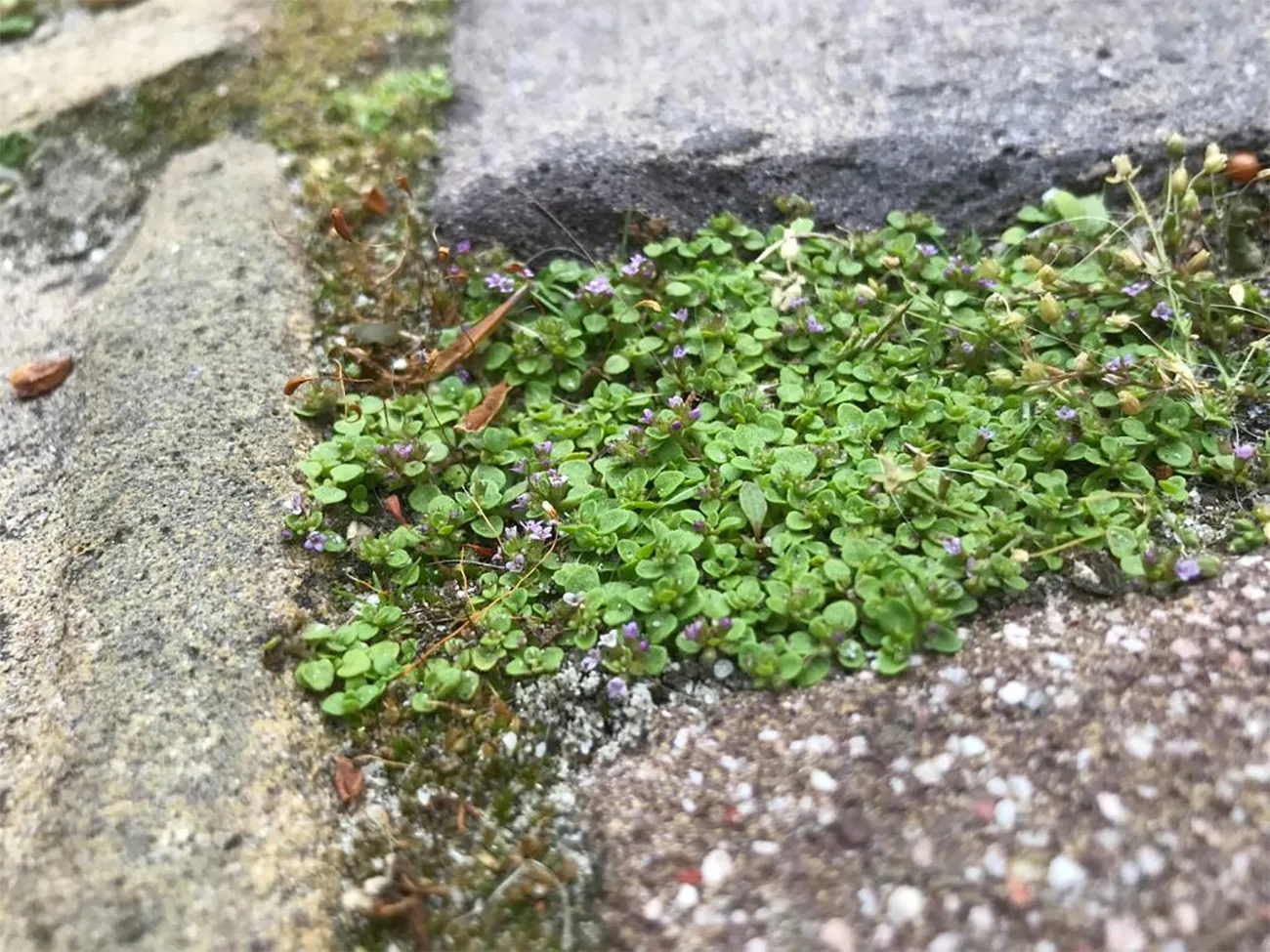
Mentha requinii, for example, is a miniature mint plant that gives off a delicate scent when stepped on. This Corsican mint is native to the mountains and grows fairly quickly. It reaches a maximum height of 2 centimetres and is hardy to -10°C. As an evergreen ground cover, it is of interest all year round, but comes into its own from June to September, when it flowers with tiny purple blooms.
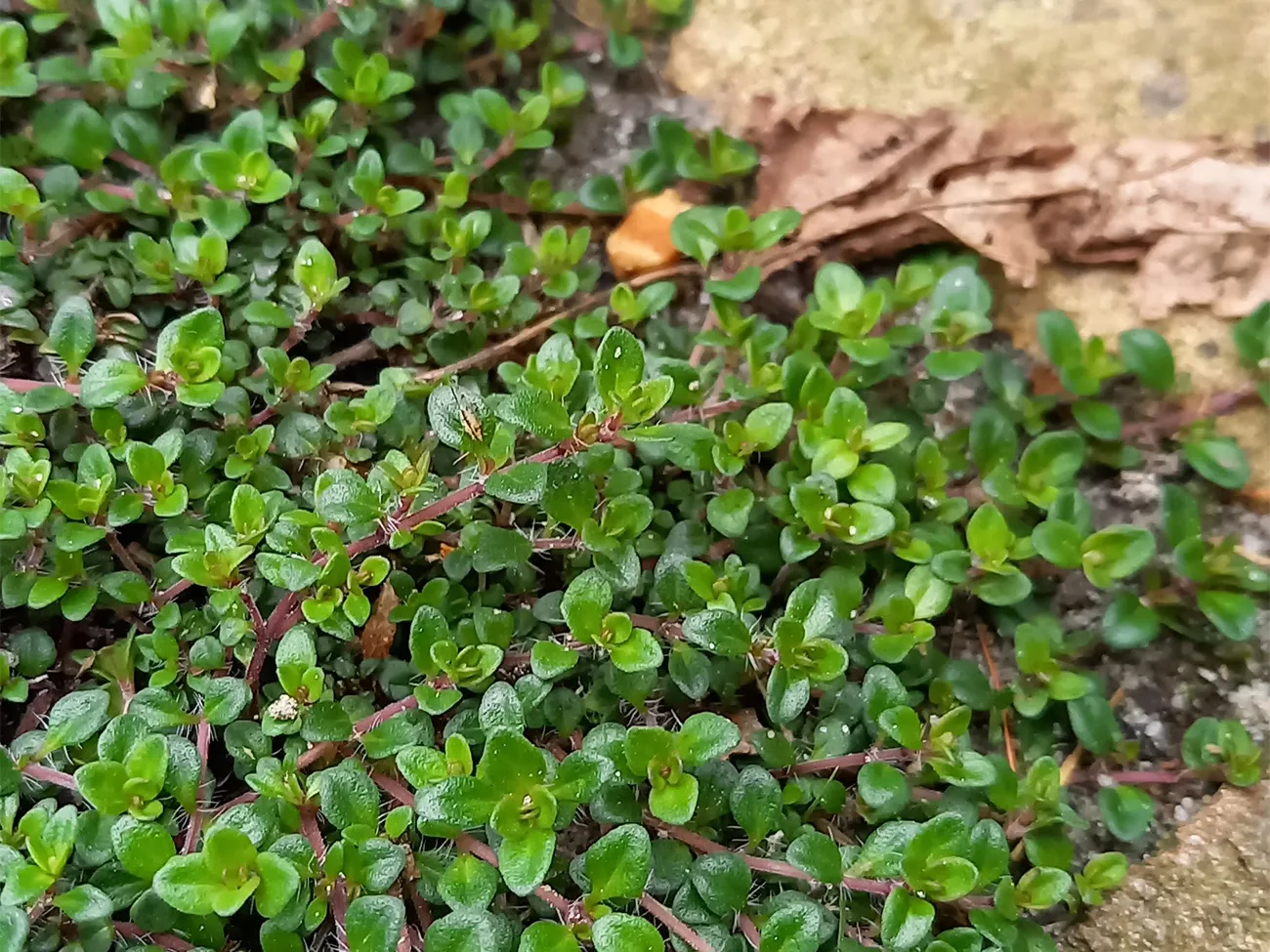
Thyme species are also a fragrant addition to the range. Thymus serpylllum, or creeping thyme, is particularly suitable. Other low-growing species can also be used, such as the slightly more unusual Thymus ‘caborn Wine en Roses’. It was discovered in 2004 by Margaret Easter, who manages the national thyme collection in England. This vigorous, mat-forming cultivar has small flower spikes in purple-pink. It is unique for its beautiful, deep colour, and flowers profusely from May to June. It is also a valuable plant for bees.
Pretty in yellow
Raoullia australis, also known as silver cushion, is a silvery plant with a moss-like appearance. At just 1 centimetre tall, it is the perfect plant for paving joints. However, this New Zealand native does not like soil with a high lime content and must not be too wet in winter, which can sometimes present a challenge. It is hardy to -15°C and flowers in June and July, producing attractive but very small yellow blooms.
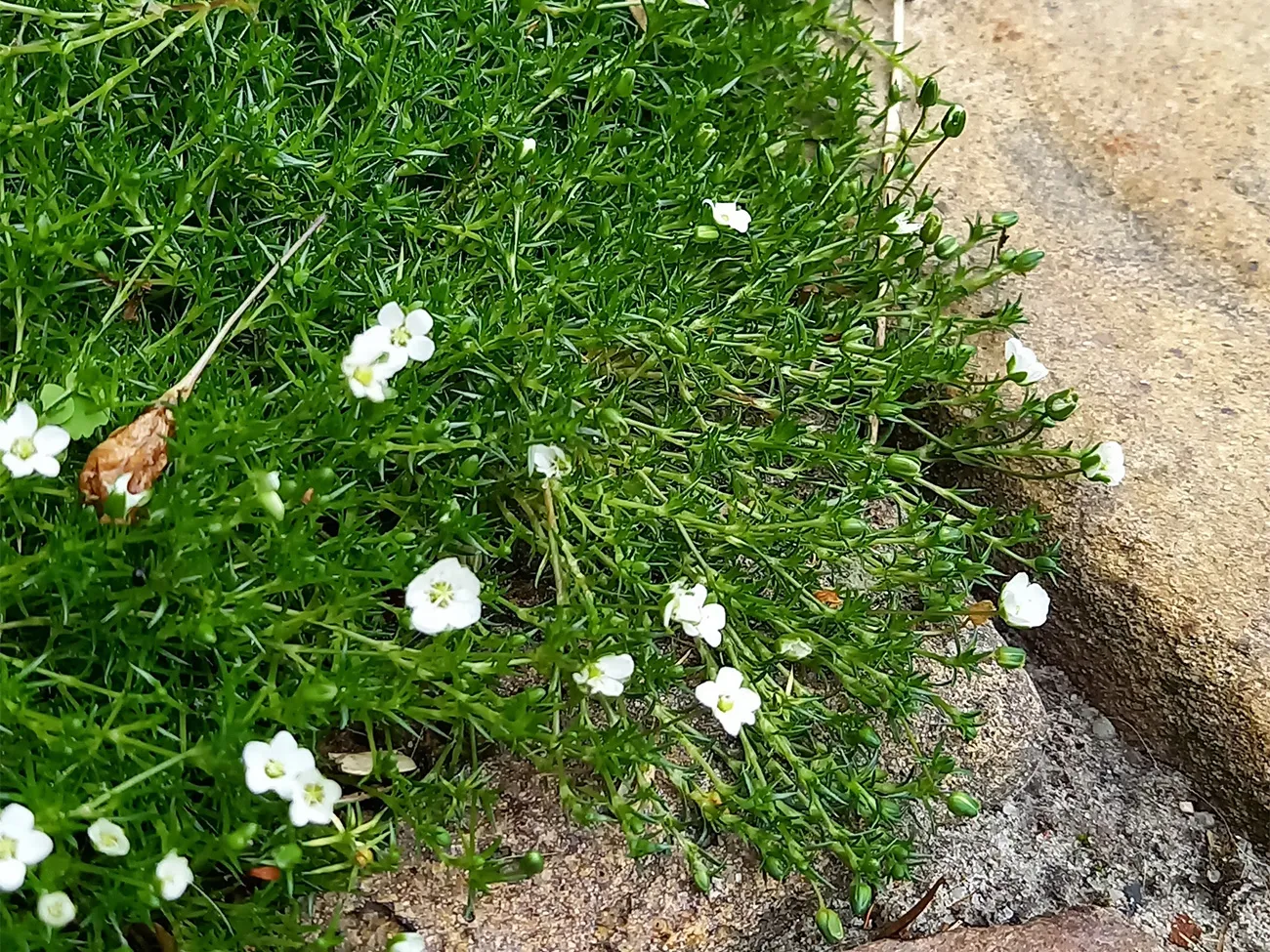
Sagina subulata, or Irish moss, is a native plant that likes a moist spot with low-lime soil. Partial shade is therefore usually better than full sun. However, if you want to enjoy its beautiful white flowers, some sunshine is recommended. The flowers appear from May to July and rise slightly above the leaves. Sagina can look a little like moss, but it is a true perennial.
A lawn alternative
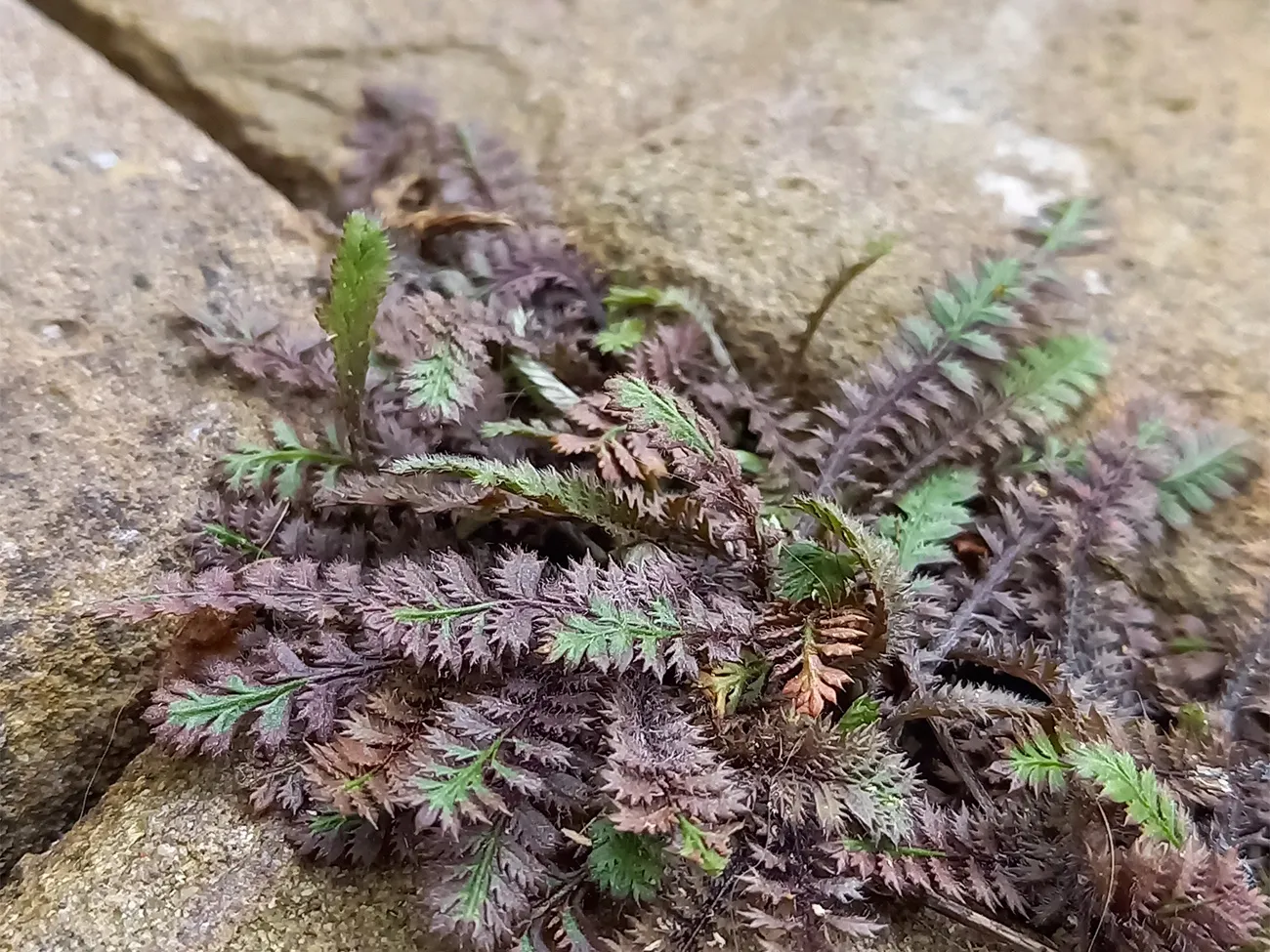
For shade and partial shade, there is also a creeping plant that looks a little like a miniature fern: Leptinella squalida, or brass buttons. It grows as a dense mat and can tolerate quite a lot of foot traffic. It is so robust that it can be used as a lawn alternative, provided the traffic is not too heavy. So it is not suitable for a sports or play lawn. It stays green all year round, except in winter, when it turns more bronze in colour. Cultivars with dark foliage throughout the year are also available. It flowers with small yellow blooms in May and June. Between paving joints, it is better planted in shade than in sun, otherwise it dries out too much in summer.
Question about this story? Ask your question
Keep following this
Get an email when a new story is published. No account needed.
- SubjectGeneral







