









How the right seed mixtures create stronger lawns and more nature in the city
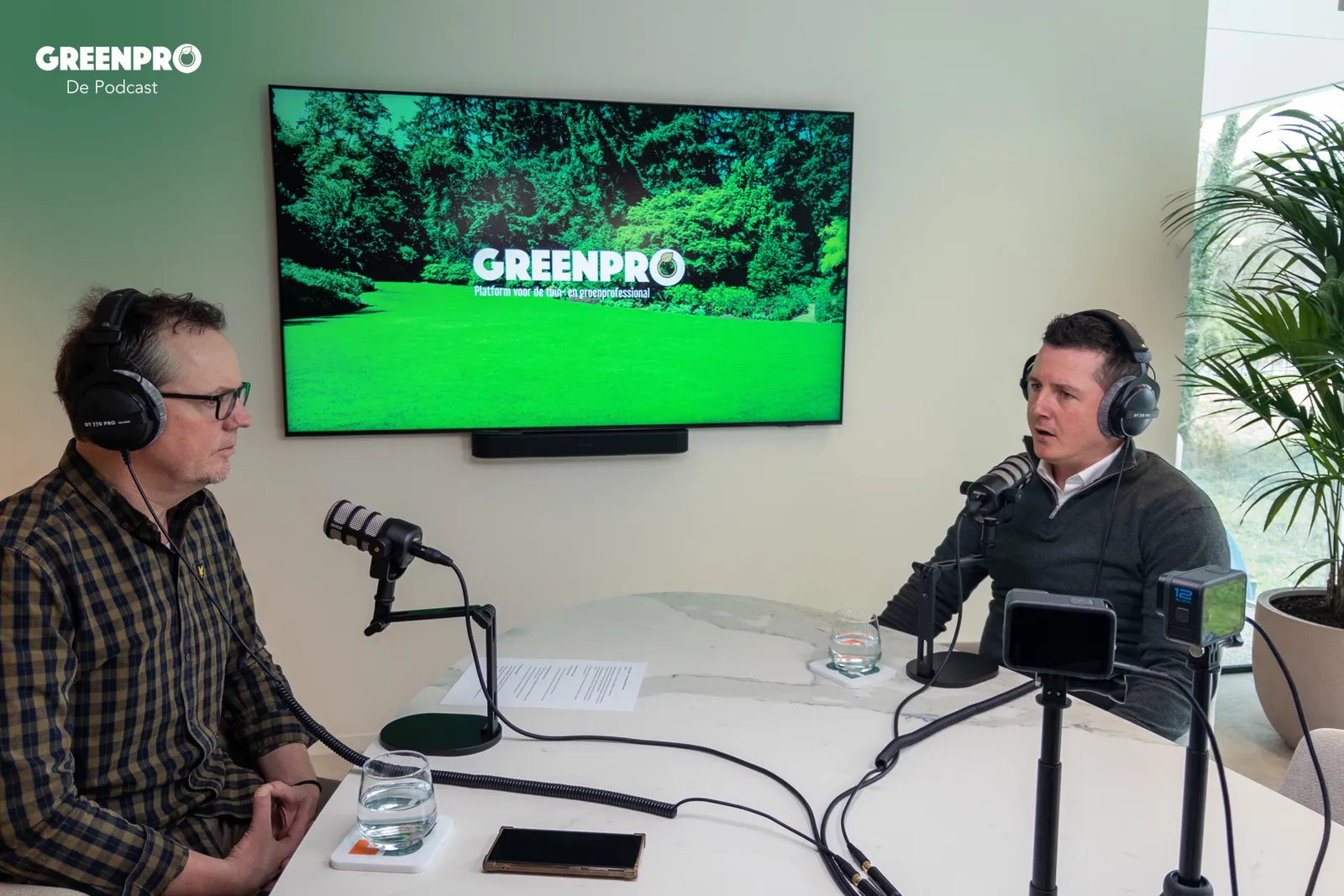
What role do seeds play in biodiversity and sustainable green-space management? In this episode of GreenPro, the podcast, host Kris Vandekerckhove talks to Thijs Schoenmakers (DSV Zaden) about smart seed mixtures, soil knowledge and the impact of climate change on grass and flower meadows. Find out how landscape contractors, designers and public authorities can make better choices for stronger lawns, more pollinators and urban biodiversity that is fit for the future.
Full transcript
All chapters (18)
- Introduction and episode theme
- Conversation begins and guest introduction
- Thijs Schoenmakers introduces himself
- Positioning and differentiation in the market
- Why seeds matter for biodiversity
- Common choices in lawn mixtures
- Example project and the impact of choosing the right seed
- Why good rooting matters
- Native species and climate change
- Aesthetics versus ecological value
- How mixtures support insects and pollinators
- The complexity of flower meadows and sowing with a purpose
- Management after sowing
- Innovations in seeds and grass varieties
- The future of biodiversity in urban areas
- Advice for newcomers to the sector
- Closing message and views on artificial grass
- End of the episode
Introduction and episode theme
Kris Vandekerckhove Welcome to GreenPro, the podcast for professionals in the green sector. Today we’re looking at something that literally lies at the root of everything that grows and flowers: seeds. But we’re going beyond that, because seeds also play a crucial role in biodiversity, a topic that is more important today than ever. So how do you, as a landscape contractor, designer or public authority, make the right choices? What impact do seed mixtures have on our natural environment? And where are the biggest opportunities and pitfalls? We’re discussing all this with Thijs Schoenmakers from DSV Zaden, a specialist in seeds and biodiversity. Welcome, Thijs.
Conversation begins and guest introduction
Thijs Schoenmakers Thank you, thank you. You’re from far-off Limburg, Thijs. Yes, North Limburg to be precise, so it’s not exactly round the corner. We’ll translate you with AI in a moment so we can understand what you’re saying. No problem. Great, great.
Kris Vandekerckhove Right, Thijs, could you briefly introduce yourself and explain your role at DSV Zaden, please?
Thijs Schoenmakers introduces himself
Thijs Schoenmakers Well, I’m Thijs Schoenmakers, Sales Manager Recreatiegrassen at DSV Zaden. My role involves a bit of advising and a bit of sales, and I help our product management team develop mixtures for the Dutch and Belgian markets.
Positioning and differentiation in the market
Kris Vandekerckhove Okay, and here’s the hardest question straight off the bat. What sets you apart in this market?
Thijs Schoenmakers What sets us apart is primarily our knowledge and the quality we’re prepared to put into our mixtures, and then take to market.
Kris Vandekerckhove What do you mean by ‘prepared to put in’?
Thijs Schoenmakers We look at where the need lies. We’re not looking at tomorrow, we’re looking at the day after. With climate change, growers need to be thinking now about what might be needed in ten years’ time. That’s why we’re prepared to look at where the need lies.
Kris Vandekerckhove So you don’t look at what the customer wants, but at what they really need. You’re prepared to challenge them.
Thijs Schoenmakers Yes, definitely. Sometimes a customer says they want a particular lawn, and then we ask more detailed questions about their requirements and what they want to achieve. The answers sometimes differ from what the customer initially asked for, because there are several ways to establish a lawn.
Read the full transcriptCollapse transcript14 chapters remaining
Why seeds matter for biodiversity
Kris Vandekerckhove Okay. Seeds sound simple, but they’re actually the foundation. Along with the soil, they’re where everything begins. Why are seeds so crucial to biodiversity?
Thijs Schoenmakers Seeds are important because they can help boost biodiversity. By seeds, I mean that in the broadest sense. We’re talking about grass seed here, but we could also be talking about flower mixtures. Grass seed comes in several varieties, with differences between the species. Ultimately, it’s about increasing diversity. Combining seeds makes them stronger, which is why we create mixtures: the seeds complement one another. You should always think in terms of mixed cultures rather than monocultures.
Common choices in lawn mixtures
Kris Vandekerckhove Okay, okay. What typical mistakes do you still see people making too often when choosing mixtures?
Thijs Schoenmakers Well, are they mistakes? I wouldn’t call them mistakes, but people still very often use a sports mixture for lawns. It’s become common practice, something that was always done quickly in the past. The thinking is, ‘Oh, let’s just sow a sports mixture. It greens up quickly and looks smart.’ But in the long term, it’s often not the best choice for a private garden lawn.
Kris Vandekerckhove Do you mean that’s perennial ryegrass?
Thijs Schoenmakers It often has a high proportion of perennial ryegrass, with only Kentucky bluegrass alongside it. Traditionally, a lawn mixture also contains some red fescue.
Example project and the impact of choosing the right seed
Kris Vandekerckhove Right, okay. Can you give us a specific example of a project where choosing the right seed really made a difference? One you still look back on with pride?
Thijs Schoenmakers I’d say grass pavers, or green parking. That’s a real area of focus. We were able to develop a good mixture for it, and it has made a real difference, both above and below ground. Above ground, it produces less vertical growth, which helps keep maintenance down. Below ground, it creates good rooting, which contributes to water infiltration and makes the turf stronger.
Why good rooting matters
Kris Vandekerckhove What does good rooting mean to you?
Thijs Schoenmakers Good rooting means the roots grow deep into the growing medium or subsoil, where they can access nutrients, moisture and oxygen. Ultimately, the more water there is below ground, the stronger the turf becomes, or is.
Native species and climate change
Kris Vandekerckhove Okay. We also hear from people in the sector, particularly local authorities, that when tenders are being drawn up for new parks, there is still a strong focus on native species. What’s your view on that?
Thijs Schoenmakers We always take a specialist view, drawing on our expertise. But when it comes to native species, how do you decide whether something is still native if it disappeared from here in the past? Climate change may mean a species no longer grows here, so we need to be prepared to anticipate that and make adjustments. Sometimes people want to bring back species from the past, but that’s simply not always feasible, and we need to be prepared to explain that. There’s a reason it no longer grows here. Sometimes other species that are better suited to current conditions return instead. We see the same thing with grass mixtures. In response to the climate, we look at drought-tolerant species. The same applies to flower mixtures: we look at which species are better suited to today’s climate.
Aesthetics versus ecological value
Kris Vandekerckhove Exactly. Do you sometimes sense a tension among customers between aesthetics and ecological value?
Thijs Schoenmakers Yes, definitely. Most people focus on aesthetics, on making sure it looks attractive and flowers well. But behind that, they also want to support biodiversity. This may get a little technical, but with the cornflower, for example, you have a cultivated form and a wild form. The wild form benefits insects, while the cultivated form looks the same but has less impact on them. That’s sometimes where the difference lies, and it can also account for price differences between the various mixtures available or offered for sale. It all comes down to the choice of species.
How mixtures support insects and pollinators
Kris Vandekerckhove You mentioned insects, which immediately makes me think of bees and all sorts of other things. What role do seed mixtures play in supporting pollinators, for example?
Thijs Schoenmakers They’re pollinators, of course. Nectar is the obvious resource that benefits most insects, but some mixtures can also attract particular predatory insects. Take the oak processionary moth, for example. Some species attract predators of the oak processionary moth, and those plants can act as host plants. In turn, they attract insects that target the oak processionary moth, or can at least help tackle it. That’s how you decide how to put a mixture together and which species belong in it.
The complexity of flower meadows and sowing with a purpose
Kris Vandekerckhove So sowing a flower meadow just like that isn’t as simple as it might seem?
Thijs Schoenmakers No. That brings us back to the question of what the aim is, which is why we often ask a few more questions. Are we simply looking to improve the appearance of a piece of vacant land for a year, or is there a genuine biodiversity objective? Sometimes that’s part of the plan, but sometimes it’s simply a case of sowing a more straightforward mixture for a year, primarily to suppress weeds and make the area look tidier.
Management after sowing
Kris Vandekerckhove And I assume you don’t just sow it, wait for it to germinate and grow, and then leave it at that. There’s also management after sowing, of course. Is that something people ask you specific questions about?
Thijs Schoenmakers Yes, it requires a completely different way of thinking from sowing grass or grass mixtures. We try to give people practical guidance on how to achieve a lasting effect in a flower meadow, for example. That involves some management. You can’t just sow it and then leave it alone. Once it has finished flowering, you need to do something, and you also need to take action the following season to get the meadow to return year after year.
Innovations in seeds and grass varieties
Kris Vandekerckhove Okay. What innovations do you see coming in the near or distant future in seeds and biodiversity? You said earlier that you’re already thinking ten years ahead.
Thijs Schoenmakers I think there’s room to improve drought tolerance in today’s grasses. New varieties can be developed from existing species with better drought tolerance. There’s also scope for using other drought-tolerant species, such as tall fescue, more widely in lawns. I see a future for that too. Tall fescue used to be a very coarse grass, but breeding has made it finer, so it fits in better with the look of today’s lawns.
The future of biodiversity in urban areas
Kris Vandekerckhove Okay. Looking at biodiversity in urban areas, what do you think it will look like in, say, 10 or 20 years?
Thijs Schoenmakers I think cities will have purpose-created spaces designed specifically for biodiversity and aesthetics. They may or may not be parks, but they’ll be designated areas where management is feasible.
Kris Vandekerckhove Possibly with corridors between them?
Thijs Schoenmakers Yes, connecting zones, so you get green corridors running through a city or village, with a focus on those areas.
Advice for newcomers to the sector
Kris Vandekerckhove Right. And if someone has just left school, a landscaping contractor, a young man or woman, ready to throw themselves into garden and landscape contracting, where would you advise them to start? If they come to you and ask, ‘Thijs, where do we begin? What do we need to know? What’s essential?’
Thijs Schoenmakers Soil, I think, especially knowledge of soils. That’s one of the most important things. We can all recommend or try to sell the best seed, but if the soil isn’t right, nothing will grow. So I think it’s important to know a bit about soil science, or at least understand the soil where you’re planning to work. That’s where it all starts, whether you’re planting or sowing grass or wildflower mixes.
Kris Vandekerckhove So, really, everything starts with the soil?
Thijs Schoenmakers Yes, it does start there. That’s right.
Closing message and views on artificial grass
Kris Vandekerckhove To wrap up, if you could leave the sector with one message, what would it be? Something that’s on your mind. For example, I heard a little bird singing in the corridor that you’re against artificial grass.
Thijs Schoenmakers Yes. The message is: always try to take a natural approach. I don’t think artificial grass can really be part of that, because everything underneath it is more or less cut off from the ecosystem. And then there are the other consequences. You get the urban heat island effect. There’s less evaporation. And when the artificial grass eventually needs to be removed, it creates a pile of waste. These things may seem small. I think the focus should be on a natural approach, even if that means having a smaller lawn that still supports nature.
End of the episode
Kris Vandekerckhove Fantastic. What does your lawn look like, by the way, Thijs?
Thijs Schoenmakers I have a few clumps of grass. I still live in a built-up area, so unfortunately there’s no lawn there yet. I do dream of having a larger lawn one day.
Kris Vandekerckhove Lovely, lovely. Thanks, Thijs. This was GreenPro, the podcast. If you enjoyed this episode with Thijs, feel free to share it with colleagues in the sector. For more insights into greenery, sustainability and innovation, subscribe to the podcast and follow us on social media and the GreenPro website. Thanks for listening, and join us again for the next episode. And once again, thanks to Thijs from DSV Zaden!
Companies in this story

Keep following this
Get an email when a new story is published. No account needed.
- ThemeGreen space for everyone
- SubjectGeneral
- CompanyDSV zaden







