









Infiltration as a weapon against drought
Everyone has a responsibility to play in addressing the complex, multifaceted challenge of drought in Flanders.
Avoiding unnecessary watering, collecting rainwater, reusing process water… these are just some of the ways to save water. East Flemish family business Trudiplas is taking a different approach, working with garden designers to create simple, reliable ways to promote infiltration.
Drought in Flanders is not simply a matter of water shortages. Although summers are becoming hotter and drier, there is still heavy rainfall in winter. The main problem is that this water is carried away at great speed through roofs, streets, paved areas, sewers and drainage systems. It has no chance to soak into the ground, so groundwater reserves are not replenished and increasingly long dry spells cannot be bridged.
This is an unmistakable large-scale problem, but it also devastates soils, planting and biodiversity at local level. Conversely, seemingly small-scale measures taken locally can make a significant contribution to solving the problem on a larger scale. It is therefore worthwhile to include sufficient opportunities for infiltration in every garden project, even where the nature of the work does not make this a formal requirement. Trudiplas is focusing on two key approaches and product groups.
Permeable paving
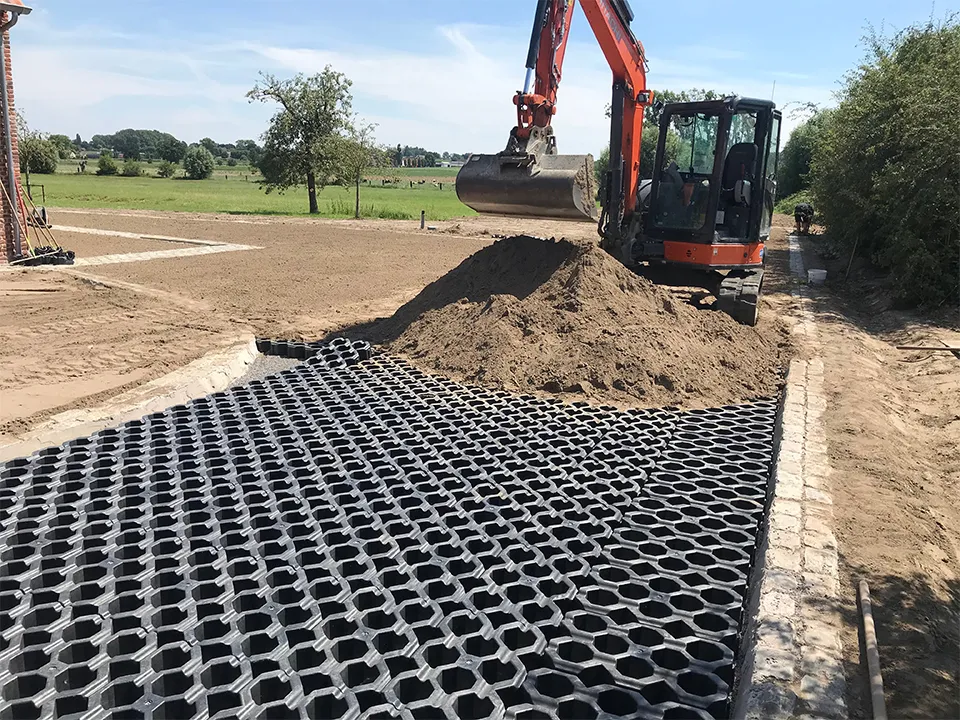
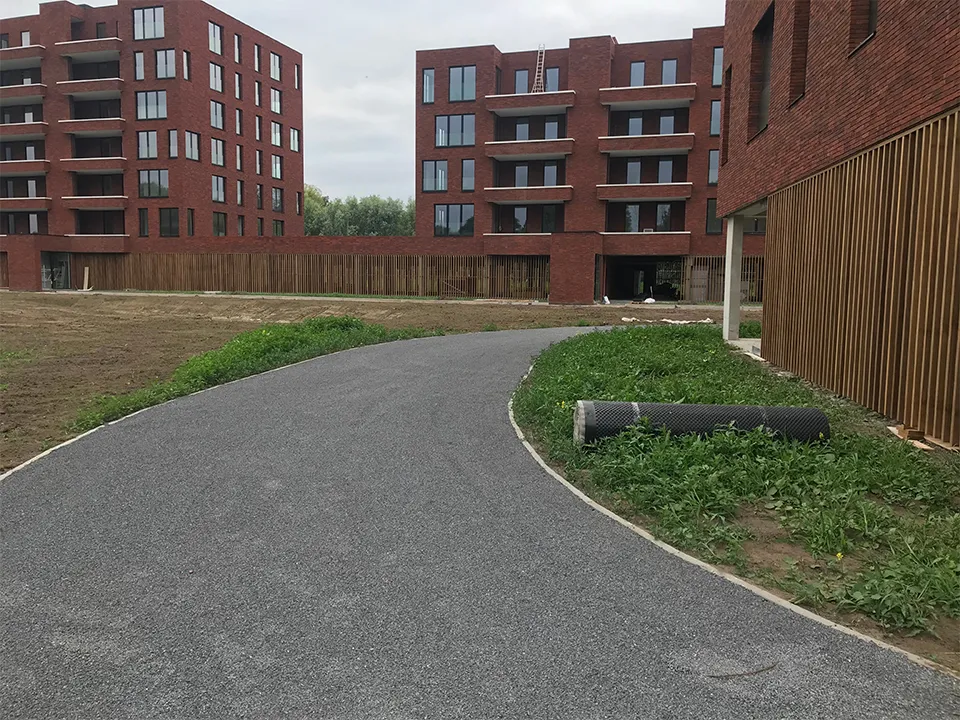
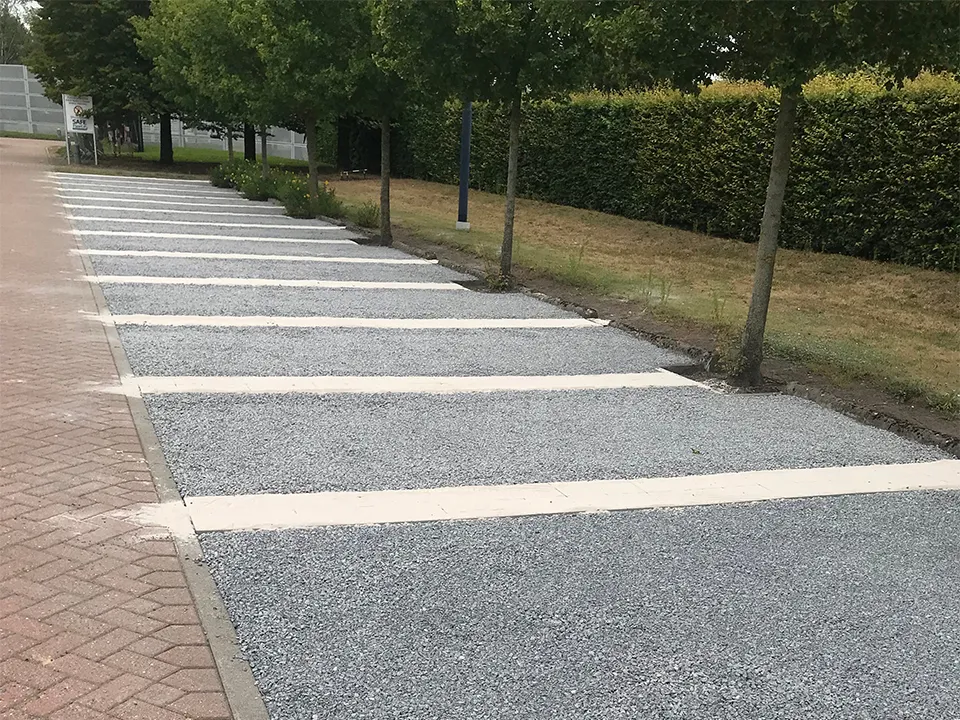
It is no secret that towns and municipalities now explicitly favour permeable paving. Using suitable grass or gravel grids ensures that the surface is not only permeable to water, but also robust and durable. It is doubly sustainable, too, if you look at the latest addition to the Trudiplas range.
Alongside its extensive range of conventional gravel grids, available in various heights and made from 100% recycled polypropylene and high-quality geotextile, the company also offers the Trudidal Heavy, an innovative grass/gravel grid for heavy traffic, made from 50% recycled polyethylene and 50% waste plastics. Plastics that would normally end up in the bin are given a new, high-quality lease of life and help improve water management. Even without infill, the Trudidal Heavy can withstand loads of more than 200 tonnes/m2, making the grass/gravel grid a fully fledged alternative to concrete versions at just a fraction of the weight.
Modular infiltration crates
Water that would traditionally flow from roofs or impermeable surfaces into the rainwater drainage system can also be infiltrated into the ground locally and in a controlled way with a simple intervention. This has been a requirement for new-build projects since 2013, although infiltration systems can just as easily be installed retrospectively.
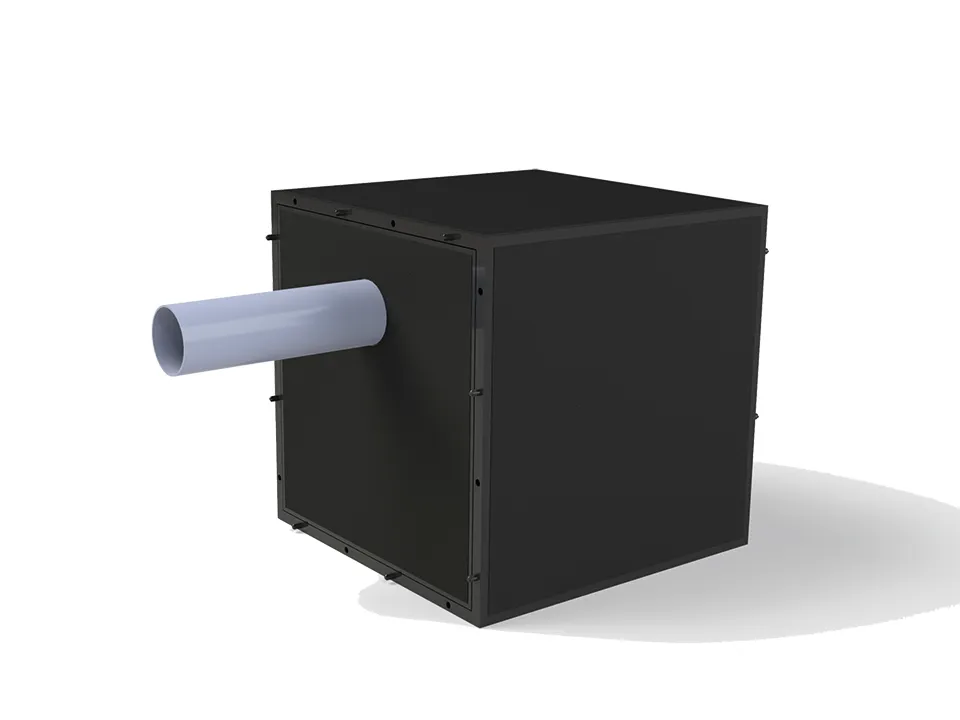
For this type of system, Trudiplas has developed the Raincycle, a modular infiltration crate with a capacity of 190 litres. It can be connected either to the overflow from a rainwater tank or to the rainwater drainage system, but in the latter case a sand filter must be installed in between. Its capacity was deliberately designed for domestic projects, although multiple crates can be linked together for larger projects.
To make transport and installation as straightforward as possible, Trudiplas deliberately opted for a modular design when developing the Raincycle. Each infiltration crate consists of seven separate panels, already fitted with 100% water-permeable geotextile, which can be clicked together to form a box in no time. As the crates are not pre-assembled, they can be packed and transported compactly, further reducing their environmental footprint.
The system is explained in detail on the www.raincycle.eco website.
Question about this story? Ask your question
Keep following this
Get an email when a new story is published. No account needed.
- ThemeHealthy soil and smart water management
- SubjectGeneral







