









Miscanthus mulch as a sustainable weed suppressant
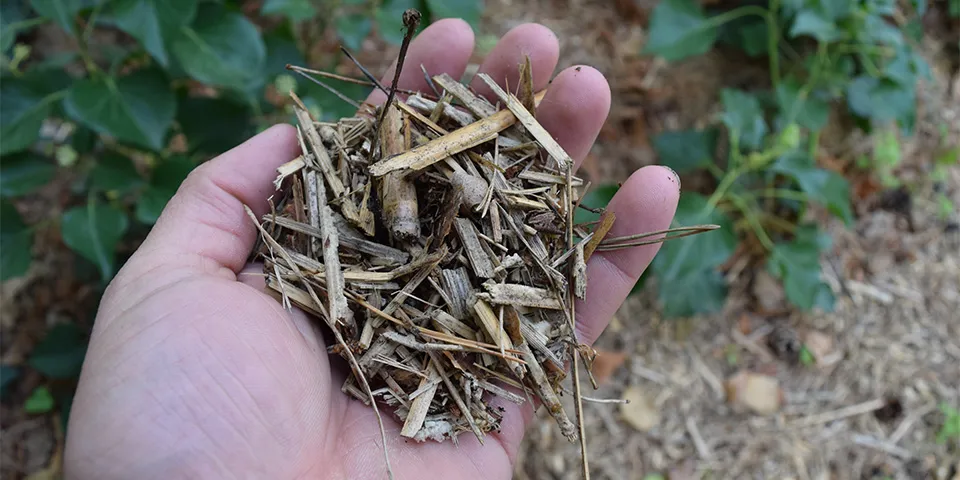
Ploegmakers from Veghel places great importance on corporate social responsibility and social sustainability, as reflected in its slogan ‘Ploegmakers lets people and their surroundings grow’. The company operates mainly in the south-east of the Netherlands and employs people who face barriers to entering the labour market. Its work focuses primarily on green projects for provinces, municipalities and water authorities, covering installation, management and maintenance. Some time ago, the company began experimenting with mulch made from elephant grass, or Miscanthus.
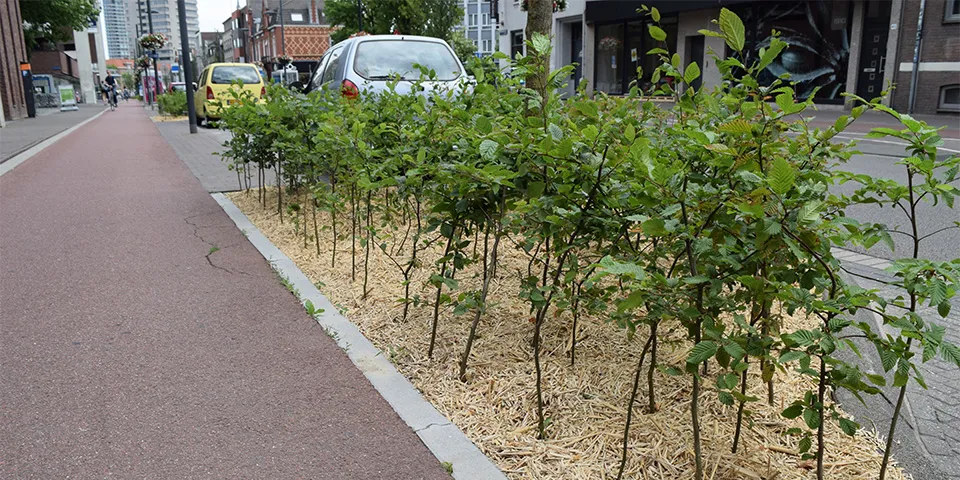
Successful test project completed
As part of the Brainport Park area coordination project, of which Ploegmakers is a member, a test project was carried out in 2014 and 2015 in collaboration with the municipality of Eindhoven. A 2.5 ha area of Miscanthus was planted in the municipality’s rural area. After harvesting, the elephant grass was shredded and applied as mulch in newly landscaped urban planting beds. The aim was to test its effectiveness in weed control and retaining soil moisture. The results were so encouraging that the use of Miscanthus mulch on a larger scale is now proposed and strongly recommended.
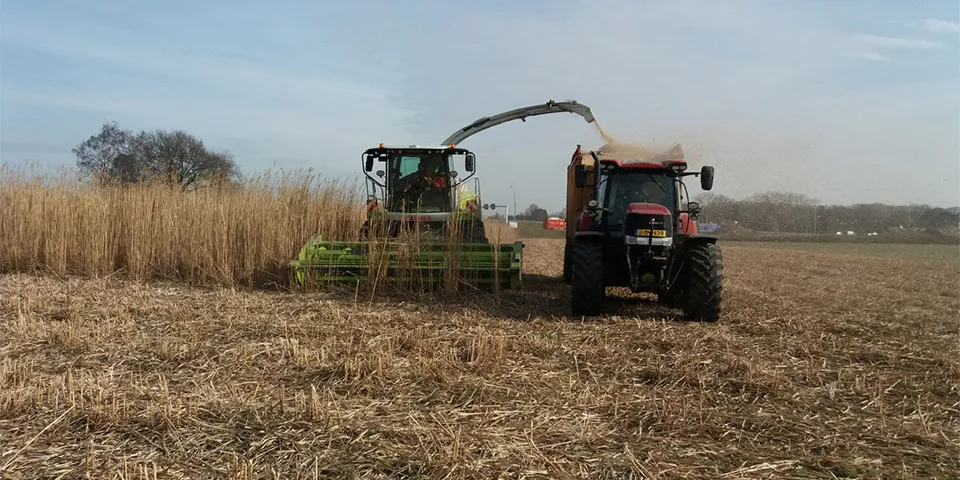
Miscanthus, an unusual crop
Miscanthus, or elephant grass, is a fast-growing crop that looks somewhat like reed and is ideally suited to the Dutch climate and soil conditions. It can be grown without insecticides, fertiliser or irrigation. Until now, it has been used as animal bedding, fuel or a raw material for paper, and from now on it will also be used as mulch. Growing Miscanthus also helps reduce greenhouse gas emissions. A Miscanthus plantation removes up to four times more CO2 from the air than a forest. It can be grown and harvested locally, thereby limiting transport and further reducing CO2 emissions. The same field can be harvested for many years without any cultivation during the growing season.
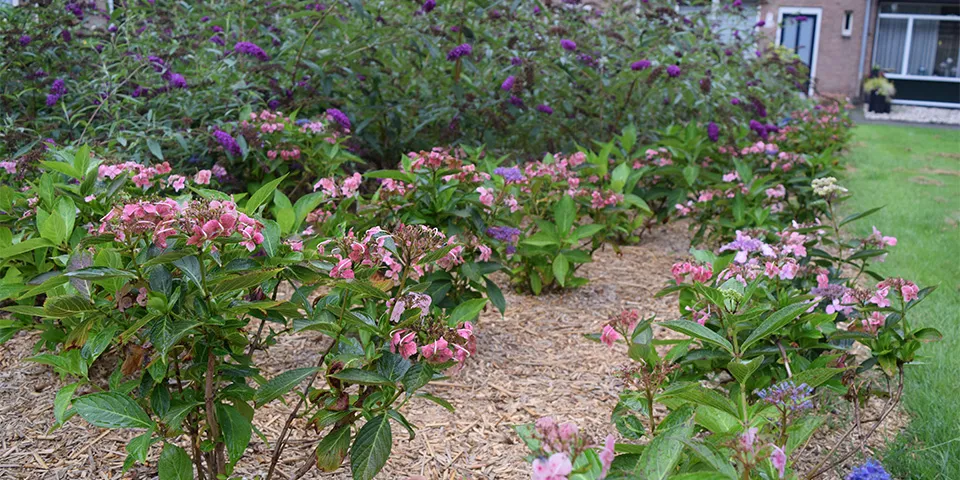
A forward-looking solution
Climate change is already taking a heavy toll. Temperatures are rising and periods of severe drought are becoming more frequent. Year after year, we are seeing further drying out of the soil. A layer of Miscanthus mulch counteracts this and keeps precious water where it belongs, in the ground. Mulched plots show little or no drying out. As well as benefiting the environment, this also reduces irrigation water use and the need for hoeing or other maintenance work in planting beds. Less hoeing means planting beds fill in more quickly. The use of Miscanthus mulch can also be considered groundbreaking in other areas. Tests have shown that it drastically reduces the failure rate in newly planted beds. Another notable difference is that, unlike conventional wood chips, Miscanthus mulch does not decompose and therefore does not acidify the soil. Miscanthus decomposes slowly, so it remains effective for longer. The elephant grass’s weed-suppressing properties, which were the original focus of the project, can be described as truly spectacular. Ploegmakers is thus making a meaningful contribution to the circular economy.
Question about this story? Ask your question
Keep following this
Get an email when a new story is published. No account needed.
- SubjectGeneral







