









New-build for LVG Vermako
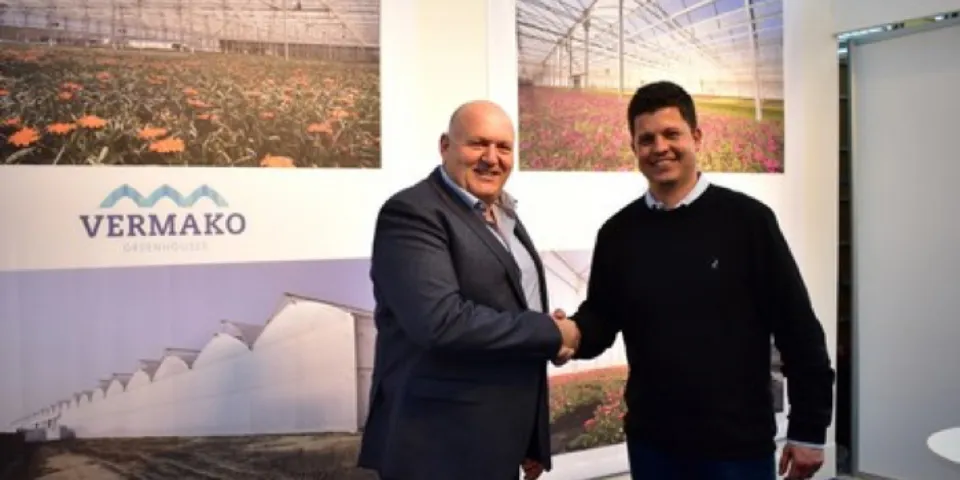
LVG Plants, the company owned by the van Geest family and South Africa’s largest plant grower, has seen its business grow in recent years. It has therefore been able to invest substantially in more sustainable energy supplies, new construction and, next year, expansion. Over the next 3 years, a further 5 hectares will be added to its 11 hectares of greenhouse space, with help from Belgian greenhouse builder Vermako. Part of this expansion is intended for the production of plant material for the pharmaceutical industry.
On 9 October 2017, things looked very different. A tornado, an extremely unusual occurrence as they are not normally seen here, swept across the business and flattened a large part of it. “All the departments were affected, but we suffered little damage in the section built by Vermako,” says Geert van Geest. “That’s why we contacted them straight after the storm, and everything was quickly arranged. Since July 2018, we have been fully operational again.”
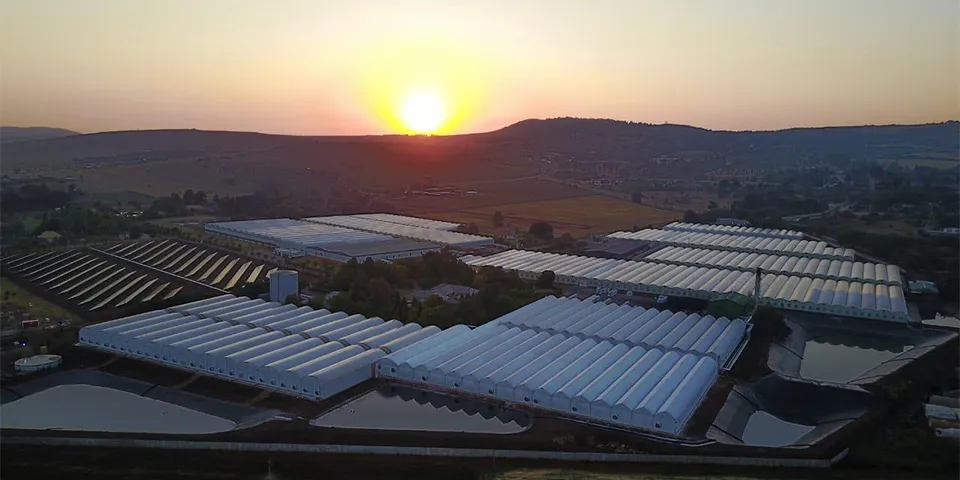
LVG grows a wide range of tropical plants, bonsai and orchids. Heating is required in winter, which represents a considerable cost. This was one of the reasons for a major investment in solar thermal collectors in 2016. The 1-hectare field, the largest of its kind in the southern hemisphere, was installed by Bosman van Zaal and now heats all the greenhouses. The grower is a sustainability leader and also intends to invest in PV panels, again in collaboration with Bosman van Zaal, which will in turn supply the business with electricity.
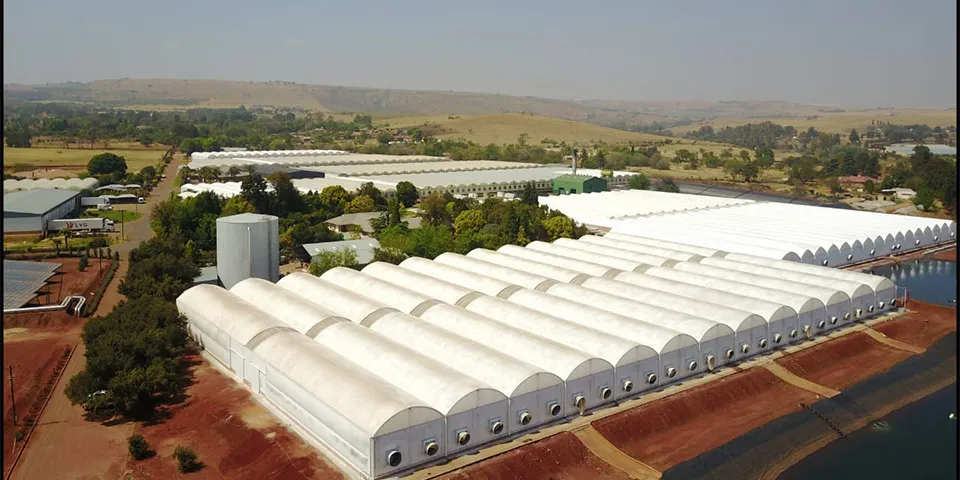
Conversely, good ventilation in summer is important for the grower. According to Geert, this is achieved particularly well with Vermako’s Poly Ventilation greenhouse, which opens on both the left and right from the ridge rather than from the gutter, thereby creating continuous ventilation.
Sales manager Peter Wicke explains that the superstructure of the greenhouses to be built, the gutters and ridge profiles, is made entirely of aluminium, while the substructure, the columns and lattice trusses, is hot-dip galvanised to guarantee a long service life. The structures are also built to withstand rough conditions. “We calculate the greenhouse structure to remain standing in wind speeds of up to 125 km/h. Others can judge whether that holds true, but what happened at LVG proves that they don’t take off in a light wind.”
Vermako is one of the major players in the African polytunnel market. In addition to its flagship project, the world’s largest rose greenhouse, built for Sher in Ethiopia, it has clients in Kenya, Rwanda, Tanzania, Zimbabwe and South Africa, among other countries.
Question about this story? Ask your question
Keep following this
Get an email when a new story is published. No account needed.
- ThemeTrees and plants of tomorrow
- SubjectGeneral







