









New research: Deep roots combat drought
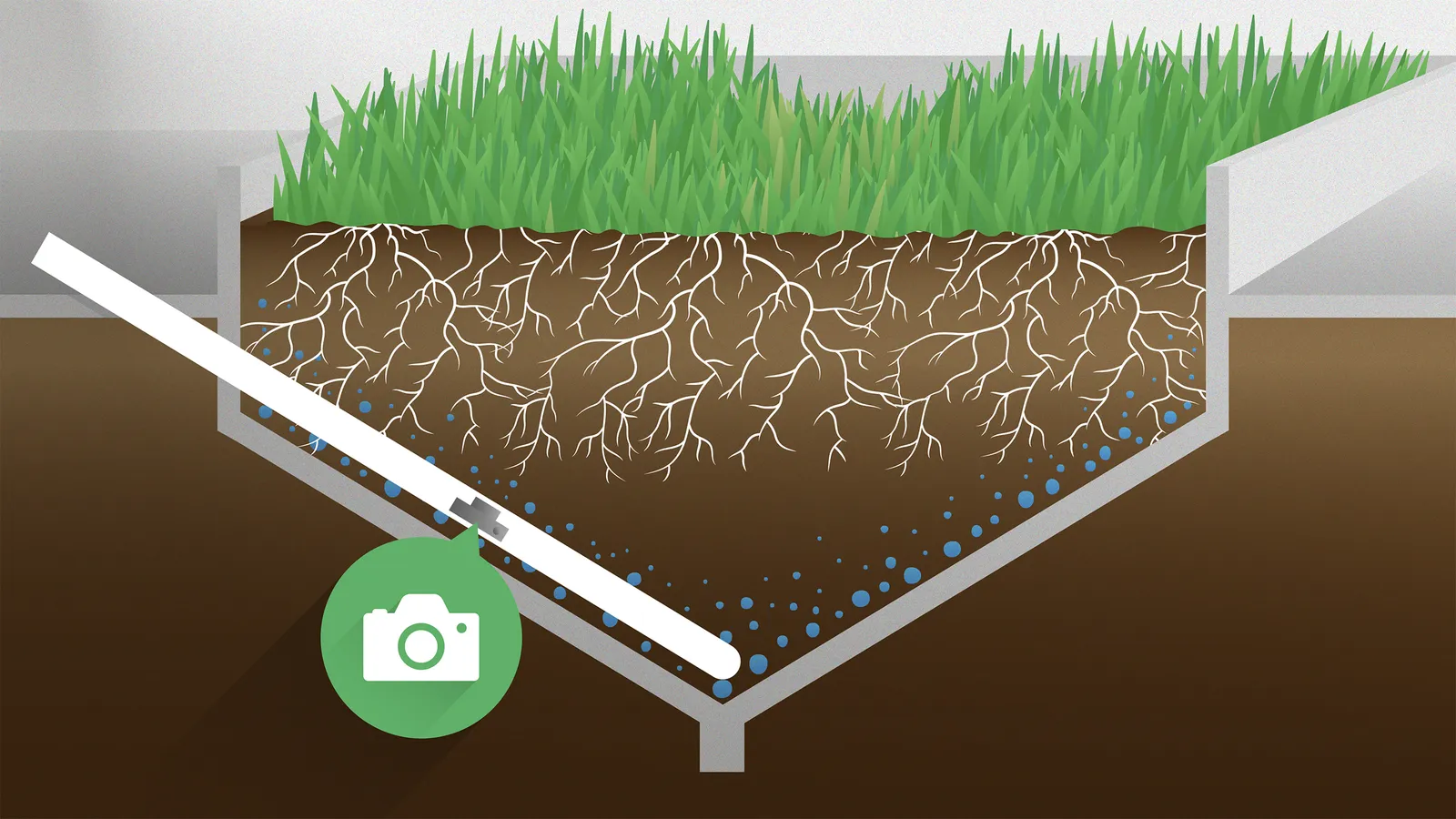
Researchers have gained new insights into the root architecture of grasses, and DLF can now offer customers verified guidance when they ask which species and varieties are most drought-tolerant.
Breeding plants for improved root architecture is very complex. It is not easy to get a good view of what is happening below the soil surface, or to do so across the large number of breeding lines needed to make improvements.
Until recently, at least. Working with the University of Copenhagen, DLF is conducting in-depth research into the deep root mass of various grass species using the world’s most advanced root research facility, called RadiMax. This facility makes it possible to take images of roots down to a depth of 3 metres, showing how they perform under drought conditions.
Root research into new varieties
“Our breeders are gaining unique insights into root architecture, enabling them to identify and select potential new varieties with the fastest root growth, the deepest roots and the greatest root mass. They have already identified a number of varieties that are the first choice for drought tolerance,” says Christian S. Jensen, Senior Scientist and Head of Biotech at DLF.
“By combining RadiMax data with what we already know from our other R&D activities, we can develop new breeding lines to further improve the drought tolerance of our new varieties. We have now been able to verify that the root mass of our forage grass varieties Raaigras PLUS and Rietzwenk PLUS, as well as several amenity grass varieties, delivers outstanding performance,” says Christian S. Jensen.
At present, deep root mass and root architecture are not rewarded with an official score in the European testing system. But we believe it is essential to bring drought-tolerant varieties to market for the benefit of farmers, sports pitch managers and consumers.
Spring drought: an everyday occurrence
With changing climate conditions, drought in spring and early summer is becoming increasingly common. In many cases, this has serious consequences for forage crops and grass performance. The year 2020 was no exception. For the sixth year running, Northern and Central Europe were affected by spring and early summer drought to varying degrees. In all those years, drought had economic consequences for forage grass producers and grassland managers. Crops sown that year were left exposed and struggled to germinate. Existing crops faced drought right in their growing period. For sports pitches, the consequences were poor appearance, more repairs and fewer playing hours.
The facts can no longer be ignored. We had better get used to the prospect of spring and summer drought becoming the rule rather than the exception!
So, when a farmer or sports pitch manager asks for drought-tolerant varieties and species in their bag of grass seed, DLF can supply them, verified by RadiMax.
Question about this story? Ask your question
Companies in this story

Keep following this
Get an email when a new story is published. No account needed.
- SubjectGeneral
- CompanyDLF BV







