









Ornamental grasses for a natural winter display
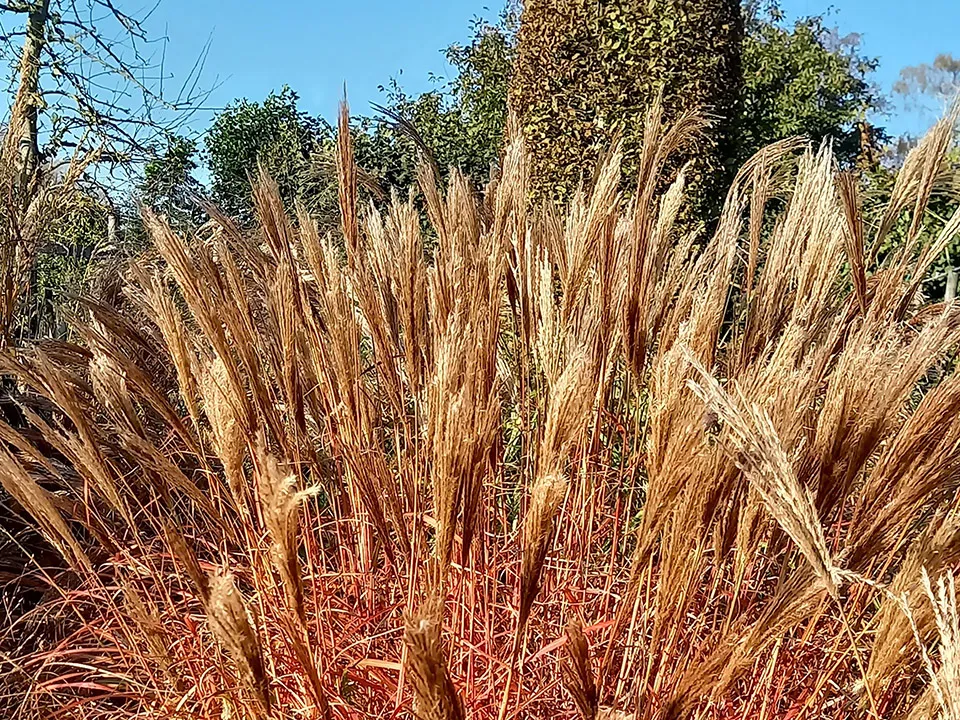
The range of ornamental grasses suited to our gardens grows every year. With hundreds of different grasses in cultivation, there are plenty of species and cultivars to choose from. Unfortunately, the same cultivars are often used time and again. Think of Pennisetum alop. ‘Hameln’ or Imperata cylindrica ‘Red baron’. You have probably also used Miscanthus sinensis ‘Gracillimus’ or Sesleria autumnalis. Do these names sound a little too familiar? It is time for a change. The greater the diversity of plants used in our gardens, the better it will be for reducing certain diseases and pests in the future. So we take a look at five new or lesser-known grasses that can add value to a design.
We start in November with a burst of colour. Miscanthus sinensis ‘Red chief’ certainly delivers. It not only flowers from August with intensely red plumes, but also puts on a red show in October and November as its leaves change colour. For the strongest colour, plant it in full sun, although it will still show autumn colour in partial shade. It is short for a Miscanthus and, with a flowering height of 1.20 metres, is one of the more compact cultivars. It is suitable for smaller gardens, containers and use as a specimen, as well as in larger drifts. Miscanthus have few soil requirements and thrive in both sandy and clay soils. They remain upright and attractive in winter, bringing structure to the border.
The pampas grass trend
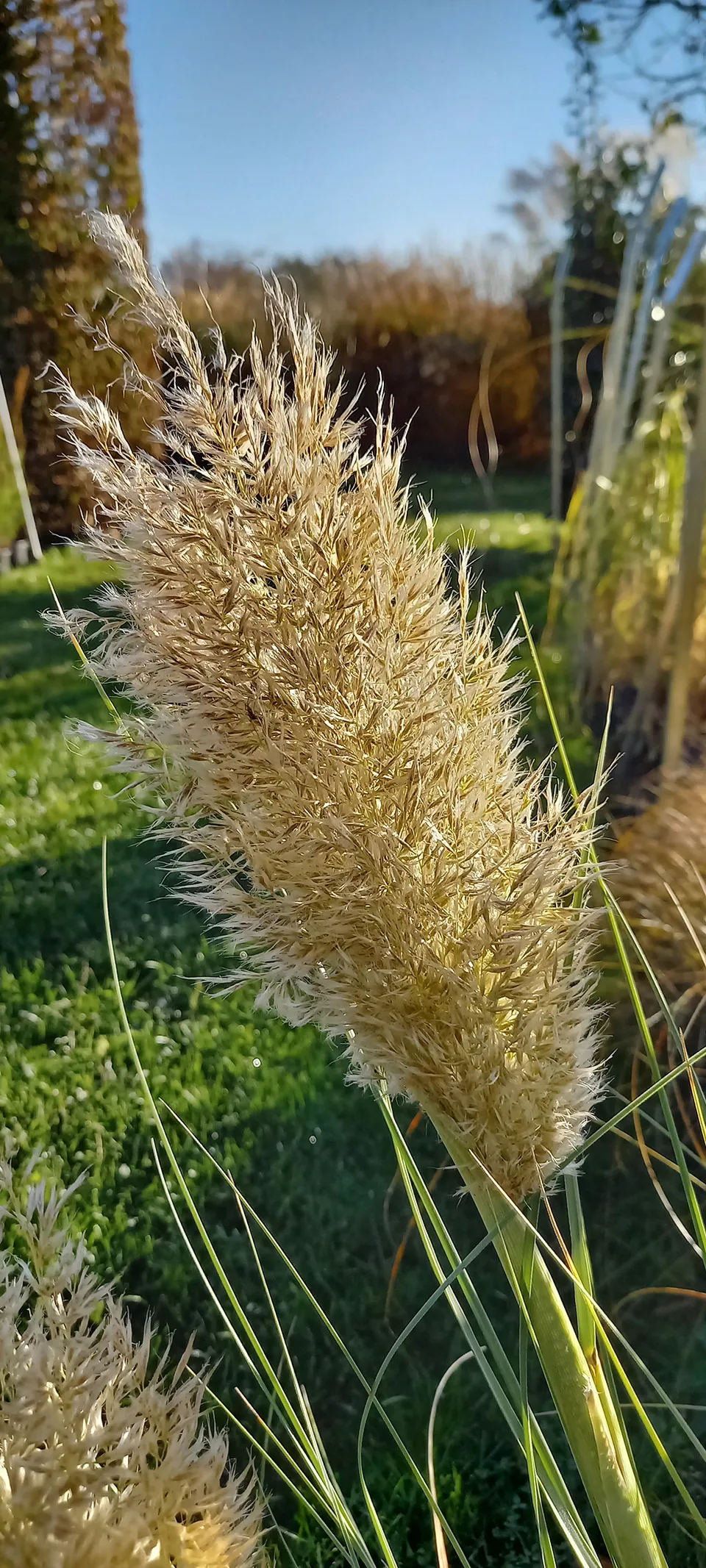
Gardens, like many other things, are subject to trends. One of the trends that began in interiors this time is the use of Cortaderia plumes. The high prices of dried pampas plumes at florists have also renewed interest in planting them in gardens. However, Cortaderia take up a lot of space, with each plant quickly occupying 2 to 4 square metres. There is now a solution to this problem in the form of the new Cortaderia ‘Tiny pampa’. Although we are not really fans of pampas grass, with its razor-sharp leaves, this small variety is certainly worth considering. Its leaves reach about 60 centimetres, with compact plumes rising above them to a maximum height of 80 centimetres, making it the smallest of its kind and suitable for containers too. It is also a prolific flowerer, blooming a little earlier than other cultivars, from August onwards. A welcome addition to the range of low-growing, semi-evergreen grasses for a dry, sunny position.
Dutch dreams
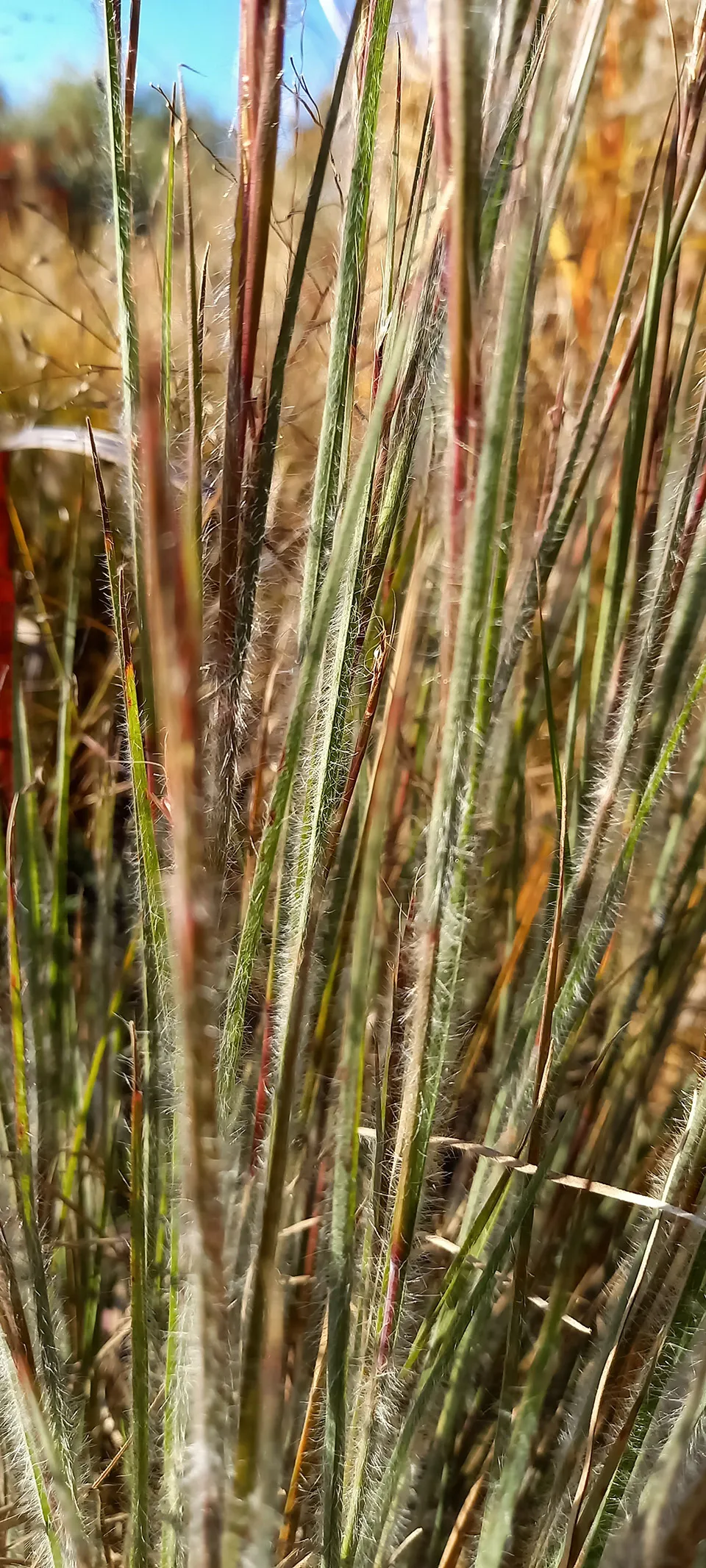
Anyone following the ‘Dutch dreams’ movement will know that plants championed by Dutch garden designer Piet Oudolf are often adopted and valued by many others soon afterwards. Sesleria autumnalis, which he was one of the first to use in his designs, is a case in point. Through his projects around the world, he has a knack for selecting plants that are distinctive, climate-resilient and bring strong winter interest. One of these newer grasses is Schizachyrium scoparium ‘Ha Ha Tonka’. This small prairie grass is notable for the many hairs on its blue-grey leaves. They create a unique garden effect by catching and holding tiny droplets of water. The grasses literally sparkle in the early morning light, and frost completes the picture. It is a non-evergreen grass that likes a sunny, dry position and grows up to 90 centimetres tall. It looks wonderful in a mixed border with perennials such as Echinacea or Salvia.
Sesleria autumnalis 2.0?
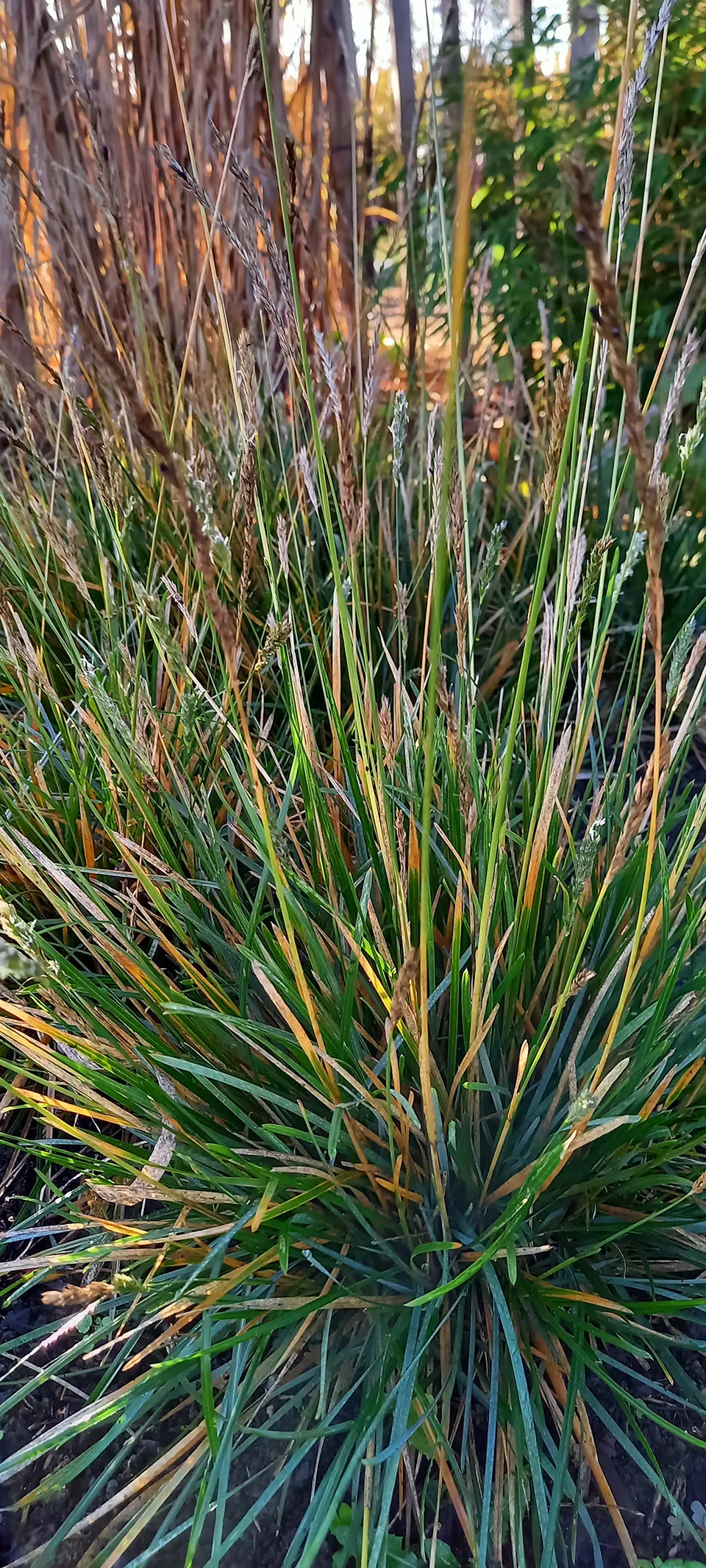
In recent years, Sesleria autumnalis has become one of the most popular species planted by landscape contractors, after Pennisetum ‘Hameln’. Sesleria is a beautiful semi-evergreen grass that is drought-tolerant and hardy, with very little maintenance required. Its one drawback is that it can sometimes look untidy. In a wet summer like the one we have had this year, it can grow taller and then flop over. This is not always welcomed by clients who want a good result year after year. Fortunately, there is now the new Sesleria ‘Greenlee hybrid’. This Sesleria is a cross between the smaller, more compact Sesleria caerulea and Sesleria autumnalis. The result is a beautiful new grass that is drought-tolerant, semi-evergreen and flowers from June to October, producing attractive silvery spikes. It also stays compact, reaching a height of 30 centimetres.
A top sedge for dry shade
Finally, we would like to bring Carex sp. ‘Kyoto’ to your attention once again. Although garden designer Chris Ghyselen brought it back from Japan years ago, this sedge is still underrated. It is one of the best evergreen sedges for dry shade, but also does very well in the sun provided it does not get too dry. At 60 centimetres tall, with an attractive rounded form, it resembles a more elegant bottlebrush, without the flowers. Its neutral appearance means it can be combined endlessly. A natural beauty that can bring colour and structure to the winter garden. Because it originates in Japan, it is also much better equipped to cope with colder, wetter winters than the more widely used Carex testacea or Carex howardii ‘Phoenix green’, both of which come from New Zealand. A sedge that is certainly a valuable addition to the climate-resilient gardens of the future.
Question about this story? Ask your question
Keep following this
Get an email when a new story is published. No account needed.
- SubjectGeneral







