









‘Out of zone’ need not be a cause for concern
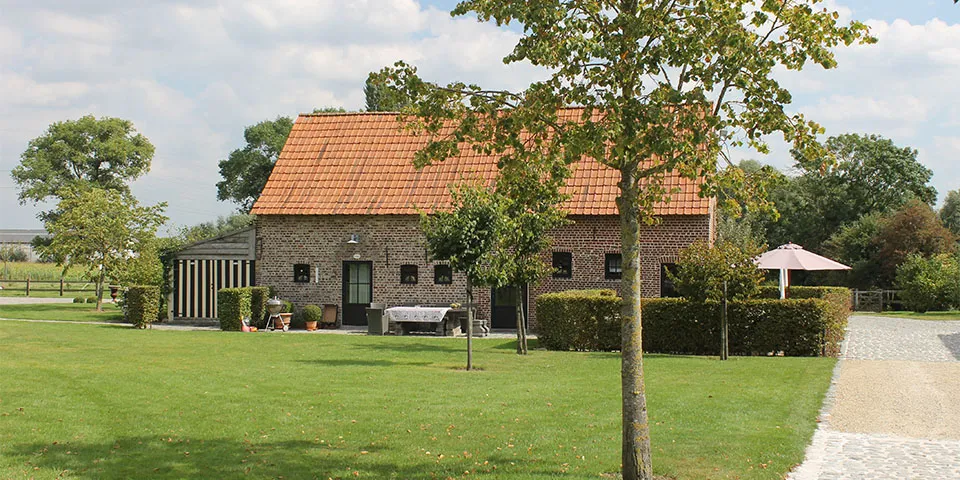
People who enjoy working outdoors often choose the countryside, away from the hustle and bustle, where there is still room to shape their home and garden as they wish. Sometimes the term ‘out of zone’ comes up. What does it mean? What should you look out for? Which permits do you need if, for example, you want to run a B&B in a vacant farmstead?
Vacant farmsteads offer plenty of possibilities
‘Correct zoning’
By definition, a property is considered out of zone when it ‘does not have the correct zoning under the current plan’. These plans include regional plans, general or special land-use plans, and spatial implementation plans drawn up by the government. They divide the territory of Flanders into residential, agricultural, industrial and recreational areas, among others. However, these main categories are further subdivided, with nuances that vary by region.
Although the first regional plans date back to 1972, historical circumstances had already led to situations in which, for example, businesses suddenly found themselves in residential areas and homes in agricultural areas. In other words, they were out of zone.
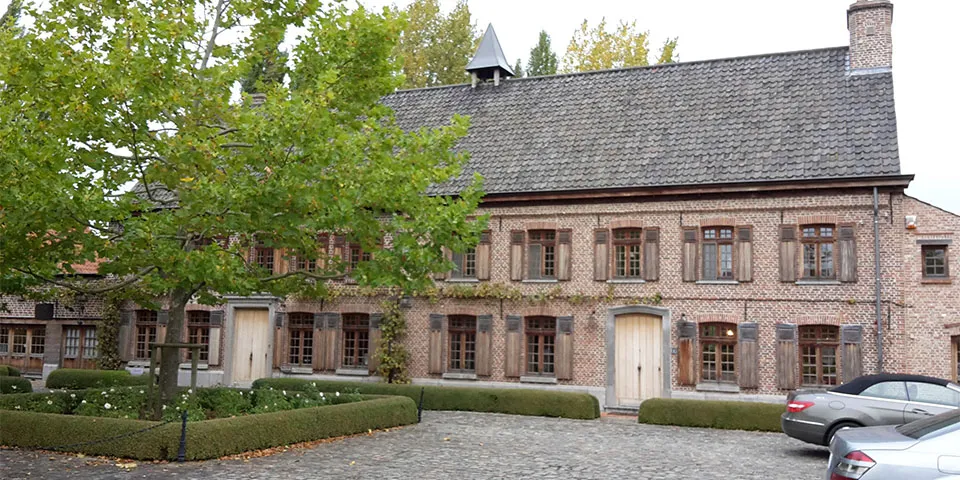
The timeless charm of an old façade.
No longer automatic
It is possible for someone whose main occupation is not farming to live in an agricultural area, provided the buildings have been properly permitted. However, if you want to extend, renovate or rebuild a building, or change its use, you must comply with the conditions set out in the ‘out-of-zone legislation’. If you have plans involving a property that is out of zone, it is therefore advisable to seek information in advance.
The possible new uses for agricultural buildings are listed in the decree on out-of-zone changes of use. These include office use, storage and rural tourism, as well as specific uses for heritage buildings. One common option is to change the use of farm buildings from agricultural to residential, so that the out-of-zone legislation can then be applied.
In the past, it was common practice for the out-of-zone legislation to be applied automatically when a farmstead was taken out of agricultural use following the cessation of farming, without any change of use being required. This has recently been subject to strict enforcement. Under circular RO 2017/01, a change of use from out-of-zone to private use must be applied for before the out-of-zone legislation can be used. This permit requirement allows the government to assess whether the change of use is appropriate for the site. The aim is to preserve vacant farmsteads that still have value for agriculture and horticulture for the sector as far as possible, and to assess whether they are in keeping with good spatial planning. The authorities are also seeking to reduce out-of-zone use, additional land take and the extent of surface sealing as far as possible. The permit requirement for this out-of-zone change of use is receiving added attention in light of the Beleidsplan Ruimte Vlaanderen, also known as the so-called ‘concrete stop’.
Expansion
To allow desirable out-of-zone activities on a temporary basis under a legally established framework, the draft Instrumentendecreet was approved at the end of 2019. One of the tools it includes is the use of activity covenants and contracts.
The purpose of this tool is to temporarily allow small-scale, non-agricultural economic activities that are not covered by the decree on changes of use, while retaining the existing zoning. Examples include a multi-unit dwelling or a hair salon in an agricultural area.
The scheme is designed as follows: first, the municipality and the Flemish Region must enter into a covenant setting out the policy framework, including the minimum requirements and area of application. The property owner can then enter into a contract with the municipality, setting out specific agreements within the framework of the applicable covenant. The contract with the municipality can run for a maximum of ten years. To qualify for an activity contract, the building or building complex where the activity is carried out must already exist, not be derelict and be largely authorised. The structure must also be located on a suitably equipped road and be physically suitable for the new activity.
A vacant farmstead in an agricultural area therefore offers plenty of possibilities today, and certainly in the future, for other uses, whether temporary or permanent. These options apply to existing buildings and are varied, so it is advisable to first list your own requirements and wishes, or those of your client, before demolishing any buildings. Be sure to discuss your plans with an expert so they can be assessed against the legal options.
Questions? Contact a DLV adviser via [email protected] or call the freephone number 0800 90 910.
Question about this story? Ask your question
Keep following this
Get an email when a new story is published. No account needed.
- SubjectGeneral







