









Permeable paving in the garden: smart solutions for infiltration, regulations and biodiversity
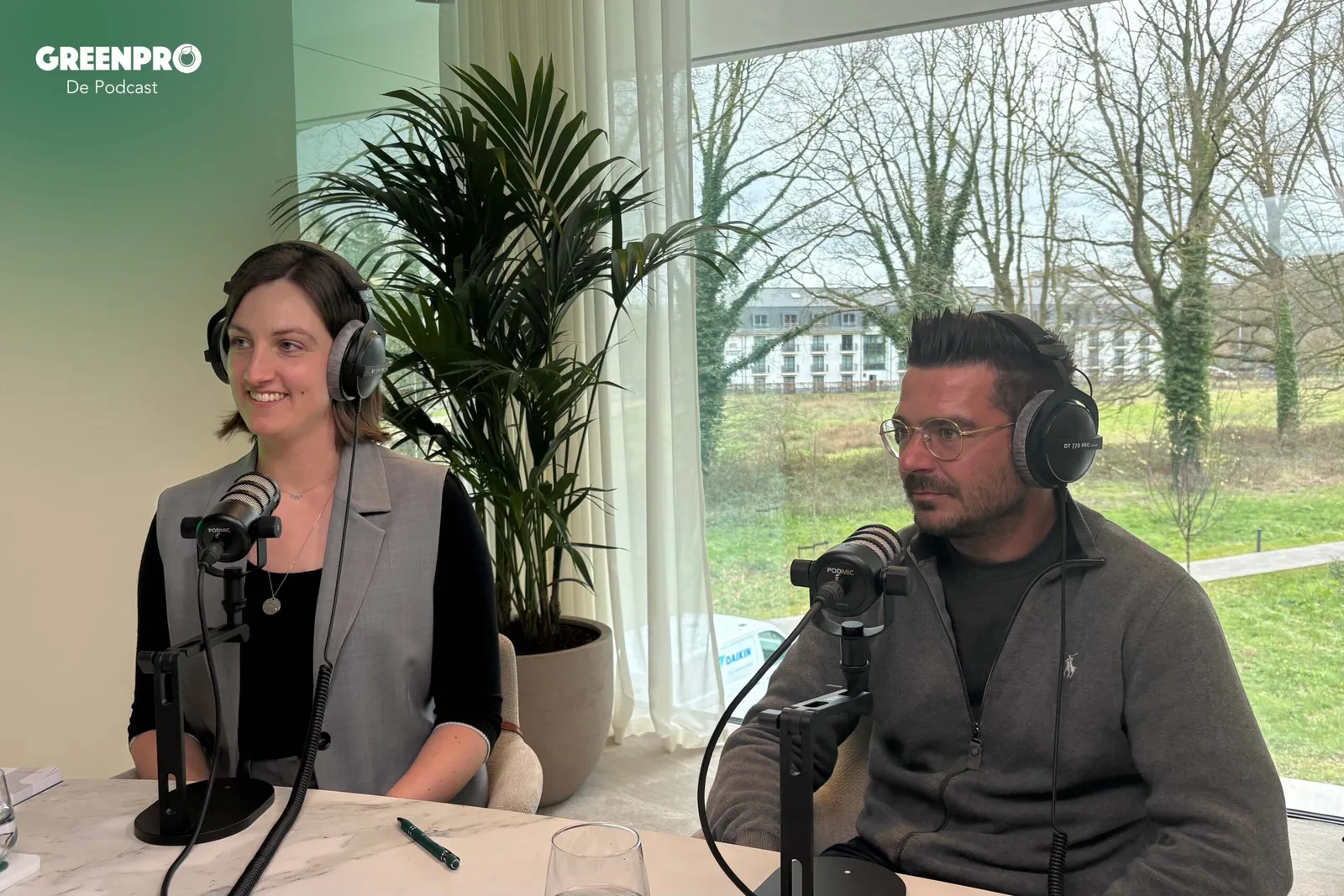
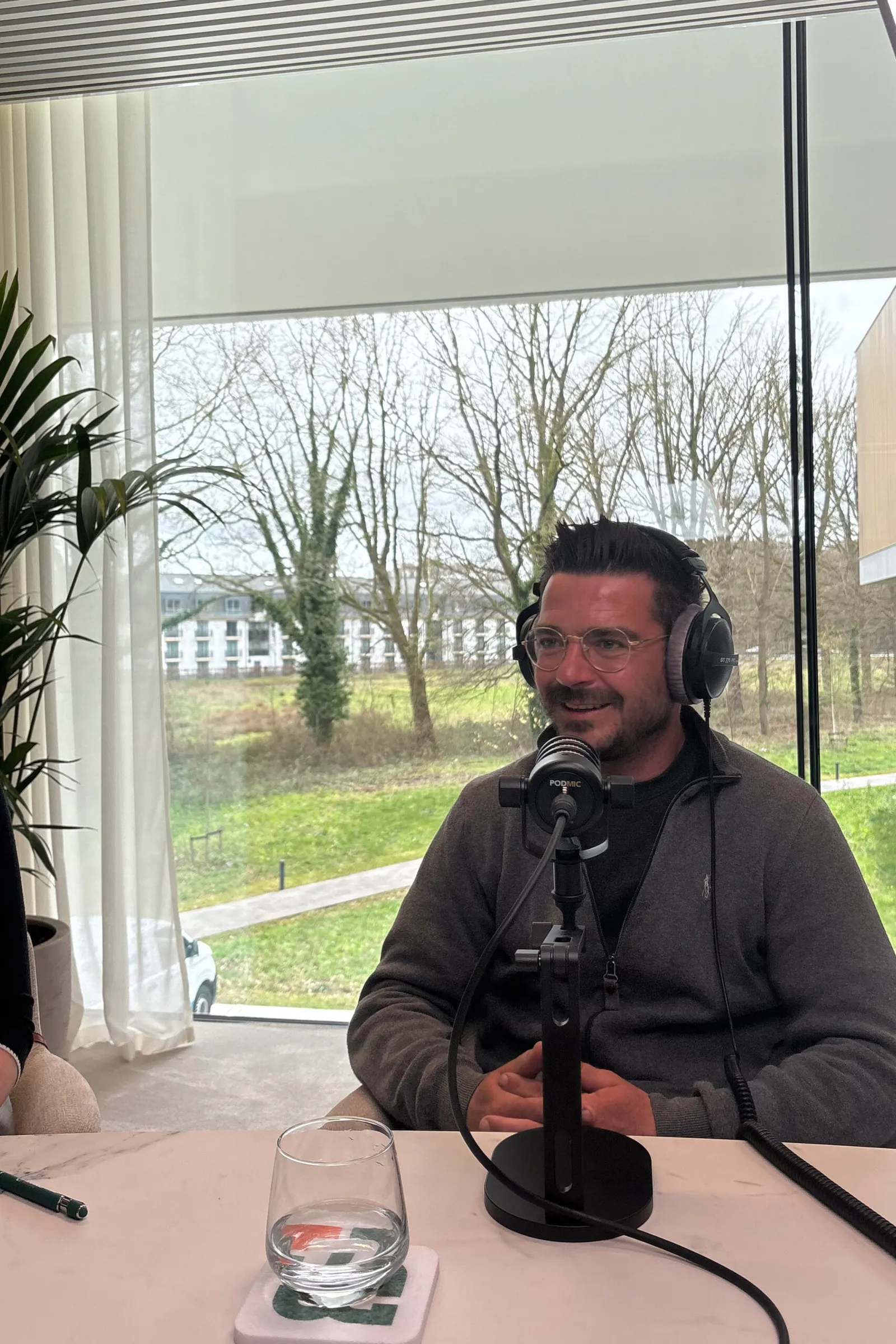
How can you combine paving with sustainable water management in garden and outdoor landscaping? In this episode of GreenPro, the podcast, host Kris Vandekerckhove talks to Jelene Verbruggen (ArtStone) and Giovanni De Vent (Go Green Gardens) about permeable paving, infiltration systems and the impact of regulations such as GSV Hemelwater. Discover how contractors and designers can use paving intelligently to improve water infiltration, increase comfort and strengthen biodiversity in the garden.

Een zakelijke vraag aan Artstone NV? Get in touch
Full transcript
All chapters (27)
- Introduction: water management and paving
- Introducing Jelene Verbruggen
- ArtStone’s advisory role
- Introducing Giovanni De Vent
- The discussion gets under way
- Paving as part of the solution
- Demand from the market
- Growing demand for permeable solutions
- Practical solutions
- Legislation and GSV Hemelwater
- The complexity of regulations
- The cost of permeable paving
- Limited space and alternatives to swales
- An innovative infiltration system
- Reaction to the infiltration system
- Confusion around terminology
- Regulations and practical application
- Discussion about the percentage of paved area
- The Tile Challenge and greener gardens
- The trend towards more biodiversity
- Balancing sustainability and comfort
- Using paving more intelligently
- A mindset shift for the sector
- Asking manufacturers for support
- How the sector has evolved
- Water management versus biodiversity
- Summary and conclusion
Introduction: water management and paving
Kris Vandekerckhove Welcome to the GreenPro podcast. Today we’re discussing a topic that is becoming increasingly central to garden and outdoor landscaping: the relationship between paving and water management. Too often, these are still seen as opposites. Paving as a problem, water as a challenge. Yet there are now plenty of solutions that can reconcile the two and even make them work together. But what does that look like in practice on site? Today I’m discussing it with two guests, Jelene Verbruggen from ArtStone and Giovanni De Vent from Go Green Gardens, which works mainly in and around Knokke. From design to installation, how do you design and install paving today that actively contributes to water management? And where do practical obstacles, or indeed opportunities, lie? Welcome, Jelene. Welcome, Giovanni. Jelene, perhaps you could briefly introduce yourself.
Introducing Jelene Verbruggen
Jelene Verbruggen Thank you. I’m Jelene from ArtStone. We specialise in natural stone, driveways and patios. We’re also very much a knowledge centre, helping contractors understand what to install, how to deal with the new legislation and what permeable products are available. That’s where we aim to stand out.
ArtStone’s advisory role
Kris Vandekerckhove So you also provide advice?
Jelene Verbruggen Yes, that’s right. Our advice centre provides free support to contractors and customers with questions about permeability and legislation.
Introducing Giovanni De Vent
Kris Vandekerckhove Giovanni, tell us a bit about yourself.
Giovanni De Vent I’m Giovanni, owner of Go Green Gardens. As you just said, we mainly work in Knokke and the surrounding area, in garden landscaping and maintenance.
Read the full transcriptCollapse transcript23 more chapters
The discussion gets under way
Kris Vandekerckhove Right, let’s start with the first question. We often hear people ask: when is paving still justified? But let’s turn that around: how can paving be designed today to actively contribute to infiltration and water storage? Jelene, what’s your conceptual view?
Paving as part of the solution
Jelene Verbruggen The point is that we’ll always need paving. We want to park our cars, not on a muddy strip but on a driveway. We want access to our front door. We want to enjoy our patio and have a comfortable outdoor space. But permeable paving blocks and slabs can help address water-related problems. They have an inherent sponge-like capacity, temporarily storing rainwater before allowing it to infiltrate the ground. That is also what the legislation requires today: rainwater must be able to infiltrate where it falls.
Demand from the market
Kris Vandekerckhove Giovanni, are you seeing that in practice already?
Giovanni De Vent I’m seeing increasing demand from customers for permeable paving. This is partly down to requirements, but above all to people’s personal convictions. More and more people are thinking about it.
Growing demand for permeable solutions
Kris Vandekerckhove So customers really do want permeable paving?
Giovanni De Vent Yes, absolutely. Not everyone, but more and more people do.
Practical solutions
Kris Vandekerckhove And which solutions are really making a difference today, Jelene?
Jelene Verbruggen Essentially, customers can choose the look they want, and we can make it permeable. They can opt for porous paving blocks or water-permeable systems that allow water to reach the ground through the joints. You can use grass pavers or infiltration systems that store water and let it infiltrate. There are plenty of solutions on the market.
Legislation and GSV Hemelwater
Kris Vandekerckhove There’s also GSV Hemelwater. Is that something you have to deal with, Giovanni?
Giovanni De Vent There are more and more rules. Sometimes people can’t see the wood for the trees. In those cases, we turn to manufacturers for guidance.
The complexity of regulations
Kris Vandekerckhove Does that ring true for you, Jelene?
Jelene Verbruggen Absolutely. We answer questions from customers and contractors every day: what can I still install, how much paving is allowed, does it have to be permeable? The legislation has changed, and it’s understandable that not everyone can keep up.
The cost of permeable paving
Kris Vandekerckhove Is cost also a concern?
Giovanni De Vent I think the price difference compared with conventional paving is small. It’s usually in the same ballpark.
Limited space and alternatives to swales
Kris Vandekerckhove Many projects don’t have room for conventional solutions such as swales. Are there alternatives?
Giovanni De Vent I think Jelene can explain that better.
An innovative infiltration system
Jelene Verbruggen We developed Fluvio-stone. It’s an infiltration system beneath the paving, essentially a swale under your driveway or patio. It consists of a porous concrete paving block with a cavity that stores water during heavy downpours and then allows it to infiltrate slowly.
Reaction to the infiltration system
Kris Vandekerckhove It slowly seeps into the ground. Ah, nice. I think we’ve all learnt something there, Giovanni.
Giovanni De Vent Exactly. When a question comes up, we’ll give them a call.
Confusion around terminology
Kris Vandekerckhove There’s also a lot of confusion around water permeability, water passing through paving and water storage.
Regulations and practical application
Giovanni De Vent Is that something customers are thinking about too, or is it still mainly about regulations? Well, the regulations are in place. One way or another, customers will have to apply them if they want to install paving and comply with their planning permission.
Discussion about the percentage of paved area
Kris Vandekerckhove But you had a solution for that, Giovanni? The 30%?
Giovanni De Vent Well, ‘solution’ is putting it strongly, but at the moment they say you can pave up to a certain percentage. But what counts as paving? Is it a paving block that lets water through, a grass paver or a pebble? A lot also depends on what each municipality requires. But I think if we had a system where, for example, you could pave up to a certain percentage with impermeable paving, but exceed that 30 or 40% if you used permeable paving, that would help. So you could pave more if the surface is permeable than if it isn’t. Of course, it still needs to be functional. The idea isn’t to cover the whole garden with water-permeable paving, but if it’s functional and you need it, perhaps some leeway could be allowed.
The Tile Challenge and greener gardens
Kris Vandekerckhove Giovanni, have you had many questions about the Tile Challenge in recent years?
Giovanni De Vent Yes, more and more. I think people are increasingly recognising the value of greenery and its aesthetic appeal, especially in smaller gardens. Those little back gardens used to have a washing line and a flint-paved surface. More and more people are choosing greenery, partly because of the TV programmes they watch and the trade publications they read. It’s simply lovely to have a bit of green of your own in a private space.
The trend towards more biodiversity
Kris Vandekerckhove Are you seeing a shift towards wilder gardens, with more flowers and more wildlife?
Giovanni De Vent Very much so, very much so. A lot of it is down to the media campaigns that have been launched. People also realise that we’re at five to twelve. There really are customers who want to do their bit. Partly because it looks good, but also because it makes them feel good to say: we’re doing our bit for biodiversity.
Balancing sustainability and comfort
Kris Vandekerckhove Of course, we want sustainability, but we also want comfort. And Jelene, you know exactly how solutions can help strike that balance.
Jelene Verbruggen Yes, that’s right. We always look for greenery that can bear loads. That means combining depaving where paving isn’t needed with smart paving where we do need comfort and the paved surface serves a purpose. It’s about finding the right balance between the two.
Using paving more intelligently
Kris Vandekerckhove So, should we depave more, or use the paving we still need more intelligently?
Jelene Verbruggen Use paving more intelligently and consider which type is needed in each location.
A mindset shift for the sector
Kris Vandekerckhove If you could share one mindset shift with designers and contractors when it comes to water and paving, what would it be?
Jelene Verbruggen I’d urge people to think less in black and white, or in our context, less in terms of greenery versus paving. It’s not an either-or, because we need both. You still want the comfort of your patio. You still want access to your home and garage. So paving will always be necessary. On the other hand, we obviously need to combine it with greenery. We need to move towards a combined system: greenery that can bear loads.
Asking manufacturers for support
Kris Vandekerckhove To wrap up, what would you like to ask manufacturers to do to support you on site?
Giovanni De Vent I think manufacturers are providing us with more and more support. Today, we get information from all sides and suppliers call us to say they have a new solution for this or that, and ask if they can come and present it. That’s useful for a contractor. You have such a wide range to choose from and recommend to your customer. You can get started, and then it’s up to the customer to choose what they find most attractive and practical, because all the options achieve the same thing.
How the sector has evolved
Kris Vandekerckhove So the trial-and-error days are over?
Giovanni De Vent In the past, you had to work it all out for yourself. Sometimes it went well, sometimes it went wrong. But suppliers now provide so much information, and even offer support with the first installation, that it’s almost impossible to get it wrong.
Water management versus biodiversity
Giovanni De Vent But I’d also like to point out that water permeability is one thing, and biodiversity is another. You can make the whole garden permeable, but if there’s no greenery or planting, that doesn’t achieve much either.
Kris Vandekerckhove: Indeed, biodiversity. Because of course, we want the bees and butterflies to be able to survive.
Summary and conclusion
Kris Vandekerckhove: The main thing to remember is that the debate need not be about paving versus green space, but about making smarter use of the space we have. By designing differently, choosing materials and systems more consciously and applying them correctly, we can already make a big difference today. The combination of vision and practice is crucial here. So thank you, Jelene, and thank you, Giovanni, for this conversation and for sharing your insights. Thank you for listening to this podcast from GreenPro, and until next time.
Companies in this story
Keep following this
Get an email when a new story is published. No account needed.
- ThemeGreen space for everyone
- SubjectGeneral
- CompanyArtstone NV







