









Planters four metres in diameter on renovated roofs
Text Armand LandmanImage FURNS
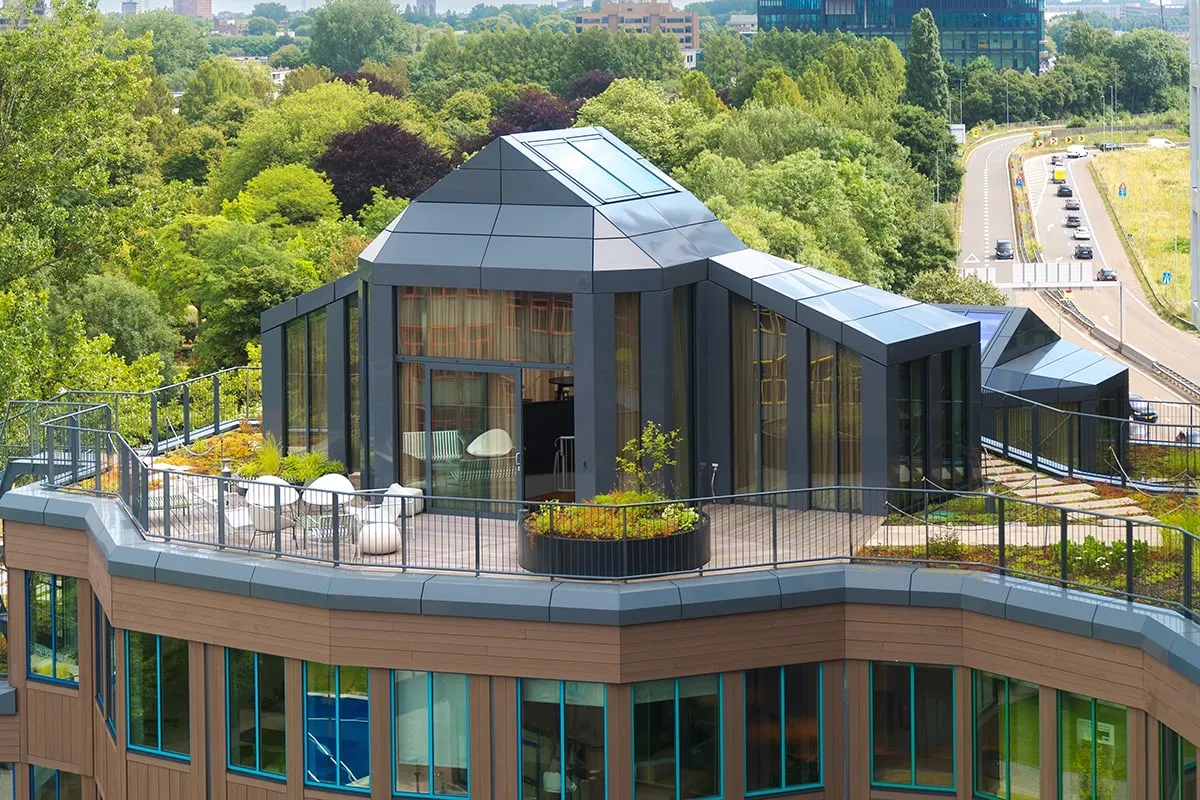
Completed in 2023, Tripolis-Park on Amsterdam’s Zuidas is an excellent example of renovation and new-build work coming together in high-quality architecture. Led by architecture firm MVRDV, the original work by architect Aldo van Eyck has been renewed with respect for his vision of architecture as a place for people to meet. Alongside a new, large glass façade that protects the park behind it and the office buildings from noise from the adjacent A10 ring road, the roofs of the renovated and new buildings have been transformed into green oases. FURNS and Awood played an important role, supplying bespoke solutions on behalf of Van Kessel Sport en Cultuurtechniek, part of Gebr. Van Kessel.
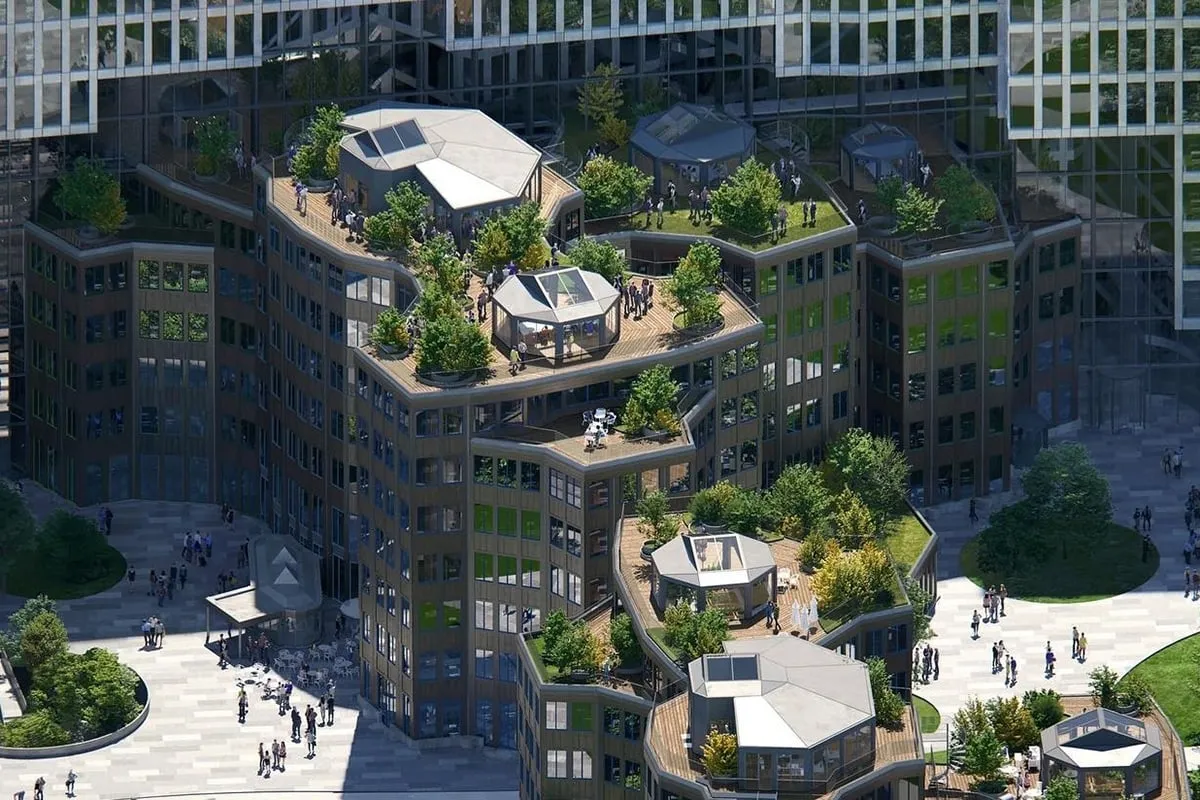
The building complex next to the Olympic Stadium, which since last year has housed Uber and law firm De Brauw Blackstone Westbroek, among others, features three different types of roof.
The new-build Het Venster has a 3,000 m² retention roof with sedum and a central strip of PV panels on a raised steel structure.
The upgraded parking deck at ground level features several undulating sections and round planters with trees and shrubs.
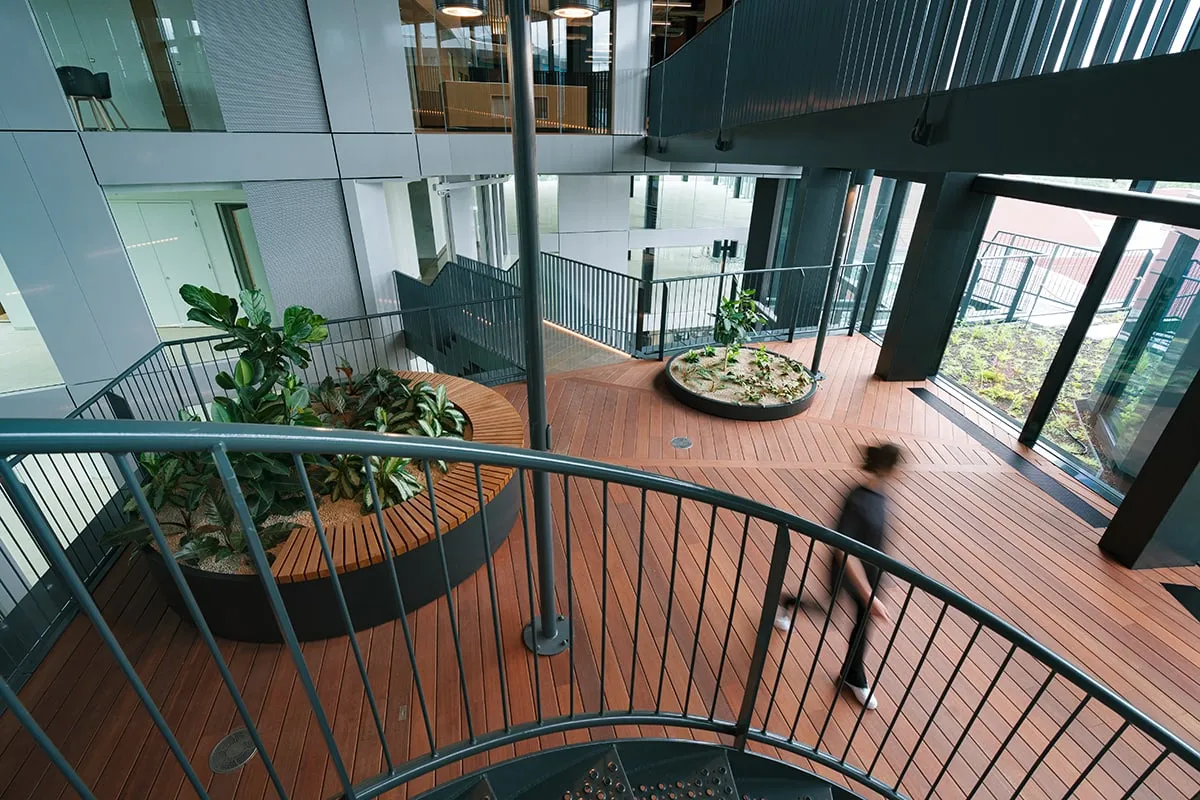
The renovated towers of the original Tripolis also have green roofs with an exceptional design. Awood supplied and installed the decking, while FURNS provided the planters integrated into the floors. Mathijs van Haren, Technical Product Manager at FURNS, explains: “We supplied a wide range of aluminium planters, with seating and waterproofing features. Some planters are as much as four metres in diameter and had to meet strict requirements, including watertightness and durability.”
Specific requirements
The complex logistics and precise bespoke work using standard FURNS components posed a challenge, particularly given the project’s specific requirements. “Everything had to be installed across several floors, which created logistical and technical headaches,” says Van Haren. “Our collaboration with Van Kessel went smoothly and enabled us to meet the high quality standards.”
The green roofs on the renovated towers, named ‘Roof of the Year’ in 2023, are built on a steel structure to support the additional load. The decking and planters from FURNS and Awood contribute to both the functionality and appearance of the roofs. “The clean design and luxurious look were key priorities,” says Van Haren.
A total of 750 m² of decking was built on timber joists to create areas for people to sit and enjoy the greenery. After careful measurement, the joists were cut and notched at Awood’s factory to fit the steel beams. The untreated hardwood decking boards were also cut to size and numbered in advance. Complete packages were lifted onto each roof. FURNS’s green elements were then installed on the decking. Plants and shrubs with an irrigation system are set in 15 to 25 cm of substrate, with raised sections formed using EPS blocks. The green areas were then edged with edging boards and galvanised steel L-profiles.
High-quality materials
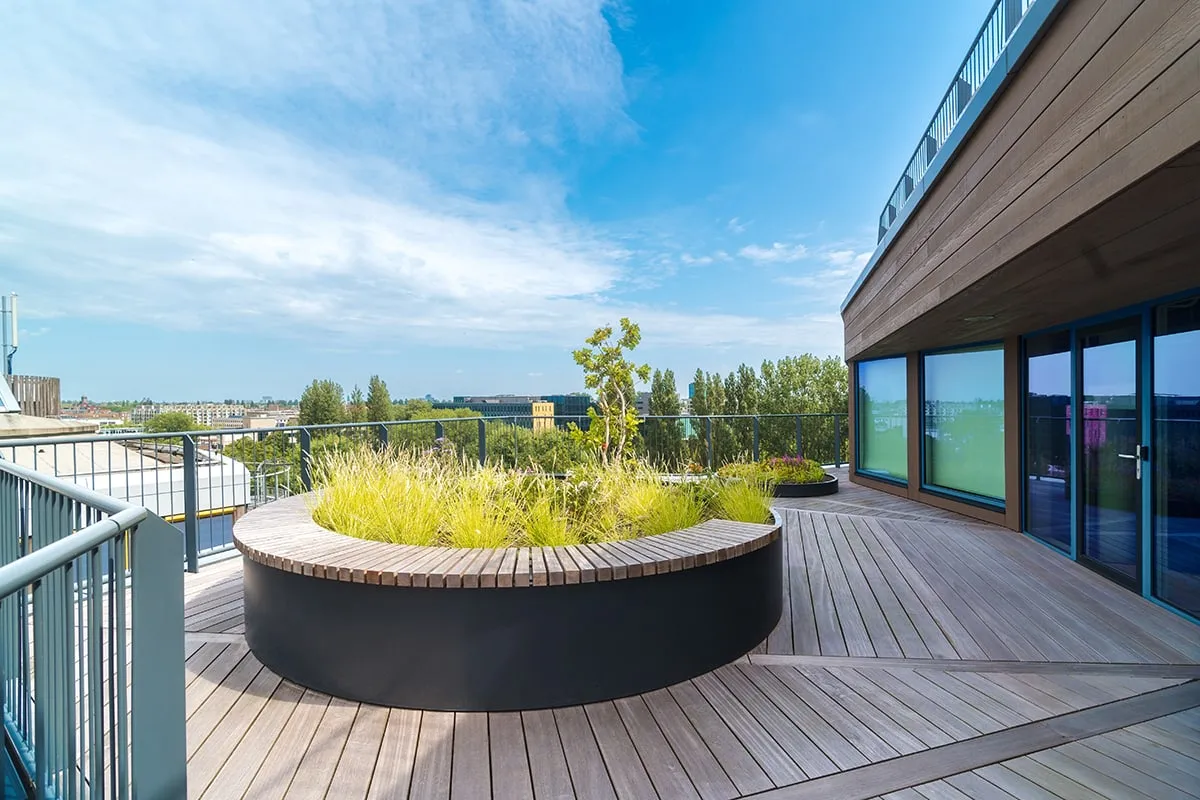
“All the planters were made to measure and had to withstand all weather conditions. This meant using high-quality materials such as aluminium, which is both lightweight and durable,” explains Van Haren. “The planters also had to be watertight, a requirement that does not apply to all the planters FURNS produces. This called for close coordination with the client, Van Kessel.”
“It was also important for the planters to be large enough for small trees and larger shrubs, without restricting their growth,” says Van Haren. “They were designed with reinforcements to ensure they could support the weight of both the plants and the substrate. This means the roof gardens can not only make a visual impact, but also last for many years.”
Question about this story? Ask your question
Keep following this
Get an email when a new story is published. No account needed.
- SubjectGeneral







