









Playful paths and patios with flagstones
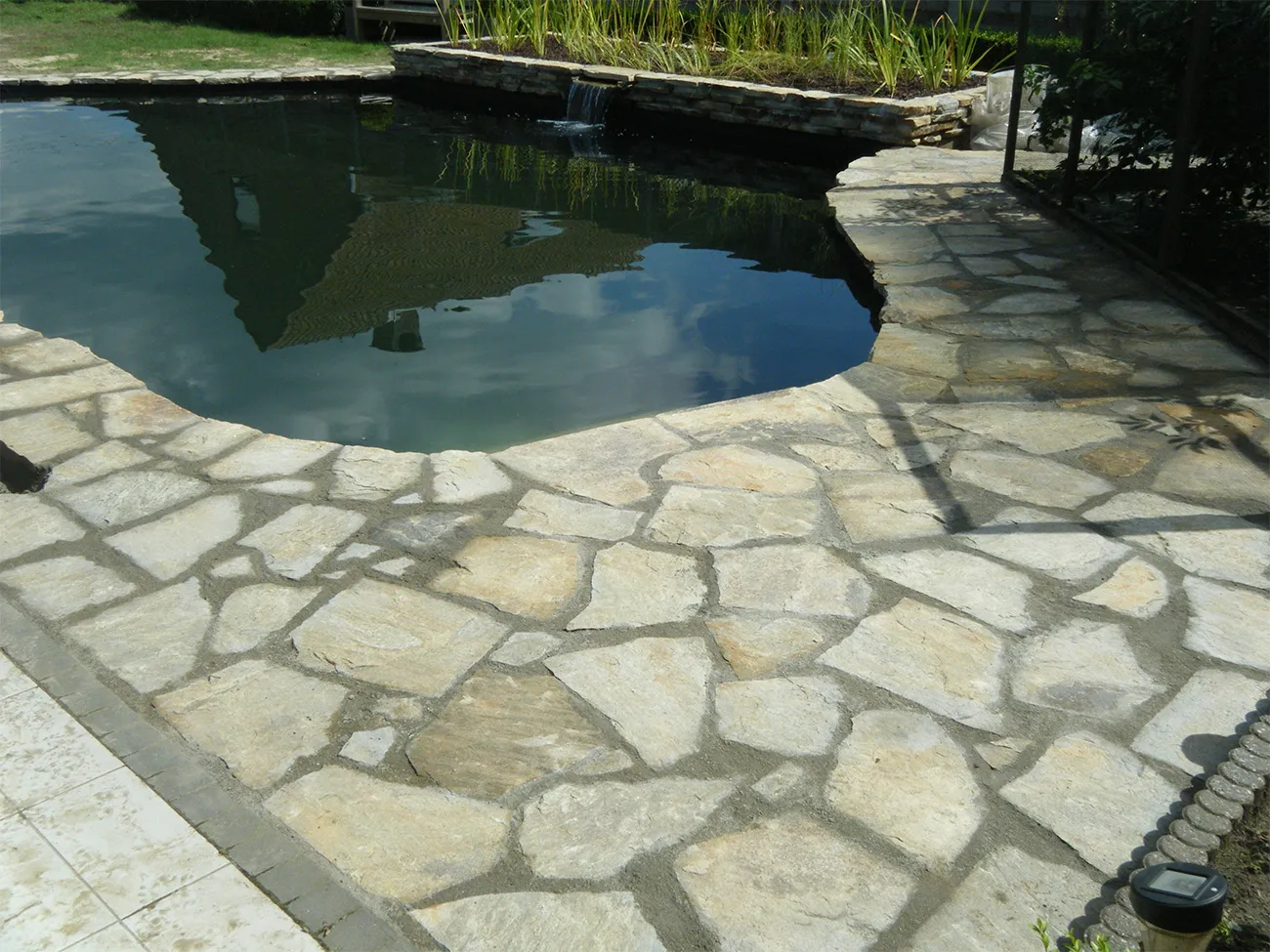
Not everything has to be neat and perfect. More and more people are opting for an organic, perhaps even slightly wild-looking garden.
Think of the many wildflower meadows, prairie gardens and small Japanese-inspired oases. The perfect material for bringing patios and paths into line with this natural concept? Naturally split, irregularly shaped flagstones.
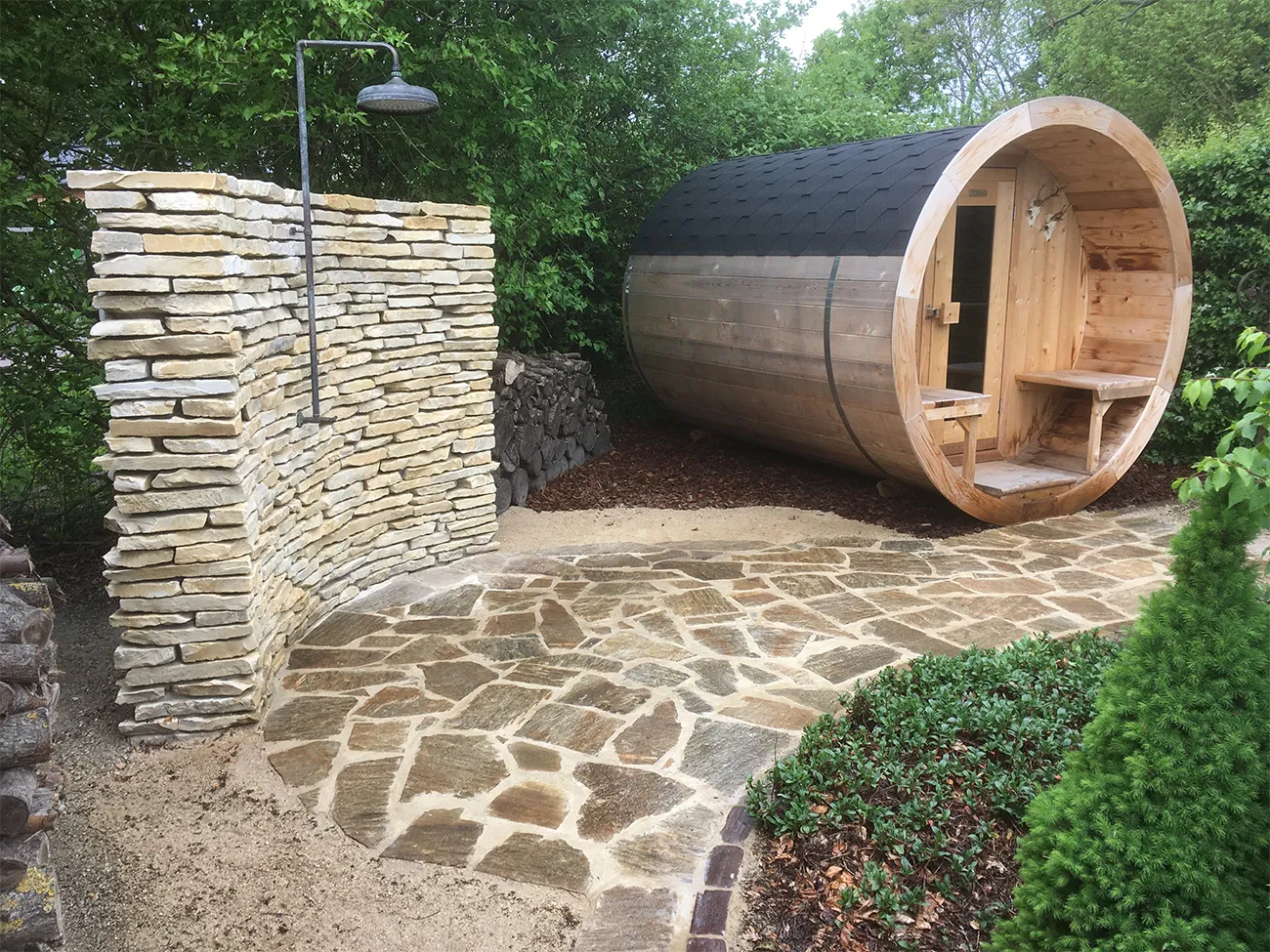
Flagstones are naturally split stones. They are often layered stones such as slate, but flagstones are also made from igneous rocks such as kavalas and bluestone. Unlike conventional paving slabs, flagstones have no standard shape or size. Every stone is different. It is precisely this unique, irregular quality that makes them so appealing, not least in wild areas, prairie gardens and wellness settings, but equally in a country garden, for example. For the installer, however, the huge variety of flagstones can present an extra challenge.
Know what you are buying
“The challenge often starts with the purchase,” says Els Meynen of garden materials supplier E.L.S. Garden. “Flagstones are not simply sold by area, but rather by weight. What is more, when we talk about particular sizes, we are referring not to the stones’ average dimensions, but to their average thickness. A 30/50 kavalas flagstone will therefore be between 30 and 50 millimetres thick, but there can still be huge differences in size and area.”
To make it easier to buy the right quantity of flagstones for the area required, E.L.S. Garden offers them on pallets, layer by layer. “The stones are fitted together as closely as possible on a pallet covering roughly one square metre. This makes it easy to work out how many layers you will need for a particular garden project, depending on the joint width you want.”
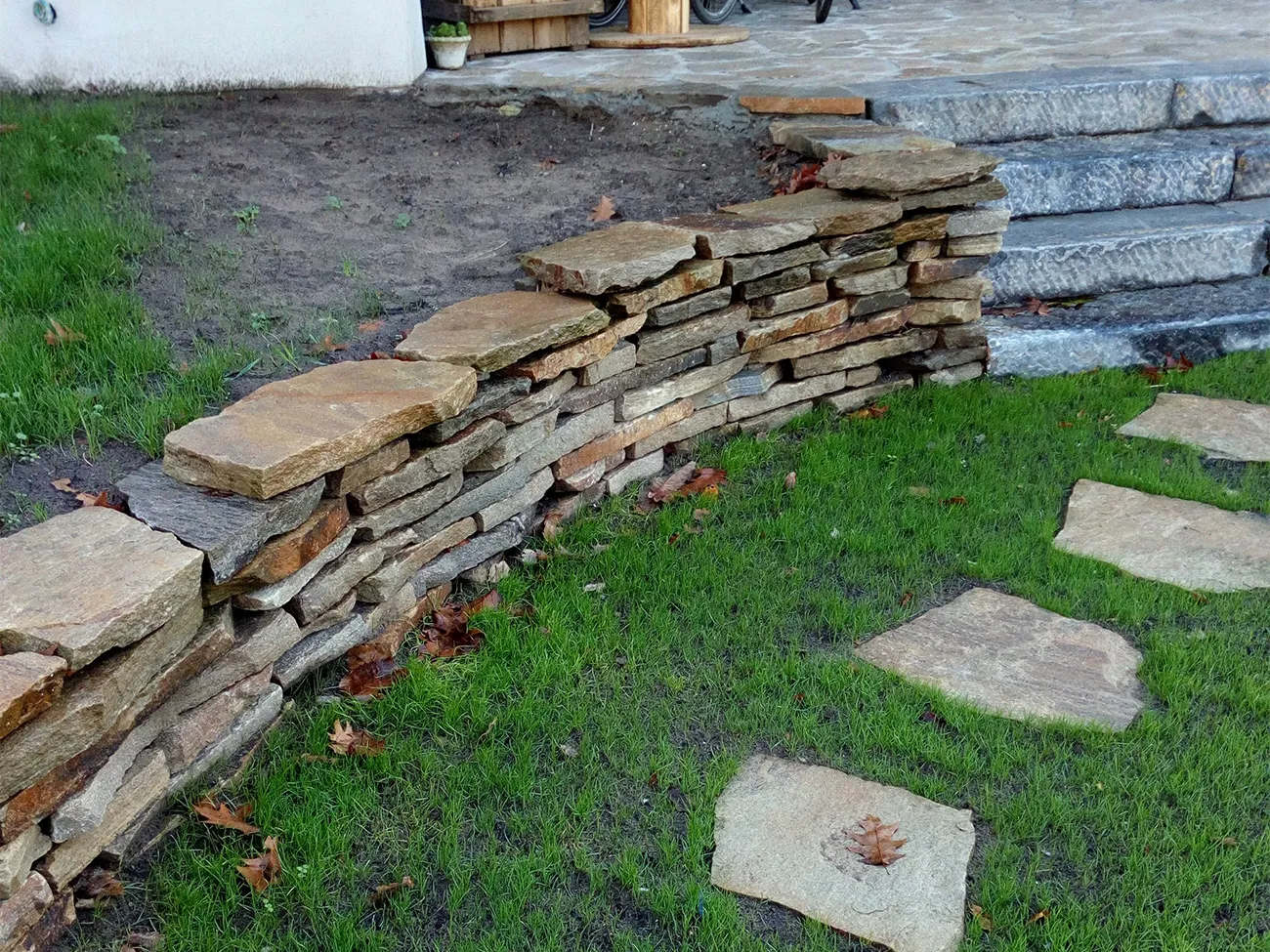
It is harder to estimate how much jointing material you will need. “Joint widths can vary enormously, depending on how well the different stones fit together. In one place, for example, a 1-centimetre joint may be enough; elsewhere, you may need 8 centimetres of jointing material. This often only becomes clear during installation, making it virtually impossible to calculate in advance.”
Work to the string line
Flagstones can be used either as individual stepping stones or to pave an entire patio. “Stepping stones are often laid in gravel, optionally with a thin layer of cement slurry underneath for stability. The surrounding area can then be filled in attractively with gravel, lava chippings or even plants. For larger patios or continuous paths, a mortar bed is generally preferred, although not every type of flagstone is suitable for this. Yonne flagstone, for example, is soft and semi-frost-sensitive. In other words, the stone will absorb moisture from the cement, which can cause it to crack in freezing conditions. This type is therefore best laid on chippings.”
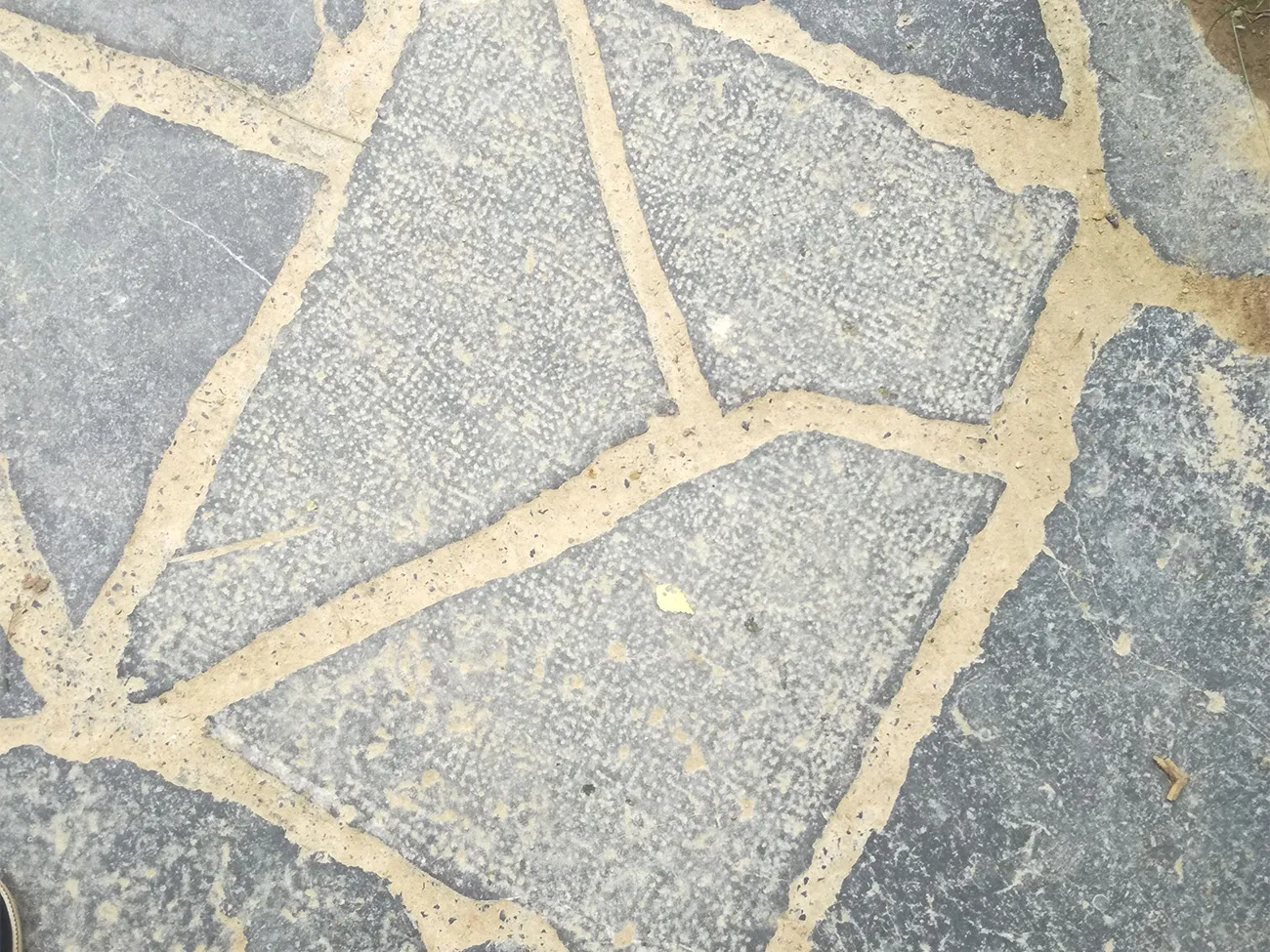
To create a neat, continuous surface, for example on a patio, the stones are fitted together as closely as possible. “If there are still gaps that are too large between some of the stones, you can break off small pieces of stone and fit them in at the end.”
However, according to Els Meynen, fitting the flagstones together is not the biggest challenge. “It is mainly the variations in thickness that need extra attention. You will not get far with an even mortar bed. As with cobbles, you need to work to a string line or straightedge. That is the only way to achieve a level surface.”
Question about this story? Ask your question
Companies in this story

Keep following this
Get an email when a new story is published. No account needed.
- ThemeWater and hard landscaping in the garden
- SubjectGeneral
- CompanyE.L.S. Garden







