









Rainwater regulations as a driver of creative design
Text Eva Goossens
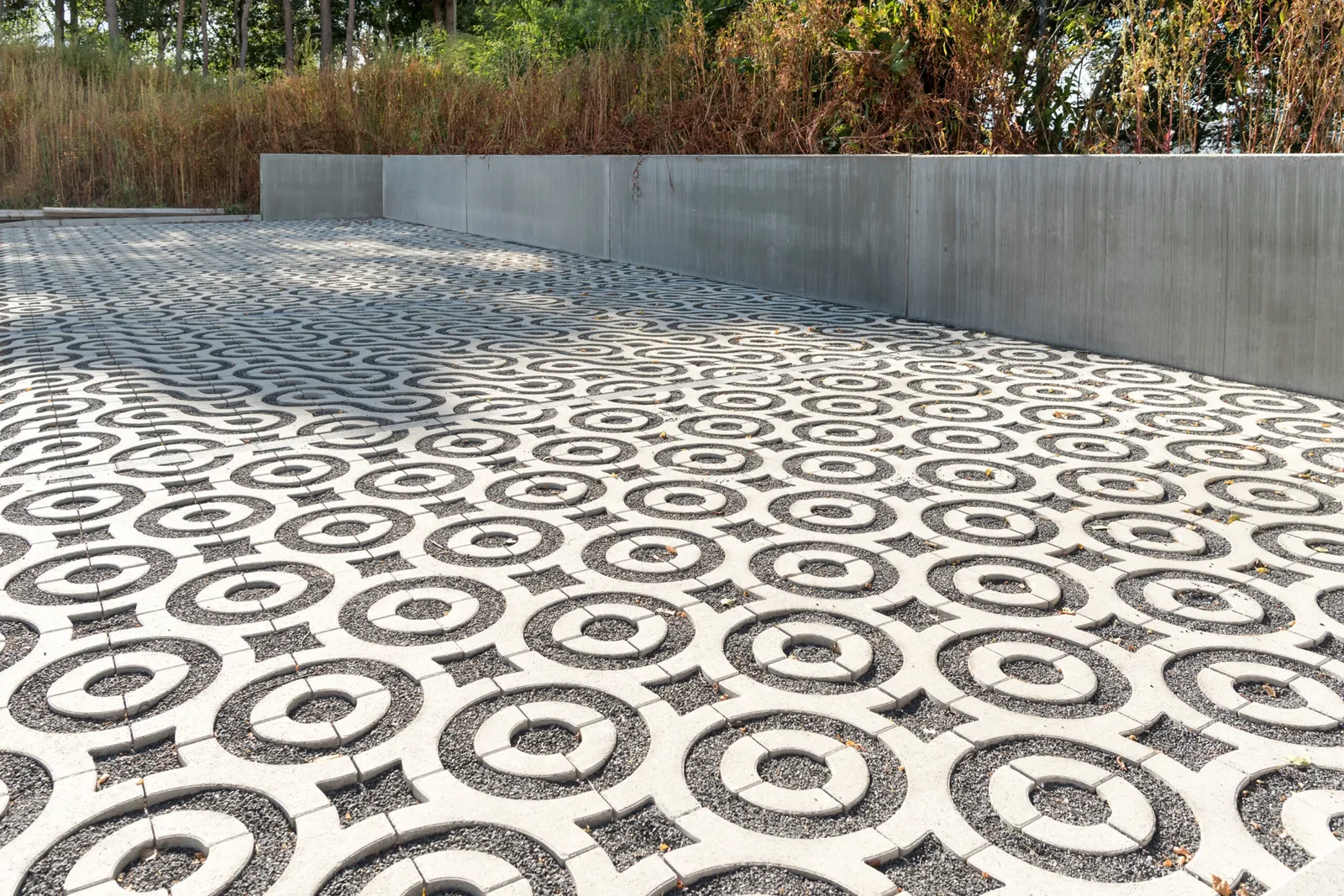
Flanders’ rainwater regulations and stricter water management rules are sometimes seen as a brake on creativity, as though design and sustainability are inherently at odds. Yet practice proves otherwise. There is now a wide range of paving alternatives that convincingly combine functionality, sustainability and aesthetics. An architectural look at water-permeable and permeable paving in 2025.
For architects, the regulations present a technical challenge, both in public spaces and at residential scale. When installing a new driveway, patio or car park, and often when renovating or extending one, sufficient infiltration capacity must be provided on the site itself. As weather conditions become increasingly extreme, managing rainwater thoughtfully is more urgent than ever. Alongside traditional solutions such as gravel, crushed stone and conventional grass pavers, there are now systems that also offer architectural value in aesthetic terms.
Water-permeable pavers
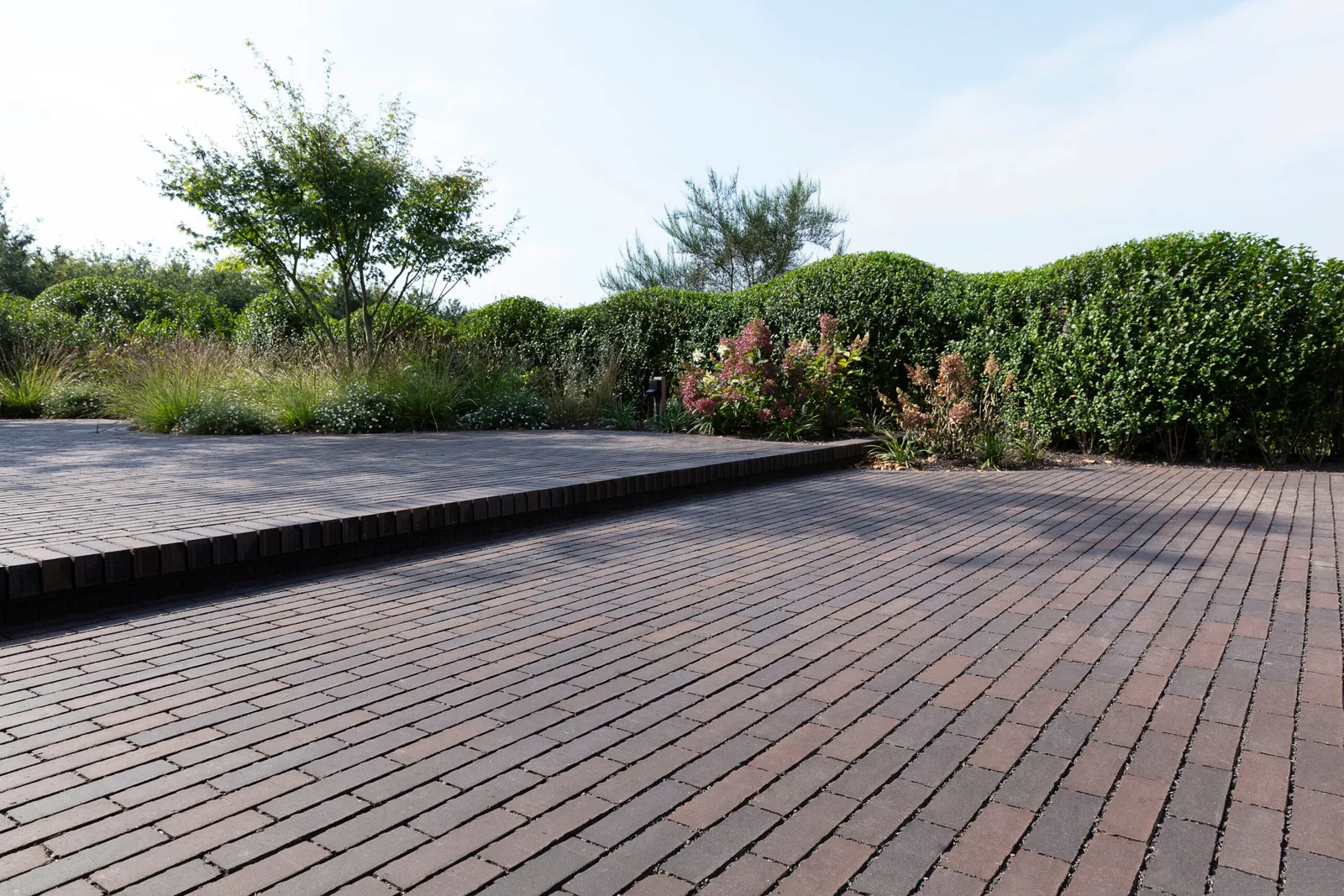
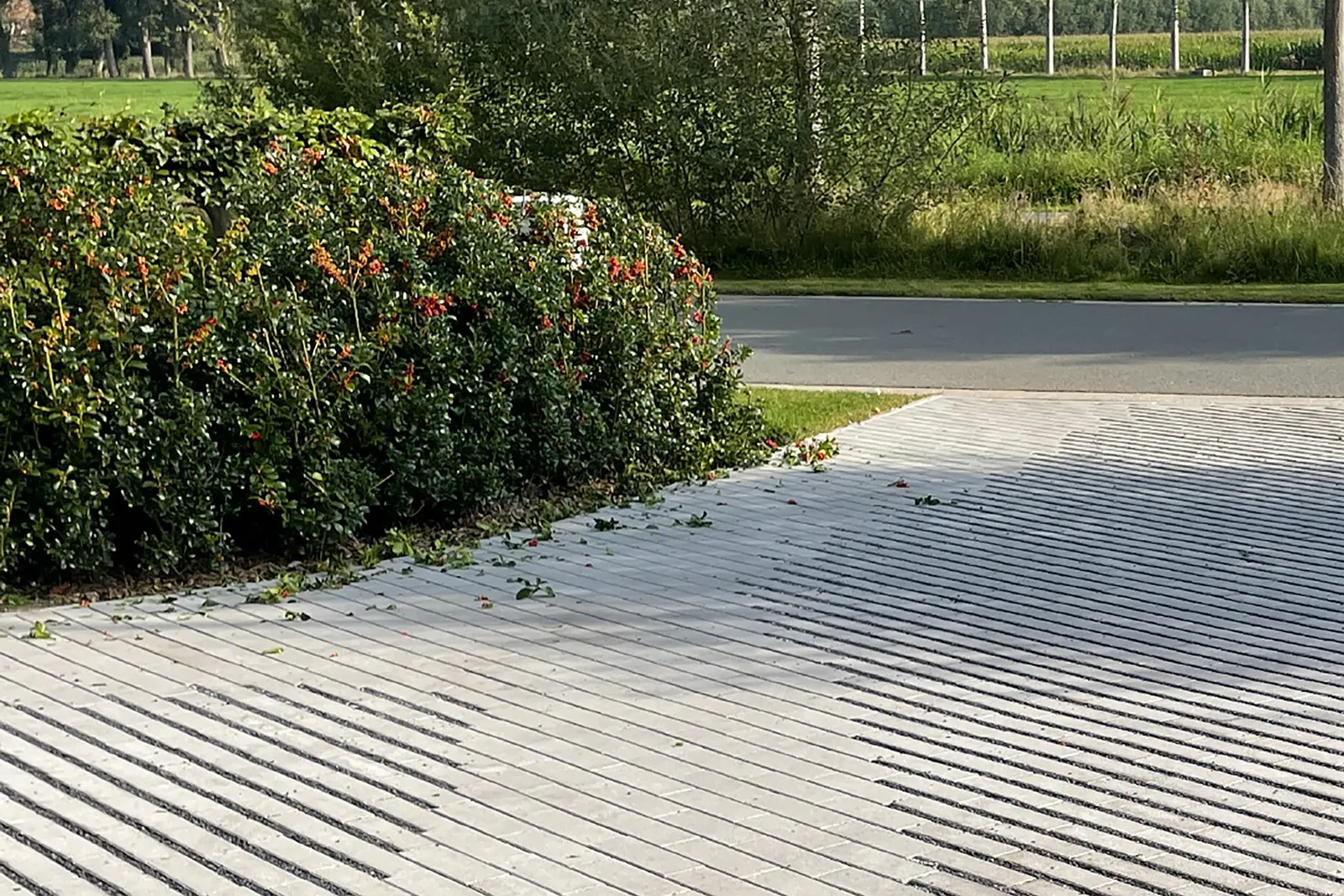
The average Fleming remains attached to pavers for their driveway. The alternative is water-permeable versions with integrated spacers, combined with a free-draining sub-base. They are now available in concrete and authentic clay, in a range of sizes and colours. The product range is also evolving in response to demand for aesthetics and sustainability. Lower clay pavers have now come onto the market, requiring less material and therefore reducing both the environmental footprint and the cost. When relaying an existing paved driveway, path or patio, reusing the pavers remains the most sustainable choice.
Loose spacers also make it possible to lay reclaimed pavers correctly, keeping the joints sufficiently open to meet Flanders’ infiltration standards. The size of the paver is an important factor here. The larger the paver, the fewer joints there are per square metre, and therefore the smaller the open area available for water infiltration.
Creative patterns
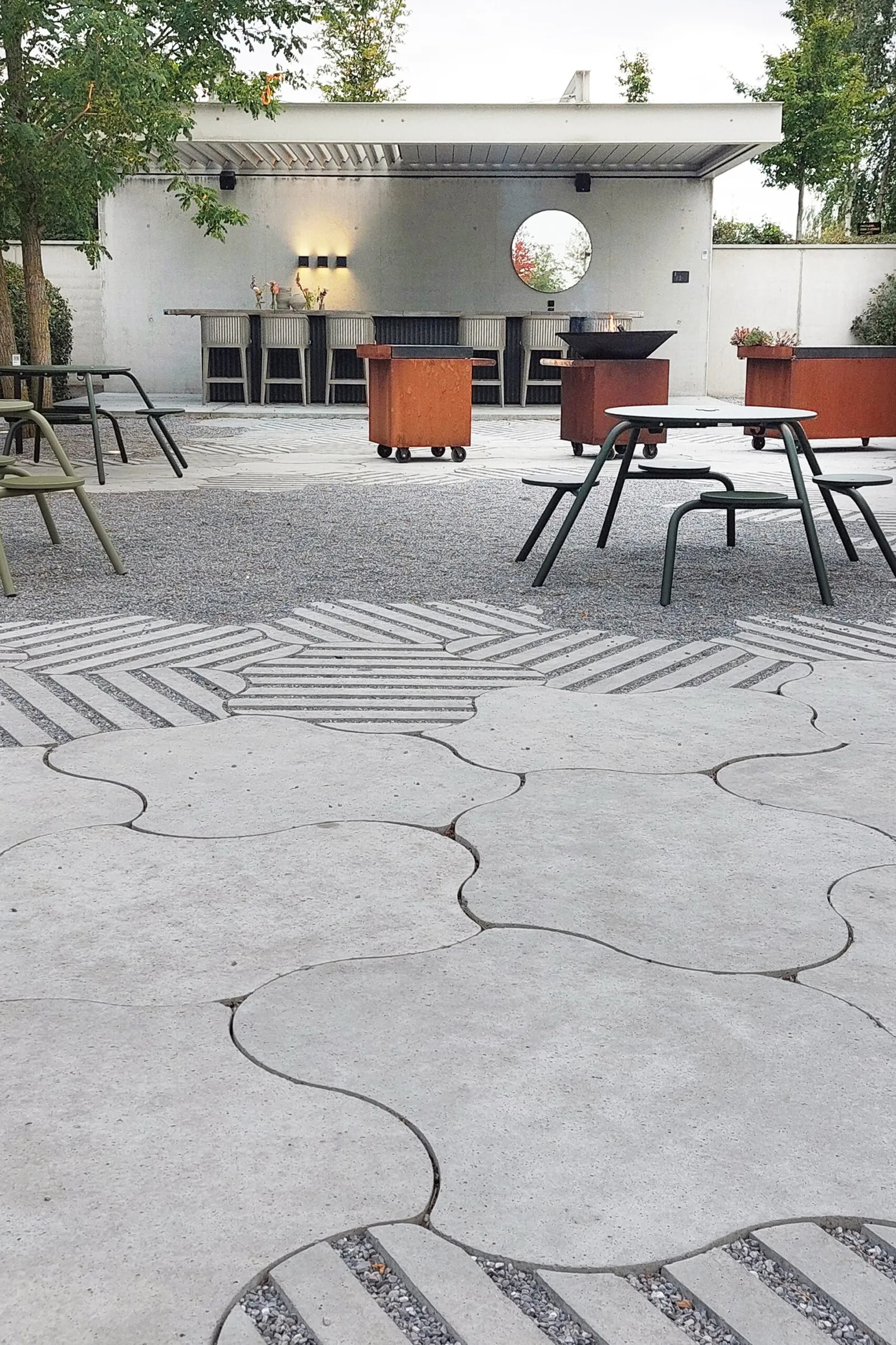
Water-permeable and original? The two go together perfectly. Alongside pavers, there are various concrete elements and grass pavers that lend themselves to creative patterns, including in residential projects.
This gives a driveway or patio its own character. Grass pavers are now available in versions that go beyond mere functionality and also have clear design appeal. Their robust concrete structure provides load-bearing capacity, while the infill can be chosen freely: traditional grass or gravel, but also herbs or clover. This gives every project a unique look.
Aggregates with a binder
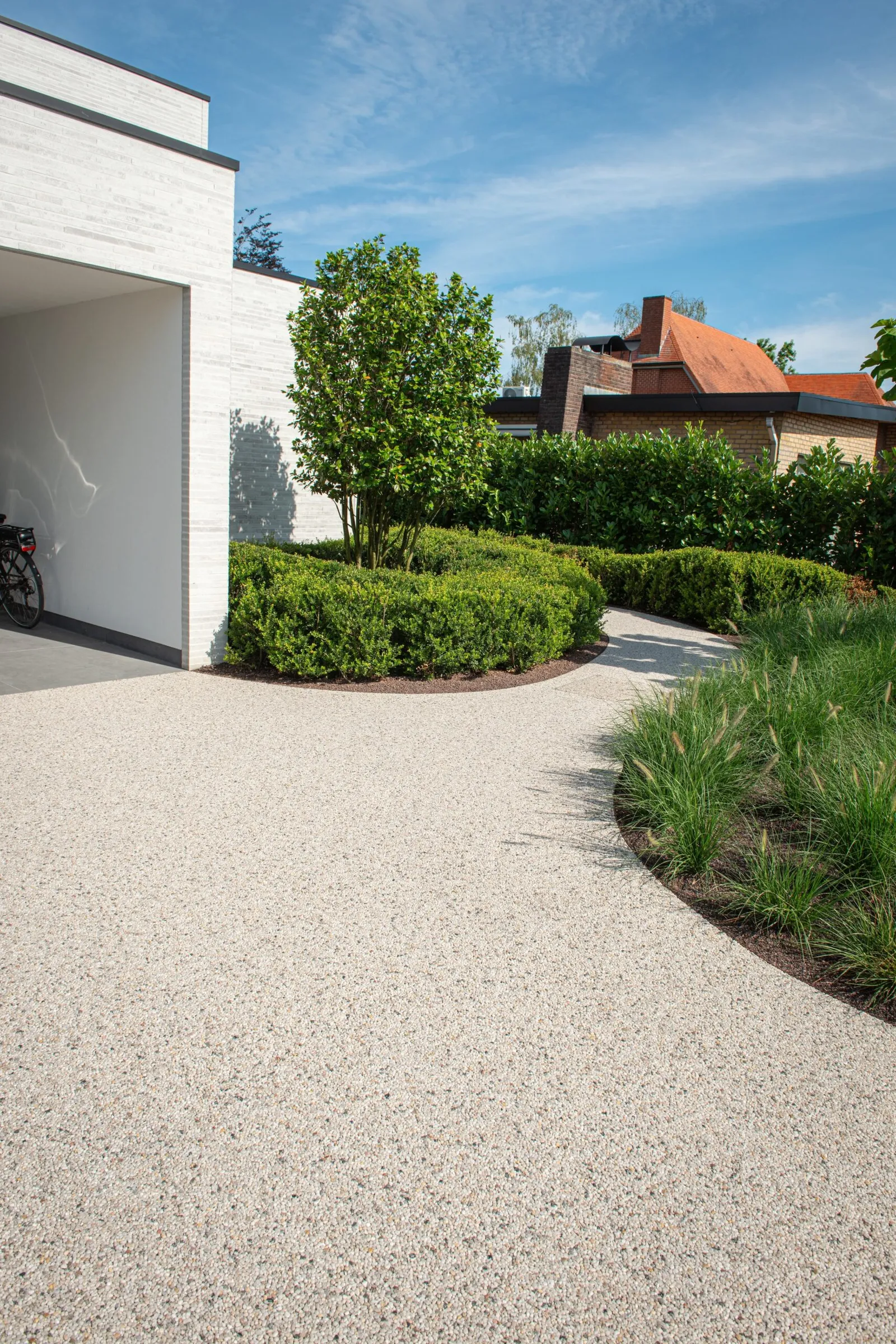
Alongside water-permeable solutions, there are also fully permeable alternatives. One example is paving made from aggregates bound together with a binder such as resin or polyurethane. The result is neither loose crushed stone or gravel nor a system with open joints, but a firm, even layer that still allows water to pass through. The paving can be shaped entirely to suit requirements: seamless, in a wide range of colours and, if desired, with graphic patterns or even logos. Paths can flow organically into the architecture and garden. The result is an exceptionally neat paved surface that remains functional.
This type of paving also helps suppress weeds, provided it is brushed regularly or cleaned with care. Water management thus becomes not a constraint, but a source of inspiration for architectural design that brings ecology and aesthetics together.
Question about this story? Ask your question
Keep following this
Get an email when a new story is published. No account needed.
- ThemeHealthy soil and smart water management
- SubjectGeneral







