









Retention roofs as a sustainable solution for smart water management
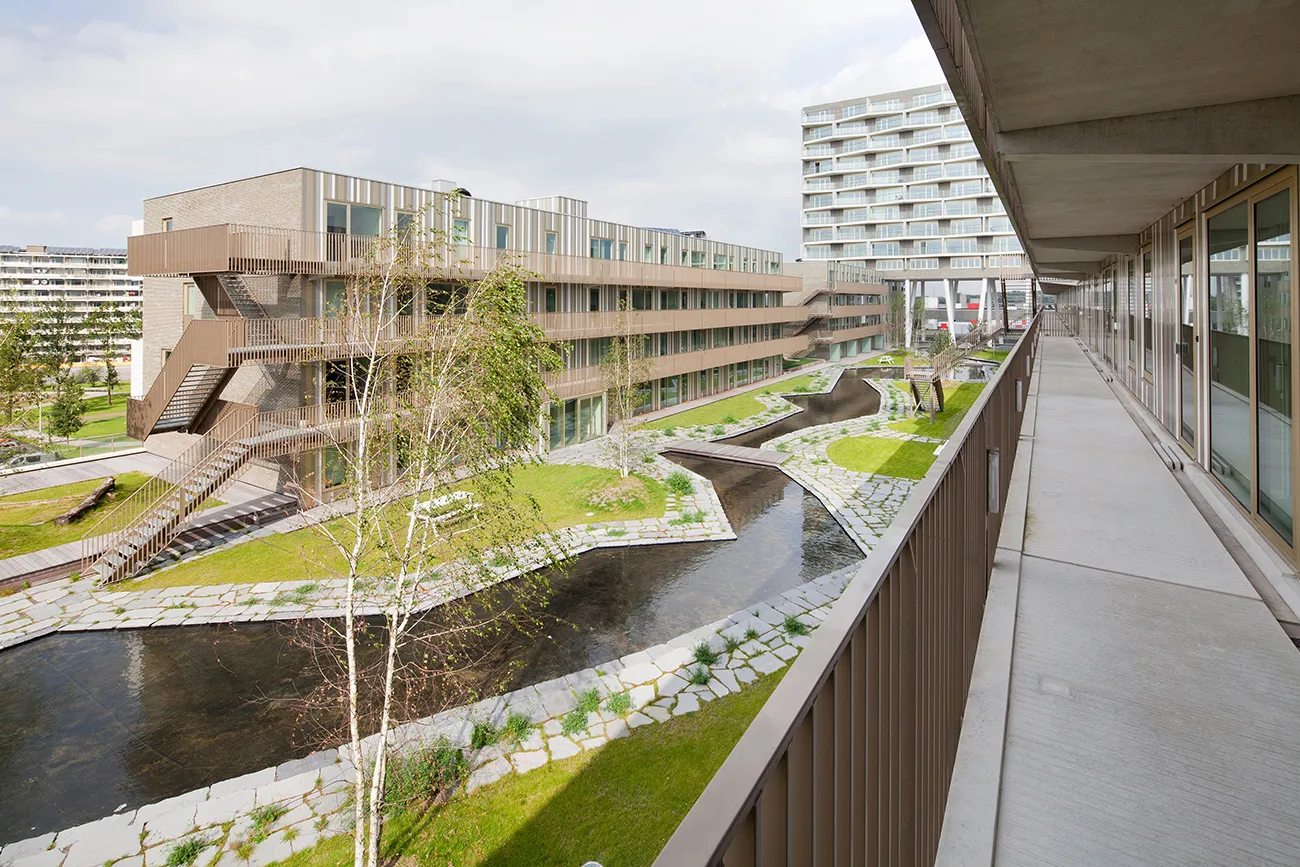
800 to 950 millimetres. That is the average annual rainfall in Belgium and the Netherlands. However, these figures mask a worrying trend: downpours are becoming increasingly intense, alongside longer periods of heat and drought. The message, then, is to retain as much rainwater as possible on site and release it slowly. Under the name ZinCo Meteo Active, ZinCo has developed several basic retention roof systems.
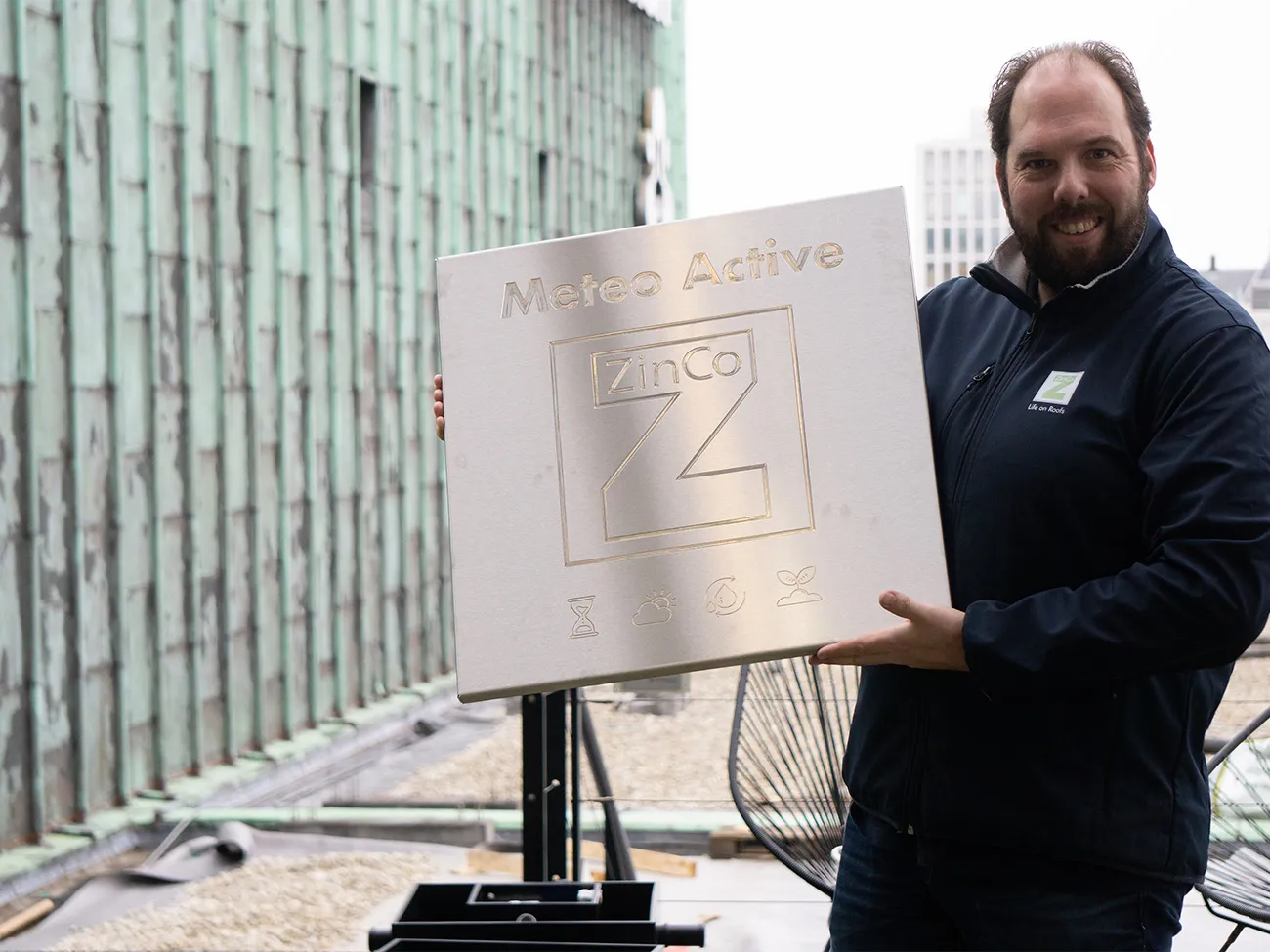
“Torrential downpours with an intensity of 60 to 100 millilitres per hour are no longer unusual in Belgium and the Netherlands,” says Michiel van de Bunt, managing director of ZinCo. “Combined with a high degree of urbanisation, this increasingly leads to flooding, because existing sewer systems are not designed to handle such large volumes of rainwater in such a short time. At the same time, recent summers have shown that we will have to contend with longer periods of heat and drought. This complex situation, with either too much or too little rainwater, is prompting us to consider new ways of retaining water on site. With our Meteo Active concept, we offer innovative solutions that use green roofs as water buffers and retention systems.”
Supply and demand
“Today, in cities and municipalities, rainwater from paved surfaces, such as roads, squares and roofs, is discharged directly into the sewer system,” explains Michiel van de Bunt. “This is not a problem when rainfall is normal, but during heavy downpours the sewer system often cannot cope with the huge volume of rainwater. By storing as much water as possible and releasing it later, we can reduce peak loads.”
“On the other hand, demand for water, including rainwater, is high during dry periods. As the environment warms up, available water evaporates quickly and plants are put under considerable stress. At such times, a reserve of rainwater that has been diverted earlier would be very welcome.”
Buffering or retention?
“Traditional facilities such as rainwater tanks, swales and unpaved areas certainly remain useful,” says Michiel van de Bunt. “Green roofs can also make a positive contribution to preventing flooding by acting as water buffers. Here, we need to distinguish between buffering and retention, two concepts that are often confused.”
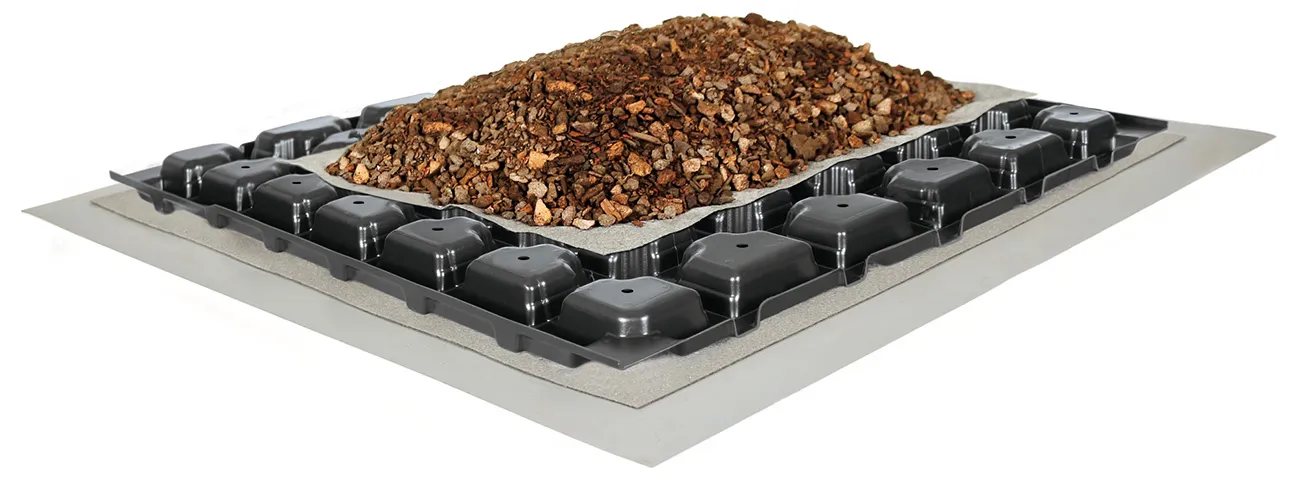
“When buffering rainwater, we focus mainly on the plants and the underlying substrate and drainage layers, which retain water like ‘sponges’. Through evaporation, the water returns to the atmosphere, or it is released slowly into the sewer system. With retention, an open space is created beneath the build-up of a green roof or roof garden, on a flat roof, where water levels can be controlled. Both passive and active water retention are possible.”
From passive retention…
“Many blue roofs are passive roof systems,” explains Michiel van de Bunt. “Rainwater is collected in the roof’s storage area and then discharged at a fixed flow rate. A so-called run-off control in the roof system allows you to determine the volume and emptying time of the water retention. One drawback of passive water retention is the short time water remains on the roof. It drains away at a fixed flow rate, so it is no longer available to the green roof later on.”
…to active retention: Meteo Active
If you want greater control over roof run-off, with a particular focus on plants’ water requirements, active water retention is the answer.
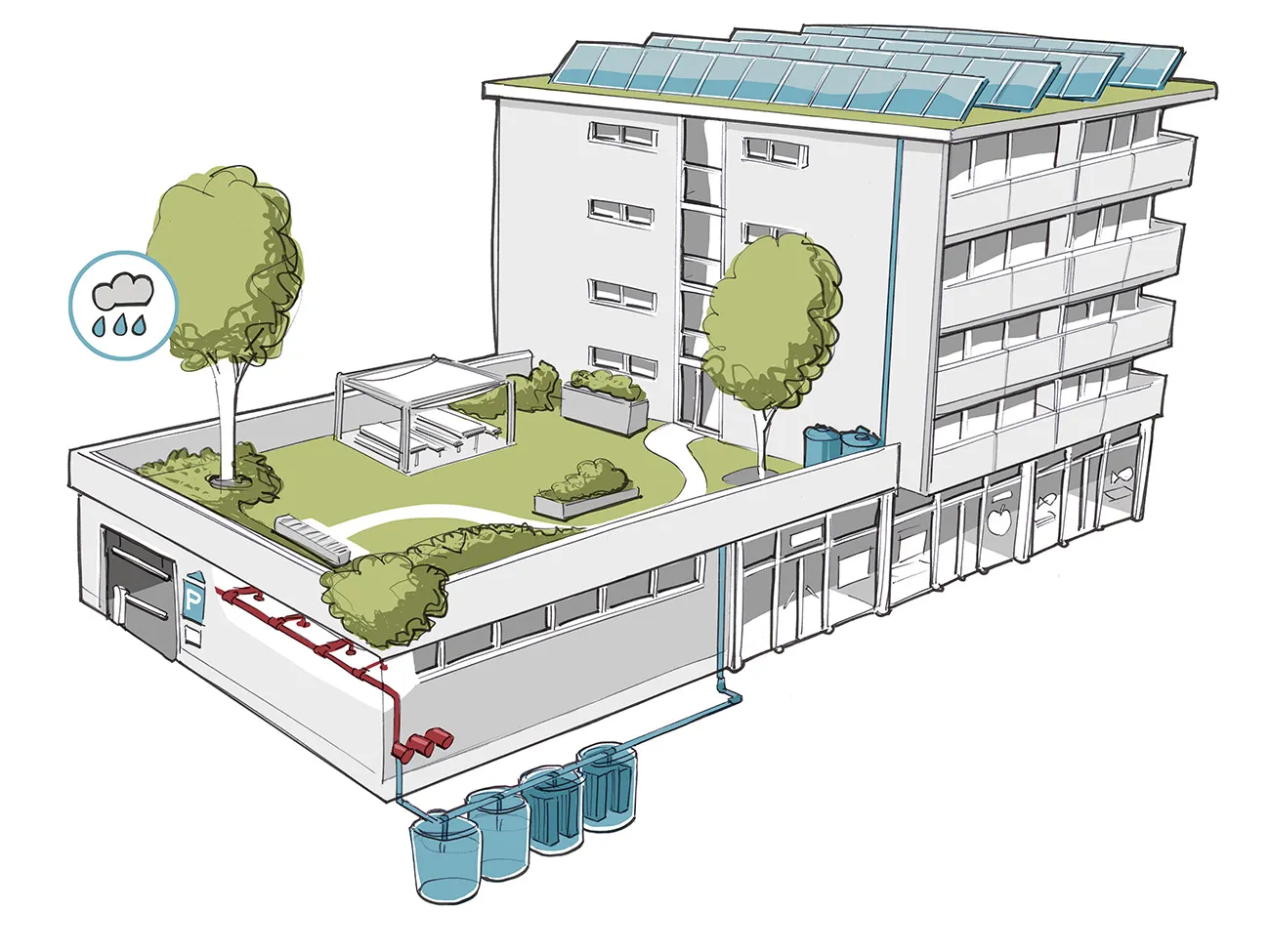
“Our ZinCo water management system is called Meteo Active. Using pre-programmed ‘if this, then that’ parameters, it determines whether rainwater should be retained on the roof and when it should be discharged. Current weather information, for example, is an important input for controlling Meteo Active. An approaching intense downpour or forecast frost helps determine what the system should do. Because active water retention holds water for as long as possible, water is usually available for irrigation and evaporation. This also helps cool the area during periods of heat stress.”
RegENergie as the ‘next level’
“As part of the ‘RegENergie’ concept, Meteo Active becomes an active component of a building’s heating system,” concludes Michiel van de Bunt. “We harvest thermal energy from rainwater, which can be used for underfloor heating, radiators and domestic hot water. In summer, the process can be reversed to cool a building. This sustainable approach makes us less dependent on gas-powered applications. ZinCo is investing heavily in this innovative technology.”
Question about this story? Ask your question
Companies in this story
Keep following this
Get an email when a new story is published. No account needed.
- ThemeHealthy soil and smart water management
- SubjectGeneral
- CompanyZinCo







