









Rising standards for swimming pond finishes. No more uneven surfaces
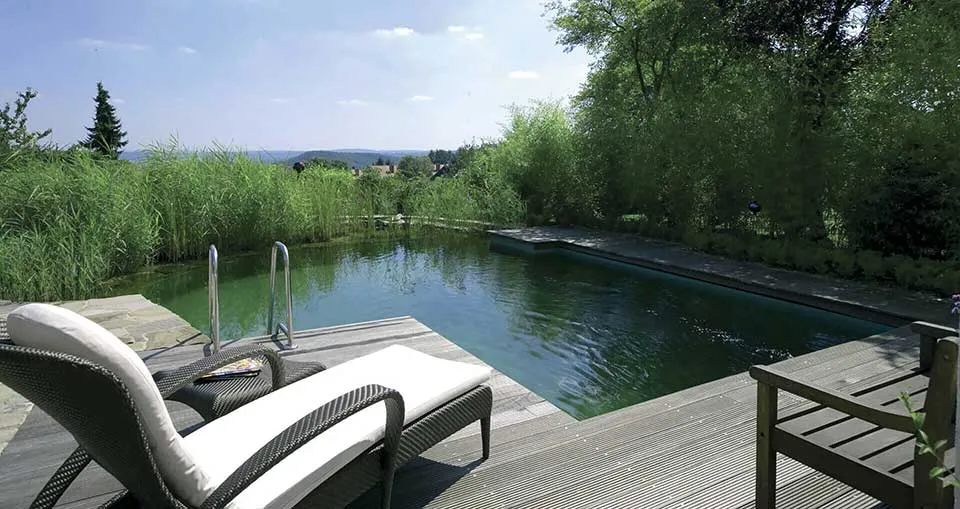
Fifteen years ago, a swimming pond was little more than an upmarket pond where only the truly intrepid would occasionally take a dip. Today, it is widely regarded as a fully-fledged, more environmentally friendly alternative to the conventional swimming pool.
As the distinction between swimming ponds and swimming pools continues to blur, standards for finishing and detailing are also rising.
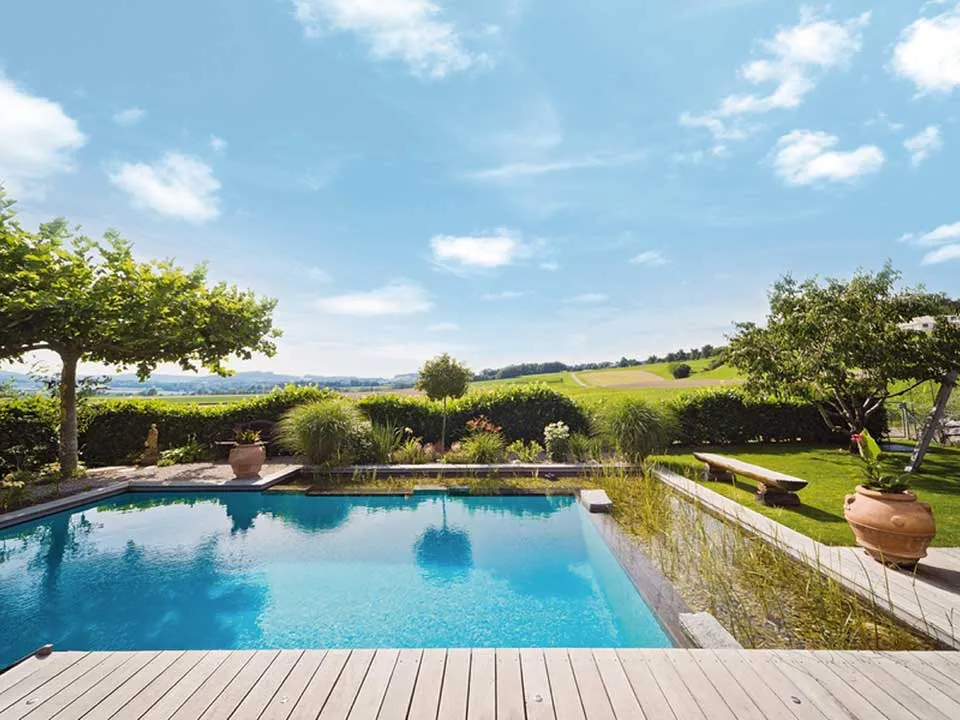
Swimming ponds have undergone a huge transformation over the past fifteen years. They have entirely shed their image as cold, dirty, green bodies of water and are now valued for their dual role: a practical place to swim in summer and an attractive natural feature in winter. The pandemic and the obligatory staycations have further fuelled their popularity, as have the many hybrid alternatives that use water treatment based on methods such as hydrolysis.
Seamless
“Swimming ponds are now regarded as fully-fledged swimming pools,” says Stijn Frooninckx of waterproofing specialist Sealtec. “They are held to the same quality standards, not just above the water, but below the surface too. The raised seams and adhesive residue seen with some liners are no longer acceptable, and there is a need for a seamless alternative. TPO liners made from polypropylene (PP) or polyethylene (PE) are ideally suited to this purpose, offering durable solutions for swimming ponds and hybrid, biological or conventional swimming pools, whatever the budget.”

Which liner, and when?
TPO liners include a range of products, each with its own technical characteristics and colour options. “PE liners offer the best colourfastness in environments with high chlorine levels. They are therefore used mainly in conventional swimming pools, but we also recommend them for water treatment based on (salt) electrolysis. The colour palette is also perfectly suited to these applications, with a focus on light and blue shades.”
For ponds, swimming ponds and hybrid pools with a low chemical load, such as those using hydrolysis, Frooninckx mainly opts for PP liners, with or without glass fibre reinforcement. “Like PE liners, these are strong, completely waterproof, can be installed seamlessly and are available in different thicknesses. The colour range, however, consists mainly of darker shades of grey, green and blue. They are less conspicuous and, for example, create more reflections on the water’s surface.”
To show the effect of the different liners and colours, Sealtec offers registered installers an updated, easy-to-use sample book, as well as the free Sealtec app. “The app lets users virtually place a swimming pool or pond in their own garden and assess the visual impact of different liners, with or without water.”
Also suitable for renovations
Frooninckx says PP liners are also ideally suited to renovations. “Those who had a swimming pond installed in the past but want to use it more, or those who have bought a home with a swimming pond, may first plan some refurbishment work. This often focuses solely on the swimming area. Renovations in the filter area are generally less necessary, and it is also a major, messy job.”
The result is that any such renovation must take the existing waterproofing in the filter area into account. “In most cases, this will be EPDM, which can be combined perfectly with a TPO liner. To accommodate the stresses involved, we install a mechanical fixing over the dividing wall and finish it with EPDM flashing to ensure waterproofing. Only any stepping stones need to be removed; the pool coping stones can stay in place. This means that even older swimming ponds can quickly be brought up to the standard of finish expected today.”
Question about this story? Ask your question
Keep following this
Get an email when a new story is published. No account needed.
- ThemeWater and hard landscaping in the garden
- SubjectGeneral







