









Small trees with a big impact
Bees have attracted a great deal of interest in recent years among garden owners, businesses and local authorities. We depend on them if we are to keep enjoying all the beauty our gardens have to offer. When planning a garden that will attract bees, we often think first of creating large flower borders, but these are labour-intensive and not suitable for every project.
Trees can produce a large amount of pollen per square metre and are often chosen as a main food source by honeybees, bumblebees and solitary bees. A small bee tree can therefore certainly add value to a design, not only for the client, but also for nature. Here are a few small species that are popular with these and other beneficial insects.
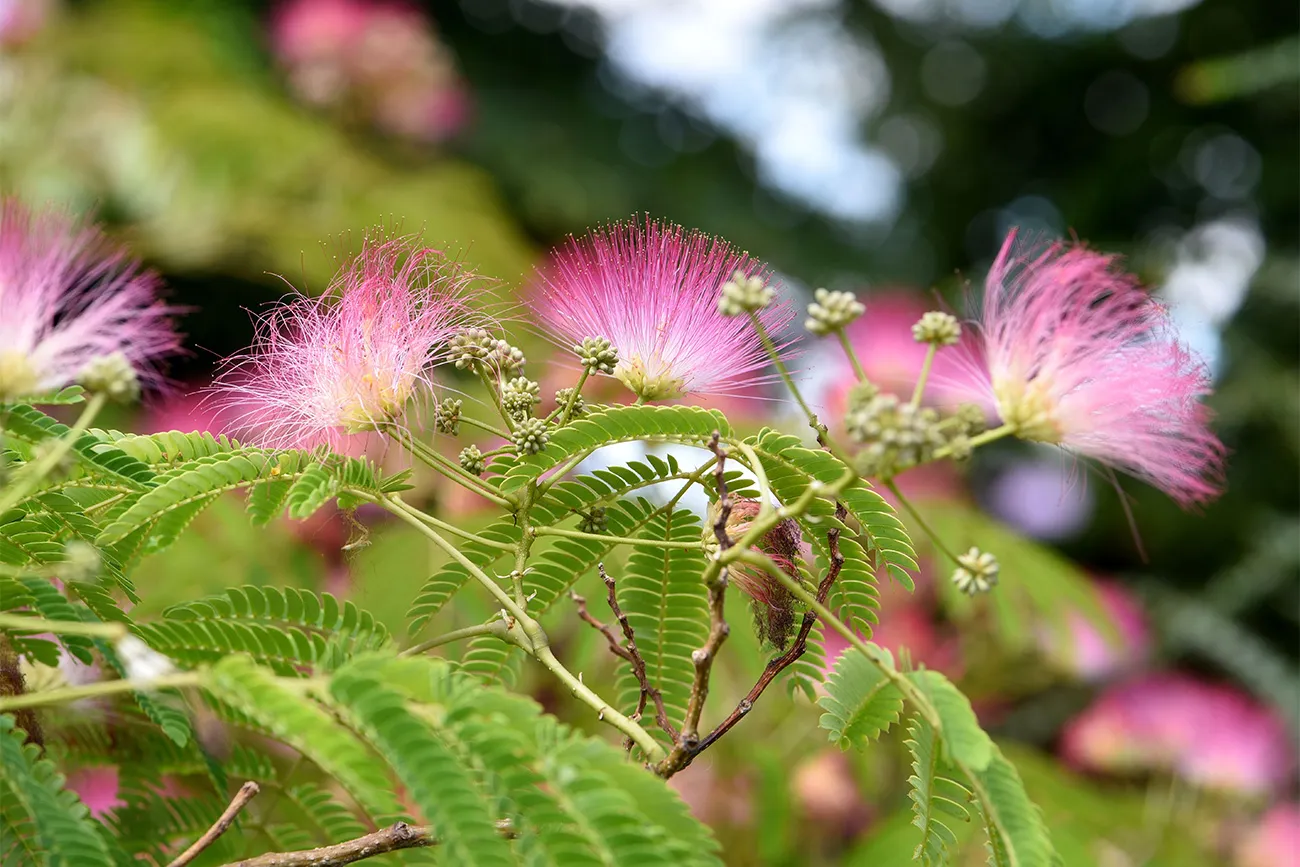
First up is Albizia julibrissin, or Persian silk tree. Once seen mainly in the Mediterranean, it has become increasingly common in our gardens in recent years. It can flower for as long as three months, and its bright pink, sweetly scented flowers are eye-catching from a distance. Its bipinnate leaves fold up in the evening, hence its Dutch name. Albizia has a distinctive shape, with widely spreading branches that grow almost horizontally. Although it was once considered only moderately hardy, it does well in sheltered spots and needs no winter protection. Increasingly hardy cultivars are also available, such as Albizia jul. ‘Tropical dream’. This cultivar flowers prolifically from a very young age and is hardy to around -20°C.
Unjustly overlooked
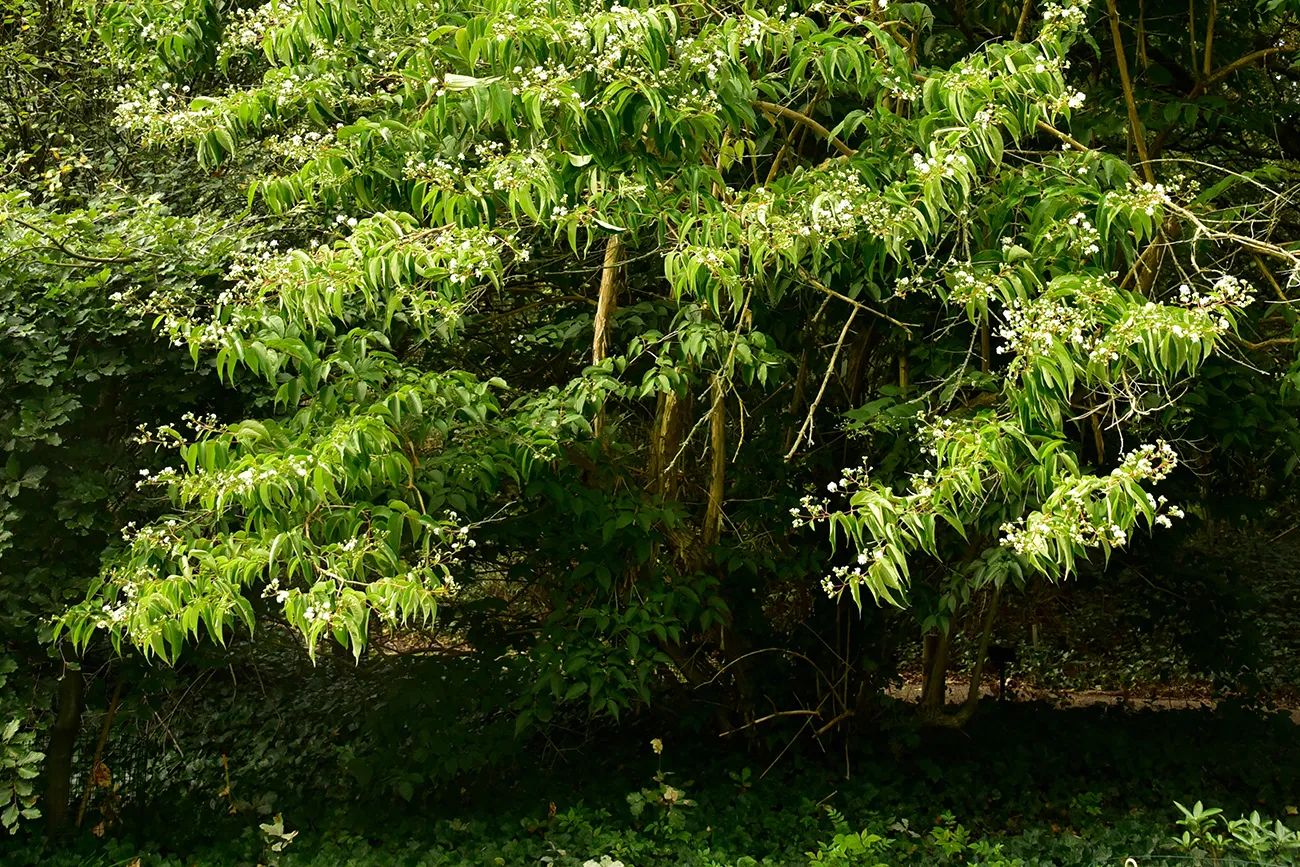
Heptacodium miconiodides, or seven-son flower, is certainly deserving of more attention. It is usually grown as a multi-stemmed shrub, but can also be planted as a tree. It has all the attributes of a top tree, yet is often overlooked. First, its beautiful peeling bark adds ornamental value all year round. It also produces bright white, sweetly scented flowers from late August to October. Once flowering is over, striking bright red fruits appear and remain on the plant for a long time. In autumn, the leaves turn shades of purple. This very hardy, disease-resistant plant originates from China. It is undoubtedly a valuable addition to any garden.
Profuse flowering
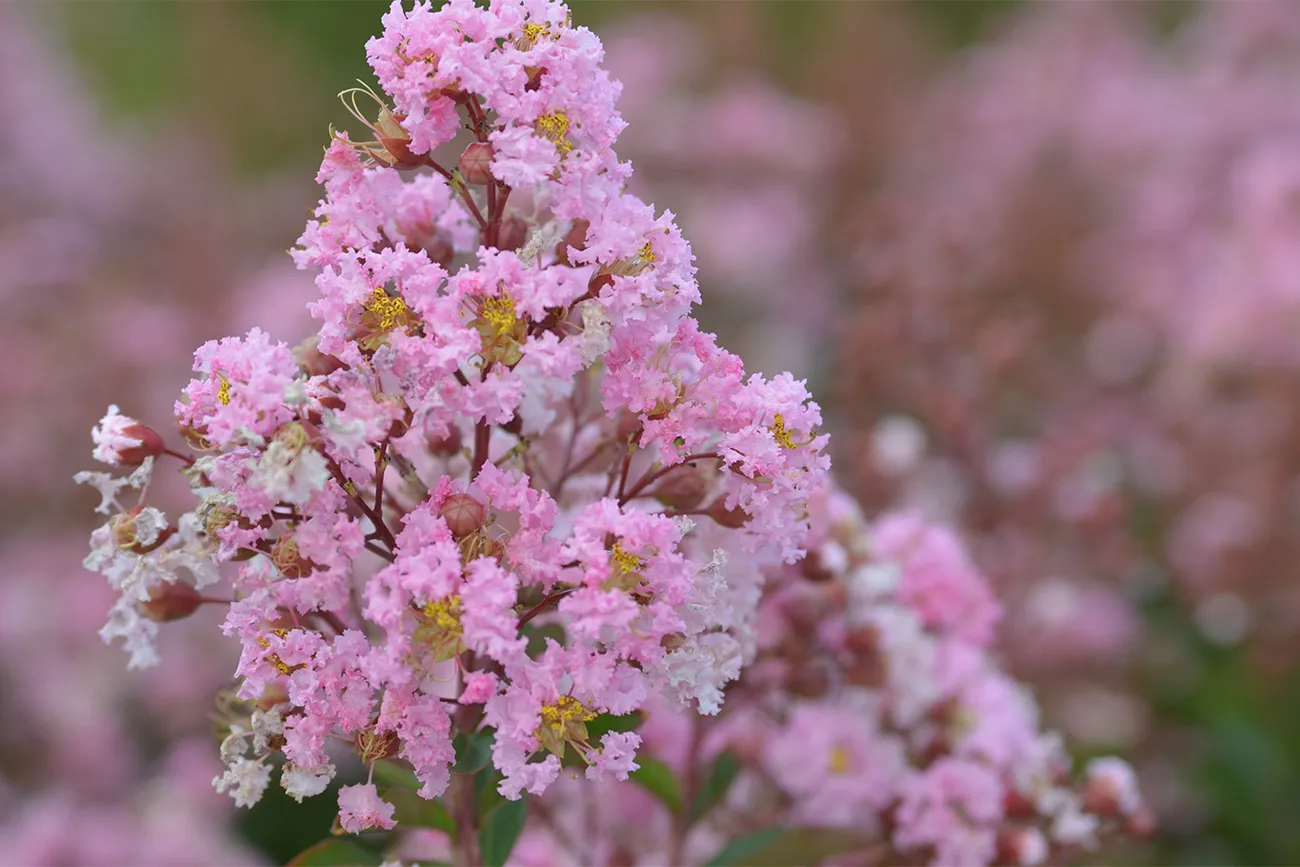
Lagerstroemia indica, also known as crape myrtle, is a broad, vase-shaped tree or shrub. It is widely used in the Mediterranean region and is becoming increasingly popular here too. It flowers profusely, mainly in shades of pink and red, although white and yellow cultivars are also available. Originally a tropical tree, it is now available in cultivars hardy to -18°C thanks to a good breeding programme, including Lagerstroemia indica ‘Eveline’.
This plant was selected by Belgian growers Geert Devriese and Ingrid Luyssen, and has all the qualities of a small tree or multi-stemmed shrub. It produces a profusion of pink flowers in summer, from July to September, and older specimens have beautiful peeling bark. It thrives in a sunny spot with moist but well-drained soil.
The bees’ favourite
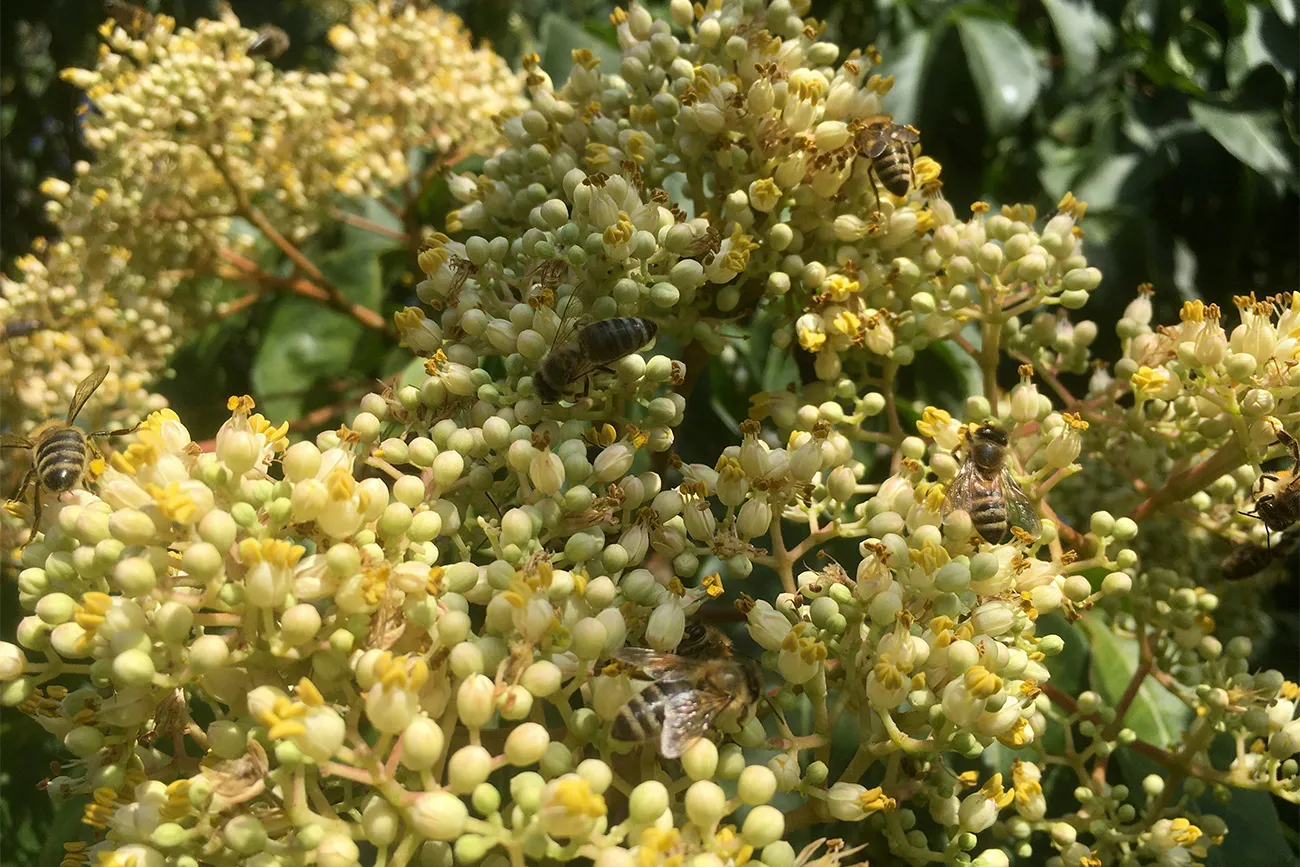
We end with THE bee tree, Tetradium danielii. Reaching a mature height of 5 to 7 metres, this tree flowers from August, producing loose white panicles. The flowers provide plenty of pollen and nectar, which makes them especially popular with bees. They are followed by striking red capsule fruits. Its compound leaves have a glossy upper surface and a grey-green underside. The bark is also grey and smooth. The leaves turn a beautiful yellow in autumn. It thrives in a sunny position and fertile soil.
Tetradium daniellii var. hupehensis is larger than the species and can reach 10 to 15 metres in height.
Hay fever
As the trees above rely mainly on insects for pollination, they are also less of a problem for people with hay fever. Their pollen is not as fine or small as that of birches and hazels, which rely on wind for pollination.
Would you like to know more about bees in the garden? Take a look at the Zakboek voor de Bijentuin by Marc Verachtert, Bruno Remaut and Bart Vandepoele. Bart is the driving force behind the ‘week van de bij’. They organise the ‘Bijenvriendelijkste gemeente’ competition and distribute information boards to local authorities wishing to inform residents about bee-friendly initiatives in their town or village.
Question about this story? Ask your question
Keep following this
Get an email when a new story is published. No account needed.
- SubjectGeneral







