A robotic total station as an extra pair of hands
Text LasertopoImage Pieter Gyssels
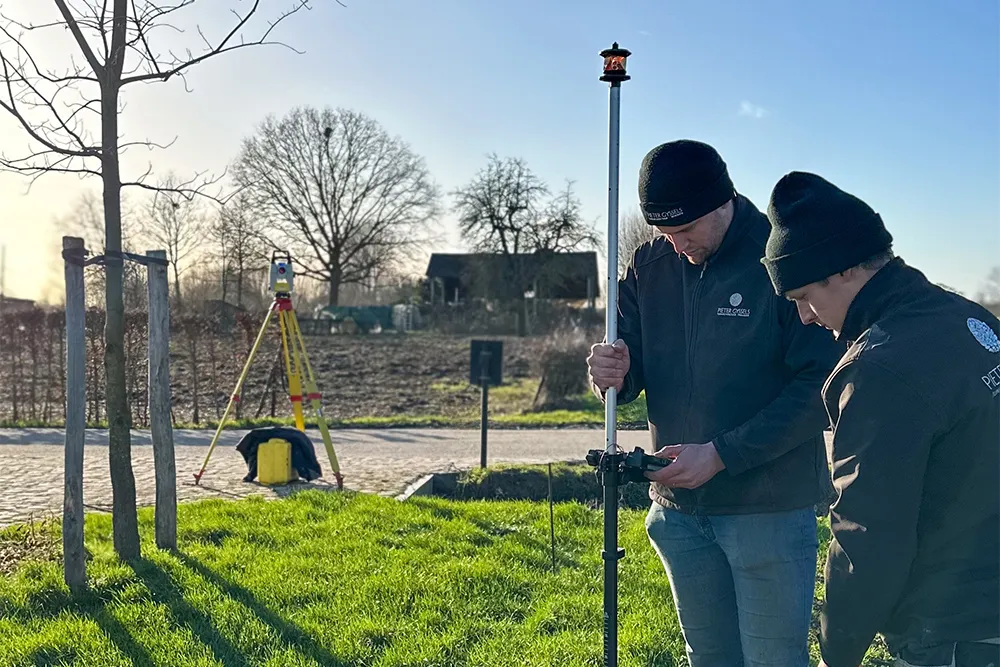
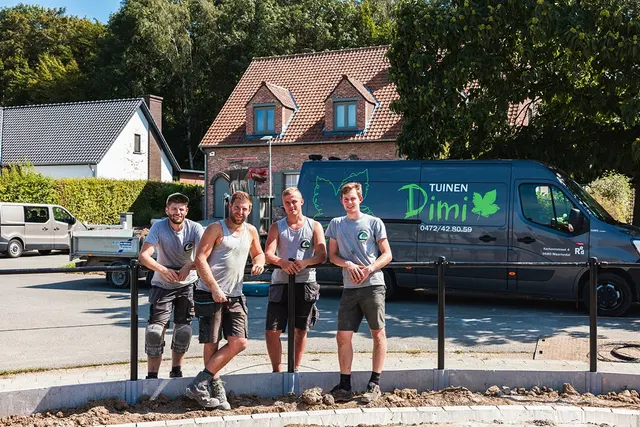
In 2014, 27-year-old Pieter Gyssels set up his own garden design and landscaping business in Sleidinge, a village in East Flanders. Just two years later, he won bronze in De Vlaamse Tuinaannemer’s Young Talent competition, followed by a silver medal as Belgian Swimming Pond Builder in 2020. The young landscape professional and his team now compete mainly in the top tier of the garden market in and around Ghent. “We’ve worked hard to reach this level,” he says. “Above all, our attention to detail and our determination to keep improving have made the difference.” It is no coincidence that these are also two reasons why Gyssels contacted Lasertopo in the summer of 2022.
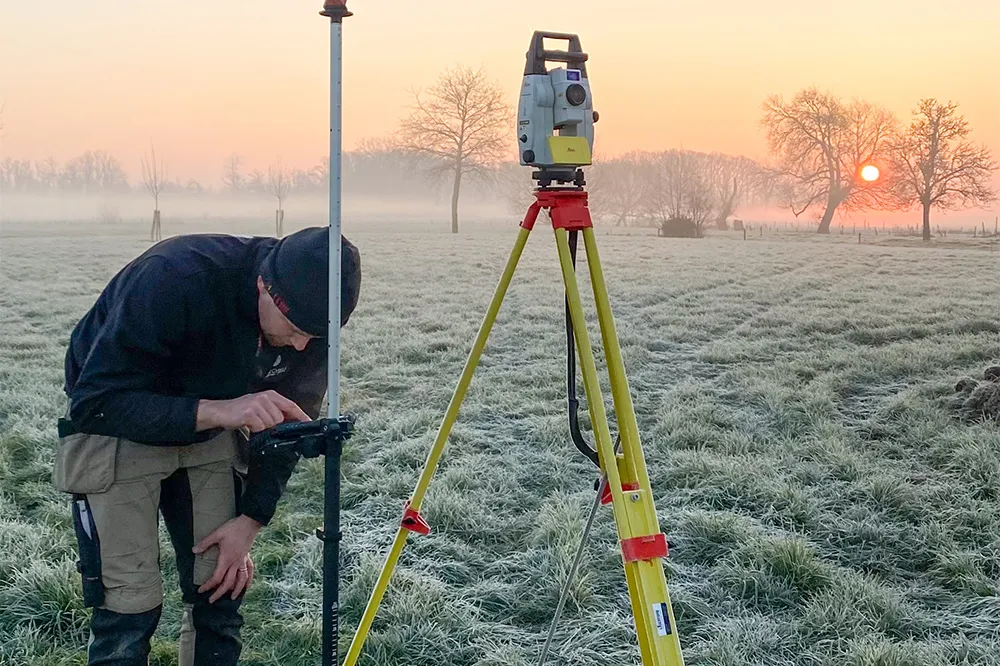
Gyssels’s first introduction to Lasertopo had come not long before, on paper. “I read an article in GreenPro about how another landscaping contractor had optimised his projects using a Leica total station. The enthusiasm it conveyed, not only for the equipment but just as much for Lasertopo, was enough to make me pick up the phone. After a short demonstration and an expert explanation from my contact, Jochen, I was soon the proud owner of a Leica iCR70 total station.”
Efficient preparation
Gyssels says he quickly realised he had made the right choice. “The iCR70 delivers gains at every stage of a project, in terms of time, precision and materials. For example, we no longer have to measure projects with a tape measure or convert paper plans into a digital model, and we can base our designs almost immediately on the most up-to-date and accurate site conditions. The initial survey and plan preparation alone easily save us a full working day.”
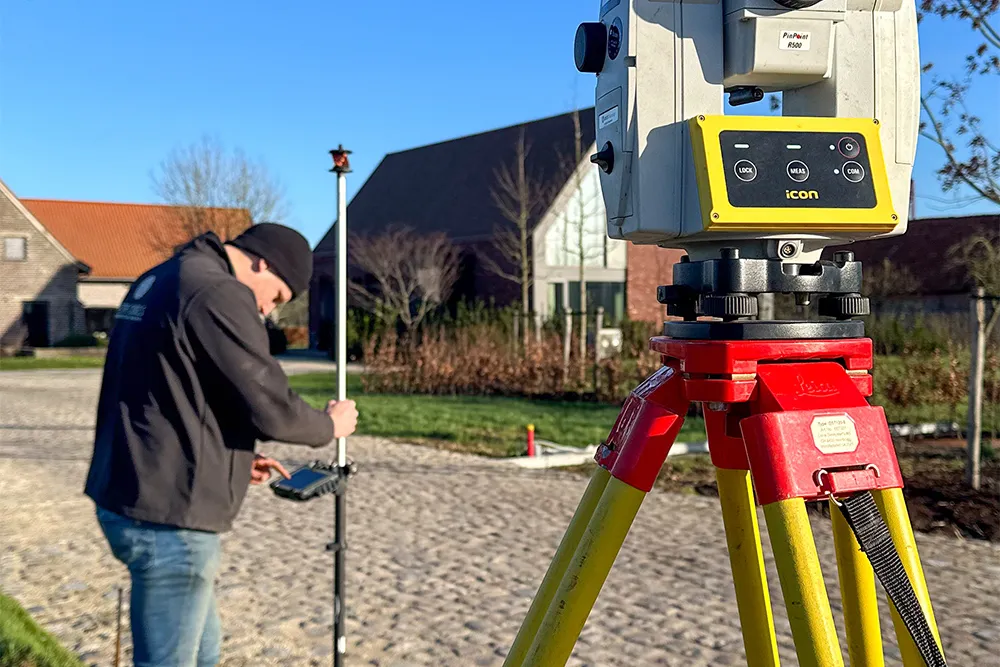
He sees similar time savings when setting out the work. “Because I chose a robotic rather than a manual total station, I can set out the next day’s work entirely on my own after the working day. My staff are very happy about that too.”
Where setting out organic planting beds or irrigation systems could previously take half a day, Gyssels can now do it in just a few hours, with guaranteed accuracy. “In other words, we no longer waste valuable time and resources on remeasuring and recalculating. What’s more, we can keep working with the total station in all conditions. That is not always the case with GPS, as shrubs, trees and buildings, among other things, can have a major impact on the precision of a GNSS receiver. A total station, by contrast, is simply set up on site, where we survey a few fixed points. We can then get straight to work measuring or setting out with a high degree of accuracy.”
Documented execution
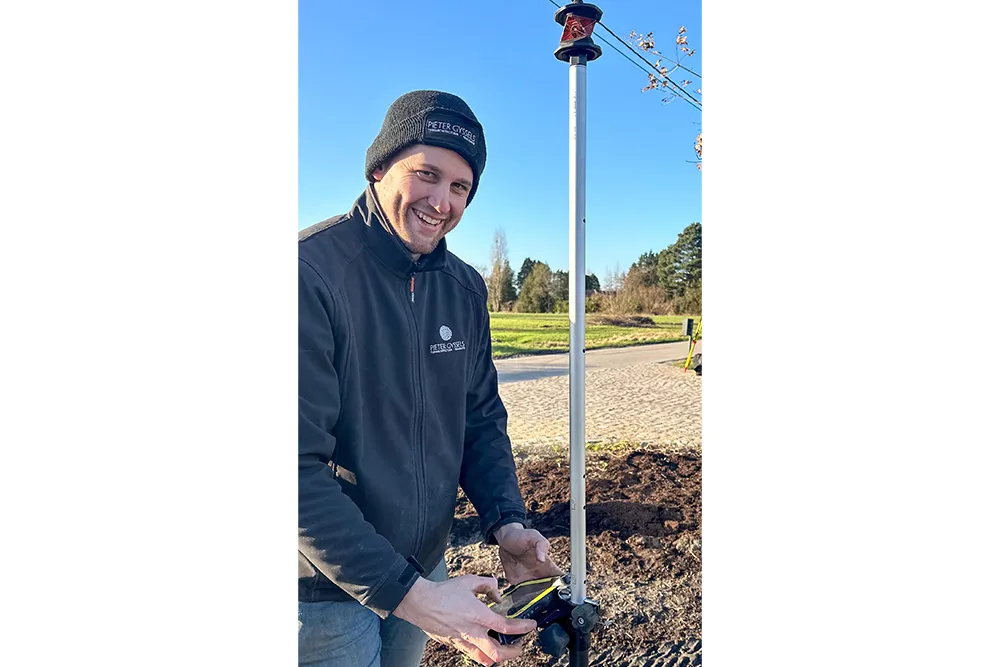
According to Pieter Gyssels, another advantage of the total station is how quickly and easily it allows as-built plans to be produced. “The end client may not ask for them explicitly yet, but whenever we bring them up, we can see that they inspire confidence. For us too, of course. When planting trees with a large root ball, knowing exactly where underground pipes are and how deep they lie helps us avoid a lot of stress and potential damage.”
Always on hand
As a young contractor with a flair for technology, Gyssels quickly got to grips with the iCR70’s many functions. However, he believes that with support from Lasertopo, any landscaping or construction professional can soon benefit from them.
“The device itself is already much more user-friendly than other alternatives, but Lasertopo also does everything it can to help its customers succeed. Jochen and Nicola both know exactly what they’re doing, provide clear, targeted training and remain easy to reach afterwards for any questions. If you’re on site and get stuck, they’re just a phone call away and you get an immediate answer. They also take care of all the worries around testing and calibration. I don’t see many companies matching that.”
Question about this story? Ask your question
Keep following this
Get an email when a new story is published. No account needed.
- SubjectSoftware & digitalisation