









Strong with Corten steel
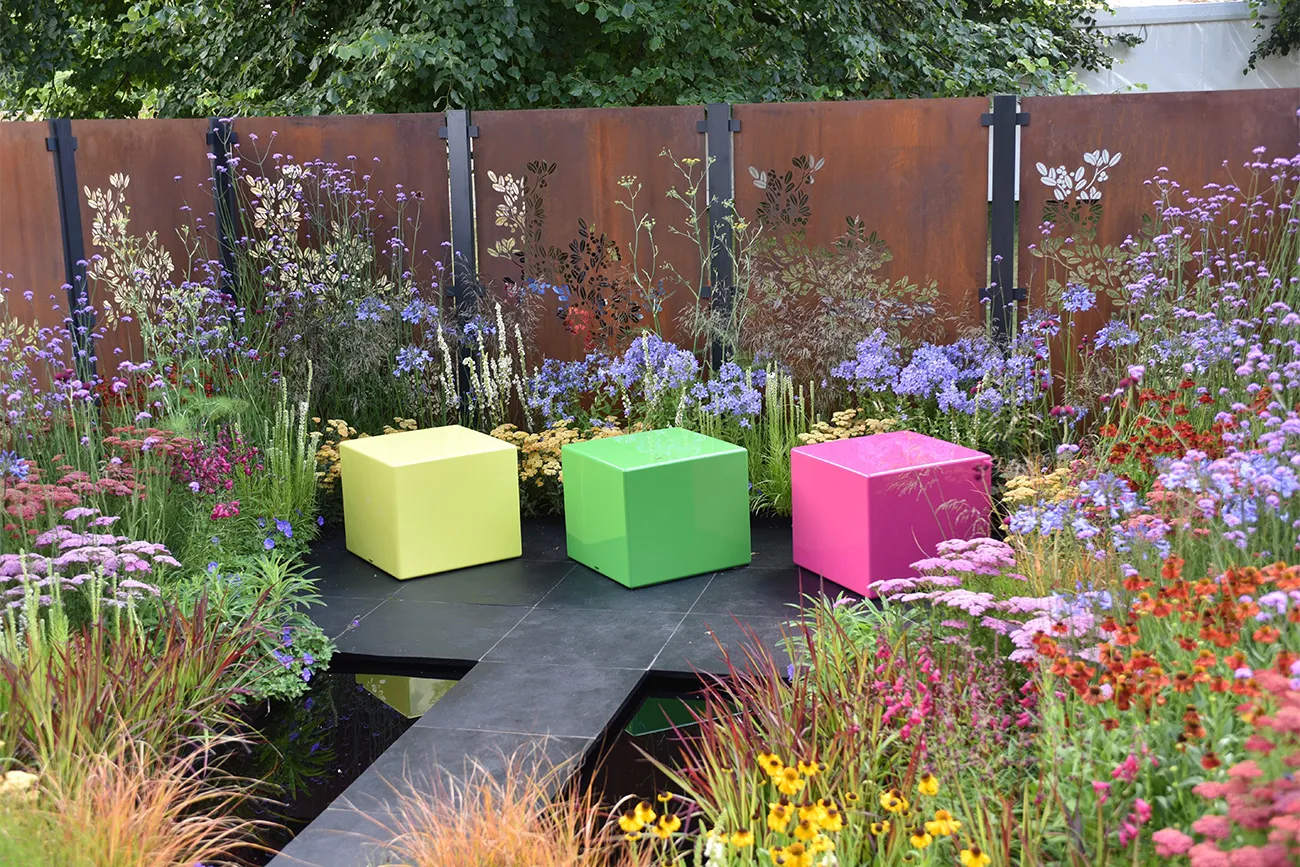
Corten steel is virtually everywhere in new gardens. It is easy to see why. This exceptionally versatile material allows you, as a garden designer or landscaper, to create gardens that last almost forever.
Corten steel is anything but new. Its history dates back to 1932, when American Byramji D. Saklatwalla (1881-1944) patented an alloy of iron, copper, phosphorus, silicon, nickel and chromium. He named it Cor-Ten, with ‘COR’ referring to corrosion resistance and ‘TEN’ to tensile strength, two of its key properties. However, it took a great deal more development by United States Steel Corporation, and many more years of promotion, before this distinctive steel was embraced by the garden industry. Now, there is no escaping it, even after price rises driven by higher energy costs and other wartime conditions. Your customers are clearly not deterred by the new price.
Rust never sleeps!
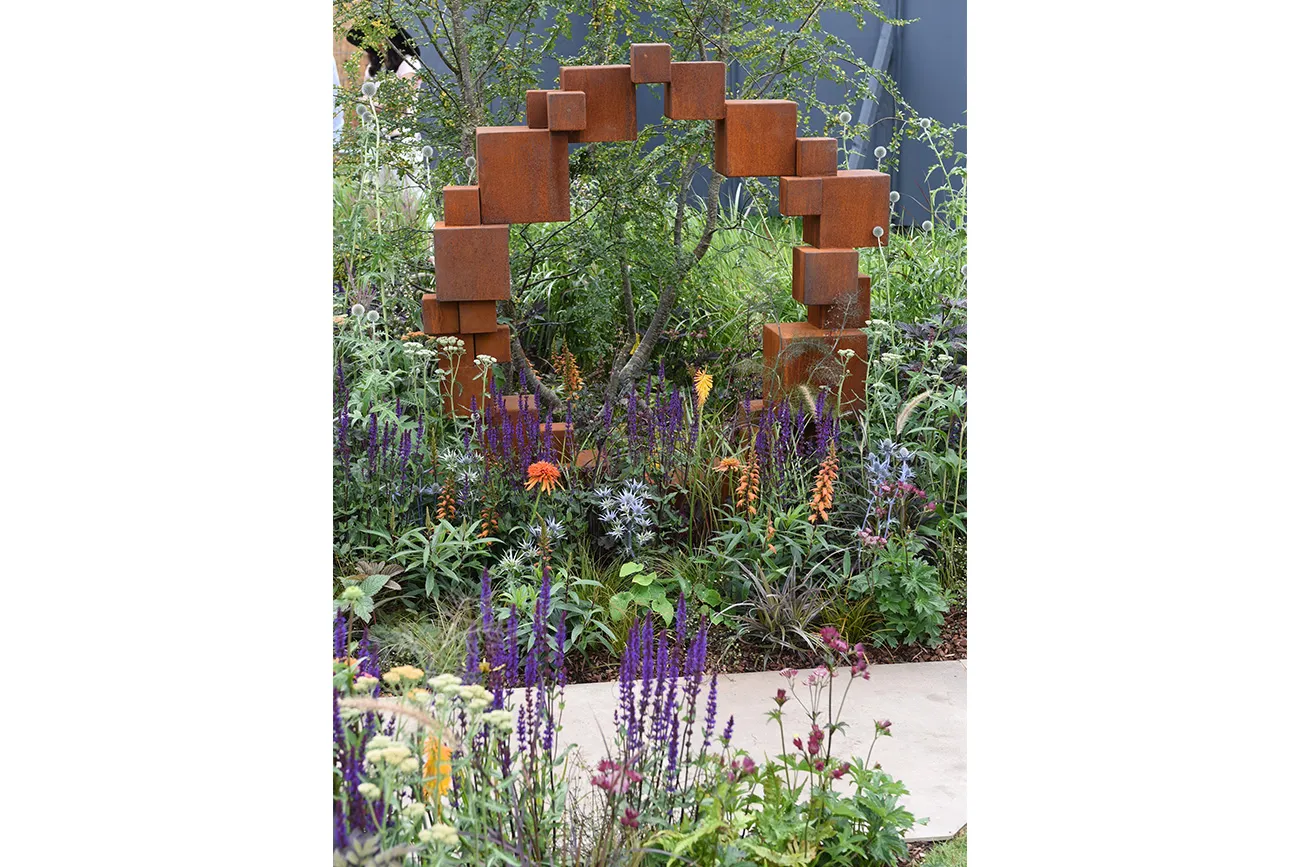
Corten steel is an absolutely stunning material, and above all, a practical and durable one. Its rust-brown colour makes it a perfect fit among both green and flowering plants. It requires no maintenance and lasts virtually forever. Most customers are happy to accept that it arrives on site as bare steel. They know that iron rusts. They also know that, after a while, Corten steel stops rusting further and the visible layer of rust stabilises, to put it simply, into a finish or even a protective coating. This surface rust does indeed protect the underlying steel against further corrosion, and therefore against any loss of strength or thickness.
As professionals, we need to qualify that. Corten steel does continue to rust beneath that protective layer, and therefore loses some of its thickness. Grade A Corten steel, intended mainly for architectural applications, loses 35 to 75 microns per ten years. Grade B, used mainly for heavily loaded structures, loses 75 to 100 microns. However, there is no need to worry. The plate you use is 2 mm thick, sometimes even 3 mm. Multiply by 1,000 to express the thickness in microns. That tells you that Corten steel will outlast your current customers, their children, grandchildren and even great-grandchildren. There is one condition: the steel must not remain in constant contact with water or be exposed to the abrasive effects of sea winds, road salt or emissions from heavy industry. In those conditions, the oxidation process does not stop.
Give Corten steel time!
Be sure to warn your customers that, in the first few weeks after fabrication and/or installation, the rust layer still needs to develop under the influence of the weather, and that this early rust comes off easily. It can leave marks on fingers that brush against it, touch it or test it, or, worse still, on clothing. The rust layer only becomes firmly established after one to two years! Naturally, you will take this into account during installation and fabrication. When installed above patios and other paved areas, or incorporated into walls and structures, dripping rust water causes stains that set into and on stone. For vertical elements, be sure to fit a temporary gutter beneath the structure until it has passed this ‘adolescent’ stage. There is no problem on lawns or in planting areas. Plants can cope with the additional iron.
To avoid problems, should you start with Corten steel that has already corroded? Yes. It is available on the market, or the manufacturer may pre-rust the structure at its premises, with or without rust accelerators. No one will tell us what these contain, or whether they are the same as, or better than, the rust accelerators you can buy online. It is a trade secret, they say. In any case, these professionals laugh at the household tips circulating online, such as spraying the steel with water mixed with salt or vinegar.
If you fabricate Corten steel yourself, never combine steel from different batches. Each batch can develop a different shade of rust. Never stick labels or tape on surfaces that will later be visible, either. They leave marks. The same applies to markings made with an alcohol-based marker, and to splashes or smears of grease and oil. Welds also require care. Using ordinary welding wire results in a different colour and reduced durability. Use a MIG welder and Corten welding wire instead. Fortunately, more and more companies offer a wide range of ready-made models or can execute your design perfectly. Your job is then to install the product perfectly, whether it is edging, stair elements, retaining walls or cladding.
Making the right choice
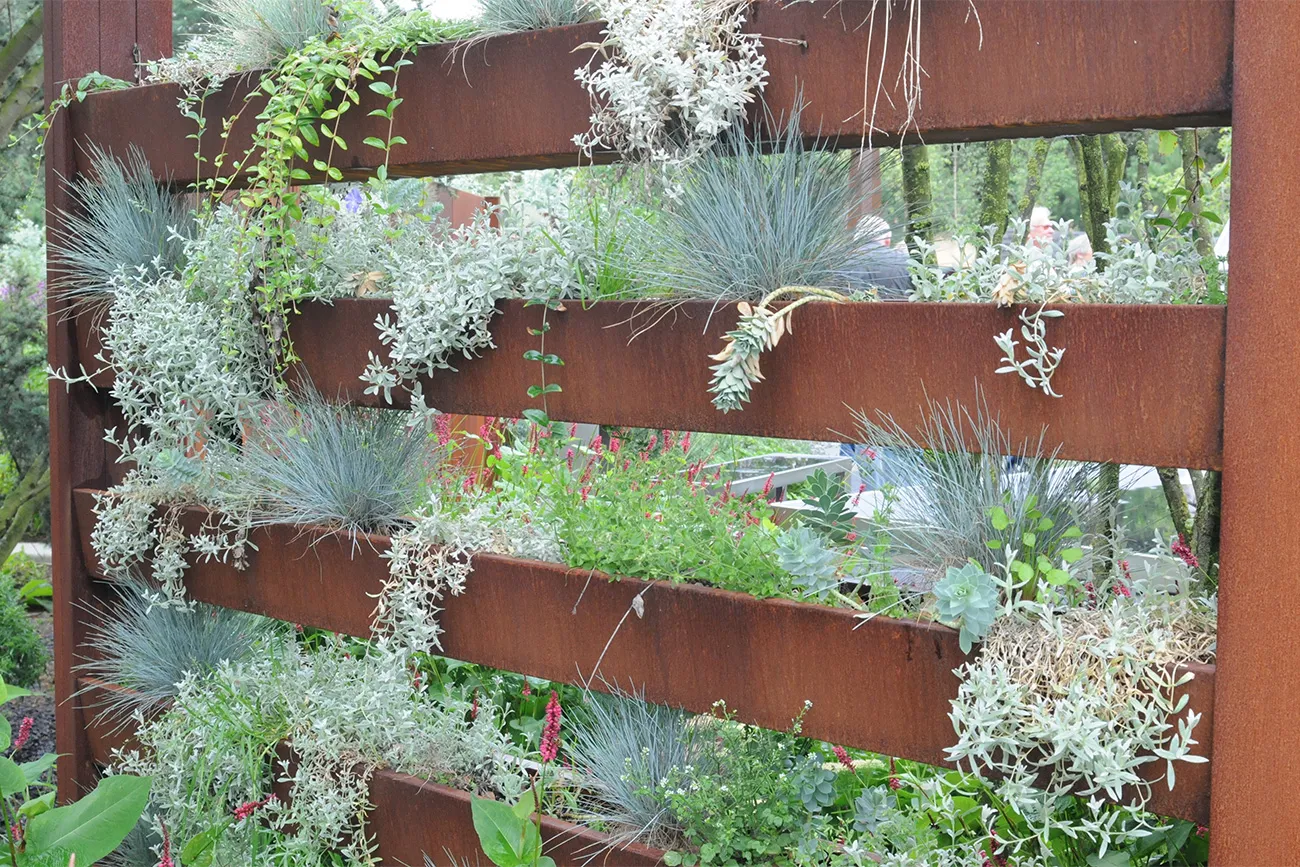
Not yet commonly seen here, but increasingly popular, are garden screens made from Corten steel. Straight or curved? It makes no difference. Once securely anchored to support posts on either side, these panels provide excellent privacy and keep out wind and even noise, reflecting it back towards the street or neighbours. If your customer would rather not have a completely solid wall, Corten steel can be laser-cut to feature attractive designs and messages of their choice. Slats arranged in overlapping rows can, in turn, conceal certain parts of the garden or draw attention to them, according to your design. They can even be installed as a boundary with a neighbour, making diagonal views difficult or impossible while retaining a sense of visual and spatial openness. What works vertically works horizontally too. Incorporated into a wall or partition, or even linked to a poolhouse, garden shed or the house itself, strips of this material add real value!
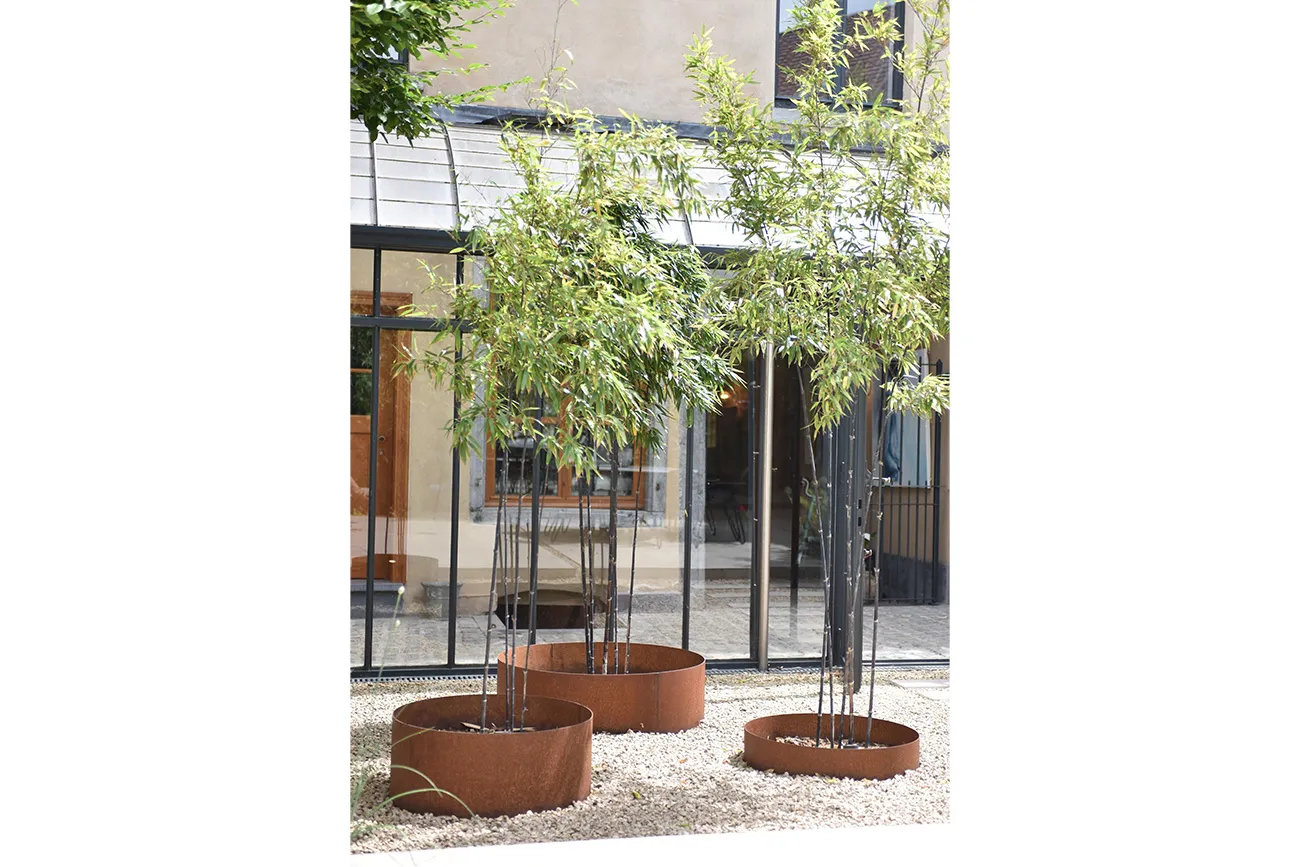
Water troughs and water tables are already well established and widely used. They can be delivered ready-made to your site. The same goes for decorative log stores, excellent and versatile barbecues, garden stoves, fire pits and bowls, and much more. You can find them from a wide range of manufacturers, wholesalers, garden centres and even online shops. Every one of them offers bargain prices. Unfortunately, however, some pay less attention to material selection, use lower-grade steel plate that is thinner than ideal, and sometimes neglect quality finishing. Cheap can therefore end up costing more. Take garden stoves, for example. Cheap models are little more than a tube with a base, while better ones have a stainless steel base plate, allowing ash to remain inside, even when wet, without eating into the Corten steel. You can certainly add to this and explain to your customer why, in their best interests, you choose quality and durability.
Question about this story? Ask your question
Keep following this
Get an email when a new story is published. No account needed.
- SubjectGeneral







