









Ten honey locusts complete the redevelopment of Mediaplein
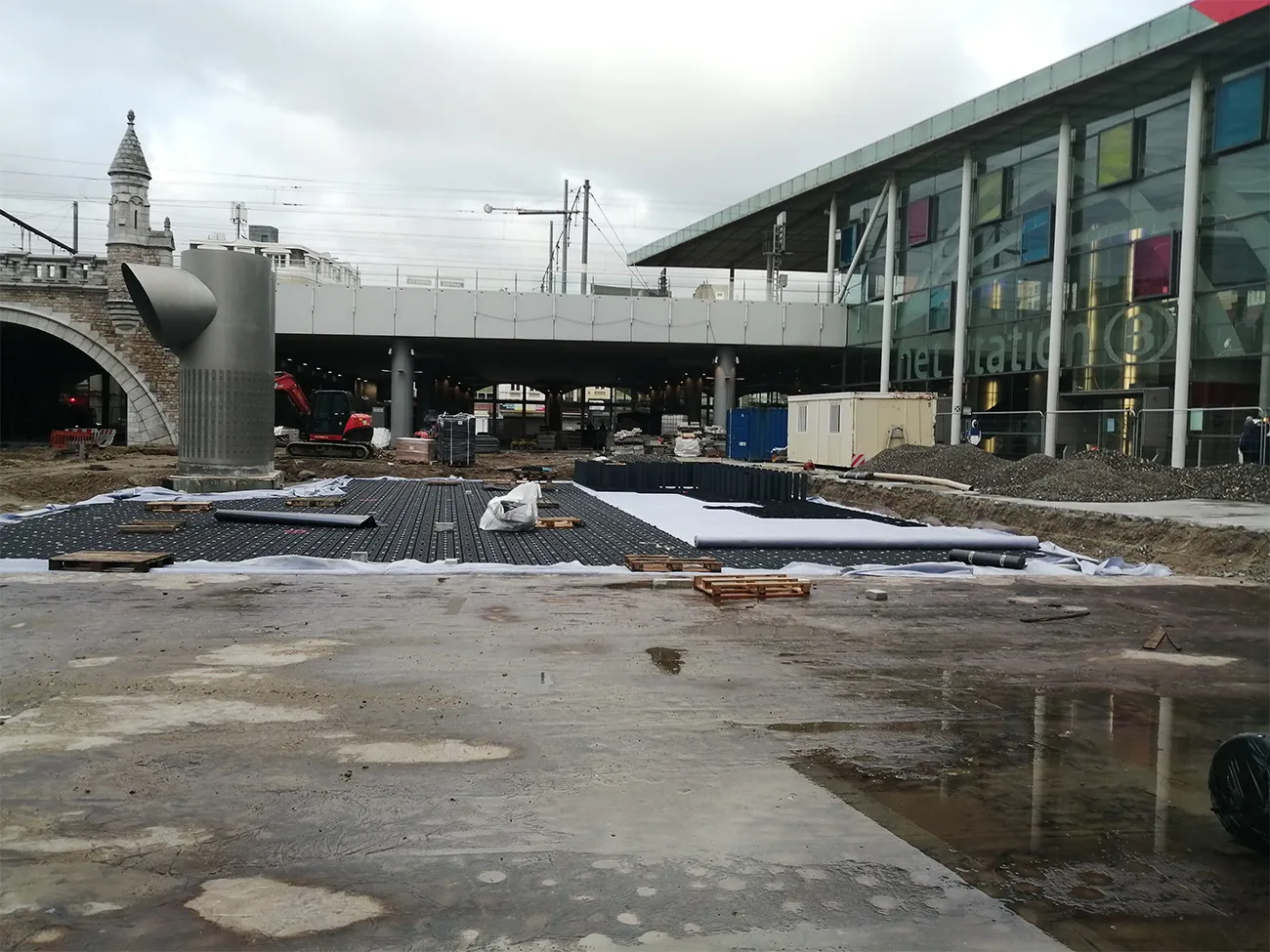
Antwerp’s station district has undergone a complete transformation in recent years. The rear of Antwerpen-Centraal has gained an architectural landmark in the form of DPG Media’s new headquarters, while the once much-maligned Kievitplein has acquired a new identity as the youthful, dynamic and green Mediaplein. The redevelopment will be completed this winter with the planting of ten honey locusts.
Antwerp’s Mediaplein is located in the pedestrian zone at the rear entrance to Antwerpen-Centraal station. It sits above an underground car park, but is itself closed to motor vehicles, apart from emergency and law-enforcement services. In recent months, a raised area has been created in the centre of the square, where benches and ten deciduous trees of the Gleditsia triacanthos ‘Skyline’ variety will eventually be installed.
To give the trees the optimum growing conditions, engineering consultancy Infrabo called on TreeBuilders, a subsidiary of GreenMax specialising in the design and supply of the TreeParker tree pit system for public spaces.
Tree pits
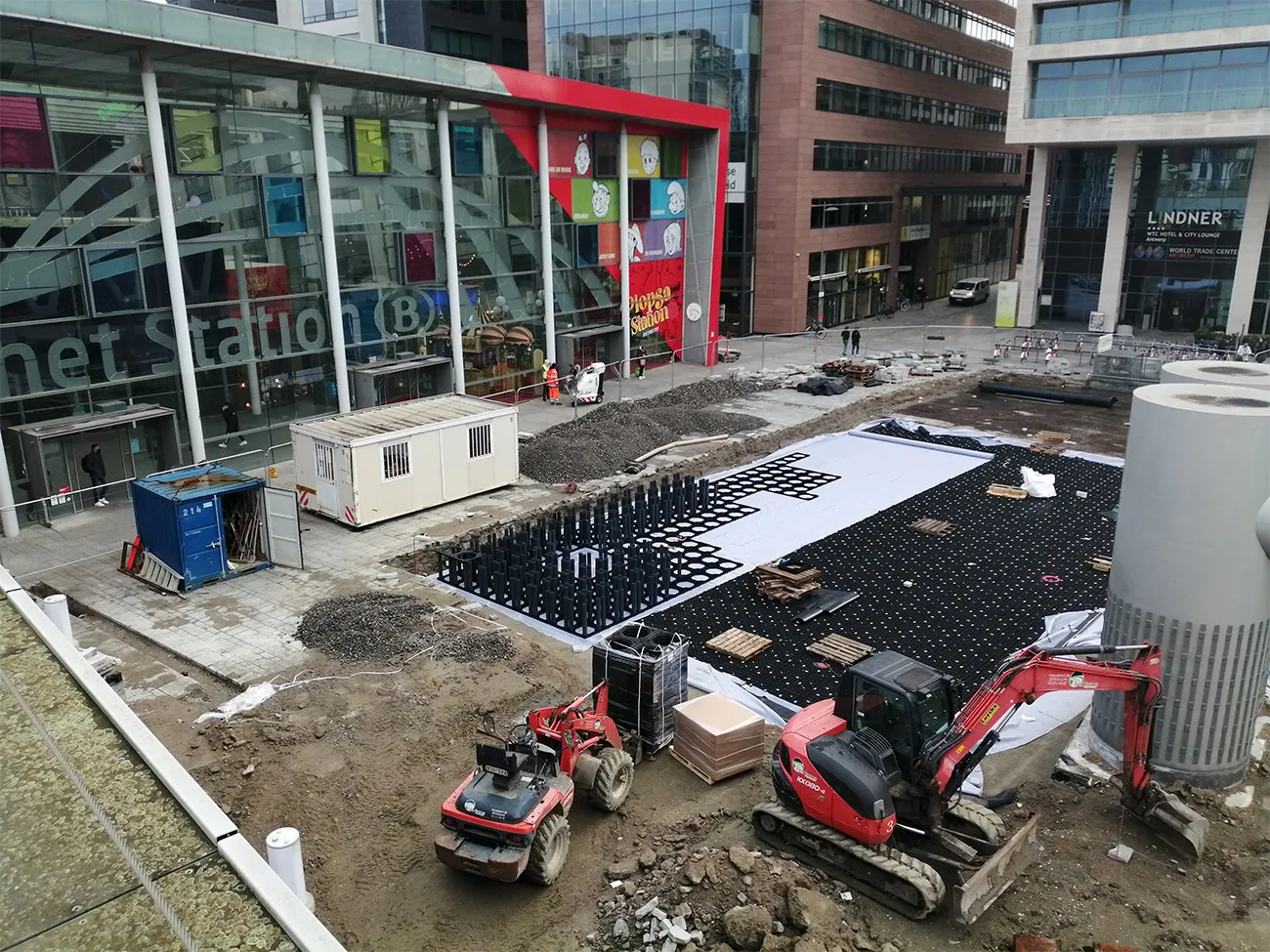
“TreeParker tree pits were installed across the entire square,” says Joris De Coster, international consultant at TreeBuilders. “There are more than 1,500 TreeParkers in total, filled with rich topsoil. They provide structural support and create one large, undisturbed rooting area beneath the paving, while also preventing the soil from becoming compacted through daily use. Combined with aeration, irrigation and tree anchoring, this means the trees will have access to soil, water and air for the long term. In this case, everything was designed to allow the trees to grow for up to 200 years.”
To prevent damage to the edge of the raised square and the surrounding paving, a Tree Root Guide system was also installed along every side, against the kerbs.
“These barriers have guiding ribs that direct young tree roots straight downwards. Without this special profile, roots could grow along the barrier, potentially causing the ‘flowerpot effect’. This could, in turn, compromise the tree’s stability.”
Car park adds complexity
The underground car park presented several challenges, both during the initial design study and when the tree pits were installed.
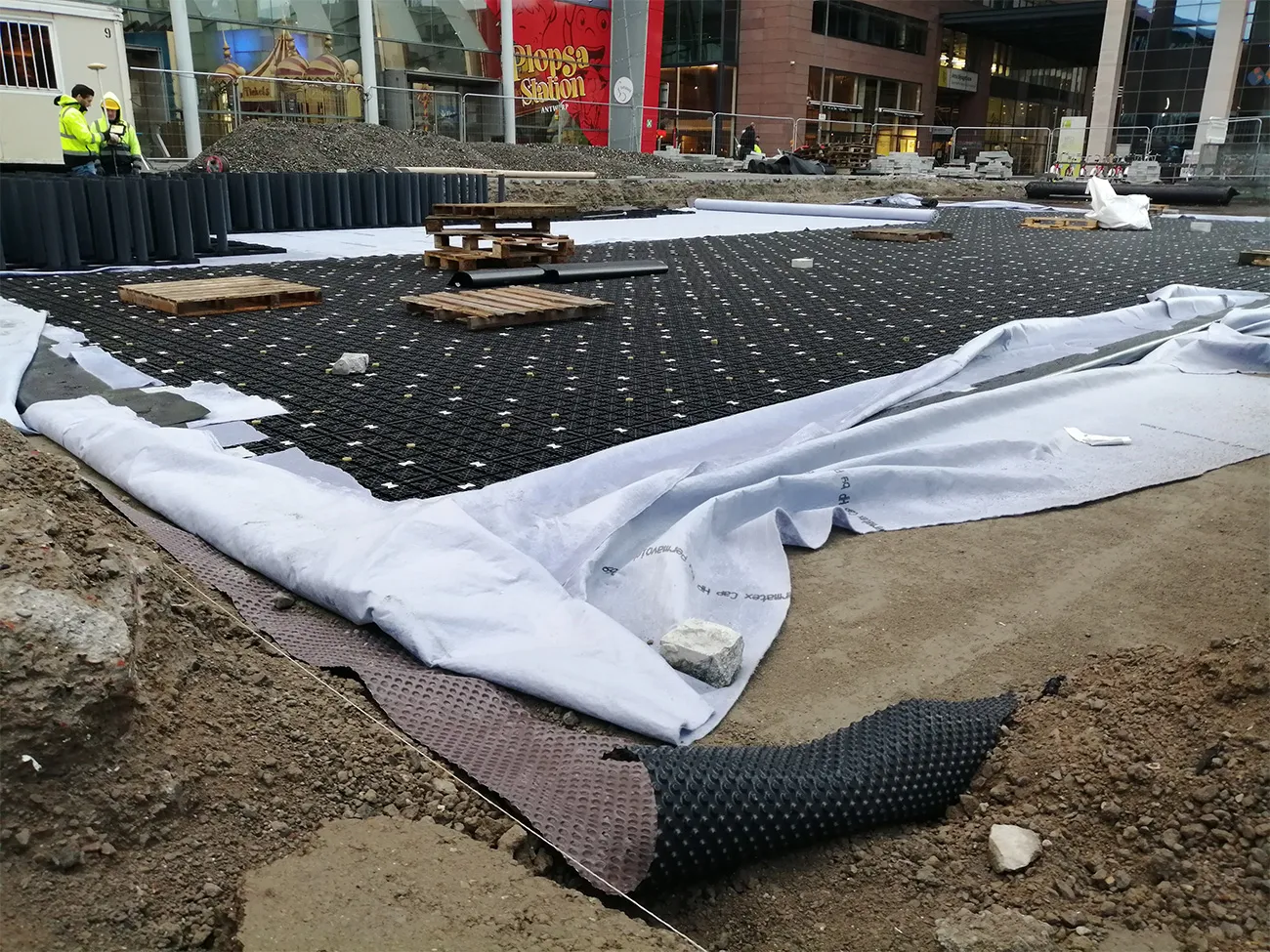
De Coster: “The trees need water, but of course you have to make sure at all times that no water from the system gets into the car park’s concrete structure. That is why the entire area was sealed with pond liner and an irrigation system was installed.”
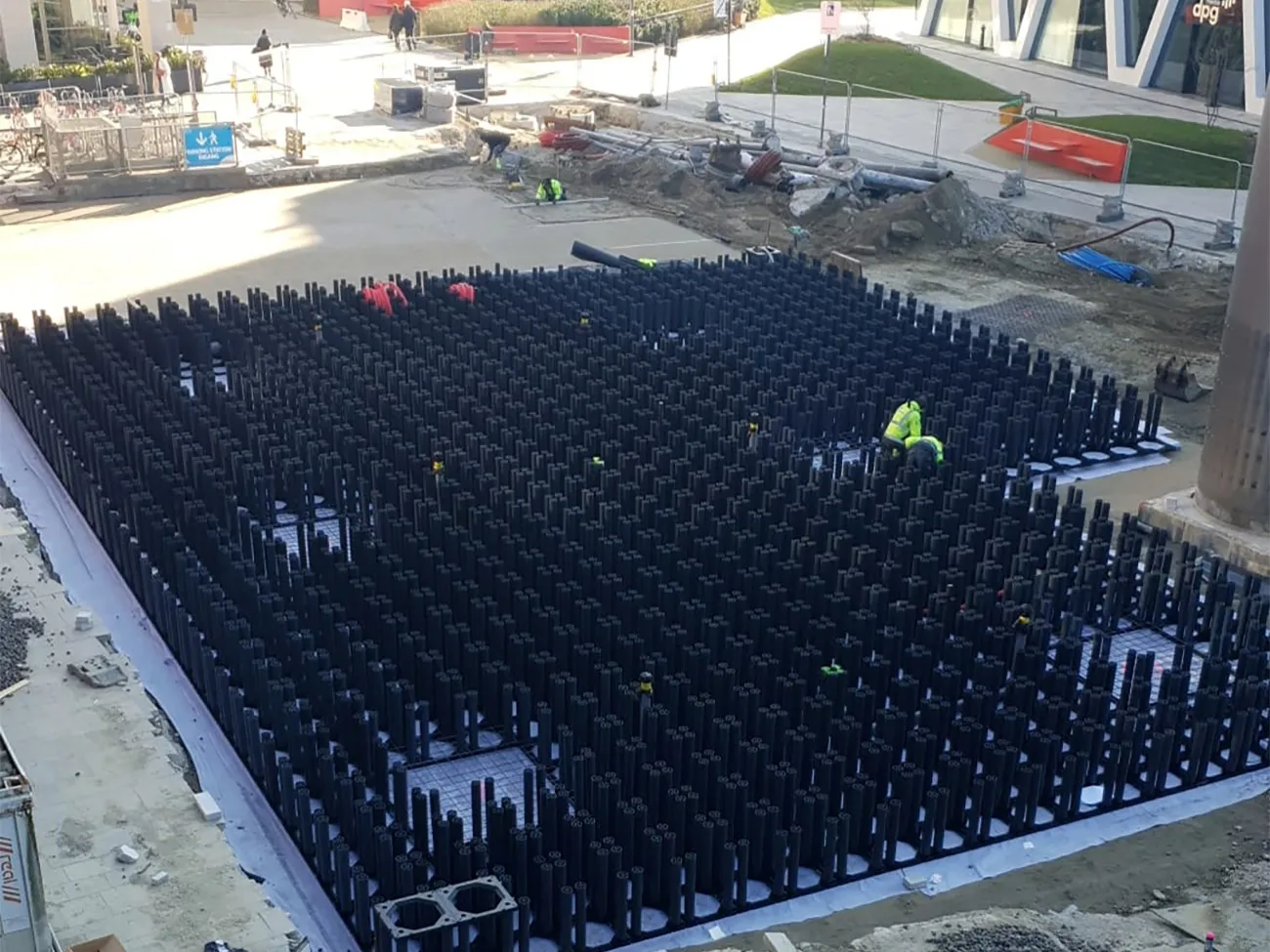
The variations in level above the car park proved an unexpected challenge.
“Apparently, the concrete structure was not the same thickness everywhere, so we had to accommodate those variations in our system. We had originally specified units that were all 80 cm high, but in some places only 70 cm was available. Fortunately, TreeParker is a modular system, and its posts can easily be cut to length or manufactured to size, so we were able to resolve the issue quickly. In the end, one third of the 1,514 units were shortened to 70 cm, without any need to stop work or delay the project.”
Question about this story? Ask your question
Keep following this
Get an email when a new story is published. No account needed.
- SubjectGeneral







