









The many charms of topiary bay trees. Timeless, stylish and with a touch of British flair
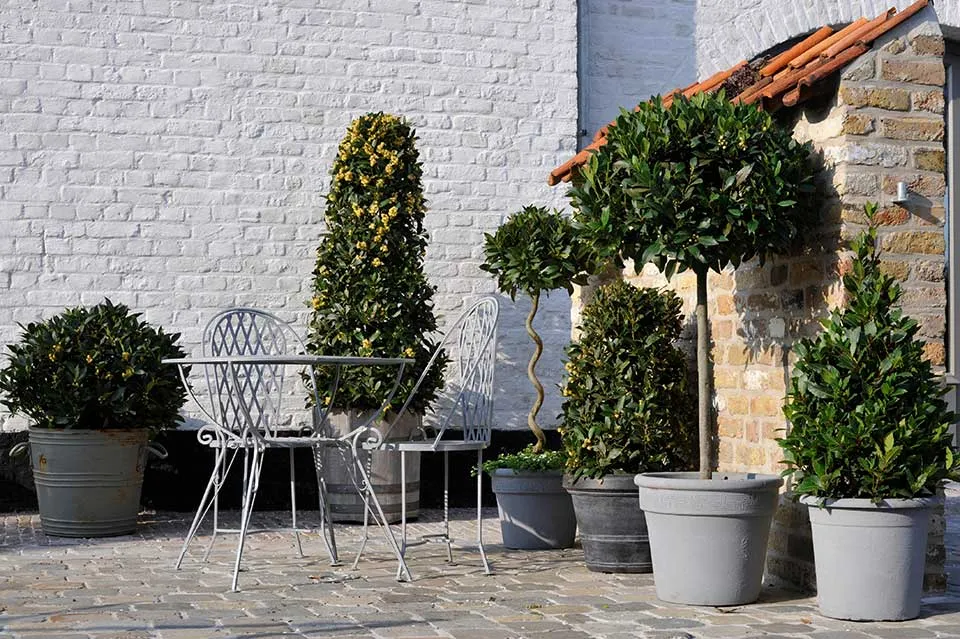
Since its foundation, Laurica Plants in Jabbeke has grown into an international market leader in growing bay trees trained as topiary or standards for green-space professionals.
Thanks in part to Laurica Plants’ years of dedication, bay trees have become a stylish and attractive feature in British-inspired gardens, on summer terraces and at atmospheric, luxurious events.
Bay has long featured in classic English gardens, from informal cottage gardens to larger landscaped park gardens. Certain varieties are used in low, informal plantings or as more structured features that provide year-round shape and an evergreen accent in the garden.
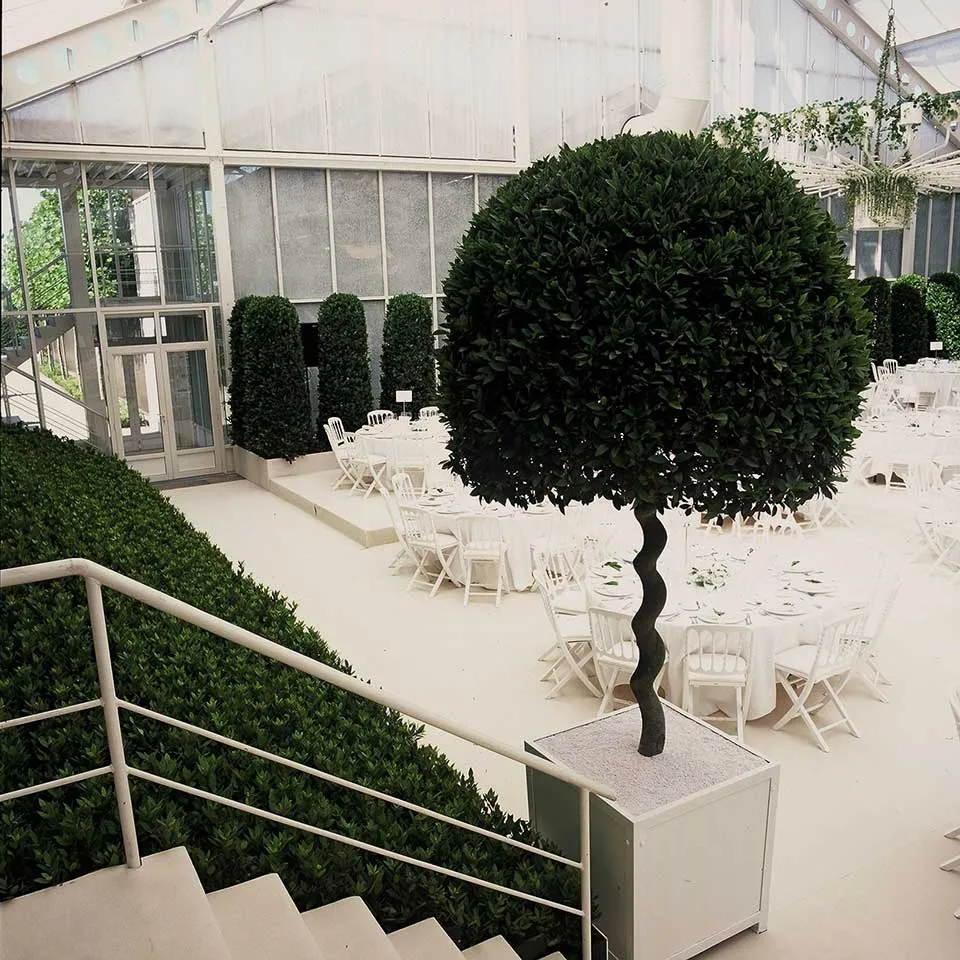
Bay is at its best, however, as a standard or topiary specimen grown in a pot. These stylish accents work wonderfully on terraces, but are equally at home on outdoor staircases, in gravel gardens, beside paths… They can also be arranged in rows as proud sentinels leading to the front door. The possibilities are endless. They also add a festive touch to receptions and other events.
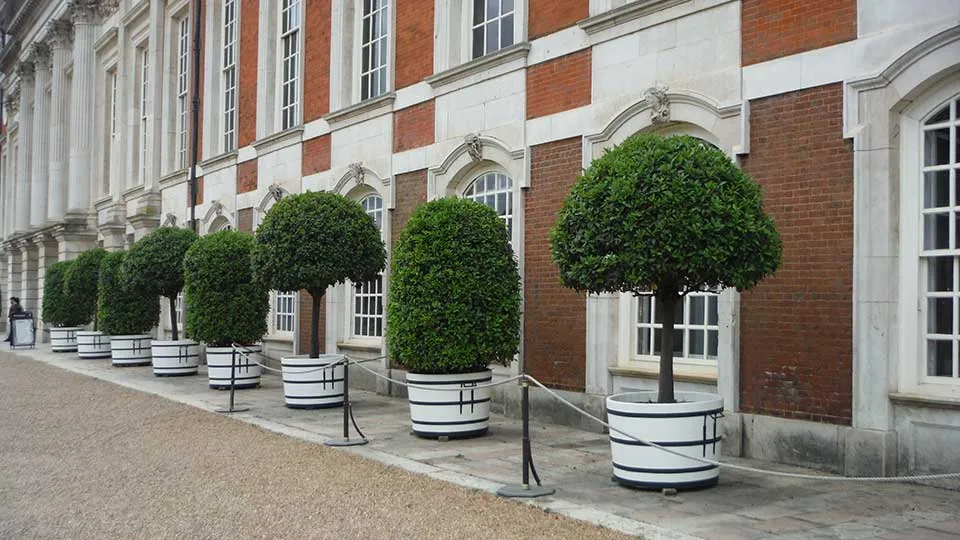
‘Topiary’: a wealth of shapes
Laurica Plants carefully grows its plants in the best conditions, with the utmost care. The range is particularly extensive, from small kitchen varieties to imposing standards up to 3 metres tall. The many topiary shapes available are exceptionally attractive and fit perfectly with the spirit of ‘topiary’, an art form in its own right that the British are particularly fond of. In every English garden, large or small, you will find a beautifully clipped bay tree.
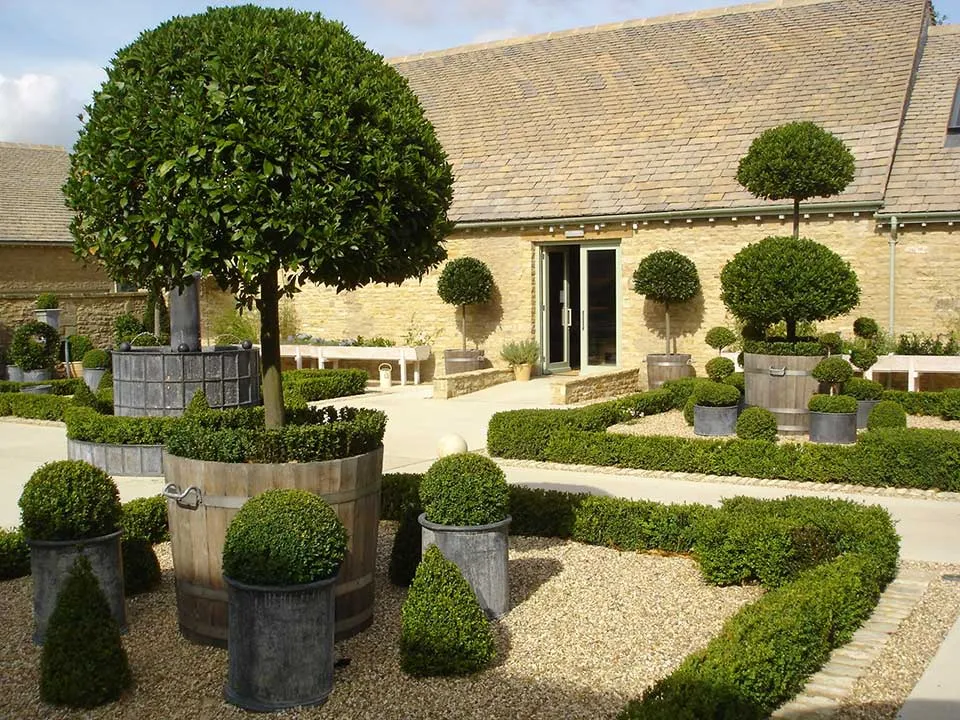
Laurica Plants supplies plants pre-clipped into shapes including pyramids, cones and standard lollipops. These are more classic, formal options. More imaginative shapes are also available, including plants with twisted or braided stems, columnar standards and the imperial crown. In a classic low ball shape, bay makes an attractive and resilient alternative to boxwood, which is under threat.
Proud to bear the label
Every bay tree leaving the nursery proudly bears the orange Laurica label, a mark of excellence backed by rigorous quality control and advanced growing techniques. The label also provides numerous practical and valuable care tips.
Each new plant is grown from a cutting. These plants may grow more slowly, but their leaf size, shape and aroma are much more uniform. They also develop a more compact root system, making them better suited to pots and tubs, as well as to precise topiary clipping.
Growing bay trees is a time-consuming and labour-intensive undertaking. Weeds are still removed meticulously by hand. Before delivery, every pot is washed, the plant is given a final trim and the pot is watered for the last time. The stem is also given extra protection for transport.
Centenarians
Most plants leave the nursery only after seven to eight years. Some of the bay trees on the site are even more than a hundred years old. Each year, in another time-consuming ritual, all the plants are brought indoors by 1 November and are not put back outside until spring. They are clipped into shape during the winter and trimmed again throughout the summer. This ensures absolute uniformity, with plants available in size increments of 5 to 10 centimetres.
All this work results in the finest quality and most beautiful shapes, bringing a timeless, stylish accent to any garden or outdoor space.
Question about this story? Ask your question
Companies in this story

Keep following this
Get an email when a new story is published. No account needed.
- ThemeTrees and plants of tomorrow
- SubjectGeneral
- CompanyLaurica Plants







