









What nectar or pollen value does a tree or plant have?
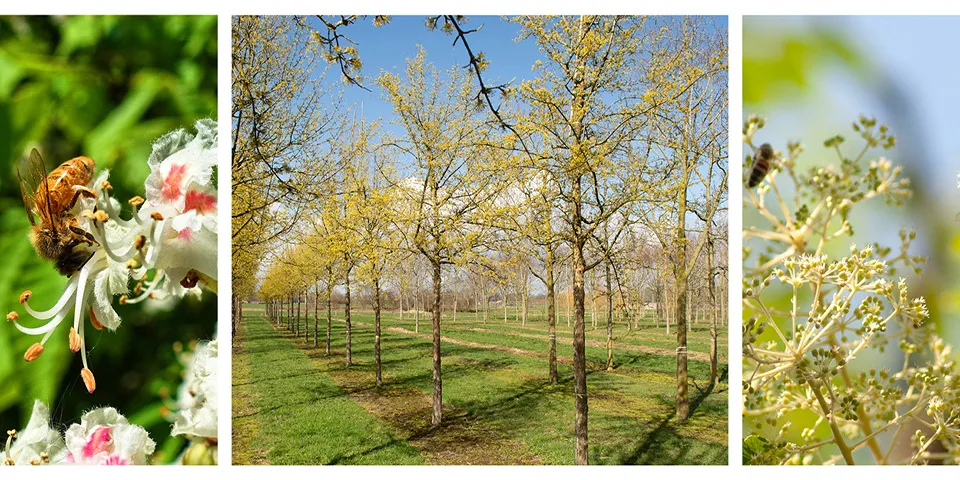
We don’t need to tell anyone that bees need help. A lot of help. Fortunately, the need to plant bee-friendly plants is gaining wider recognition. Ecological value is increasingly becoming an important criterion when selecting trees for public spaces. That is why a new, unique feature has been added to the TreeEbb tree encyclopaedia, allowing users to search by the specific nectar and/or pollen value of trees and plants.
It was already possible to search for trees in TreeEbb by ‘host plant/food plant’ for bees and butterflies, among others. A new feature has recently been added to the tree search tool from Boomkwekerij Ebben: the nectar and pollen value of food plants for bees and other insects. This means you can now select not only WHETHER a tree is a host plant, but also WHAT its specific nectar and/or pollen value is. Nectar value indicates how readily a species is visited by insects for nectar; pollen value indicates how readily bees find the tree for pollen.
Trees for bees
Which species are the very best for bees? Tetradium daniellii, the bee-bee tree, of course. But top performers such as Salix capria, Cornus controversa, Tilia tomentosa ‘Szeleste’ and Zanthoxylum simulans also score highly for nectar value. Looking for other options? TreeEbb shows the best trees for bees at a glance: almost 300 species with a nectar value of five. Time to get planting!
Question about this story? Ask your question
Keep following this
Get an email when a new story is published. No account needed.
- ThemeGreen space for everyone
- SubjectGeneral







