









With thanks to grower Hugo Maes: the unstoppable rise of the holm oak and kermes oak
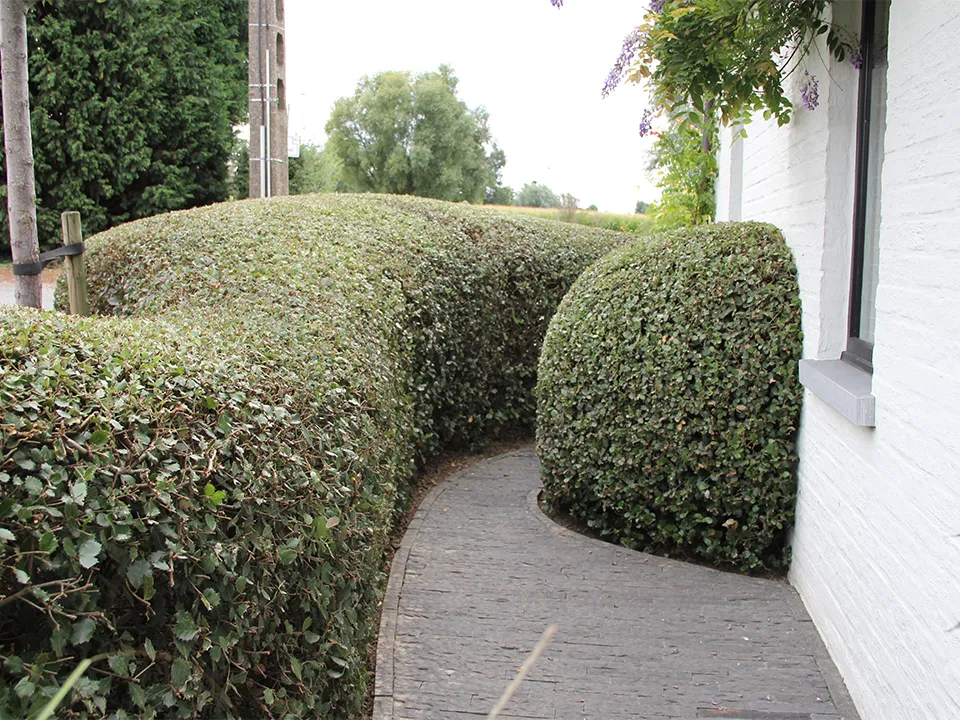
The unstoppable rise of holm oak and kermes oak in gardens across Flanders and Wallonia is largely down to the work of one man: perennial plant grower Hugo Maes from Waregem. One of the few in Belgium to have specialised in growing this hardy woody plant from southern Europe and North Africa, he champions the use of holm oak in hedges and mass plantings. It is a particularly attractive, robust and fully fledged alternative to holly, yew or hornbeam hedges, and especially to box hedges, which have come under severe pressure in recent years in our region.
Sustainable and decorative
Holm oak is characterised by its thick, leathery, dark green leaves, with a felt-grey, silvery underside. In late spring, it produces an abundance of soft yellow flowers. Its leaves can have smooth or holly-like toothed edges. Quercus ilex is evergreen, but may lose some of its leaves during prolonged cold spells. These are immediately replaced by fresh young foliage. This evergreen quality makes holm oak particularly suitable for planting as a hedge.
Home-grown
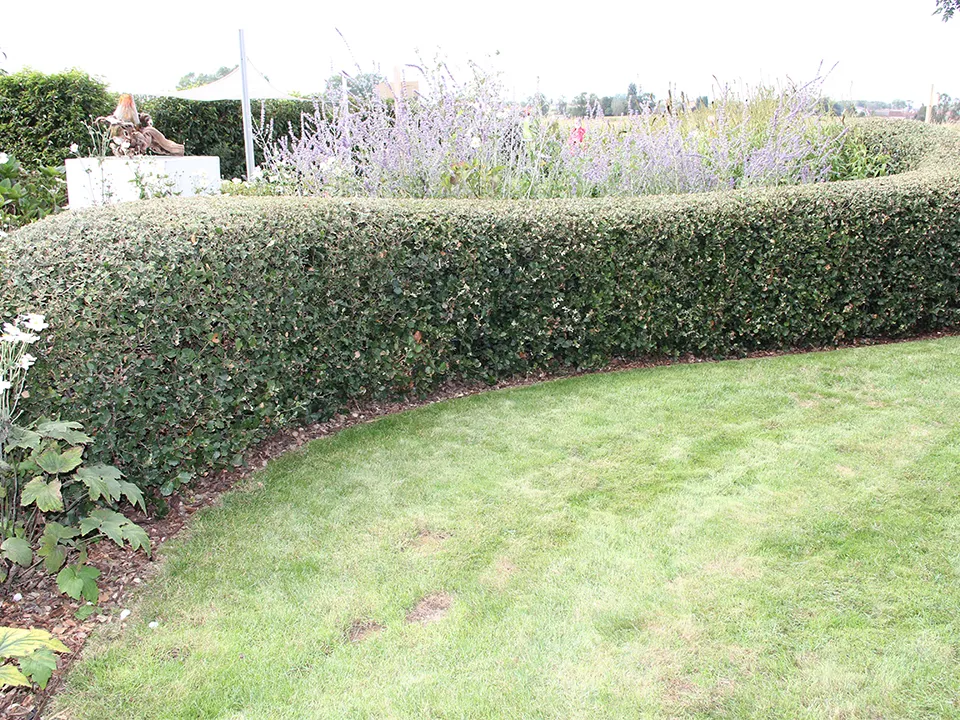
Every year, Hugo Maes travels to southern France to collect ripe holm oak acorns. He germinates them himself and grows them into hedge plants. By selecting the seeds meticulously, he produces Belgian-grown holm oaks with much smaller leaves than imported Italian specimens. The plants can therefore adapt to our climate and soil conditions, and are hardy to at least -18°C.
Regular pruning and meticulous care of the young plants ensure they develop into well-branched, dense specimens that establish quickly in their new surroundings after transplanting. Unlike other hedge plants, Quercus ilex is unaffected by diseases, infestations or harmful insects.
Hugo Maes’s pioneering work over many years has led an increasing number of garden designers to specify Belgian-grown plants, particularly for their leaf shape and size.
For every garden
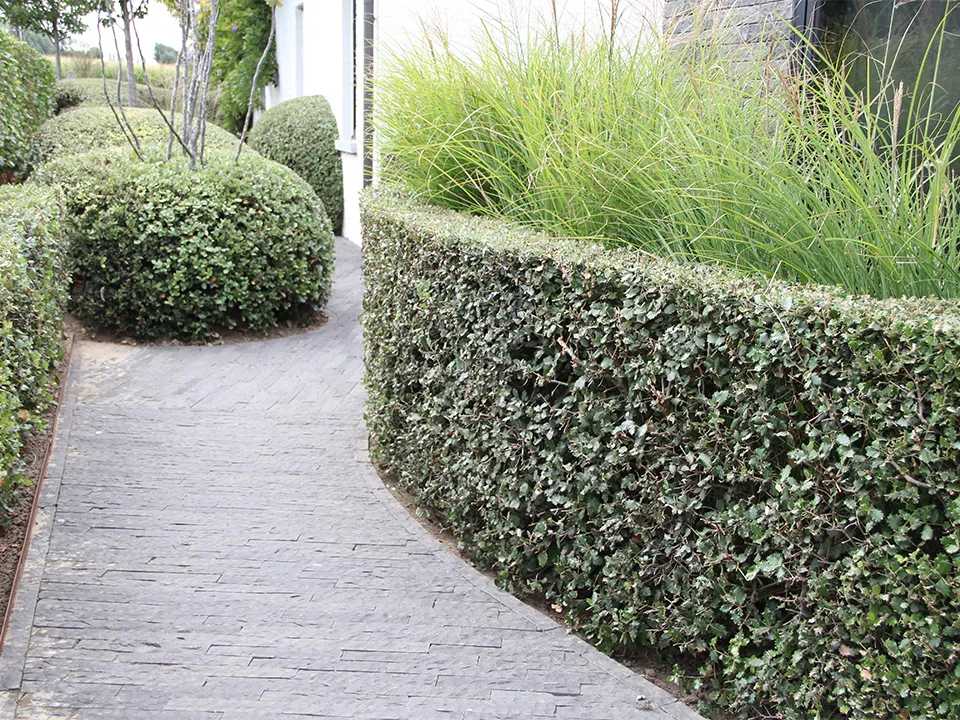
Holm oak hedges can be used in almost any garden as an impenetrable boundary. Pruning twice a year keeps them neat and crisp in shape. Looser forms are also possible, requiring just one pruning a year. Holm oak can also be used to create beautiful, intimate garden rooms. Quercus ilex thrives even in salty, often windy coastal climates, which is why it is often planted as a resilient, evergreen windbreak.
The little brother
The kermes oak, or Quercus coccifera, is a miniature version of Quercus ilex. It is also known as holly oak because of its small, hard, spiny leaves. Quercus coccifera is smaller and more compact than holm oak in every respect. In the south, it is abundant as impenetrable undergrowth in woodland. In spring, kermes oak takes on a soft bronze hue. In our region, it is a valuable alternative to traditional bedding plants. As a low-maintenance ground cover, kermes oak also looks particularly attractive beneath
holm oak trees.
Ideal for our climate
Climate change is becoming increasingly apparent, including in our part of the world. Extreme weather events are becoming more frequent. Periods of heavy rainfall alternate with scorching heat and drought. Many plants struggle under these conditions, but not holm oak or kermes oak. Quercus thrives in our climate and will flourish in all conditions, provided the soil is sufficiently rich in lime and well drained.
Question about this story? Ask your question
Keep following this
Get an email when a new story is published. No account needed.
- ThemeTrees and plants of tomorrow
- SubjectGeneral







