Artificial grass for sport and play
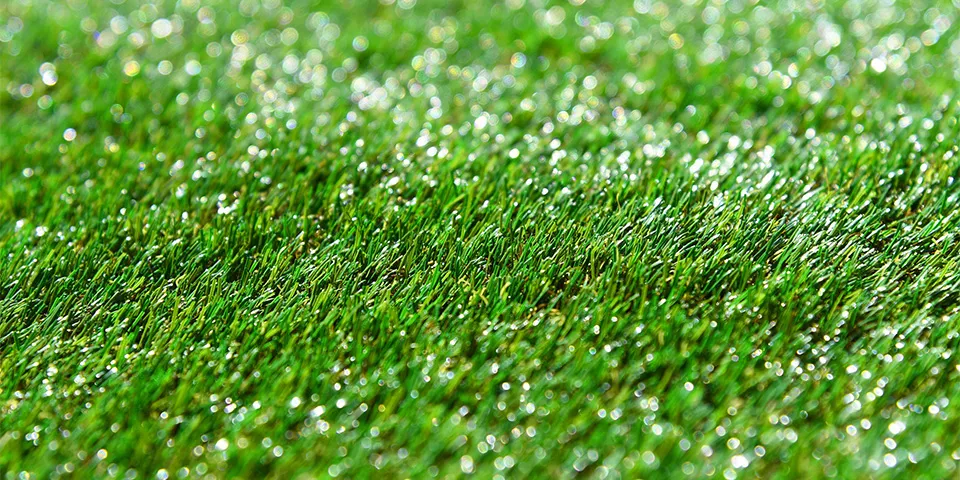
Installing an artificial grass sports field involves a great deal of work. By the time a contractor starts laying an artificial grass sports field, a lengthy process has already taken place. An artificial grass field consists of several layers: the foundation, a sports performance layer and the top layer, or artificial grass system. Field construction follows the standards set by the relevant governing body, for example a football or hockey association.
Different layers
The foundation consists of sand, with drainage installed to remove water and regulate the groundwater level. A ‘hard’ layer of lava is laid on top. The sports performance layer stabilises the construction and provides the base for the artificial grass system. The build-up of the top layer, the artificial grass system, depends on the sport. A variety of systems are available for football, hockey, korfball, handball, tennis and rugby. Artificial grass fields are subject to a standard that sets requirements for grip (which affects knee loading), shock absorption (ankle loading and lower back), ball bounce (field hardness) and ball roll (field speed).
What are the benefits of artificial grass?
- Good shock absorption.
- Artificial grass fields can be used more frequently. One artificial grass field replaces around four natural grass fields.
- Lower risk of knee injuries.
- A more even playing surface gives players greater control of the ball.
- The field markings do not fade.
- Can be used all year round.
- Easy to maintain.
- Long lifespan and high wear resistance.
Football and hockey
There is more resistance to artificial grass in football than in hockey. Football is a fairly conservative sport and does not readily break with tradition. Opponents of artificial grass fear it will change the game, making it more technical and faster. It could start to resemble futsal, but on a larger pitch. Despite the criticism, the trend looks set to continue. What’s more, an artificial grass field makes you less dependent on the weather.
In hockey, there is much discussion about water-based and sand-dressed pitches. Both are artificial grass fields. A sand-dressed pitch is a good, slightly cheaper option for building a hockey pitch, but players often prefer a water-based pitch for the feel of the game. The ball travels faster on a water-based pitch, and if you fall, you land more softly and are less likely to suffer skin irritation caused by friction.
Clubs are increasingly choosing artificial grass because it allows many teams to play on the same surface in all weather conditions. Artificial grass fields can be used more intensively than natural grass fields. The sports artificial grass from kunstgras-grastapijt.be is professional quality and can be installed correctly.
Question about this story? Ask your question
Keep following this
Get an email when a new story is published. No account needed.
- ThemeHard-wearing turf
- SubjectProduct information