Fire safety, safe charging and burglary resistance with Seefion battery cabinets
Text Geert Van CauwenbergeImage Seefion
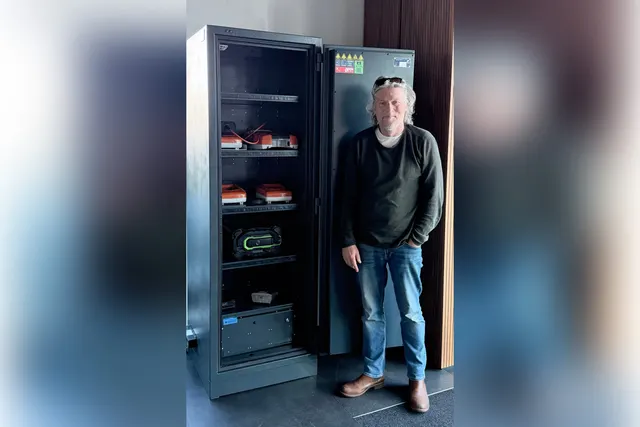
From smartphones and electric vehicles to garden tools, lithium-ion batteries have become an integral part of our daily lives. Unfortunately, these batteries also pose risks if stored or used incorrectly. A secure battery cabinet offers the ideal solution. Under the motto ‘Your safe lithium solution’, Seefion offers a range of cabinets that combine fire safety, burglary resistance and safe charging.
“Lithium batteries are characterised by their extremely high energy density, which allows them to power equipment for a very long time,” says Remco van Kuilenburg, managing director of Seefion. “However, this high energy density also increases the risk of fire or even explosion. A company with several lithium-ion batteries on its premises therefore faces an increased risk. “With Gertjan Flier joining us as sales & marketing manager last year, we are working together to further grow Seefion.”
. Our mission: “To provide a safe solution for storing and charging lithium-ion batteries as safely as possible. We do this in partnership with a selected network of partners who sell our battery cabinets to end customers.”
Thermal runaway
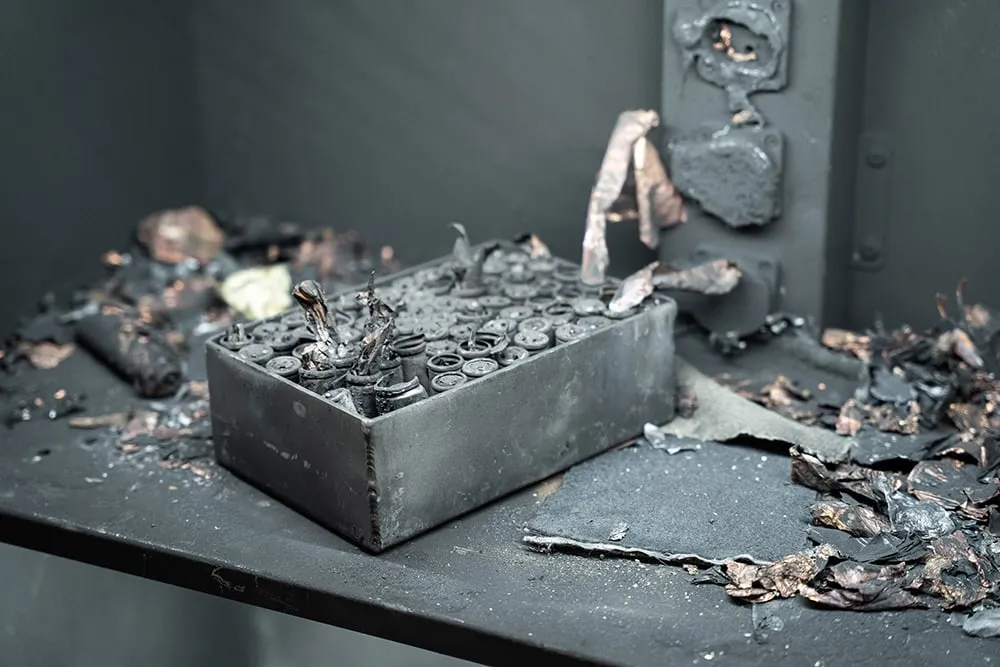
Why are lithium-ion batteries so dangerous? Remco explains: “A lithium-ion battery is relatively lighter than other battery types. The combination of compactness and power means that a small fault can cause a short circuit. A cell then becomes unbalanced and overheats. This in turn sets off a chain reaction, resulting in what is known as ‘thermal runaway’. During this combustion process, extremely high temperatures are reached, releasing large amounts of black smoke and toxic gases. To make matters worse, the explosive force can cause cells to be propelled outwards, with all the consequences that entails.”
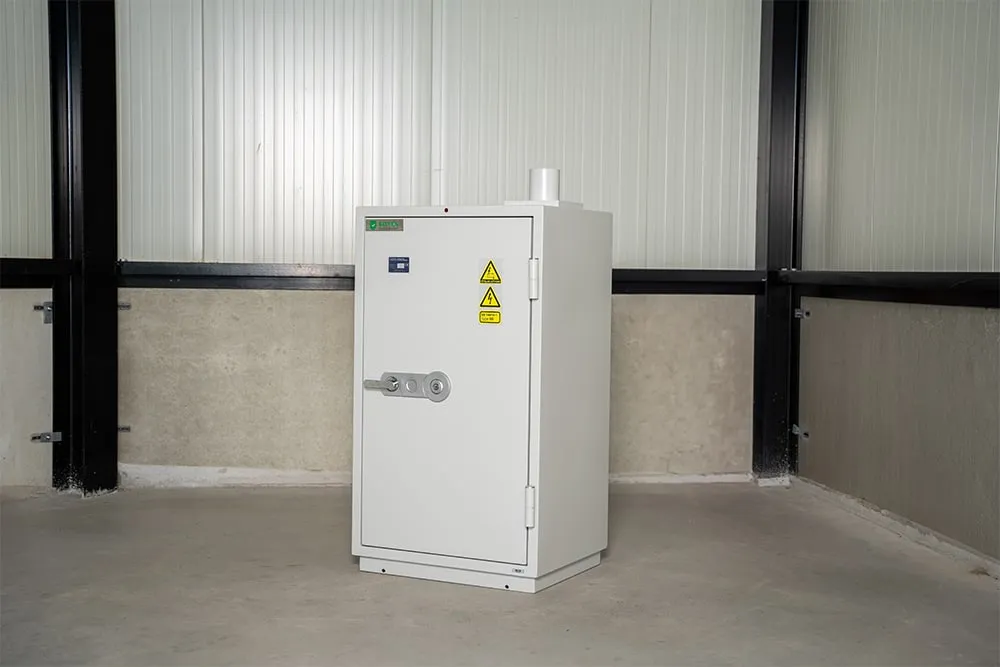
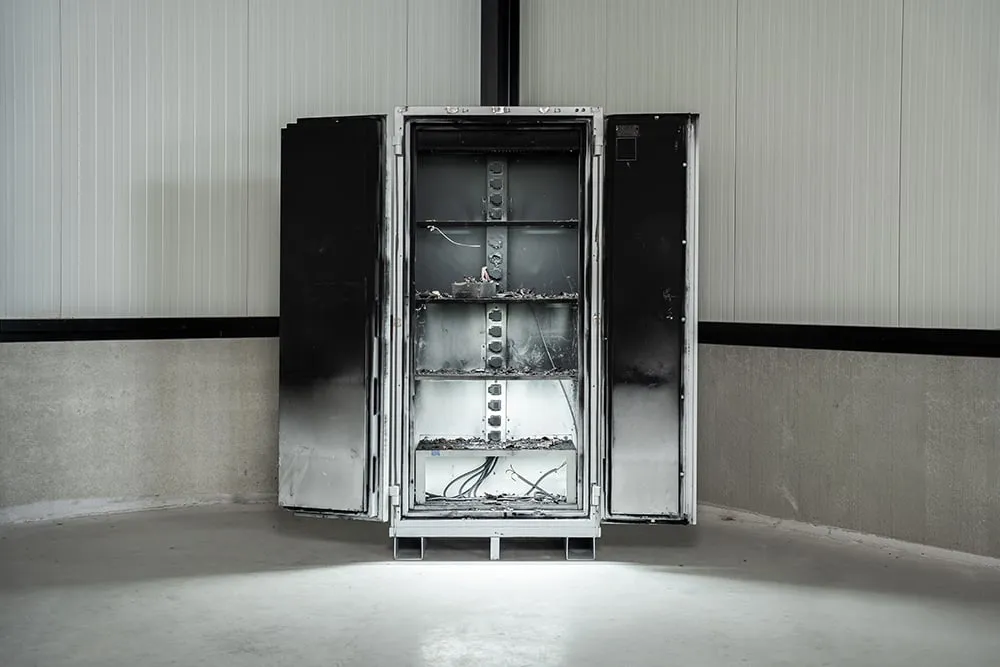
What causes thermal runaway? Remco: “It can result from overcharging or excessively discharging a lithium-ion battery, damage caused by dropping or impact, a short circuit caused by moisture, using the wrong charger, or the battery reaching the end of its life. To literally contain these risks, we at Seefion developed fire-safe and burglary-resistant battery cabinets designed to contain a fire inside the cabinet, even in the event of an explosion.”
Chemical leakage
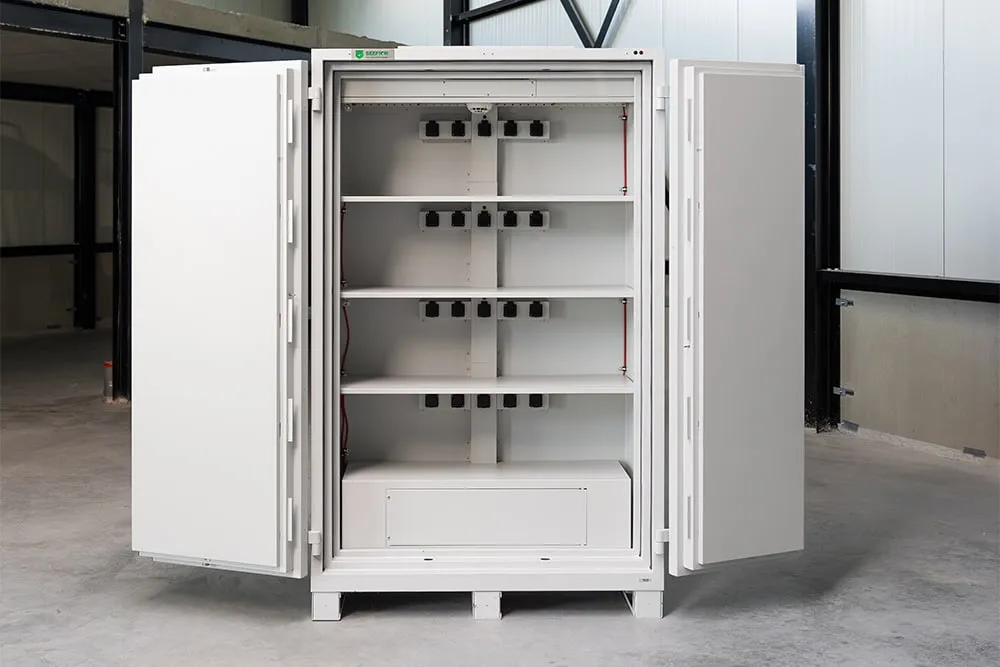
Seefion’s battery cabinets not only protect against fire and explosions, but also contain harmful smoke and gas. “When a lithium-ion battery catches fire, dangerous gases can escape. This can pose serious health risks, such as breathing difficulties and skin irritation,” Remco explains. “Our cabinets have a smoke and gas extraction vent at the top that automatically seals with foam if temperatures become too high. This prevents toxic gases from escaping.”
Strict legislation
Given these potentially dangerous circumstances, it is only natural that laws and regulations on the correct storage and charging of lithium-ion batteries are becoming increasingly strict. Remco: “Alongside increasingly stringent requirements from insurance companies, the Netherlands has the PGS 37-2 guideline, which sets out measures to manage the risks associated with storing lithium-containing energy carriers. There is also VDMA 24994, a document describing the requirements a battery cabinet must meet to charge and store lithium-ion batteries safely. This document, published in August this year, is based on test results. Two years ago, together with Nauta, a leading importer, wholesaler and manufacturer of security products, we tested a lithium-ion charging cabinet that served as a blueprint for the VDMA 24994 document.”
Notably, Belgium has no legislation governing the storage of lithium batteries. “Only recommendations are available,” Remco confirms. “It is therefore up to each company to determine and implement appropriate measures. This can create problems in terms of liability risks. Alongside the serious consequences of a lithium-ion fire, this makes it important for companies to invest in safe battery storage.”
Robust battery cabinets
With a range of battery cabinets, Seefion is doing its bit to create a safe working environment. “Our cabinets have been tested by MPA Dresden using lithium-ion batteries for fire resistance and the overpressure generated in an explosion,” says Remco. “The test was carried out during the development of VDMA 24994. Our cabinets are also fitted with a mechanical ventilation system. This fire-resistant ventilation grille consists of a frame and slats and is filled with thermo-expansive material. When the temperature exceeds 100°C, the vent closes and seals itself. Safety first!”
A business enquiry for Seefion B.V.? Get in touch
Companies in this story

Keep following this
Get an email when a new story is published. No account needed.
- SubjectProduct information
- CompanySeefion B.V.