From a basic feature to a real showstopper
There are many ways to breathe new life into a garden or front garden. Topiary trees are one option.
Laurel is ideal for topiary
Laurel’s suitability for shaping is clear from the range offered by Laurica-plants. The Jabbeke-based specialist stands out for its wide variety of shapes and sizes, and is not afraid to experiment from time to time.
Words Elise Noyez | Images Laurica-plants
Knowledge and patience are the foundations of Laurica-plants’ extensive, high-quality range of topiary laurels. All the plants are deliberately grown from cuttings. This method results in slower growth, but also greater uniformity and a more compact root system, making them ideal for topiary and life in a pot or planter. The plants are grown this way in Jabbeke for at least seven years, with topiary pruning in winter and an additional trim in summer to ensure uniformity. The range comes in dozens of shapes and sizes.
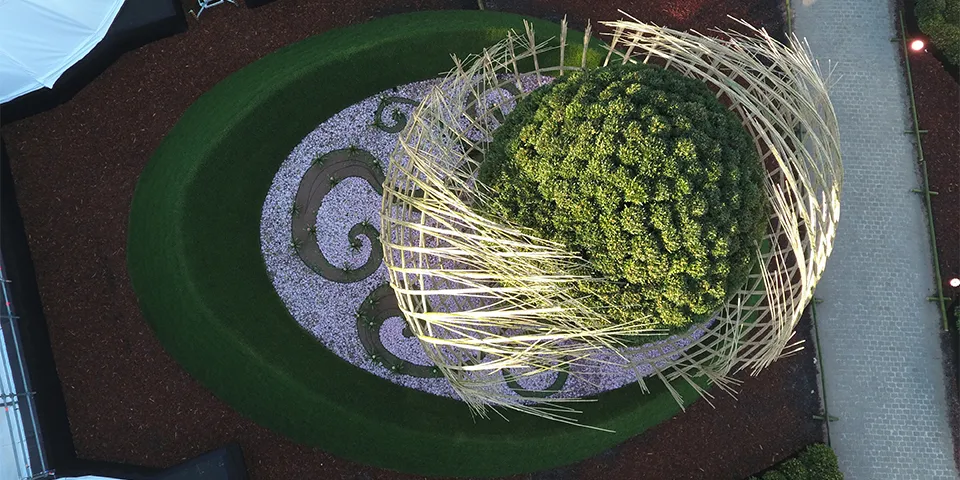
At the 2016 Floraliën, Laurica-plants worked with Daniël Ost on an exceptional creation.
Ball on stem
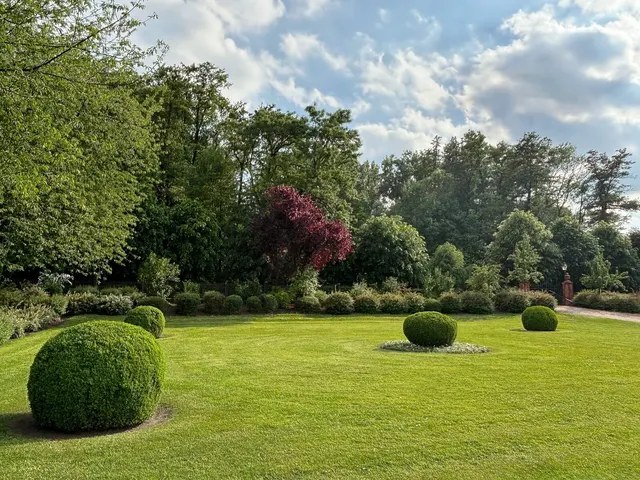
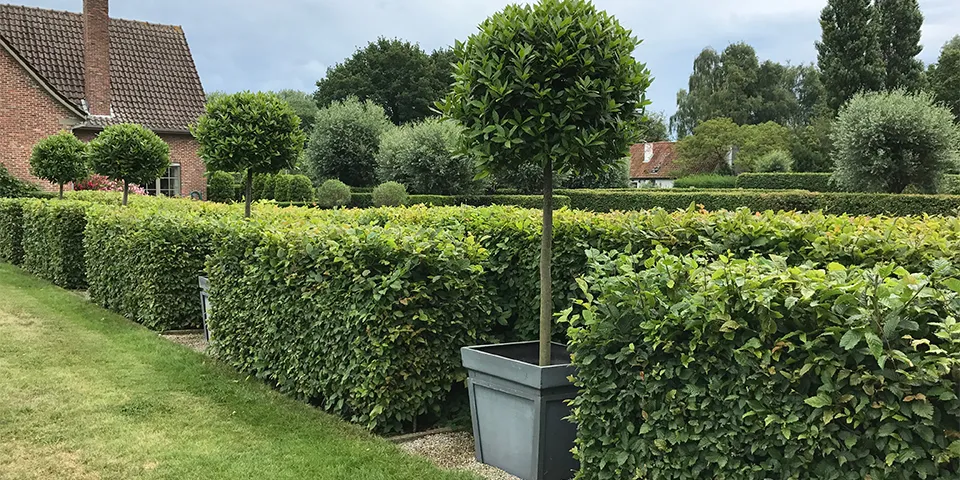
One of the most popular shapes is the ball on stem. A simple, elegant plant that looks beautiful in a pot. Just a few specimens are enough to accentuate a passageway, garden entrance or front door, or you can place them among traditional hedges to add height and dynamism.
The main considerations when buying this topiary plant are the height of the stem, the diameter of the ball and the pot size. Laurica offers plenty of options. Bear in mind that the plant will only grow in diameter, and that the stem height will not change. The key is to choose the right height from the outset.
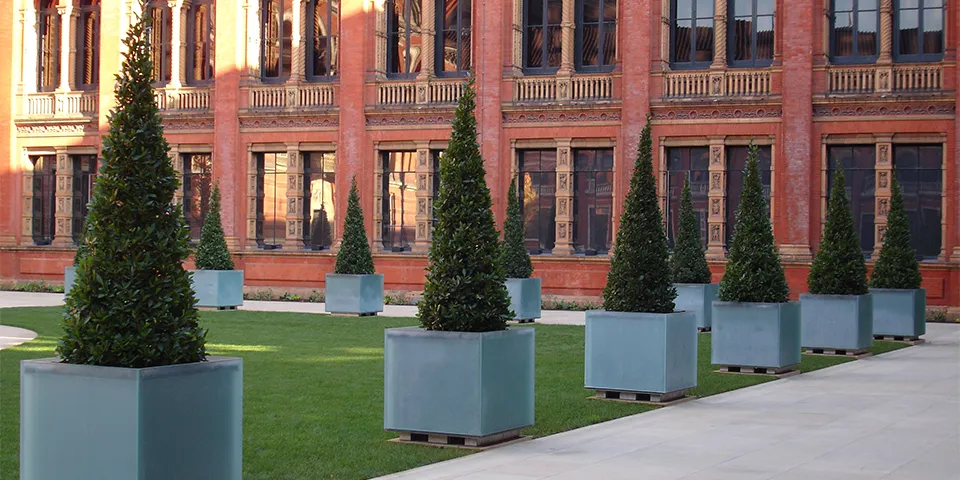
At the Victoria & Albert Museum in London, pyramid-shaped laurels accentuate the stately architecture.
Pyramid
The pyramid is also a mainstay of the Laurica-plants range. Group several sizes of this conical plant in a corner to create an intimate yet playful space, or use them, as at the Victoria & Albert Museum in London, to accentuate the stately architecture of the surrounding buildings. For a softer look, Laurica-plants also offers column shapes and pyramids with rounded tops.
Special shapes
A beautifully shaped topiary tree can also be used as a focal point in the garden, especially if you choose a single specimen with a more unusual appearance. A ball on a twisted or braided stem is stylish, slender and stately, while a column-stem-ball shape is sturdier and more robust.
As tastes and styles evolve, Laurica-plants also experiments from time to time. In the past, this led to the development of the emperor’s crown, a cone on a stem that has since joined the laurel specialist’s range.
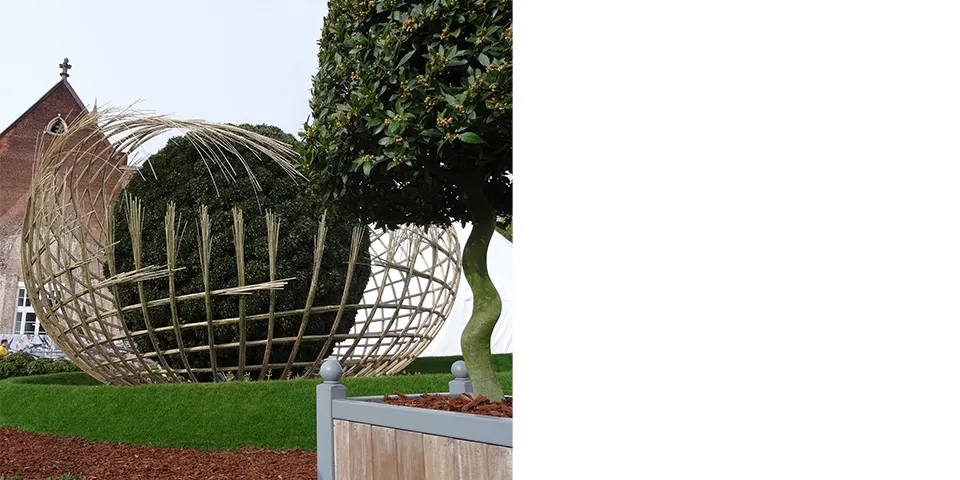
More than a thousand balls on stems were brought together to create a gigantic sculptural ball.
Room for creativity
The fact that Laurica-plants’ topiary laurels thrive in pots and planters also offers clear advantages for a creative garden design. The right pot not only completes the look, but choosing topiary laurels also creates scope for change and dynamism. In other words, creativity is not limited to the many shapes and pruning options available for the plants themselves. Just look at the creation by Laurica-plants and Daniël Ost at the 2016 Floraliën. More than a thousand balls on stems were brought together to create a gigantic sculptural ball. A true showpiece.
Question about this story? Ask your question
Companies in this story

Keep following this
Get an email when a new story is published. No account needed.
- ThemeTrees and plants of tomorrow
- SubjectProduct information
- CompanyLaurica Plants