How to keep your bay laurel looking beautiful and healthy
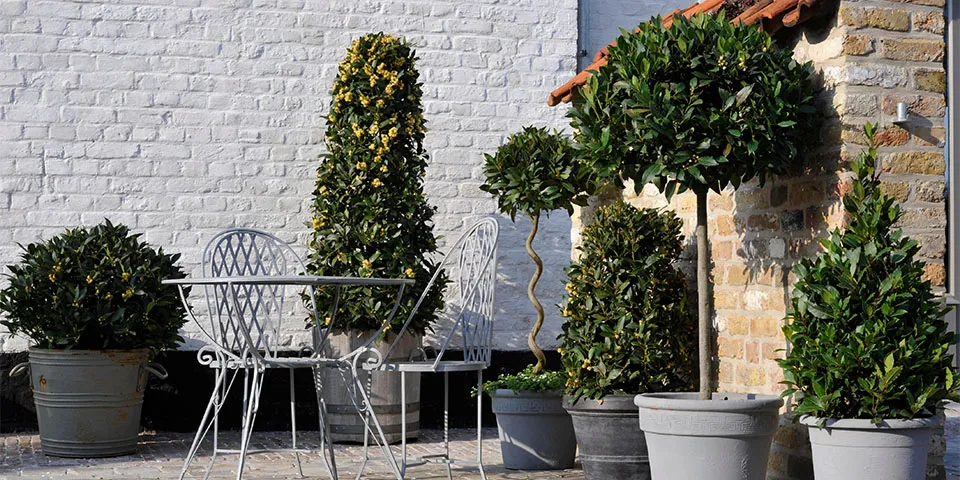
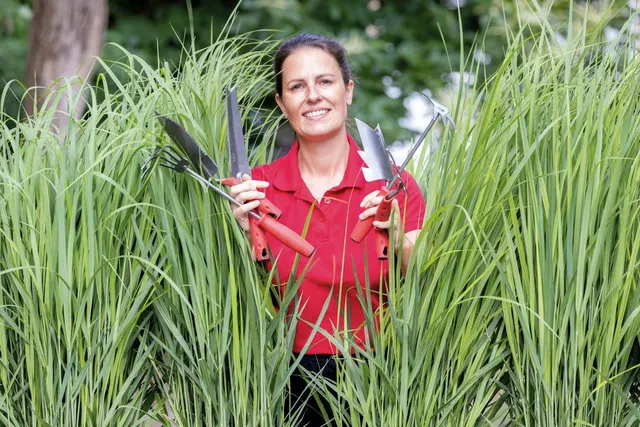
Bay laurel is an attractive, long-lasting plant. With the right care and maintenance, it will retain its beauty for years. Laurica-plants/Lauretum from Jabbeke has specialised in growing bay laurels for years. Every plant that leaves the nursery carries its distinctive orange quality label. Marian Maenhoudt shares some care tips for the best results.
Care tips from specialist Marian Maenhoudt

The Laurica orange quality label.
Pruning
Regular pruning keeps plants full and compact. Hand-pruning with secateurs gives the best results. Larger specimens can also be pruned with hedge shears. Prune twice a year, at the beginning of summer and during winter.
Summer pruning is intended to maintain the plant’s shape. For slightly older plants (from 4 to 5 years old), it is best to prune back the strongest shoots before July. The stronger the shoot, the further it can be cut back, and the more vigorously it will grow afterwards. Pruning judiciously produces a full, compact plant.
Winter pruning, or shaping, is best carried out between November and March. The aim is to balance the plant and tidy up its ball or pyramid shape. It is important to increase the plant’s diameter by only a few centimetres each year. A compact shape helps it withstand rain and wind.
Pruning, especially of younger plants, can be done by eye. For older, larger specimens, it is easier to use a pruning template or measuring tape.

Fertilise twice a year.
Repotting
Bay laurel can be repotted at any time of year, but September is ideal. From then on, the plant gradually enters its winter dormancy. Its root system is still fairly active, however, so the
new soil will be partly colonised by roots before winter.
In the first few years, it is best to repot bay laurel annually. Later, repot every two years. Plants over ten years old need repotting only every four to five years. Specimens over fifty years old need repotting every ten to fifteen years. Never prune the roots when repotting!
With each successive repotting, use a larger container with drainage holes in the base and, if desired, a layer of expanded clay or lava to ensure good drainage. A watering rim of around two to three centimetres is important to allow enough water to be
added each time.
For the potting mix, it is best to use pre-fertilised potting compost for conservatory plants, mixed with clay. This helps retain water as a reserve.
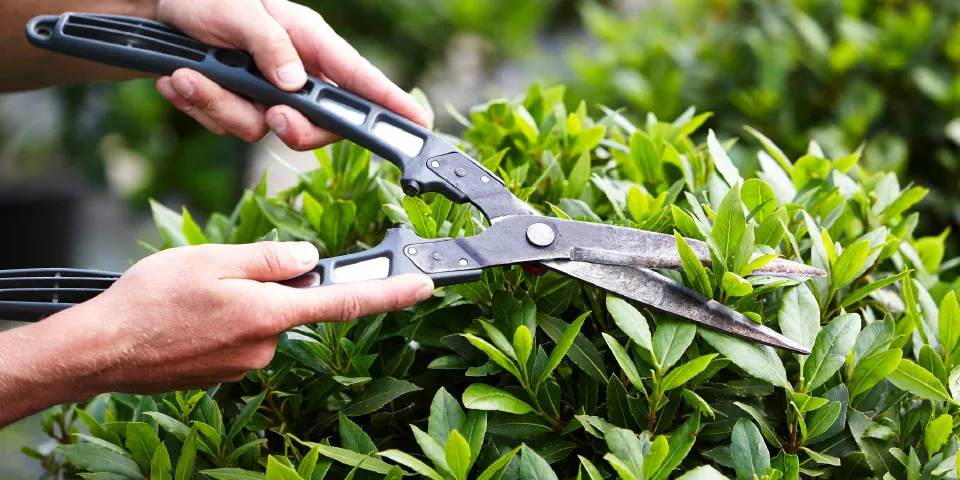
Pruning for shape and growth.
Fertilising
A slow-release organic fertiliser with a high nitrogen content promotes healthy plants, strong growth and attractive green foliage. Specially formulated fertilisers are available from garden retailers.
Ideally, fertilise twice a year: first in April-May and again in July-August. This is when the plant grows fastest and needs extra nutrients. The amount of fertiliser depends on the size of the pot and the age of the plant.
Watering
Because plants in pots take up less rainwater than those planted in the ground, regular watering is essential. The amount and frequency of watering depend on the size of the pot, its location and the season. Always water from above and avoid leaving excess water in the pot or saucer, as this can cause root rot.
From March through to midsummer, watering can be gradually increased. The plant needs plenty of water on the hottest summer days. Reduce watering from September onwards. In winter, while the plant is dormant, the root ball can be allowed to dry out more, but it must not
dry out completely.
Pest and disease control
Despite the best care, bay laurel can still fall victim to diseases and pests. Scale insects on the undersides of leaves, along with the characteristic black sooty mould, can be treated with a solution of natural soap, followed if necessary by an insecticide for scale insects.
Bay sucker can be identified by small white spots on the (curling) leaves. Always remove affected leaves and, if necessary, use an insecticide for bay sucker.
Overwintering
Bay laurel can withstand light frost without any problems, down to -5°C. In more severe frost, it is best to overwinter plants in an unheated but frost-free garage or conservatory. Protect plants left outside by wrapping the trunk and roots in breathable material (fleece, hessian, an old blanket, etc.). Remember to water them occasionally during winter too. Once the period of the hardest night frosts has passed, the plants can go back outside from March onwards.
Question about this story? Ask your question
Companies in this story

Keep following this
Get an email when a new story is published. No account needed.
- ThemeTrees and plants of tomorrow
- SubjectProduct information
- CompanyLaurica Plants