How to make a wadi a feature in your garden: tips from ELS Garden
Text Laura Delandsheer of KDV – Language & MoreImage ELS Garden
The Flemish garden sector is increasingly facing stricter standards on paving and water permeability. Climate resilience and regulation are becoming ever more closely linked. Rainwater infiltration is becoming the norm, with drainage the exception. Enter the wadi, still a thorn in the side of many garden contractors. But at ELS Garden, they know how to turn this mandatory ‘pit’ into a visual focal point that fits perfectly into the garden.
Wadi stands for ‘Water Drainage and Infiltration’. The principle is simple: rainwater is temporarily collected in a shallow, planted depression in the garden, where it can slowly infiltrate into the soil. The aim? To relieve pressure on the sewer system during heavy rainfall and replenish groundwater levels.
From functional to attractive
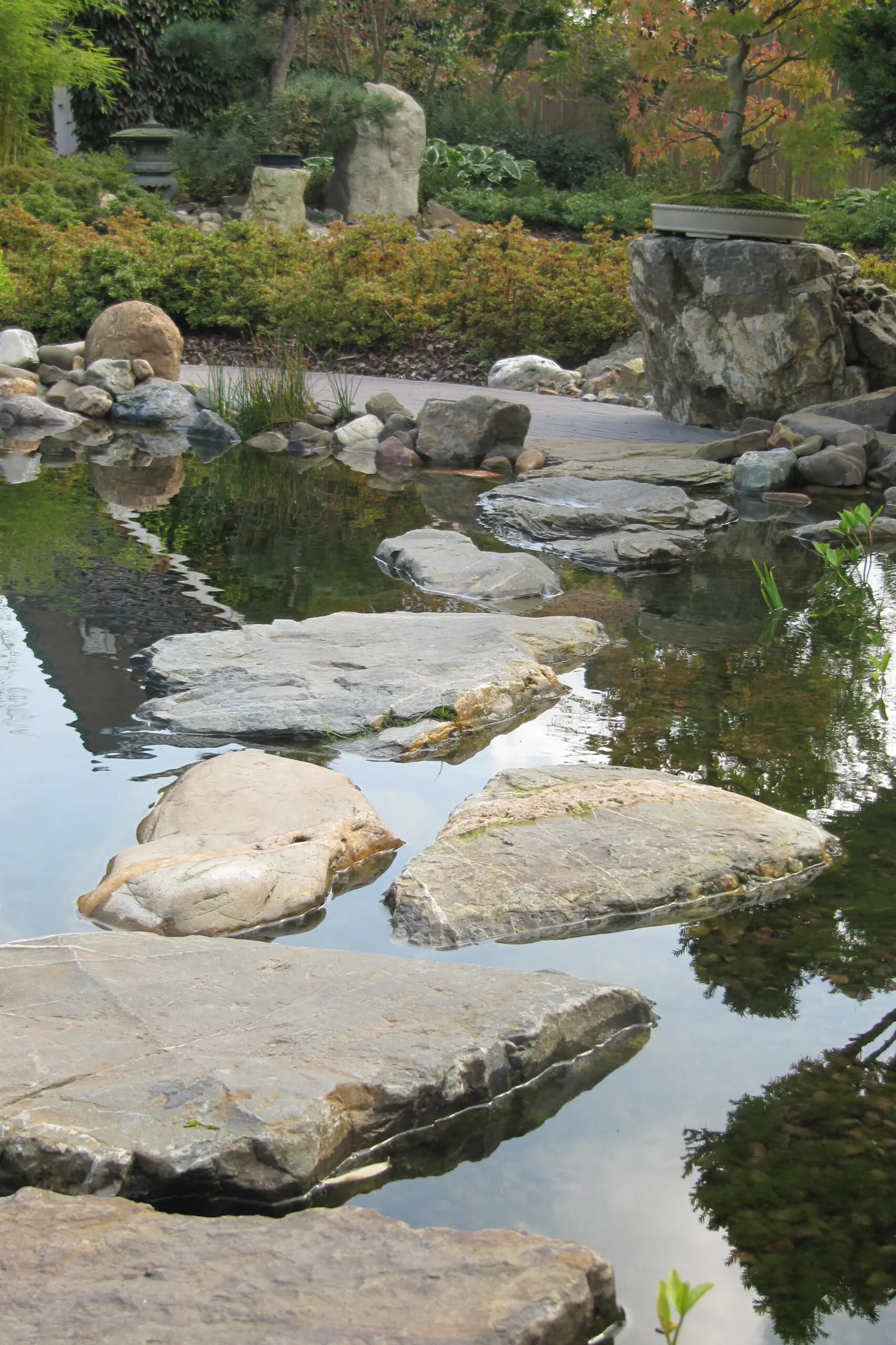
As the principle is simple, the finished result is often basic too: a shallow pit sown with grass. “What a waste,” says Els Meynen, owner of ELS Garden in Laakdal. “See the wadi as an opportunity, not an obligation. By combining function and aesthetics, you can create a cosy corner in the garden. Using natural materials, of course,” smiles Meynen, who specialises in natural stone and garden materials. “A wadi should look good in dry spells too. Boulders and pebbles are an ideal, permeable and durable choice.”
River pebbles and Scandi boulders
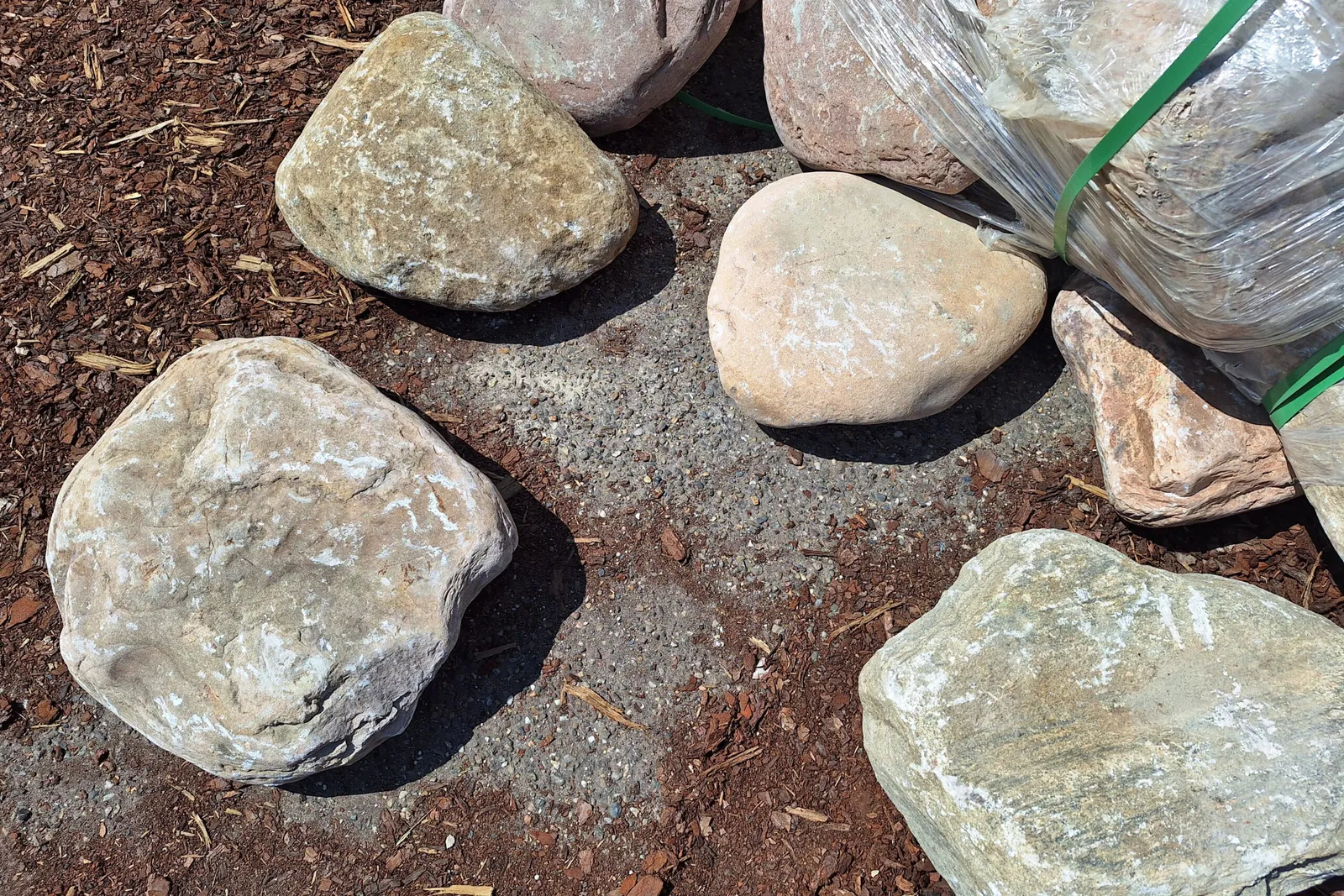
River pebbles and Scandi boulders add character to any wadi. Their organic shape and smooth surface are the result of nature’s forces and the action of flowing river water. “Scandi boulders, or erratics, come from Scandinavia,” Meynen explains. “They are large and robust, making them perfect as seating around the wadi. River pebbles are smaller, similar to cobbles or setts. Use them as a base layer, with smaller stones on top for an even surface. This keeps the wadi accessible in dry spells, without mud, while the gaps still allow water to infiltrate properly.”
Boulders as a focal point
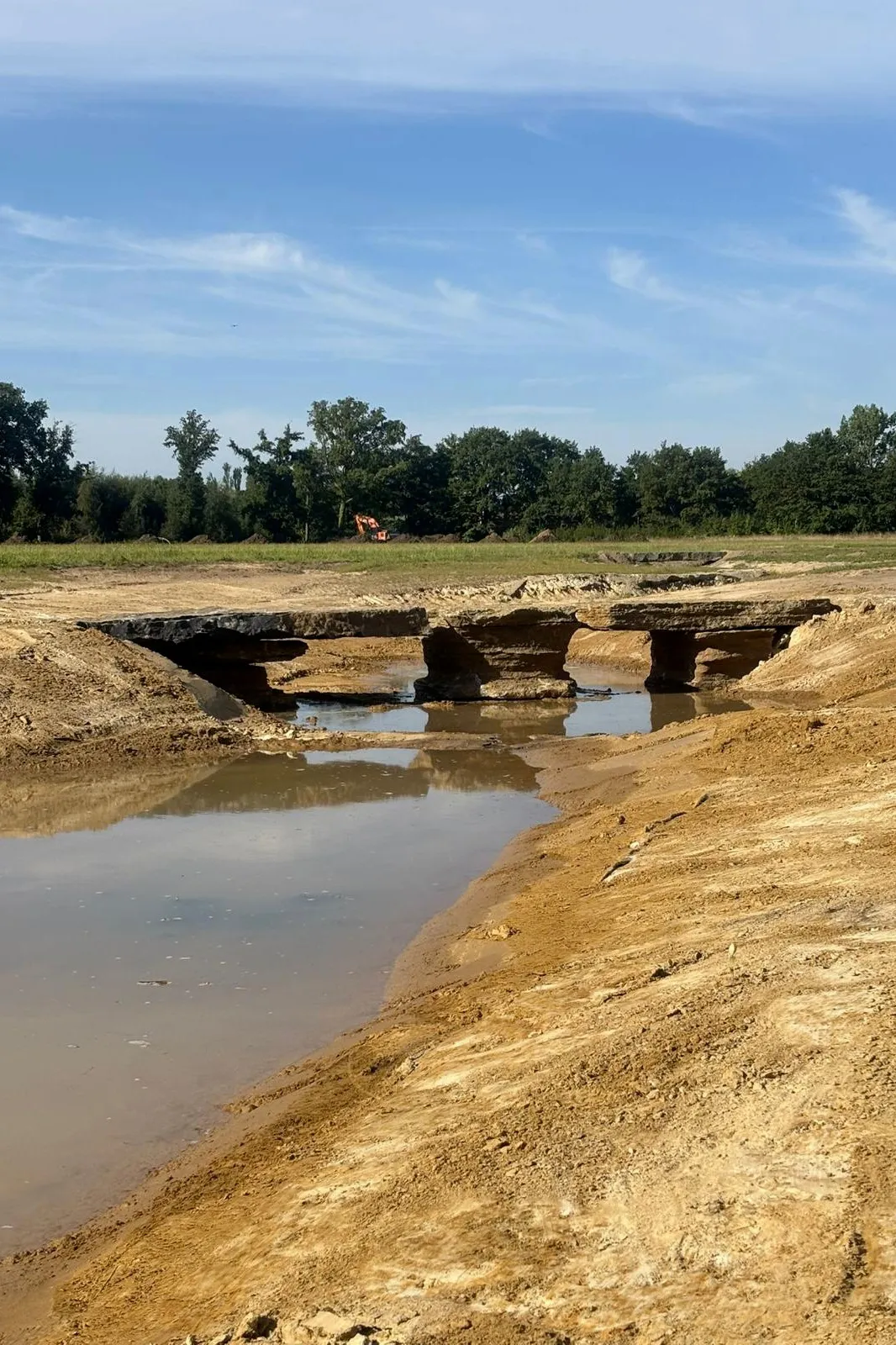
For a larger wadi, boulders can create a real focal point. “Rather than tucking the wadi away in a corner, you can make it stand out as a garden feature,” Meynen advises. “We recently supplied boulders for a park garden in Kontich, where they formed a natural bridge. The stones came from China and weighed 36 tonnes in total. It was a fantastic project in which the wadi blended seamlessly into the landscape.”
Filter lava for natural purification
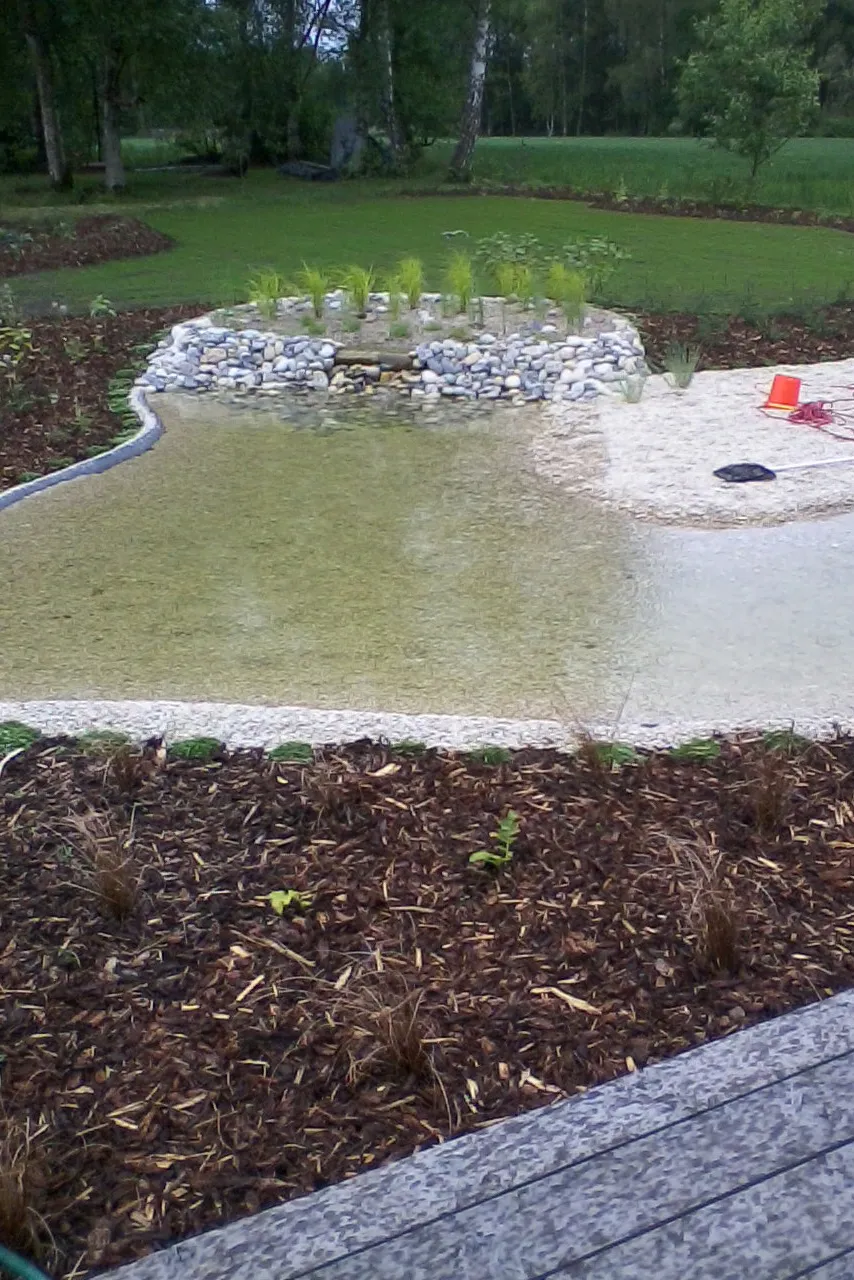
If you want your wadi to have the character of a pond, filter lava is the best choice. “It is washed lava stone with open pores, which help water infiltrate more effectively,” Meynen explains. “Unlike ordinary lava stone, it does not form sediment, keeping the soil clean. This variety also contains no heavy metals, making it ideal for wadis with planting, marsh areas or natural ponds.”
Check local regulations
The Flemish Codex is not applied in the same way everywhere. Each city or municipality has its own interpretation. “Whether you can use lava stone or river pebbles as a base layer depends on local regulations,” Meynen says. “ELS Garden is happy to advise on which natural materials are right for your project.”
Een zakelijke vraag aan E.L.S. Garden? Get in touch
Companies in this story

Keep following this
Get an email when a new story is published. No account needed.
- ThemeHealthy soil and smart water management
- SubjectProduct information
- CompanyE.L.S. Garden