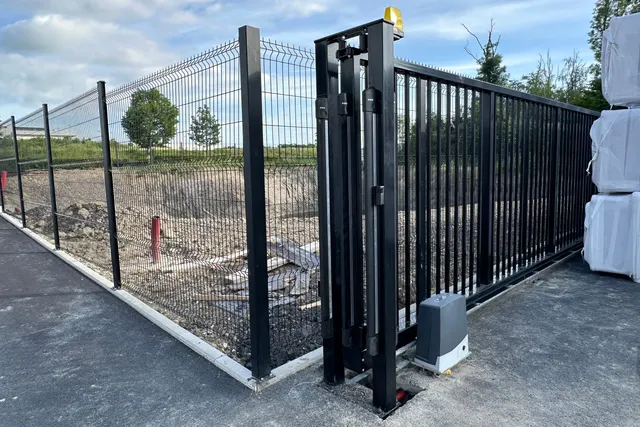
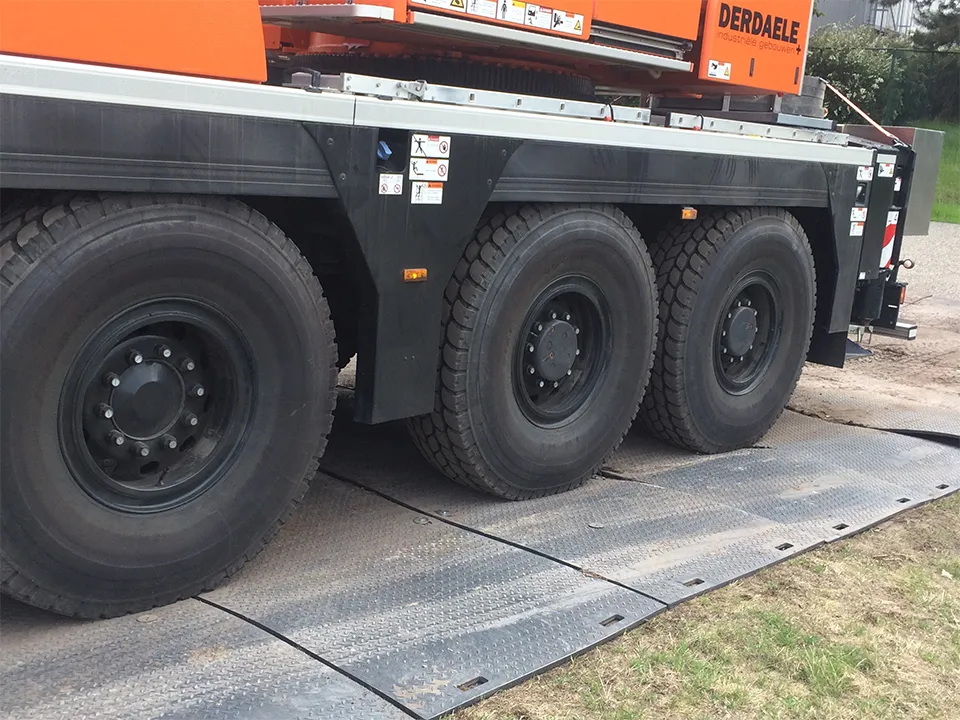
Plastic ground protection mats prevent damage to surfaces
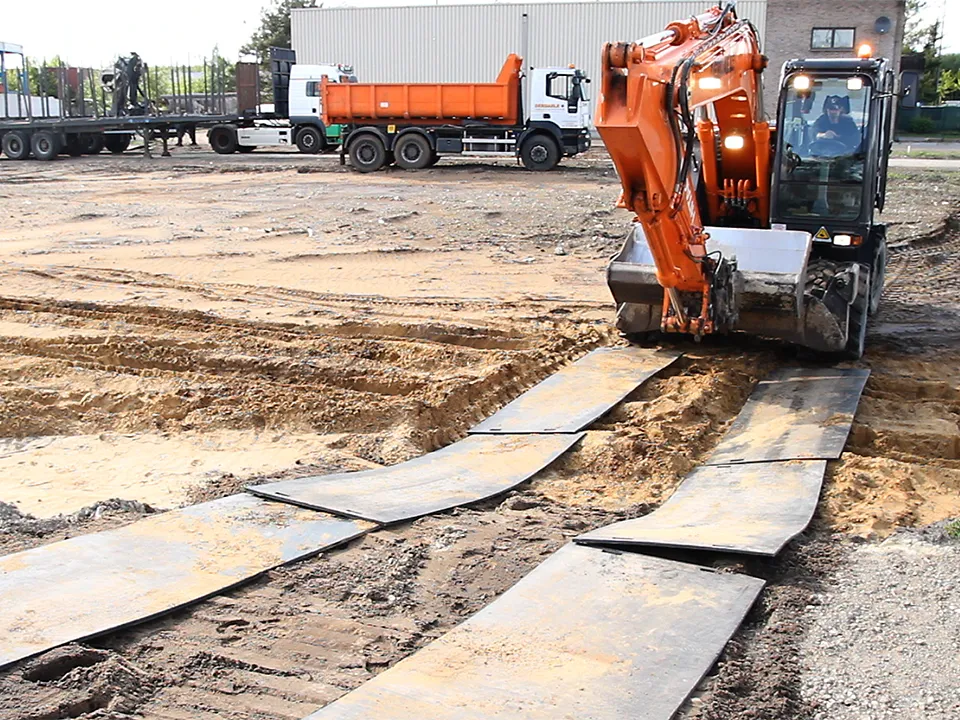
‘Easy to lay and move, without extra labour or equipment’
As a garden contractor, you are expected to enhance your clients’ outdoor spaces. But if you are not careful, the machinery you use to do so, particularly tracked loaders and mini excavators, can have the opposite effect. Ruts in the lawn, sunken sections of the driveway or mounds of churned-up soil on bends and turns... These are unfortunate consequences that can easily be avoided.
Based in Lommel, Induplates, a division of plastics specialist Indupack, has been producing and selling plastic ground protection mats for temporary site road surfacing for more than fifteen years. “Garden contractors make good use of this solution,” says managing director Vincent Van Baelen. “First and foremost, they use them to protect existing surfaces. How often are you called in to carry out just a few minor alterations at the back of a garden? Your client would be far from pleased if you damaged their perfectly laid lawn in the process. But the mats also give you the traction you need. That makes it easier to manoeuvre without causing damage, and on boggy ground there is much less risk of getting stuck.”
Weight matters
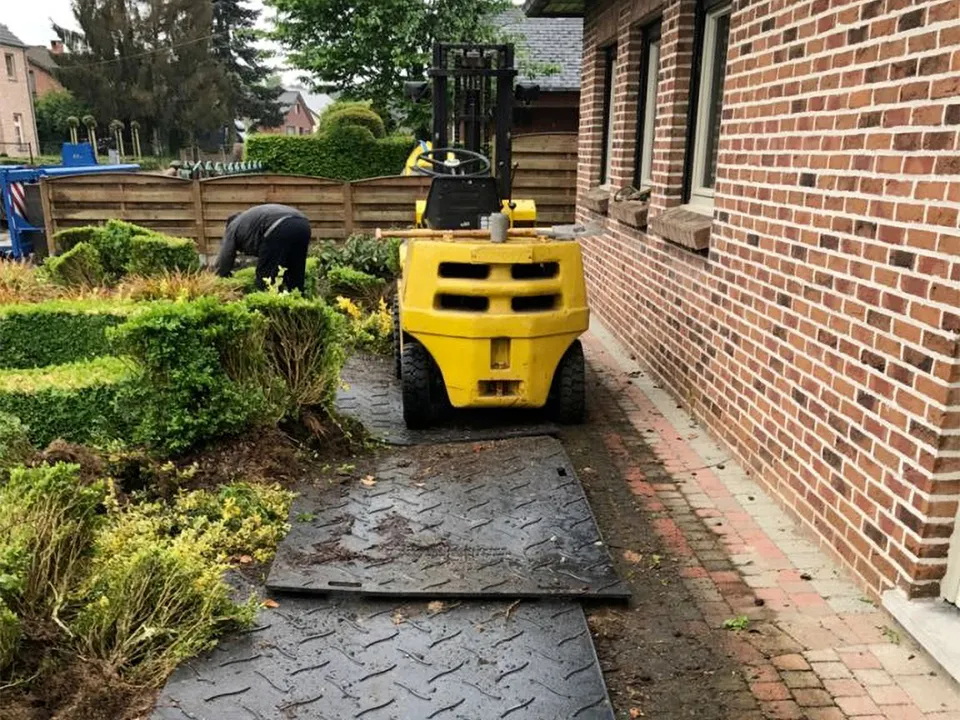
Garden projects rarely last very long, so in most cases the mats are only left in one place for a few days. They also often need to be laid on relatively narrow paths or in hard-to-reach places. “Weight and ergonomics are therefore important factors when choosing a ground protection mat. You want to be able to lay and move it quickly and easily, without needing extra labour or equipment.”
In that respect, plastic has a clear advantage over the more industrial steel mats. “The 750 x 3,000 x 15 millimetre plastic mat, which has a handle on each side, weighs 34 kilograms and has a load capacity of 15 tonnes, is probably the most popular model in our range among garden contractors, although we also have lighter models for lower loads. If the ground is particularly boggy, you can simply double up the same mats. This gives you extra load-bearing capacity while keeping each individual mat easy to handle.”
Built to take a knock
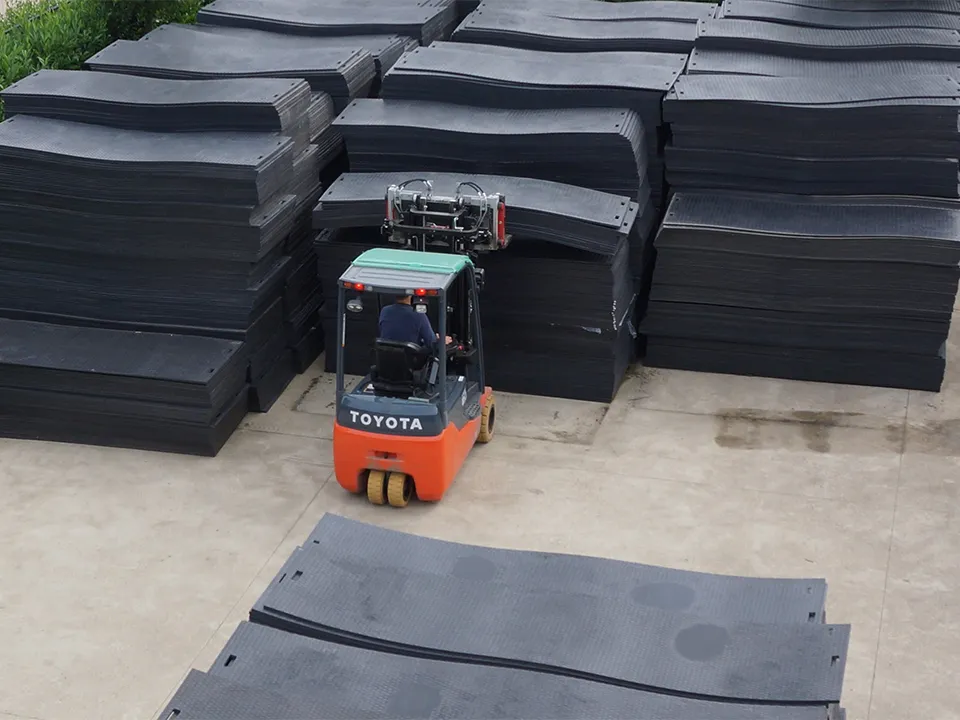
A mat that has to withstand heavy traffic every day, is hauled from one site to another and spends most of its time outdoors needs to be able to take a knock. “People sometimes use wooden beams or boards instead of ground protection mats,” says Van Baelen. “That works once, but as soon as the wood gets wet, it starts to break. You don’t have that risk with plastic mats. They do not rot and are also fully resistant to frost and UV rays.”
Thanks to their flexibility, plastic mats adapt well to the ground and the load without leaving a lasting impression afterwards. “The mat simply returns to its original flat shape. What’s more, we subject every mat to extensive testing at our factory, so we can confidently offer a two-year guarantee against cracks and breakage. To prevent theft or disputes on site, we also give customers the option of having their name or company name milled into the mats.”
Gentle on surfaces and the environment
Another advantage of the mats’ flexibility is that they are gentle on hard surfaces, too. “If you lay a steel mat on paving such as paving blocks or cobblestones, its sharp edges can leave scratches. Rust can also cause stains. Once again, that is something your client will not appreciate.”
Induplates ground protection mats are made from 100% recycled polyethylene. “When they reach the end of their service life, they can be fully recycled again. In other words, no new raw materials are used, and we do not add to the ever-growing mountain of waste. Quite the opposite!”
Question about this story? Ask your question
Keep following this
Get an email when a new story is published. No account needed.
- SubjectProduct information