Professionals choose chip quality
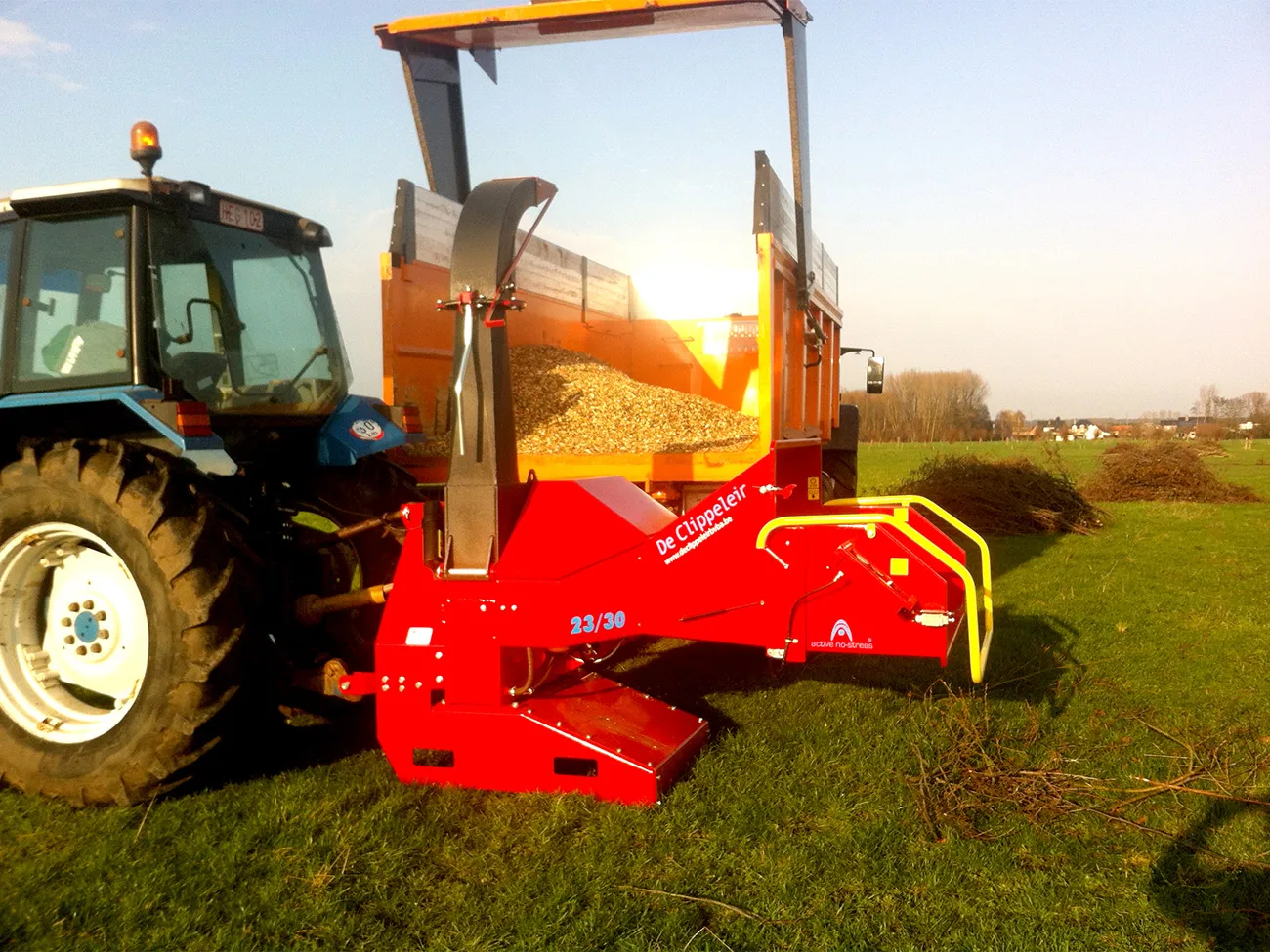
The forestry industry is booming, driving up demand for heavy equipment in the sector. This is a good time for both large-scale operators and smaller contractors to invest in machinery. Chippers are an obvious choice. China is trying to dominate the European market, but are Chinese machines suitable for true professionals?
A wood chipper, also known as a shredder, is a machine used to turn branches, foliage and tree trunks into wood chips. It makes clearing up after vegetation maintenance far less laborious. Lorries can carry much larger loads when the wood has been processed in this way, significantly reducing the time, labour and budget required to complete forestry work. The resulting wood chips can be used in various ways, for example as ground cover, as a raw material for paper production or as fuel for biomass power plants.
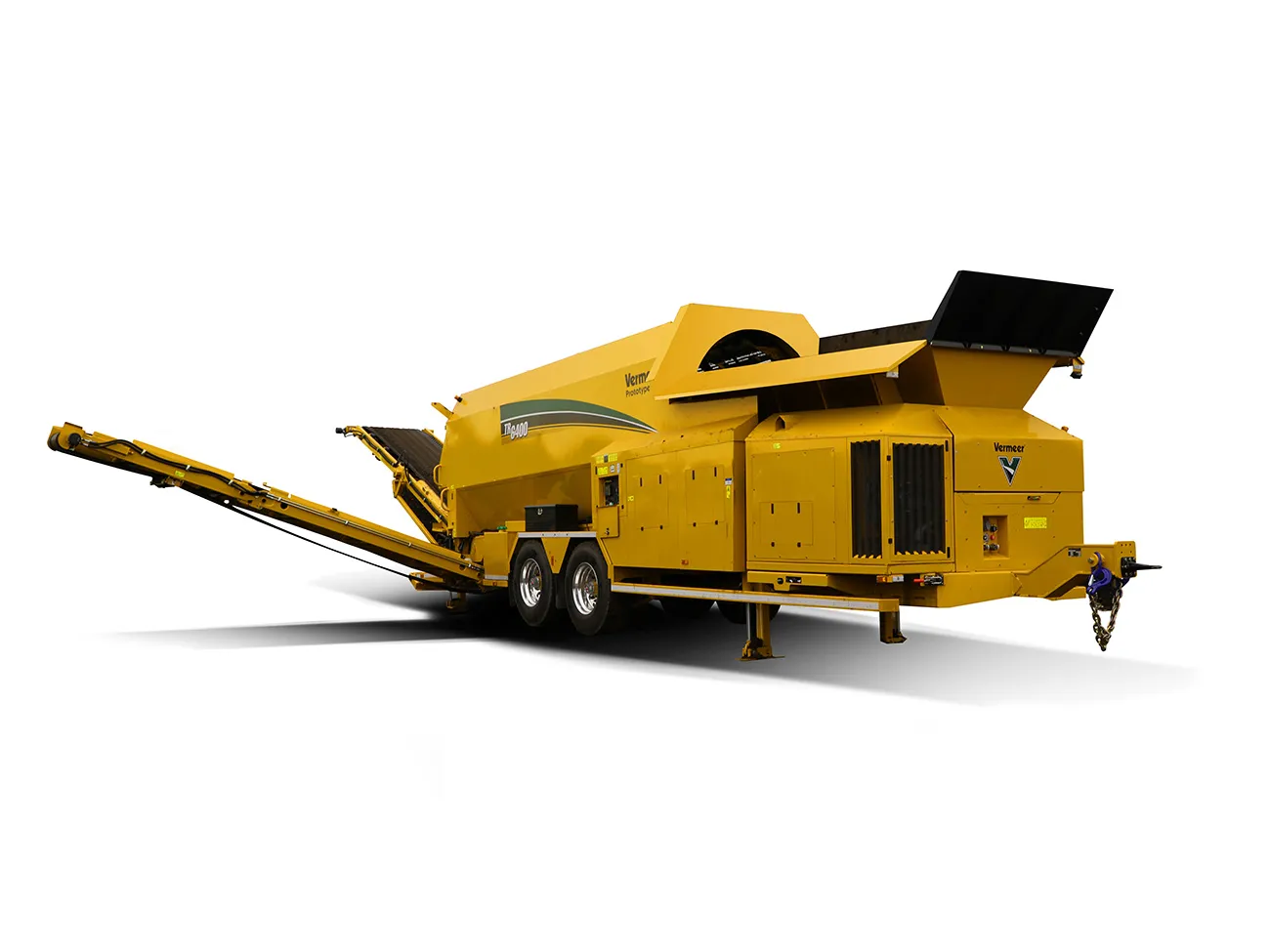
Chip quality
The key parameter in chipping technology is the length of the wood chips. You can therefore assess a chipper's performance by checking the quality of the chips it produces. If the chip size is consistent and the moisture content is low enough, the product is of good quality and the price per tonne increases.
Immediately after harvesting, the moisture content of the chips is usually more than 50%. This means they need to be dried. The desired final moisture content usually ranges from 20 to 30%. Drying chips by ‘natural convection’ is the most cost-effective method. The chips are stored on a dry concrete floor, under cover in a well-ventilated space. Biological degradation (‘self-heating’) raises the temperature in the centre of the pile, causing convection. Air circulates through the pile, and the warm air carries water vapour to its cooler surface, where the water condenses. In 3 to 5 months, this reduces the moisture content of the chips to < 30%.
Competition from China
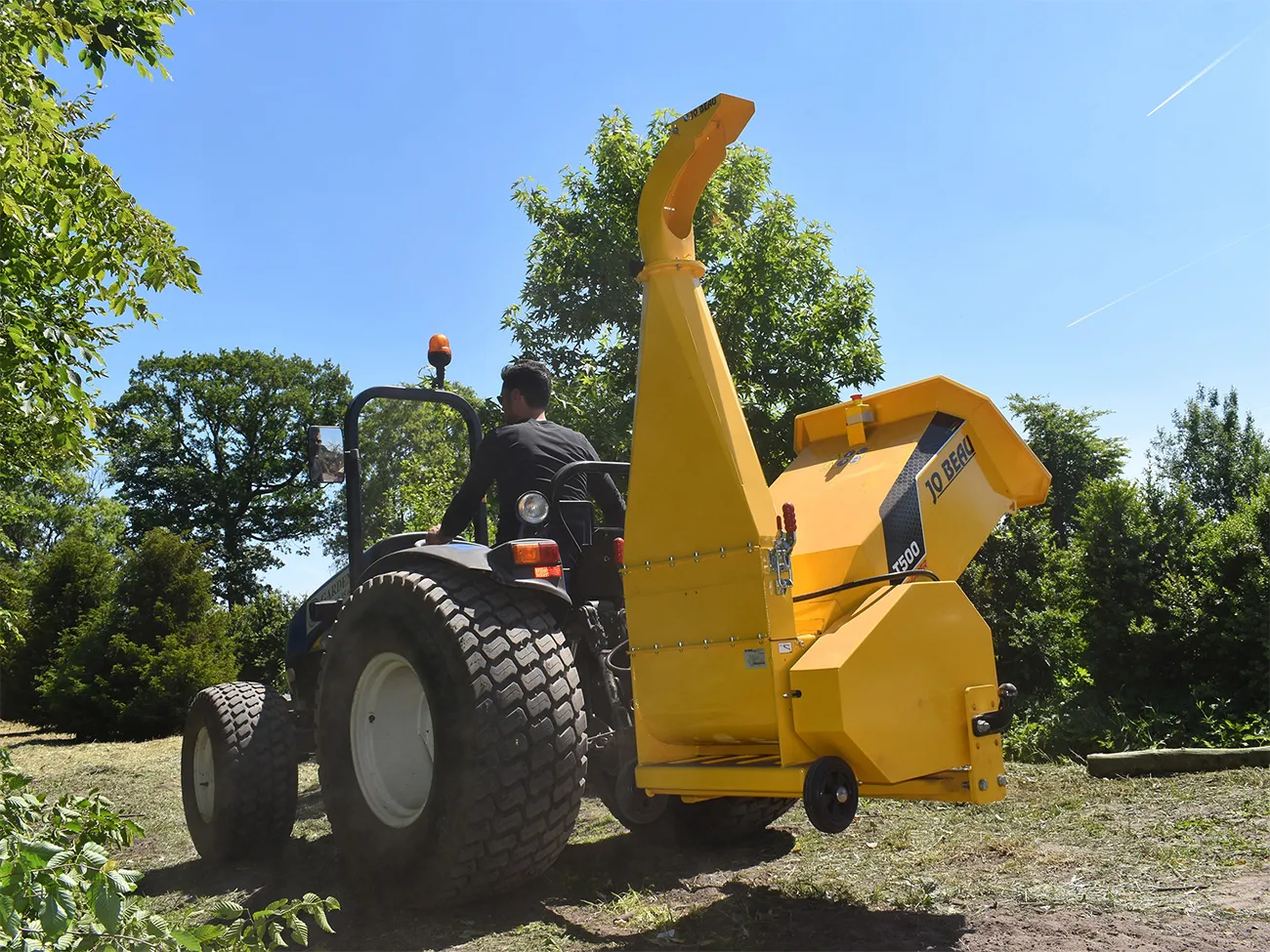
China, too, has spotted the buoyant European wood chipper market. In recent years, cheaper models have therefore been ‘added’ to the market. This needs some qualification, however: Chinese manufacturers are focusing on smaller models and tractor-driven machines. These are mainly bought by farmers, private individuals and semi-professionals. Professionals who also want to maximise revenue from chip sales have so far been unaffected, and typically opt for slightly more expensive, heavier models.
A few comments from the industry:
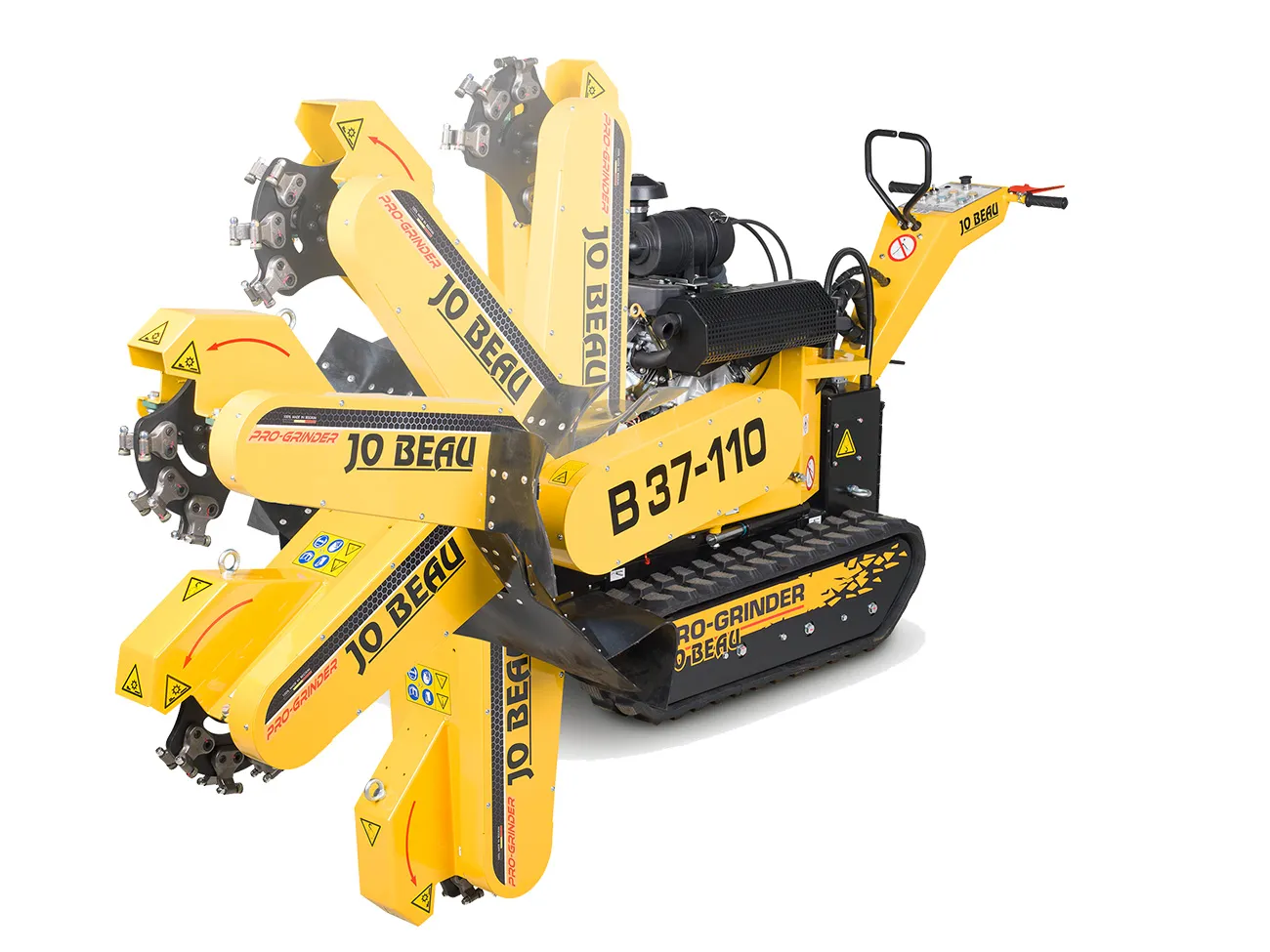
“Jo Beau Drum Technology™ ensures that both branches and foliage are drawn in ergonomically, after which the wood chips are blown out powerfully. Jo Beau chippers do not need feed rollers or other systems.” Christophe Beauprez (Jo Beau)
“Cofabel prides itself on working only with brands that are leaders in their field. For our wood chippers, for example, we work with German manufacturer Jensen, the undisputed leader in park, garden and forestry equipment since 1884.” Luc Sterckx (Cofabel)
“This year, we are launching a smaller model, the DC 12/15. It is designed to work with even the lightest tractors. By continuing to expand our range of chippers, we are strengthening our presence abroad.” Hans De Clippeleir (De Clippeleir)
“The return on investment for the HG4000 and 6000 series is very high, as the possibilities for processing biomass and recycling A- and B-grade wood are virtually endless. In short, consistent, better chip quality provides a sound return on investment.” Ive Somers (Vermeer Benelux)
Een zakelijke vraag aan De Clippeleir? Get in touch
Companies in this story


Keep following this
Get an email when a new story is published. No account needed.
- ThemeMachinery for landscape professionals
- SubjectProduct information
- CompanyDe Clippeleir
- CompanyVermeer Benelux