A pond in every garden, it has to happen
Text andPhotos Guido Lurquin
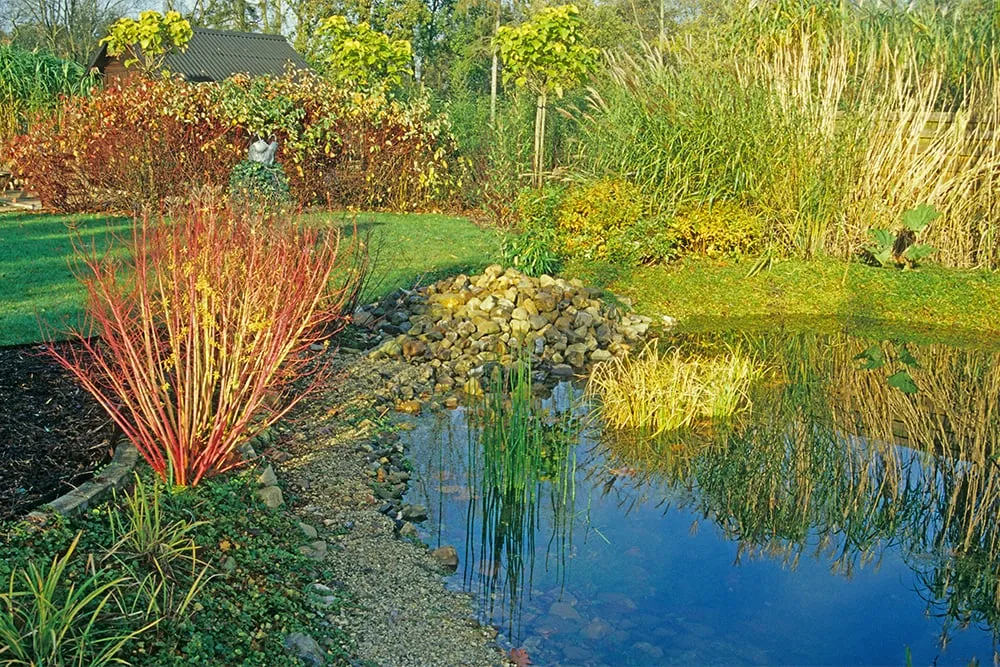
Creating a garden without a pond… frankly, it’s irresponsible. There are three very good reasons to build a pond in as many gardens as possible.
1. Water moderates the garden climate
We’re seeing extreme weather more and more often. Heat records are being broken, and hot days and heatwaves have become more frequent in recent decades. Spending time in an ‘empty’ garden with just a patio and lawn isn’t much fun when it’s hot. A parasol offers little relief. The most pleasant garden is one with trees, proper trees, not miniatures, and water. Both have a real cooling effect and moderate the climate.
2. Capturing water is essential
In recent years, there have been several periods of clear drinking water shortages, and groundwater levels have been slow to recover. Capturing rainwater and allowing it to infiltrate into a rain garden are the solution to this problem. But there are often capacity issues. A water butt holds only a few hundred litres, while an underground cistern holds only a few thousand litres. So it makes sense to build a pond that the water butt or underground cistern can overflow into. The pond can then overflow into an infiltration area beside it, or even beneath it to save space. In that case, it is important to add ballast over the pond liner to prevent it from being pushed upwards. The ‘pond section’ of the rain garden also helps to clean the water locally through the action of micro-organisms and plants.
3. Water as a habitat is urgently needed
Amphibians and other aquatic animals in our country are currently faring very badly. Various causes can be cited, including diseases and more extreme weather. These certainly play a part. But the most important reason is a lack of habitats, as well as the excessive distances between them. Amphibians move slowly and can travel only a few kilometres, or sometimes just a few hundred metres. For the survival of our amphibians, having lots of small ponds is more important than having a few large ones. Garden ponds act as ‘stepping stones’, connecting populations and keeping them connected, which is important in genetic terms.
Eco ponds are particularly recommended
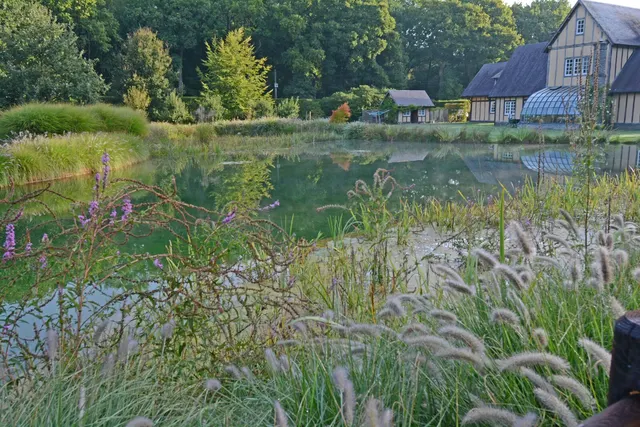
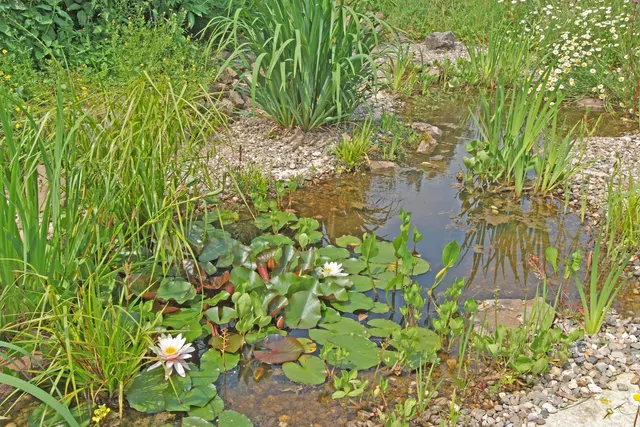
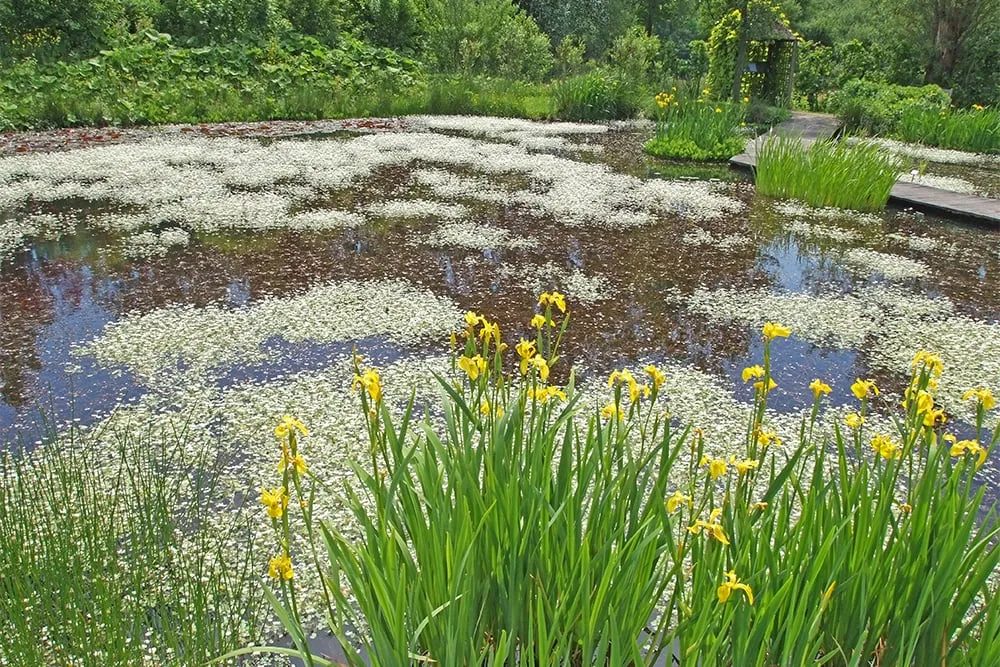
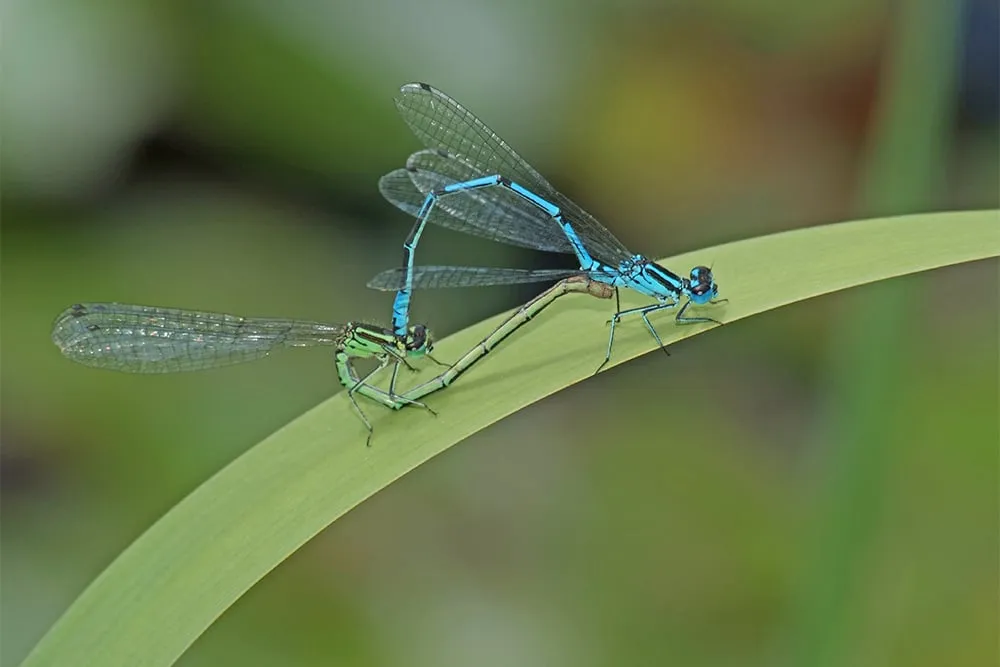
An eco pond is designed to support the native fauna and flora of wetland habitats. Any garden pond that resembles a natural pool can be described as an ‘ecological garden pond’. It can be small and still attract plenty of amphibians and aquatic insects. The important thing is to ensure that the pond always contains some water. Bear in mind that, for example, dragonfly larvae live underwater for a year before transforming into flying insects.
To get through harsh winters and dry summers without problems, a deep-water zone of 80 to 100 centimetres is recommended. Long, irregular shorelines and broad, shallow areas are also appreciated. The planting should consist mainly of native species, but a frog really doesn’t mind whether the water lily has yellow flowers instead of white ones.
Accepting fluctuating water levels
It is a misconception that all ponds need to stay filled to the brim. That certainly isn’t necessary for every pond. Even when a pond is half empty, it is still half full, and that is enough for many of the life forms that inhabit it.
Fluctuating water levels are the rule rather than the exception in nature. Many marsh plants are adapted to this and can grow both in (reasonably) deep water and in drier conditions.
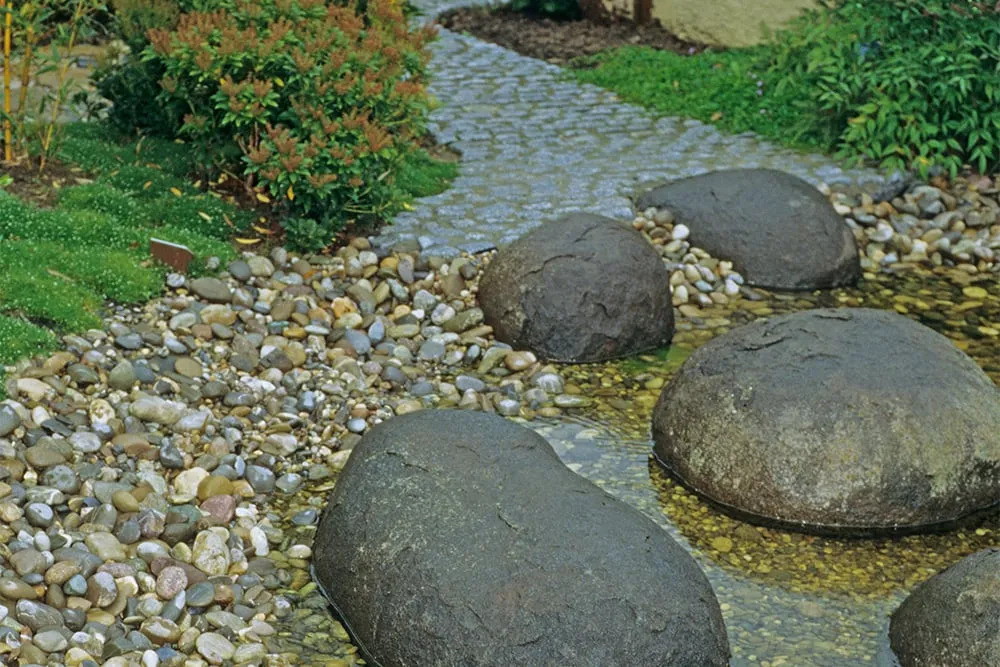
The important thing with this type of pond is that a lower water level should not be a problem. Boulders and plants create a transition from water to land, so the pond liner remains largely or completely out of sight even when the water level is low. Choosing the right plants ensures that the pond remains attractive during drier periods too.
To reduce water evaporation, it is best to include plenty of ‘covering’ plants, such as water lilies, fringed water lilies and frogbit.
A ten-year experiment
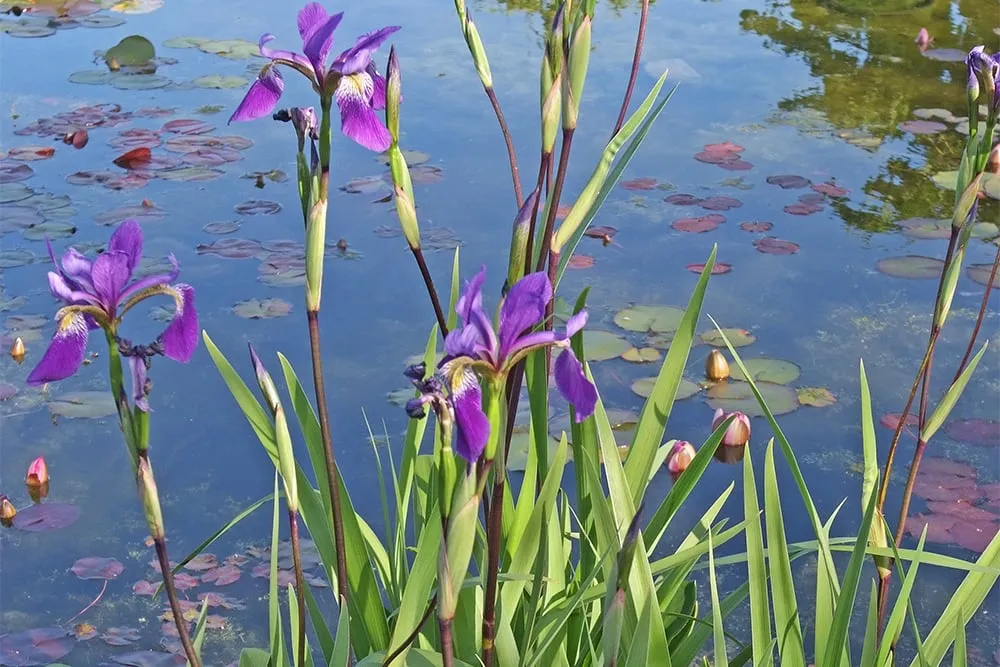
As an experiment, I never top up two of my own ponds. Nor do they receive any extra rainwater from the roof of a garden shed or carport, for example. They are up to one metre deep and receive water only from the clouds above. They are near Leuven, where the average annual rainfall is 795 millimetres. One pond is in a sunny spot and contains marsh plants and water lilies. It has never been less than half full, which was more than enough to see all the native wildlife through the dry spells. The other pond is more shaded and contains only water lilies and greater duckweed. Even during the driest periods, it remained 85% full.
Making other water features more ecological
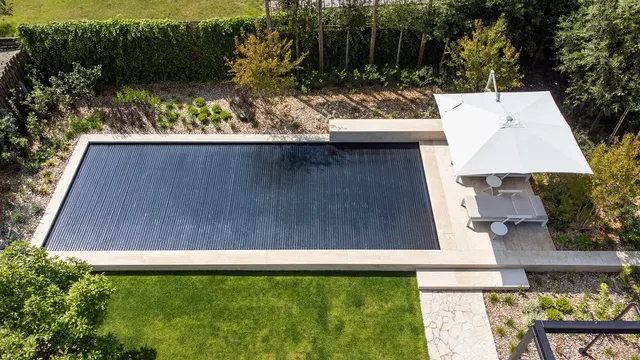
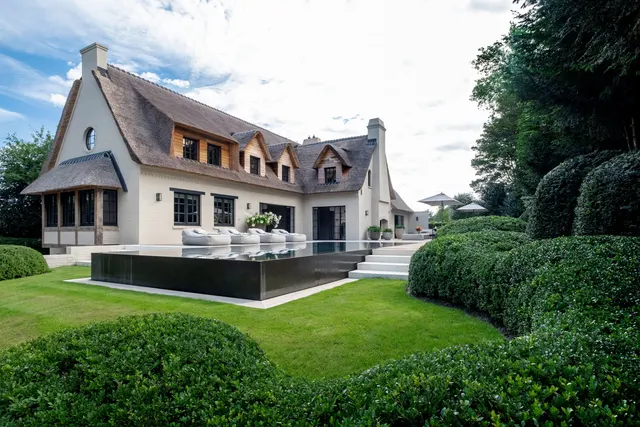
Swimming ponds are already a more ecological way to swim. If the filtering marsh zone is designed with a range of water depths above the filter substrate and a varied selection of plants, it too can become a pond habitat for native wildlife.
A koi pond can be made more ecological by adding a plant pond and/or a planted stream alongside it. Water from the filter can be routed through these features. This means more space for biological processes and less need to change the water.
Plant ponds are already very wildlife-friendly, but you can make them even more appealing to native aquatic animals. Provide places where animals can easily get in and out of the water, such as a gently sloping pebble beach or a tree stump hanging into the water. If you want to stock the pond with fish, choose, for example, golden rudd. And provide different depth zones so that every animal and plant can find a suitable spot.
There’s no need to be afraid
Take a course on ponds. With coherent, well-considered information, you can avoid making major mistakes, which makes maintenance easier. Do the right thing at the right time and… work with nature.
Question about this story? Ask your question
Keep following this
Get an email when a new story is published. No account needed.
- SubjectSwimming ponds & pools