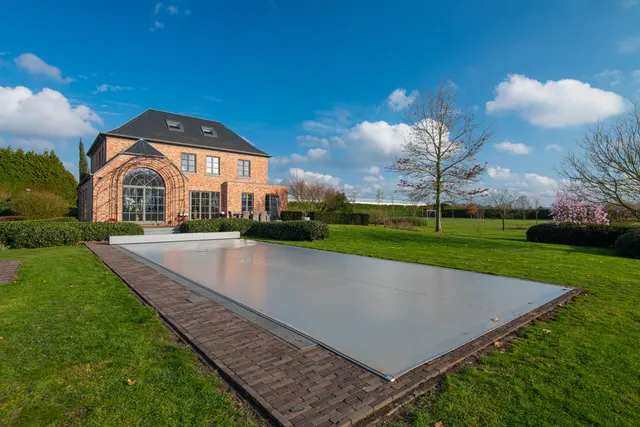
Can a swimming pond be an alternative to a swimming pool?
Text Guido LurquinImage Guido Lurquin, SealEco en Distri Pond
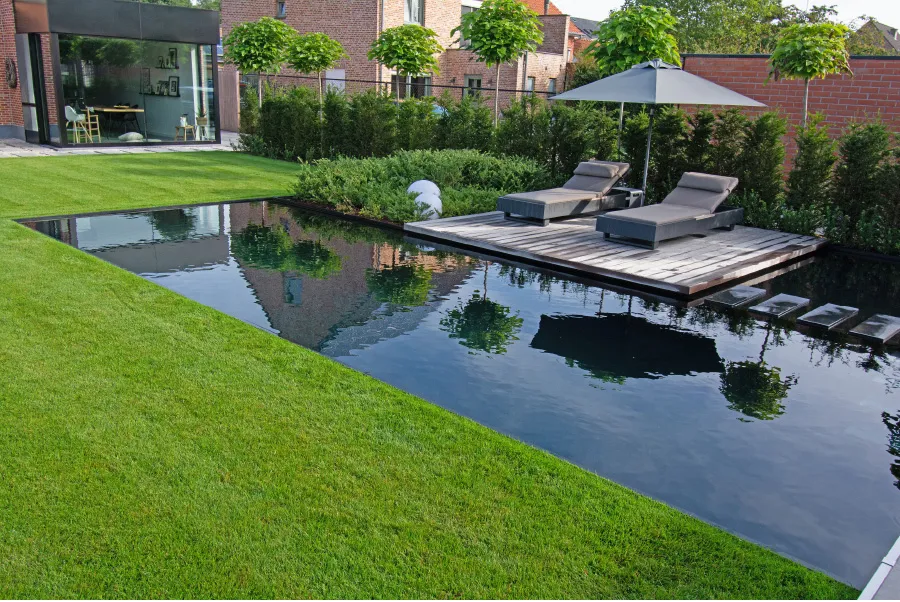
You can swim in a swimming pool, and you can swim in a swimming pond too. There are similarities, but also differences.
Appearance
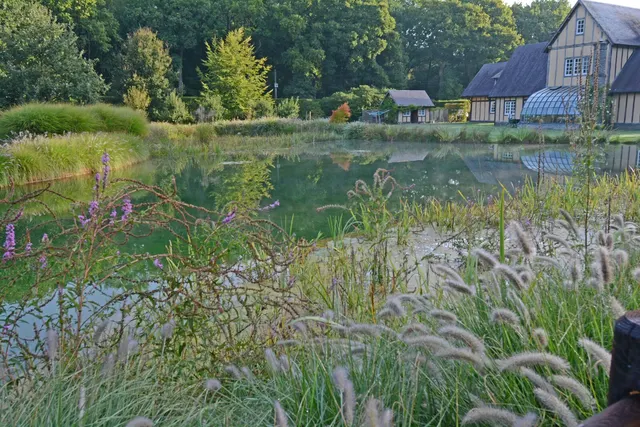
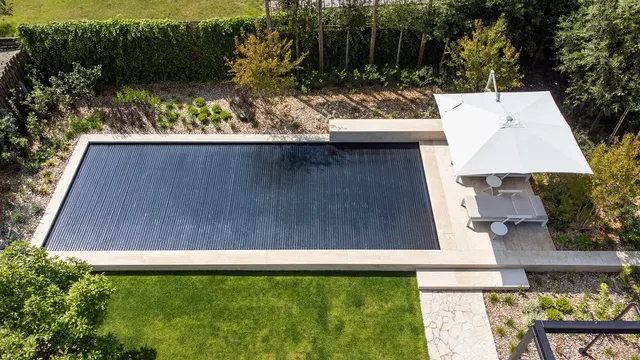
Visually, the two types of swimming facility can sometimes be almost indistinguishable. A swimming pond can look just like a swimming pool, and vice versa. But their appearance can also be completely different. Swimming pools are almost always geometric in shape, whereas swimming ponds offer more possibilities. They are ornamental ponds that can be beautifully incorporated into a landscaped garden. Informal shapes are back in fashion, and in recent years we have also seen combinations of straight lines, for the swimming area, for example, and curves, such as in the wetland filter beds. The main purpose of a swimming pool is to provide a place to swim, whereas a swimming pond is first and foremost a water feature that can be beautifully integrated into the garden design. Plants can grow close to and in the swimming pond, making the whole setting look even more natural.
One major advantage over a conventional swimming pool is that you can enjoy the swimming pond visually all year round, whatever the weather.
Waterproofing
When building a swimming pool, materials must be selected that can withstand the disinfectants used, usually chlorine derivatives. For historical reasons, and still today, PVC liner has therefore been the most common choice. It is available in a wide range of colours and is also easy to install. It can be bonded to form a watertight seal or heat-welded. One considerable environmental drawback is PVC’s very negative impact on the environment. Environmentally conscious customers and installers therefore tend to opt for FPO liner made from PE, which has a lower environmental impact. FPO liner can only be joined by thermal welding, is available in only a limited range of colours, and is most commonly grey at present.
For environmental reasons, swimming ponds are almost always lined with black or near-black EPDM liner. This makes good sense. This rubber liner has been the most widely used waterproofing material in the professional pond sector for more than 25 years. Its exceptionally long service life, over 70 years according to recent SKZ research, and recommendations from environmental organisations are certainly important factors.
The black colour has three important effects on a swimming pond. First, dark waterproofing creates a much more attractive mirror effect. The surroundings and plants are reflected clearly and playfully on the rippling water surface. It is also easy to see why a black lining is easier to maintain, as deposits are less visible or barely visible at all. And most importantly, in summer the swimming water warms up by 4 to 6 °C, completely free of charge. Black surfaces absorb the sun’s rays, and the black carbon in the EPDM converts UV light into infrared heat. That makes a big difference. Even without any additional heating, EPDM swimming ponds often reach temperatures of 26°C in summer, and sometimes even 28°C… yes, in Belgium.
Please note: high-quality EPDM membranes generally have a specific gravity of no more than 1.25 kg/dm³. Higher densities usually indicate the addition of cheap fillers, which can adversely affect the ageing of EPDM rubber membranes. PondGard from Elevate (formerly Firestone) has long proved its quality.
Filtration
Swimming pool water is treated using a combination of mechanical filtration and disinfection. The equipment is often installed above ground, in a garden shed, for example. This is where you will find a powerful swimming pool pump that draws in the water and pushes it through a filter, often a sand or bead filter, followed by monitoring equipment and the addition of acid and disinfectants. The above-ground installation and the often long, narrow pipes, typically 50mm in diameter with an internal diameter of around 47 mm, significantly restrict the water flow. The swimming pool pump therefore needs to be powerful, which means high electricity consumption. Be sure to check its power input.
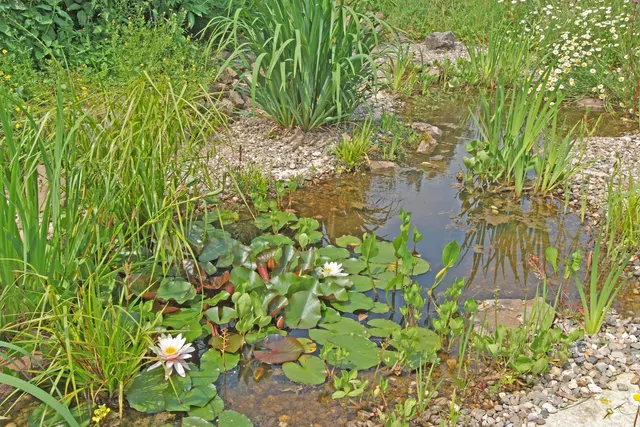
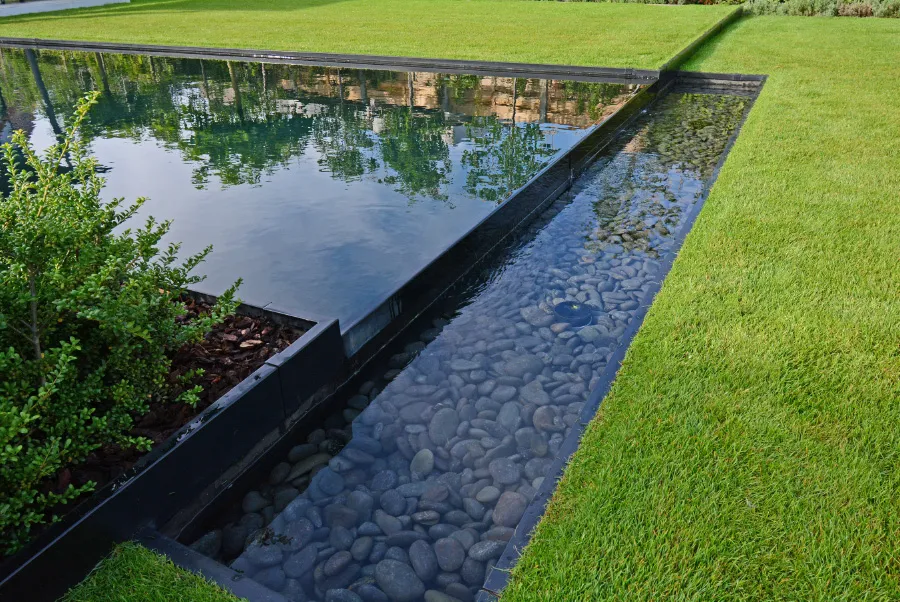
Healthy swimming water in swimming ponds is achieved through slow mechanical and biological filtration. The main filtration system usually comprises a wetland filter bed filled with a substrate. Filter bacteria do the purifying work here. An important ‘final step’ is the growth of aquatic plants, which consume the remaining waste products. They do this free of charge. The equipment is usually located right next to the swimming area, often in a pit or basement. The swimming pond sector has also focused on energy efficiency for many years. The pipes are therefore usually short and the required flow rates are low. Water can consequently be circulated using energy-efficient pond pumps with a low delivery head.
Running costs
Because there are no disinfectants to buy and energy consumption is significantly lower, running costs for a swimming pond are low to very low. However, there are substantial differences in energy consumption and costs between systems. So-called ‘hybrid’ systems, based on hydrolysis and similar processes, use equipment that looks very much like that of a conventional swimming pool, with the installation in a garden shed, plenty of bends and T-joints, the addition of water treatment products, the need for periodic calibration, and so on. These are the most technically complex swimming ponds and have the highest running costs.
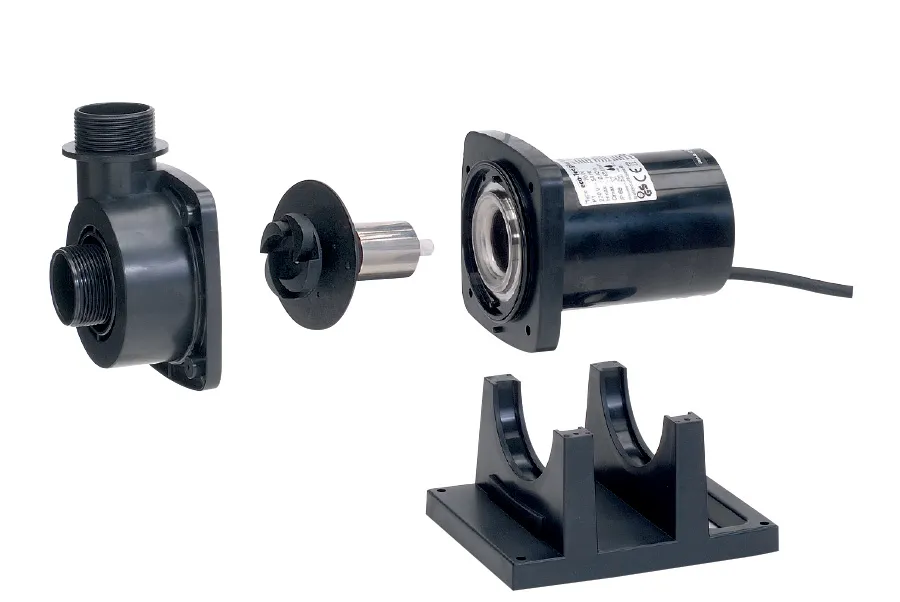
The cheapest swimming ponds are clearly those with a ‘downflow’ wetland filter (cf. Distripond concepts), both in terms of construction and operation. They require very little equipment. Construction is not very complex, and maintenance is minimal and very easy. Experienced installers usually use a low-consumption Messner Eco-Tec2 pump for these systems. Energy consumption is then around five times lower than that of a swimming pool pump for a pool of similar dimensions. If the pipes are short and wide, a Messner Eco-Tec2 Plus pump can even be used, with still lower energy consumption.
A unique swimming experience
In genuine swimming ponds, nothing is added to the water: no chlorine compounds, no acids and no salt. You swim in naturally soft water that does not sting your eyes. It is like a balm for swimmers’ skin. It is like swimming freely in a lake. A swimming pond lets you enjoy being surrounded by nature. Fish can live in the water if you like, but they are not essential. In any case, you feel as if you are in paradise, the paradise of Tarzan and Jane. Children’s health benefits too, not just physically but mentally as well. More contact with nature does you good.
Ecological swimming ponds are kind to people and nature.
Question about this story? Ask your question
Keep following this
Get an email when a new story is published. No account needed.
- ThemeWater and hard landscaping in the garden
- SubjectSwimming ponds & pools