Energy crisis pushes swimming pool owners further towards fossil-free heating
Text Elise NoyezImage Digipool, HRS Pool & Technical Equipment, SCP Benelux
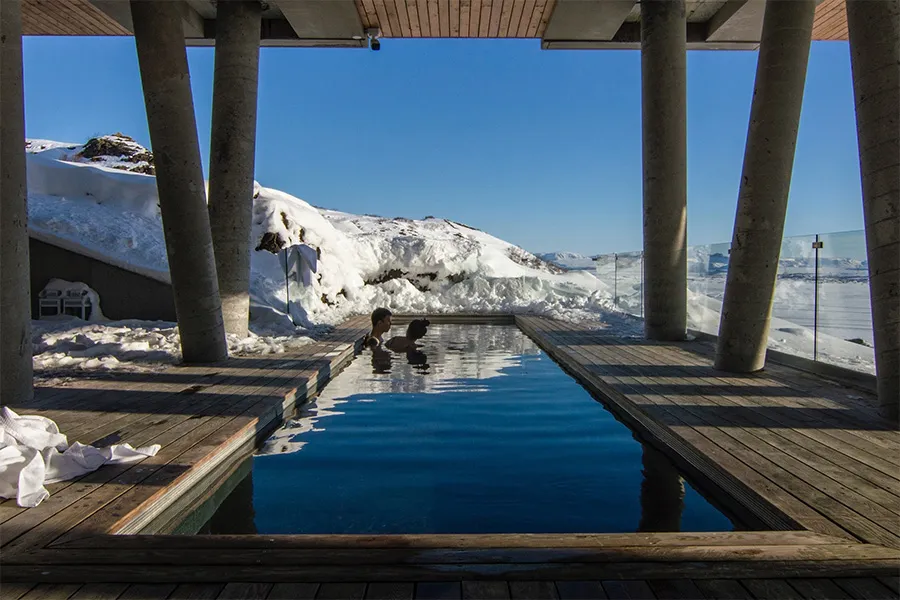
Despite the hot, dry summers of recent years, swimming without pool heating remains the exception in the Low Countries. Anyone who wants to swim more often than just on the hottest days of the year still opts for a heated outdoor pool. However, the way this large volume of water is heated has changed enormously in recent years. The recent energy crisis has only accelerated this trend.
Like a home, a swimming pool can be heated in many different ways. Factors including pool size, or more specifically, the volume of water, the desired temperature, how often it will be used for swimming and the planned length of the swimming season determine which solutions are suitable and what capacity is required. For users, however, it usually comes down to comfort, consumption and peace of mind.
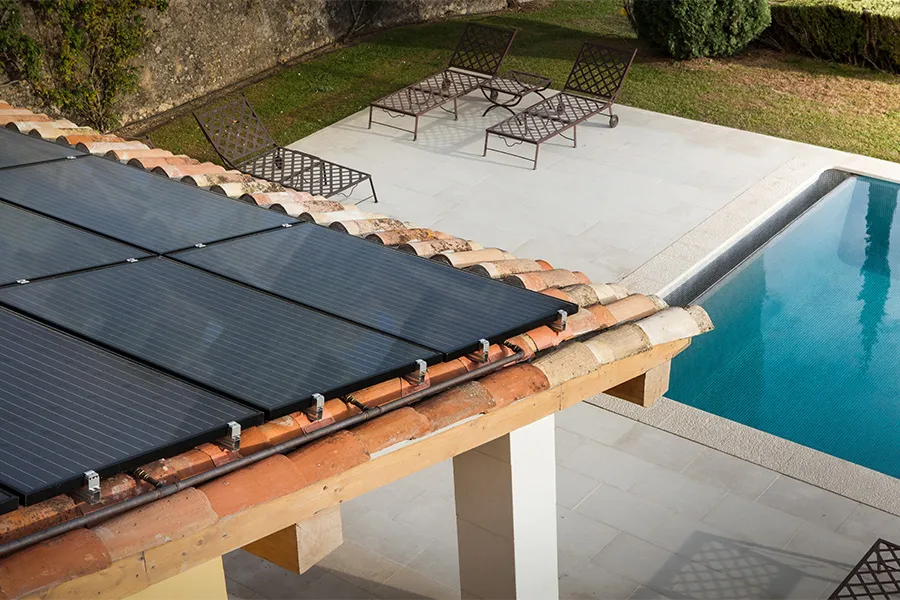
Energy consumption is also driving the replacement market
Where swimming pools were once commonly heated via a heat exchanger connected to a gas or oil-fired boiler, there has for some time been a clear trend towards low-carbon or fossil-free solutions for new pools. The main driver of this trend, however, is not so much purely ecological considerations as the financial picture. Although heating a pool with gas, fuel oil or even a fully electric heat exchanger offers exceptional comfort, with the water temperature capable of rising by around 10°C in a single day, consumption is correspondingly high, as are the resulting energy costs.
Given the exorbitant gas and electricity prices of the past year, it is hardly surprising that existing pool owners are increasingly concerned about their energy consumption too. They are also looking for alternative heating options. It is in this replacement market that the swimming pool builder now faces both the greatest challenge and the greatest potential.
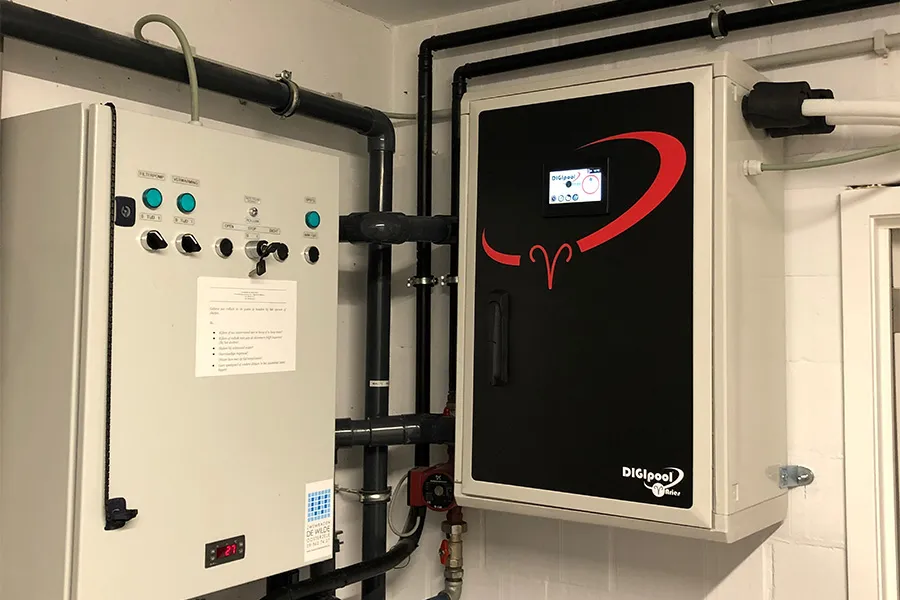
The heat pump: a rapidly evolving standard
Anyone focused on efficiency and consumption will almost inevitably turn to a heat pump. By extracting heat from the outside air and transferring it to the pool water, a heat pump can deliver more energy, in the form of heat, than it consumes in electricity. In recent years, this appliance has become the standard for pool heating. Most pool owners accept without complaint that a heat pump heats slowly and therefore takes longer to bring the water up to temperature than, for example, gas heating. At the start of the season, this can easily take several days.
However, it is important not to treat all pool heat pumps as if they were the same. There are significant differences in both efficiency and the quality of the materials used. A distinction should also be made between on-off heat pumps and the more recent full inverter models. In just a few years, the market has evolved from models that could only run at full capacity, through units with several settings, to heat pumps that can continuously adjust their output to current demand. These so-called full inverter heat pumps are generally so much more efficient than an on-off model or even older inverters that, in many cases, it makes sense to replace a heat pump that is only a few years old with a full inverter model. Full inverters also tend to run more quietly.
There is, however, another important caveat: the impact of the outside temperature. The colder it is outside, the less heat the heat pump can extract from the air. It is therefore worth bearing in mind that the high efficiency promised by the heat pump manufacturer is only achievable at the outside temperature specified. If it is colder, the heat pump’s efficiency will also fall. At temperatures below 15 to 10°C, most heat pumps
are no longer cost-effective and often simply cannot bring the water up to temperature. However, some heat pumps on the market have been specifically developed for use at lower temperatures, and therefore for year-round operation.
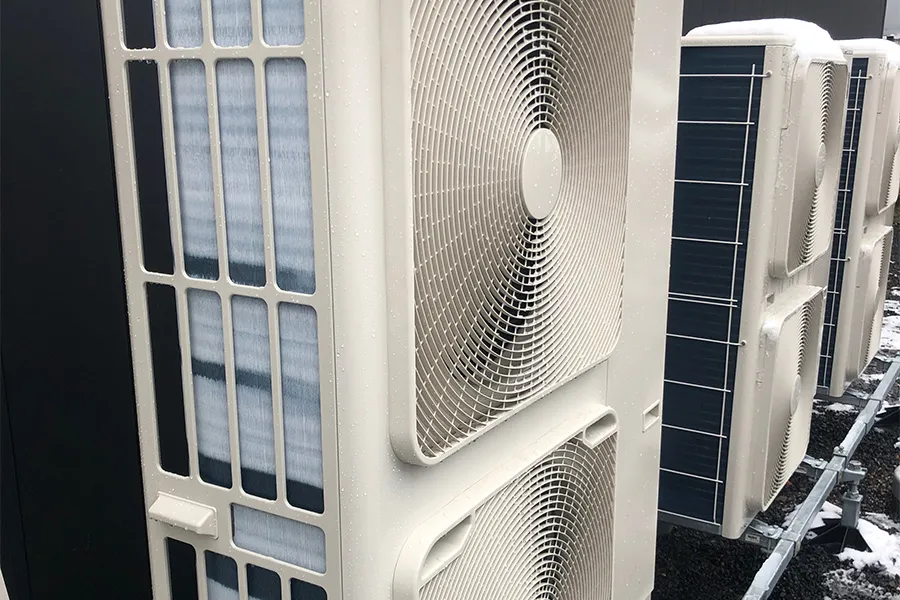
Valuable solar energy
It is no surprise that many people wonder whether the sun could also be put to good use. After all, sunny days are when most pool owners feel like taking a dip. And isn’t solar energy usually free?
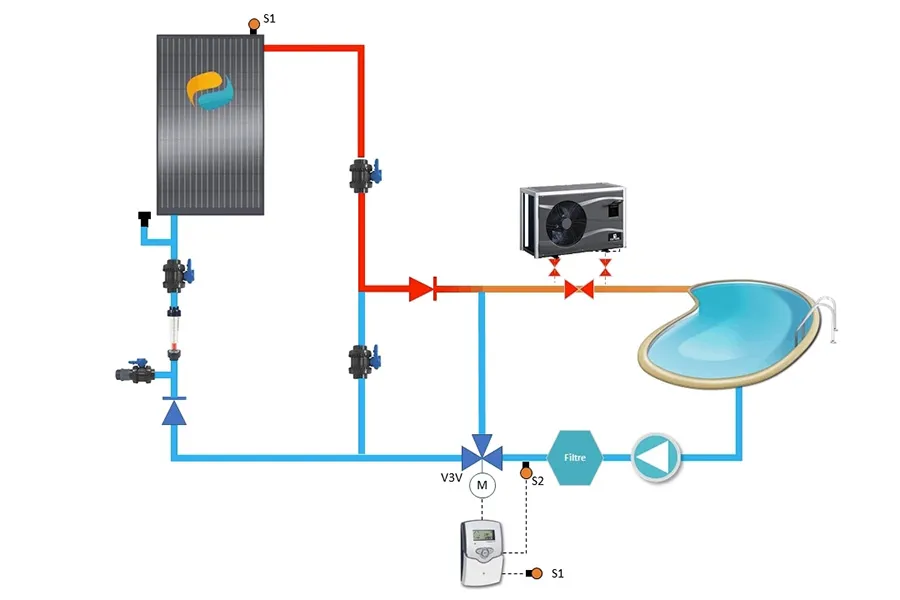
Accessible solutions such as solar mats and solar slats can contribute to energy-efficient or carbon-neutral heating, but they cannot bring an entire pool up to temperature. Solar collectors, combined with a heat exchanger or solar water heater, are a more suitable option in this respect. According to the Belgian solar water heating association Belsolar, solar collectors can provide enough energy on a warm summer’s day to bring a pool to a comfortable temperature of around 28°C. From May to September, they can supply more than half of the energy required. By also connecting the solar collectors to a domestic hot water cylinder, any surplus heat, for example when the pool is not being heated, can also be used to heat domestic hot water.
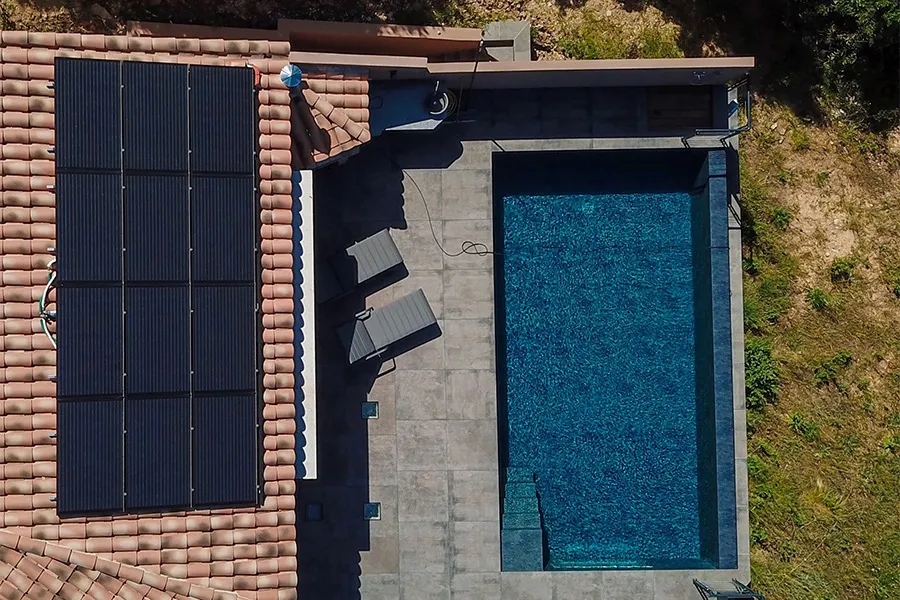
From product to system
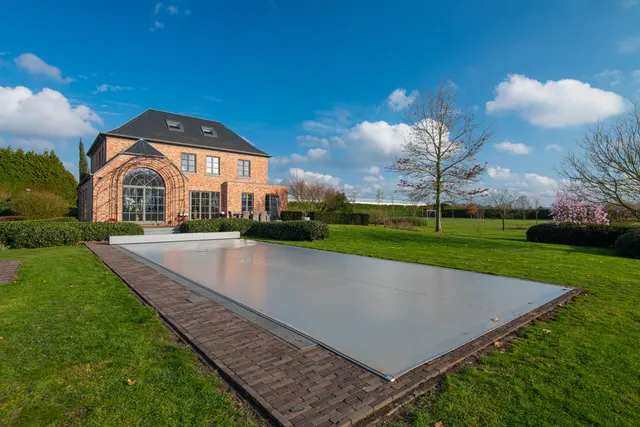
The most significant development in pool heating, however, is not at product level. On the contrary, both the energy transition and the energy crisis mean we need to look beyond the product. For example, many pool builders already point out to their customers that efficient pool heating requires an insulating pool cover, and combining a heat pump with PV panels is now well established.
You can take this a step further by combining a heat pump with both PV panels and solar collectors, whether integrated into a so-called PVT panel or not, or by creating an even more sophisticated connection to a solar water heater for domestic hot water or other parts of the home’s heating system. Ultimately, integrating different technologies and applications, including the home’s own energy systems, is the way to find the optimum energy balance. Given the increasingly complex configurations, however, the involvement of an energy specialist will become ever more important.
Question about this story? Ask your question
Keep following this
Get an email when a new story is published. No account needed.
- ThemeWater and hard landscaping in the garden
- SubjectSwimming ponds & pools