Myth or fact: does UV kill everything in your pond?
Text Guido Lurquin MSc | Beelden Guido Lurquin MSc; technische tekeningen Messner Duitsland
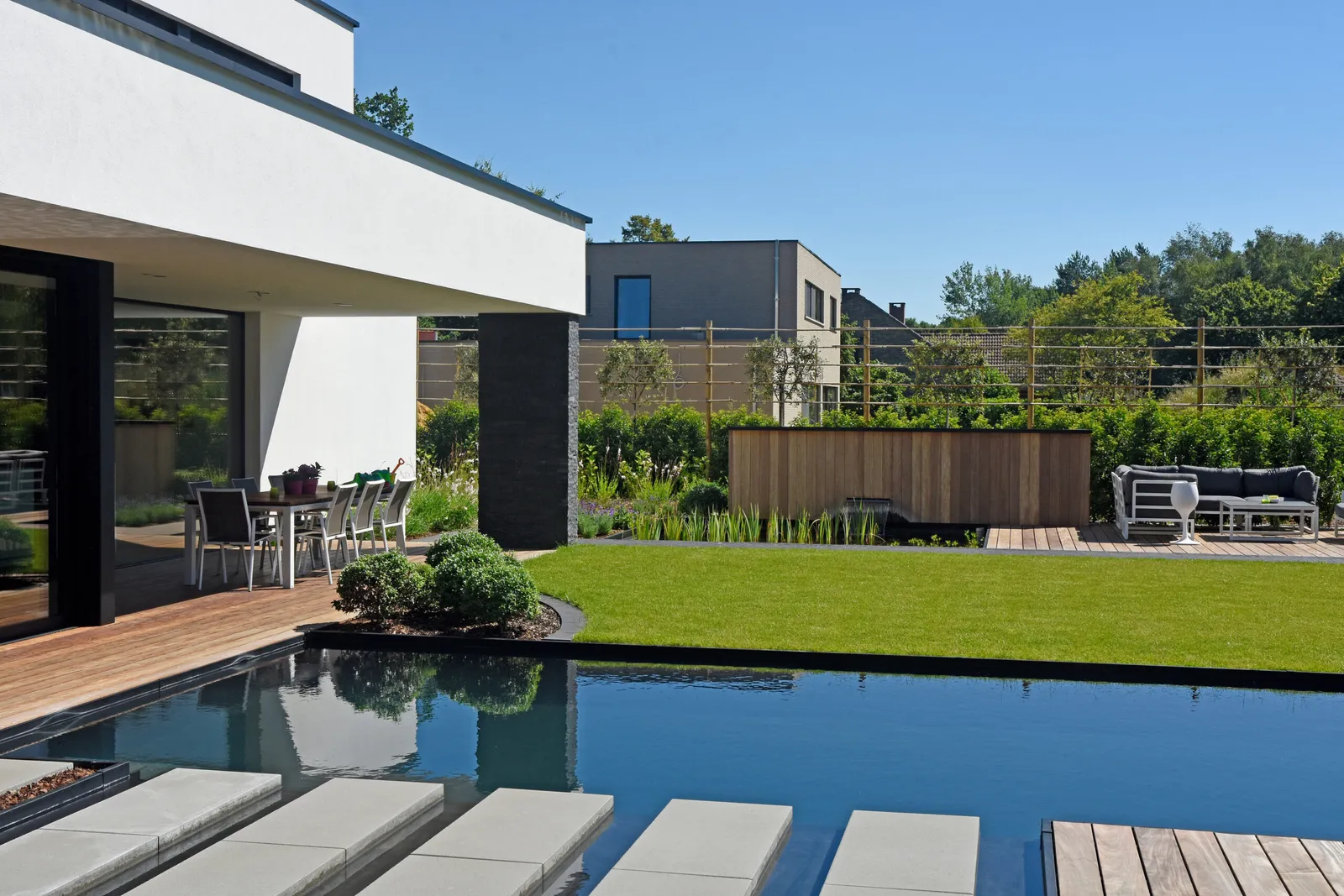
UV units have their supporters and detractors. Controversy sometimes arises, particularly around swimming ponds, because UV is seen as technological, unnatural and less environmentally friendly. One persistent myth is that it kills everything. Nothing could be further from the truth.
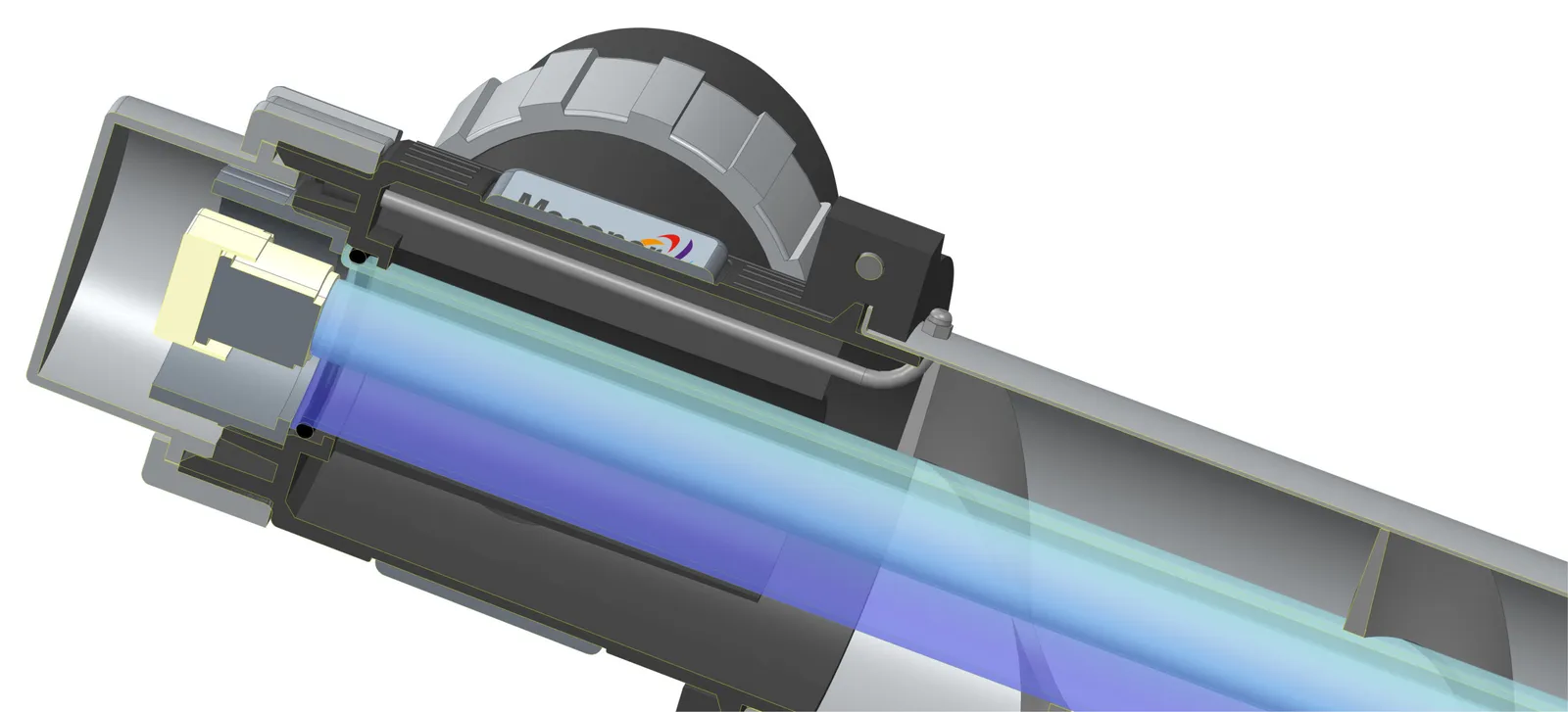
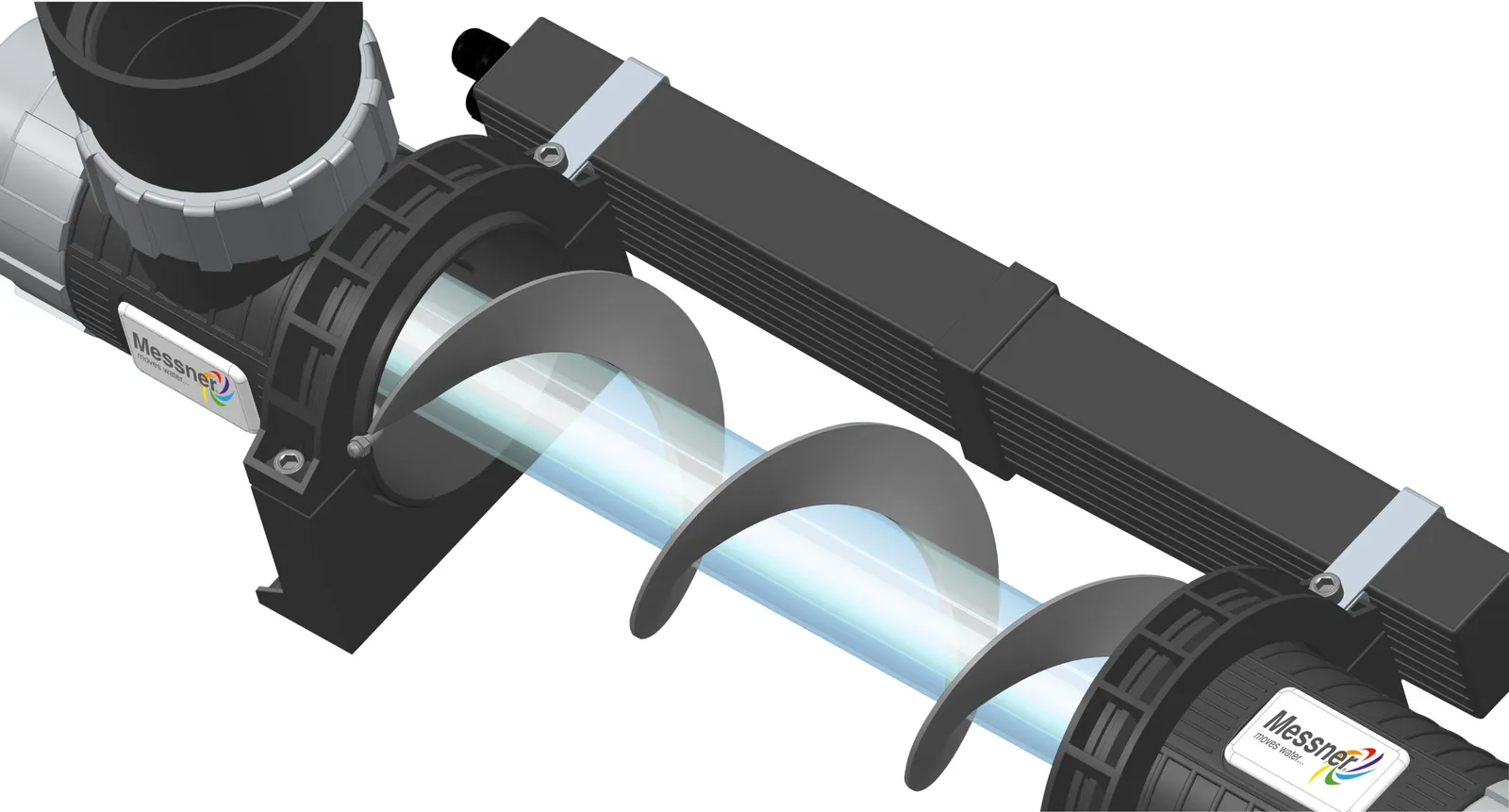
UV rays are light rays from the sun, although only a small proportion reaches the Earth. A UV lamp produces the same rays, specifically UV-C, because they are the most effective. UV-C rays damage the DNA of microscopic organisms with a transparent cell wall. This damage stops them from reproducing, and they die off.
UV units only work on organisms that pass close to the lamp with the flow of water. They must be tiny and have a transparent cell wall. Filamentous algae, for example, attach themselves to the pond bottom and plants, so they never enter the lamp. The same applies to beneficial pond bacteria: they are attached to the filter biofilm and do not float in the water. As a result, they too remain unaffected.
Reducing pathogens
UV units have been used in garden ponds and koi ponds for decades to combat suspended algae and the resulting green water. This is rarely a problem in swimming ponds, but UV-C can play another role there: reducing pathogens. These are generally far more sensitive to UV than the bacteria naturally present in the water.
When UV adds value
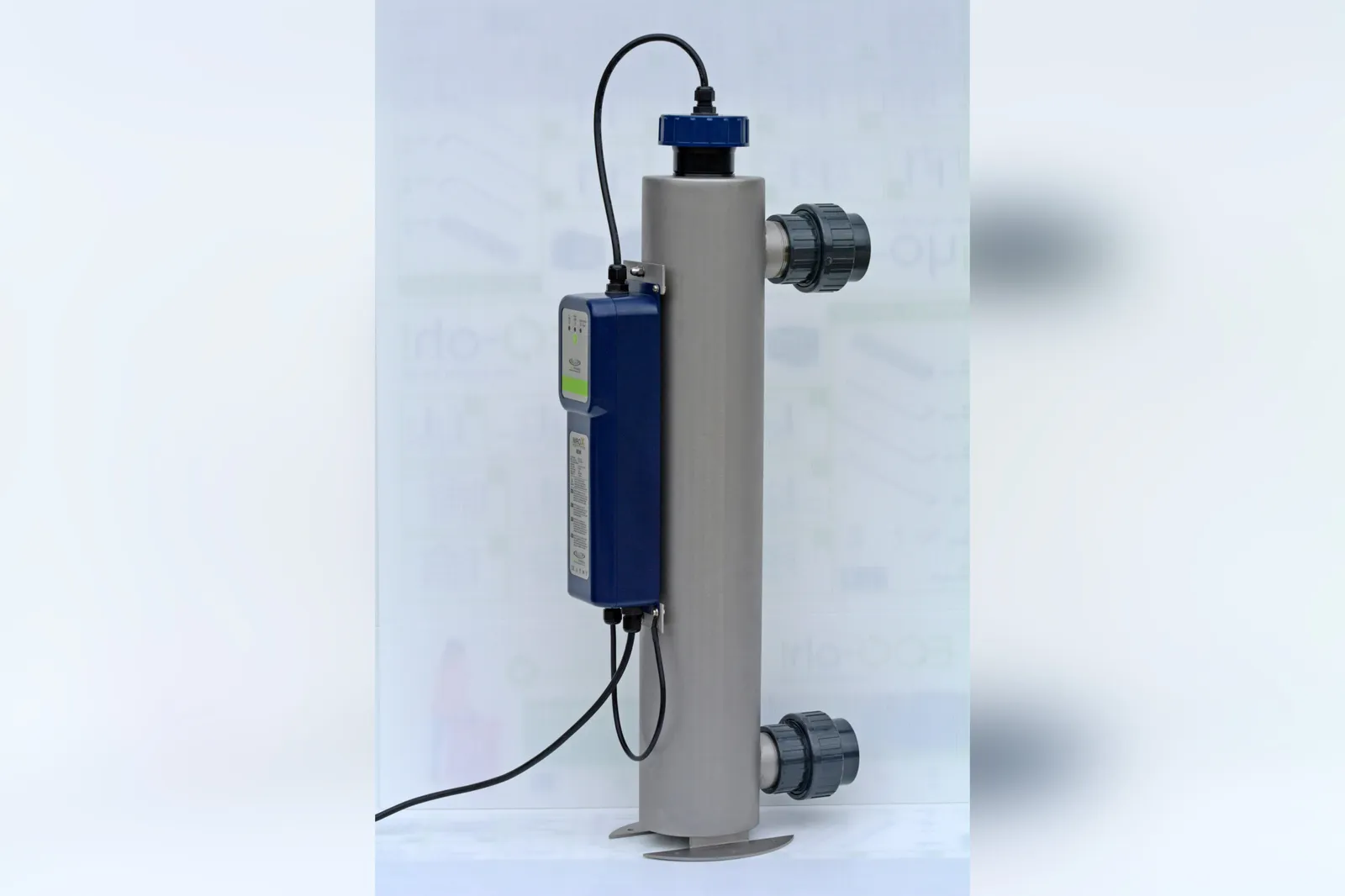
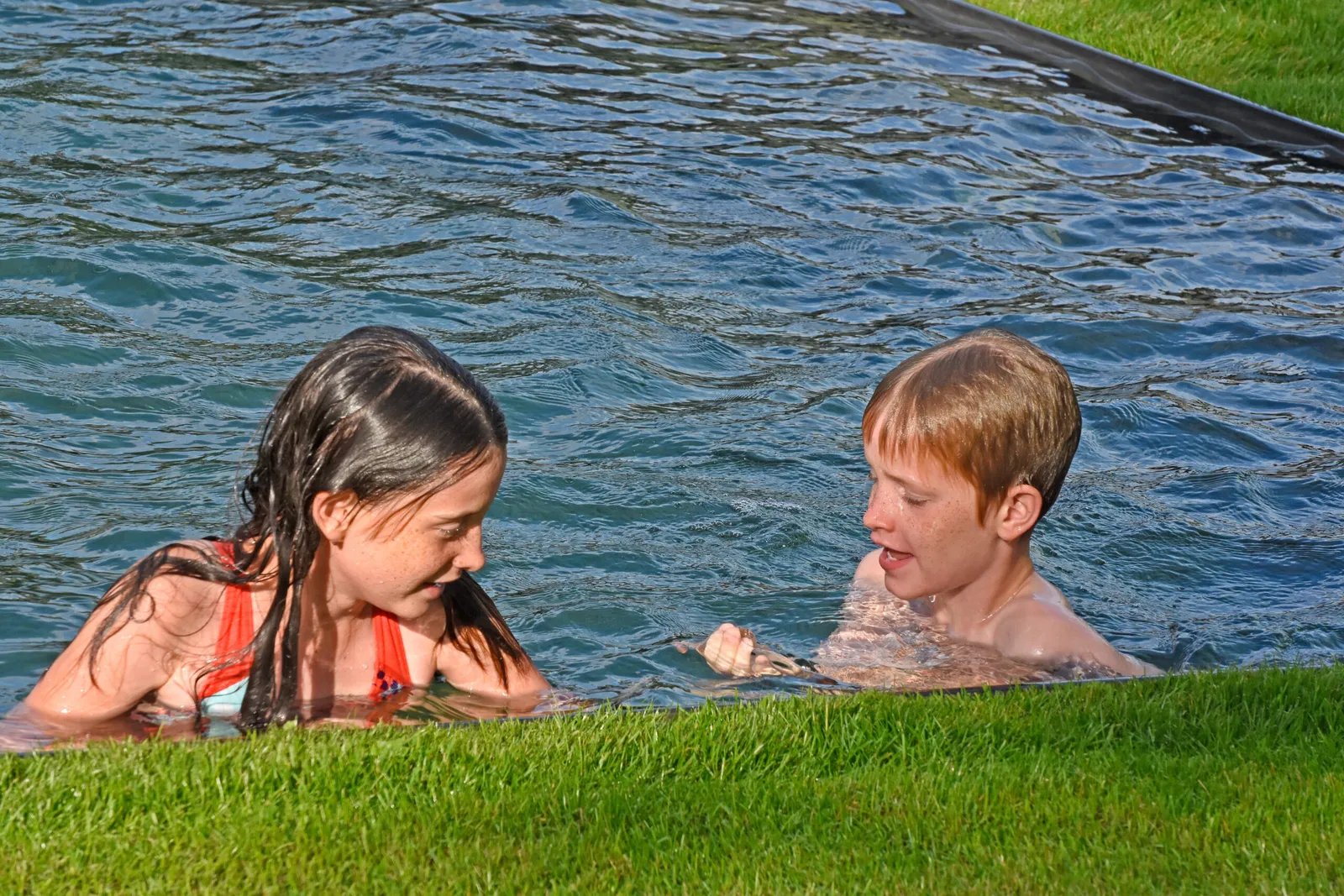
UV-C is not essential in a well-balanced biological swimming pond system, but it is recommended in certain situations. These include heated water or a large number of swimmers at the same time. If the temperature is kept above 28°C, a UV unit is advisable. UV-C is also useful when occupancy is high, at more than three bathers per 10,000 litres, to prevent cross-contamination. In (semi-)public pools, such as wellness centres, UV-C is often used as standard to control bacteria such as Pseudomonas aeruginosa.
Question about this story? Ask your question
Keep following this
Get an email when a new story is published. No account needed.
- ThemeWater and hard landscaping in the garden
- SubjectSwimming ponds & pools