Rare native aquatic plants are not expensive
Text and images Guido Lurquin MSc
Many of our native aquatic plants have become very rare in the wild and are threatened. Yet they are widely available commercially. Most are easy to propagate in nurseries. Use them in pond projects, large and small.
Rare upright-growing marsh plants
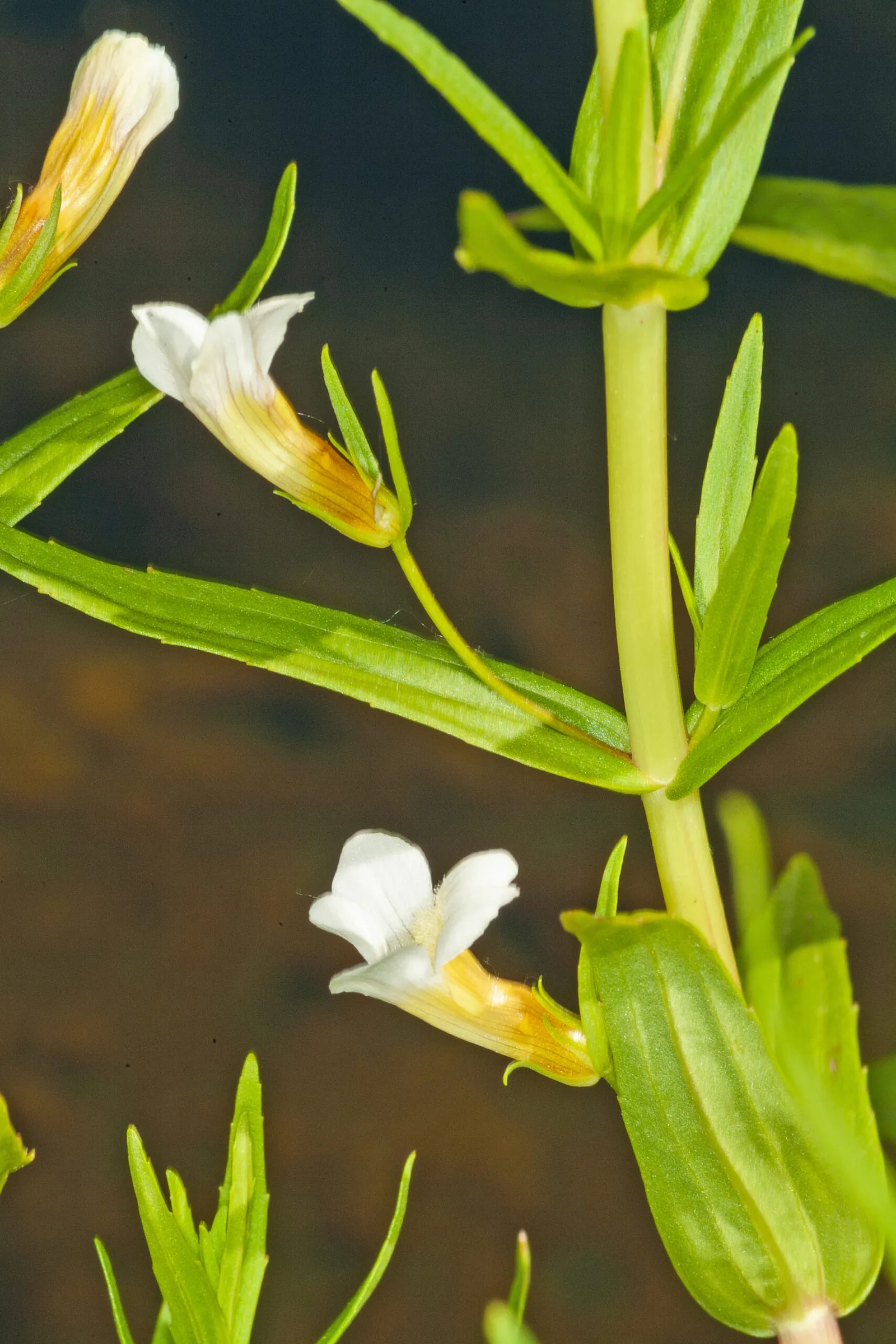
Gratiola officinalis, or hedge hyssop. This herb is now considered very rare and in steep decline, even in nature reserves. It cannot compete with larger plants, as habitats churned up by trampling livestock and the passage of horses and carts no longer exist. Give it a spot in full sun or partial shade, at an ideal water depth of between 2 and 0 centimetres. The maximum water depth is 15 centimetres. It flowers profusely, with white blooms.
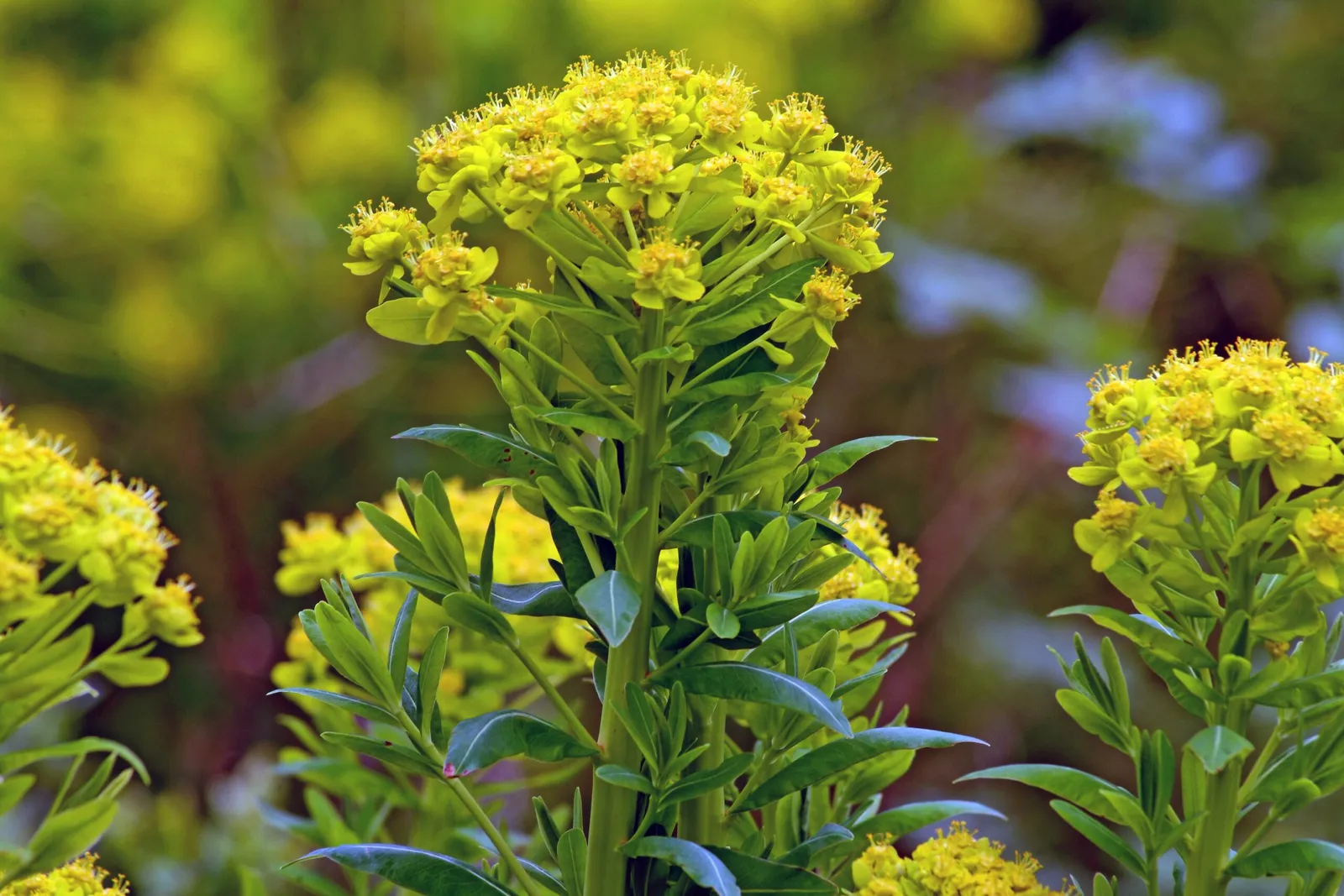
Euphorbia palustris, or marsh spurge. This is an attractive plant for in or beside the pond. It is now very rare, but was once abundant in the floodplains along our major waterways. Its striking yellow flowers add a splash of colour. The plant attracts a great many insects and prefers a water depth of 0 to 10 centimetres.
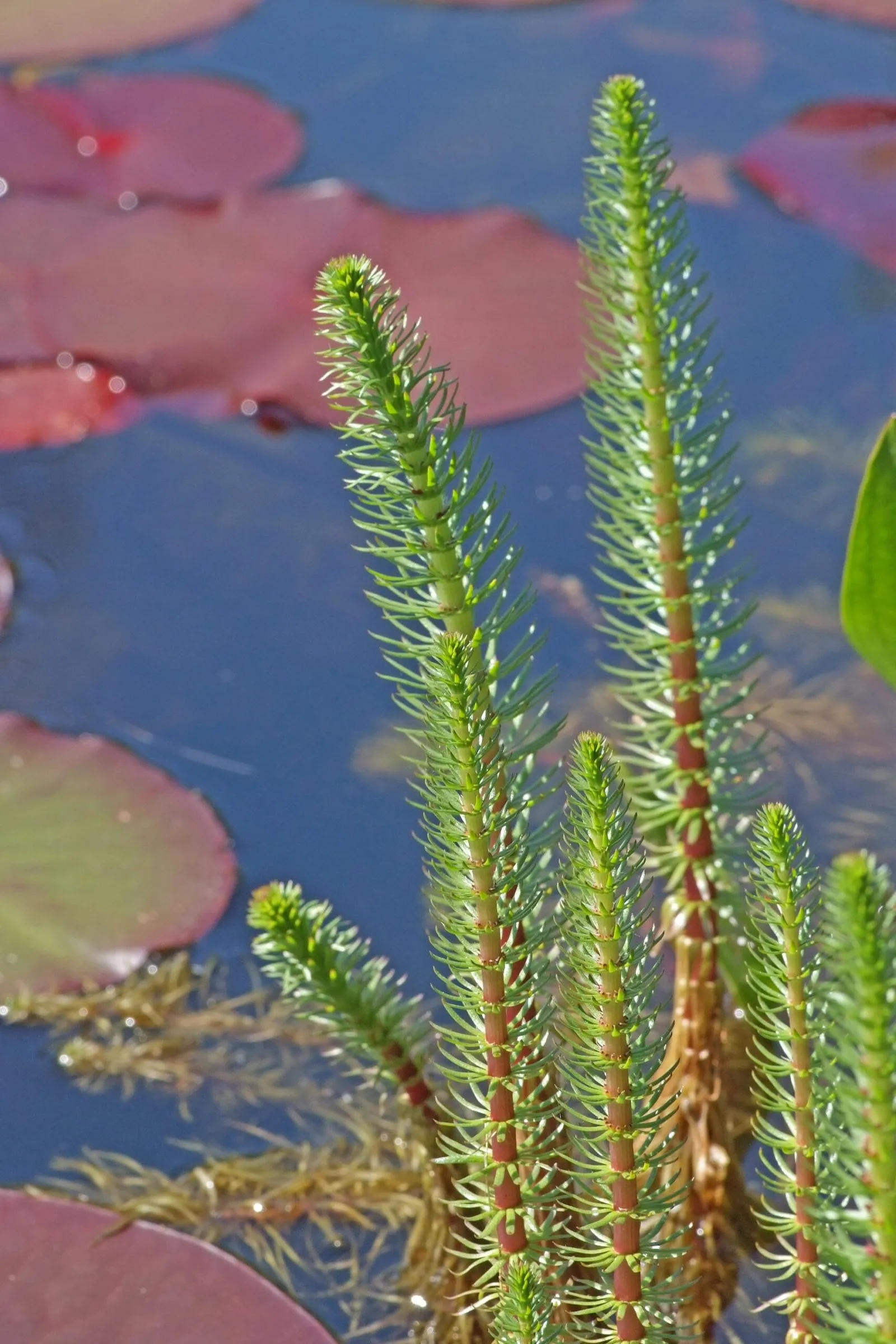
Hippuris vulgaris, or mare’s-tail. Its upright stems look like a little pine tree growing out of the water. In cold weather, mare’s-tail remains safely submerged. The underwater form thrives at depths of up to 80 centimetres. It has longer, softer leaves that are more translucent and bright green. This attractive, efficient oxygenating plant is particularly useful because it starts growing vigorously as early as February.
Rare pond plants with a more horizontal growth habit
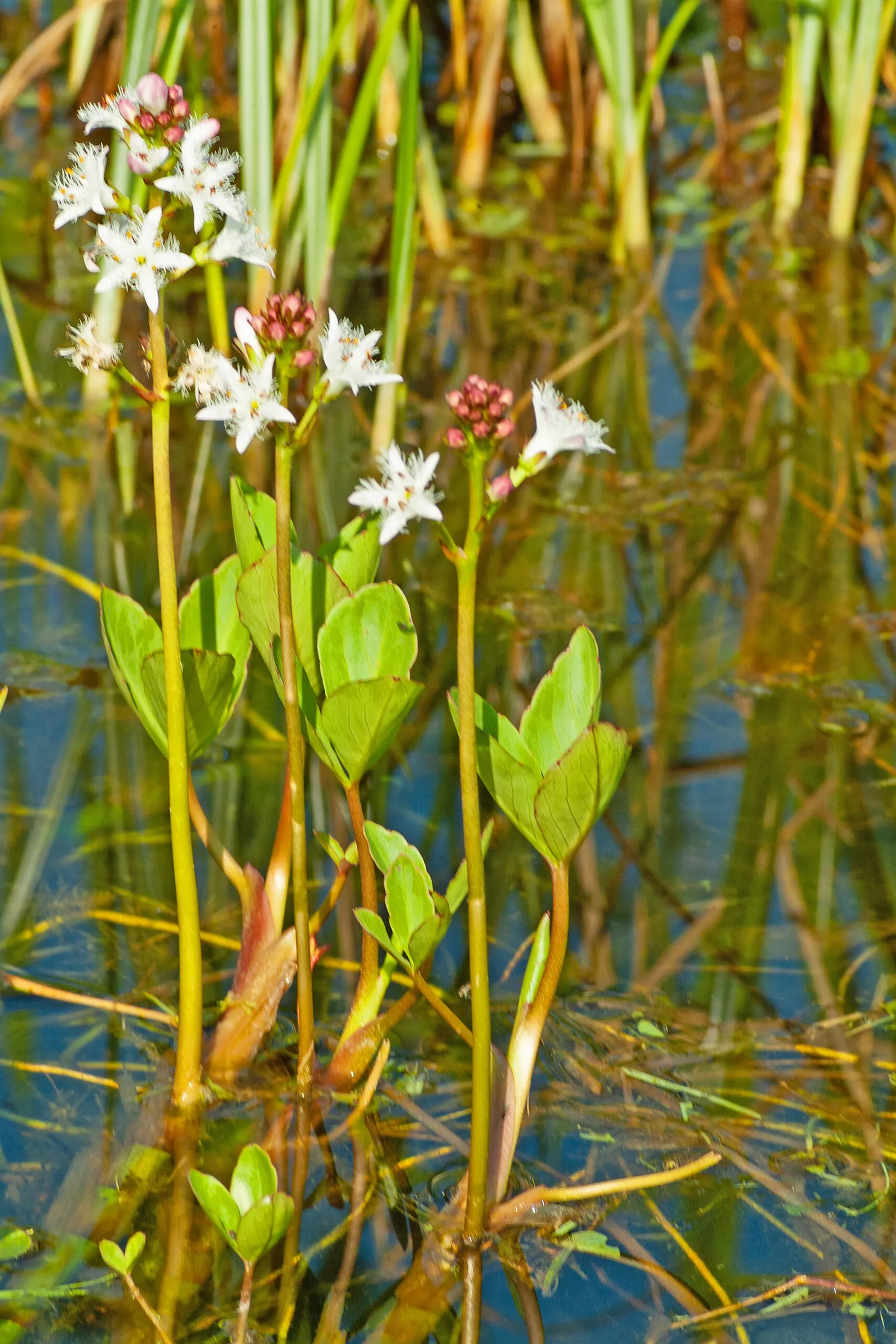
Menyanthes trifoliata, or bogbean. This is a characteristic plant of the acidic peatlands of the Kempen and the Ardense Hoogvlakte, where it is rare, and very rare elsewhere. It is best planted 5 to 10 centimetres deep in open water. It prefers a sunny or partially shaded position and some clay in the soil. Annual growth of a metre is not unusual. This need not be a problem, though, as its roots hang loose in the water and are easy to remove.
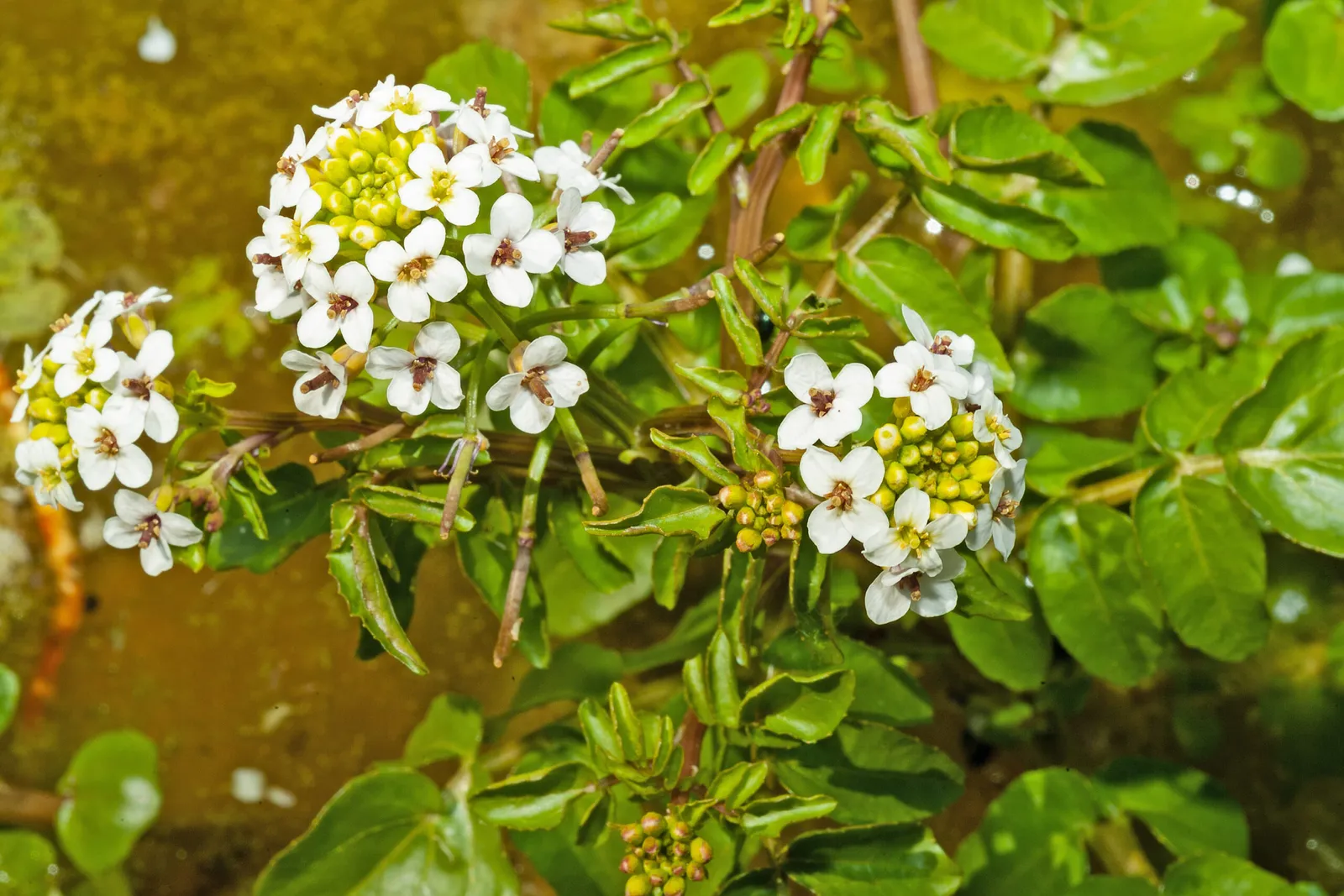
Rorippa nasturtium-aquaticum, or watercress. This plant has declined sharply in the wild. It is available from aquatic plant suppliers… or the greengrocer, as it is mainly grown as a vegetable. Its vigorous growth and evergreen habit make it very useful in a filtering marsh zone. It tolerates flowing water and even thrives in it. This makes it very suitable for purifying water in a small stream, and it can even grow in a multi-chamber filter.
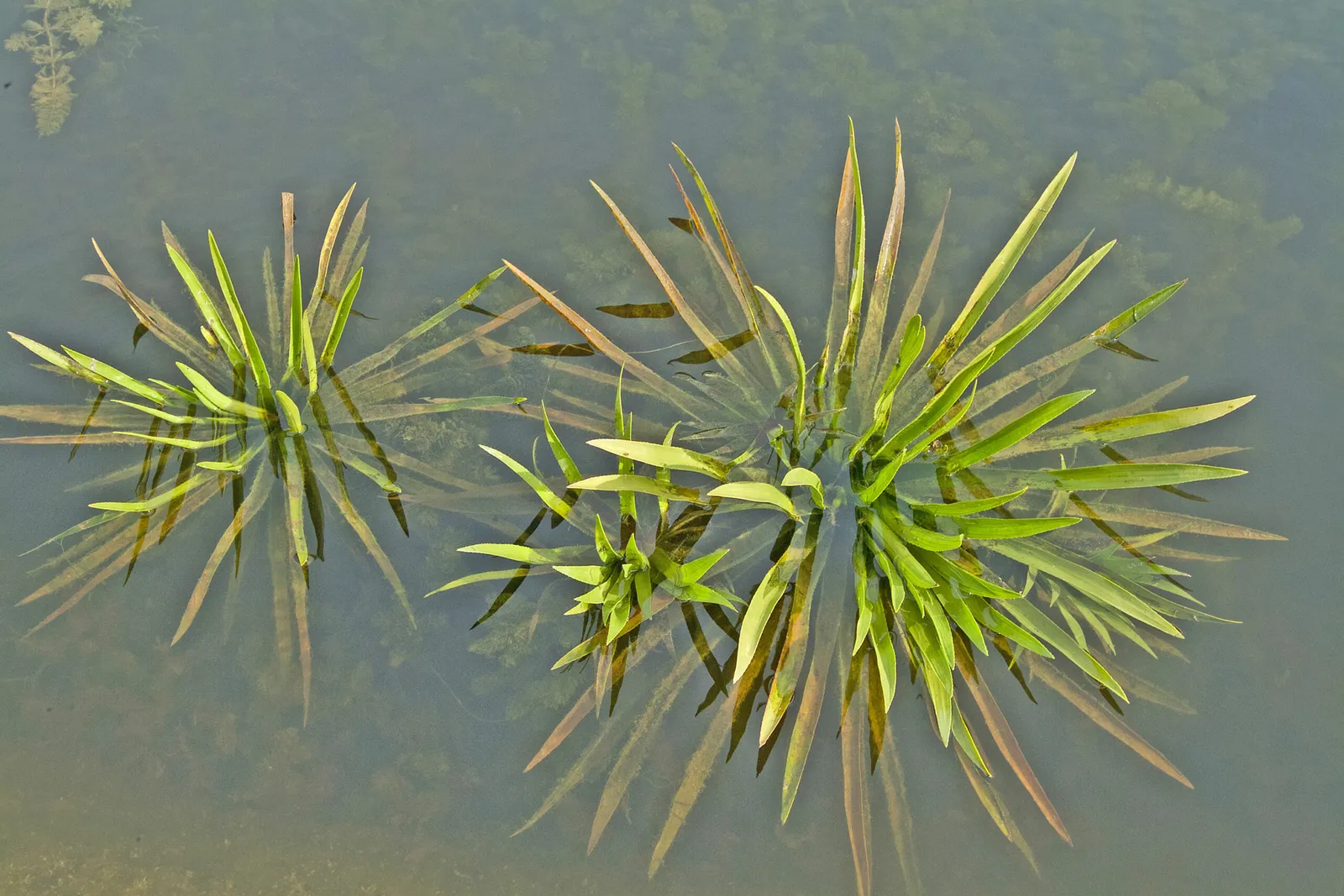
Stratiotes aloides, or water-soldier. Water-soldier is biologically important and provides a habitat for around 200 species of small animals. Its presence has declined sharply, and populations are recovering poorly, despite efforts in nature reserves. Waterfowl are often responsible for damage. During the growing season, the star-shaped plant floats on the water’s surface. In winter, it sinks to the bottom. Place small plants near the edge among the marginal vegetation, and larger plants preferably 40 to 60 centimetres deep. The plants look stunning under water lighting.
Rare water-lily relatives
Nymphaea candida, or European white water-lily. This is the smallest native water-lily. It can be used in mini ponds and in the marsh zones of swimming ponds, provided it is given some clay or loam. The ideal water depth is between 15 and 60 centimetres. Its growth is compact and its rhizome is easy to manage, even in the long term. Mature plants take up one square metre.
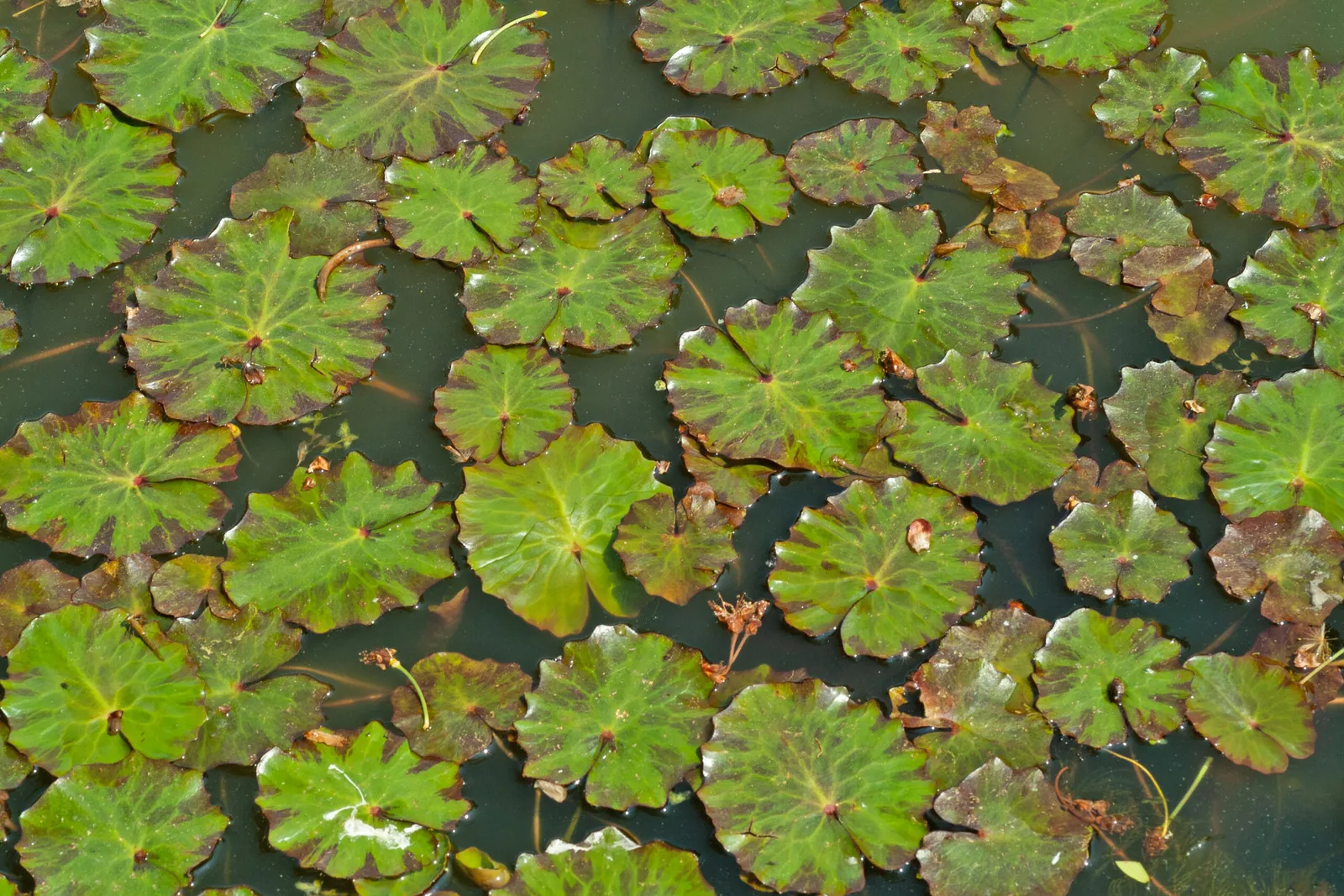
Nymphoides peltata, or fringed water-lily. Its leaves resemble those of water-lilies. Fringed water-lily can survive even when a pond dries out. New runners emerge from the rhizomes on the bottom as soon as water returns. The plant thrives best in water 25 to 30 centimetres deep. That depth is very important: if the water is too deep, it stops growing; if it is too shallow, it does too.
Hydrocharis morsus-ranae, or frogbit. This aquatic plant thrives in almost any water feature, large or small. Although frogbit floats, it anchors itself to the bottom with long roots to prevent itself from drifting away. Place it in shallow water among the marsh plants, ideally at a depth of 10 to 50 centimetres. In shade, frogbit is dark green; in sun, it is khaki. In autumn, it produces winter buds, which overwinter on the bottom.
Question about this story? Ask your question
Keep following this
Get an email when a new story is published. No account needed.
- ThemeTrees and plants of tomorrow
- SubjectSwimming ponds & pools