Swimming ponds: get informed, and inform your customers accurately
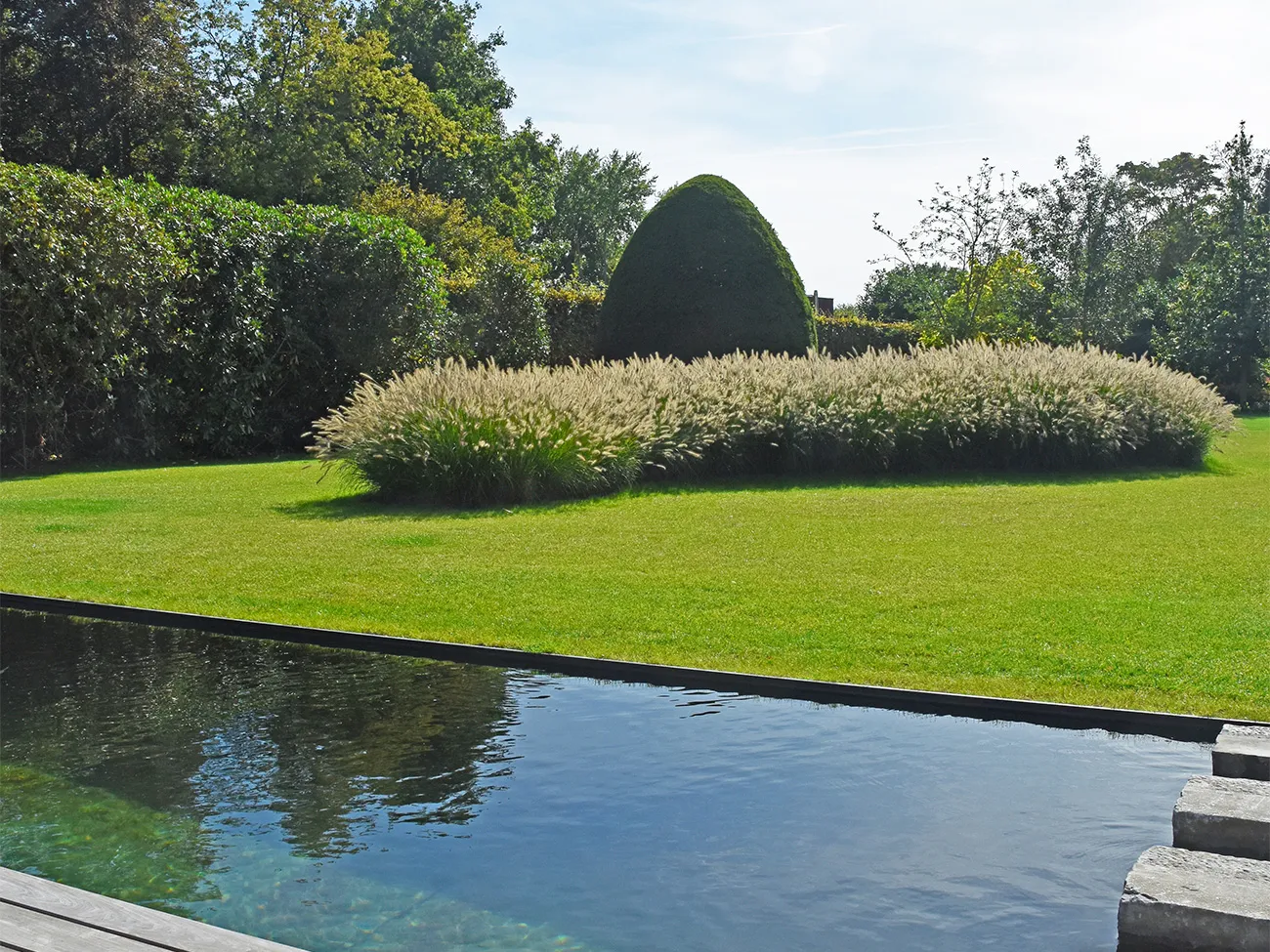
Demand for swimming ponds is high, but there is also a great deal of confusion. Terms such as ecological, natural, biological and hybrid are often mixed up and misused. End customers have a right to accurate information. They do not want to feel ‘cheated’ by promises that were not kept.
Do not promise the impossible
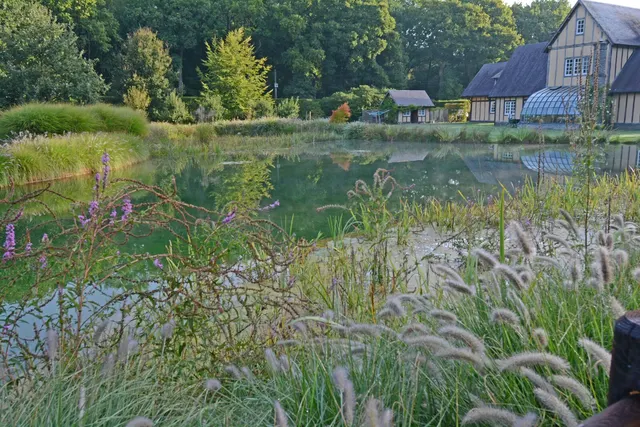
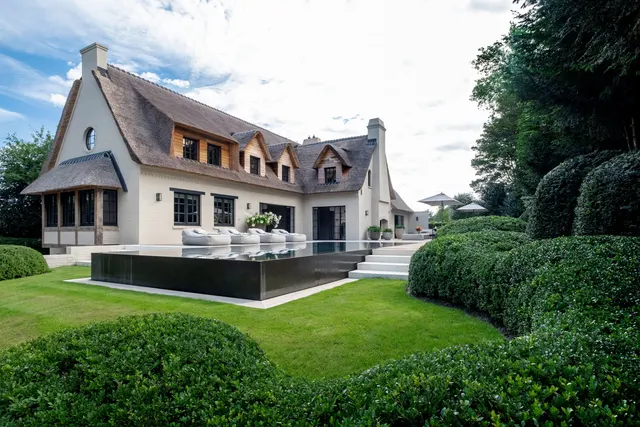
A swimming pond is an alternative to a swimming pool, but it is different. And although some swimming ponds look almost exactly like swimming pools, there are still differences. Swimming ponds have a ‘close relationship’ with nature, and nature is subject to all kinds of fluctuations. The season and weather conditions affect water clarity and the growth of algae, for example.
Installing a swimming pond with a white (or other light-coloured liner) and promising that the water will always be crystal clear, that there will be no deposits on the walls and steps, and that very little maintenance will be needed... is not very wise. It takes a great deal of effort, more in a swimming pond than in a swimming pool, where aggressive acids are often used.
In well-designed swimming ponds, clarity is not a problem at all for most of the year. On the contrary, you can usually see a euro cent on the bottom. This is because nature processes the dirt particles in a swimming pond, removing them from the water.
Stains and growth on walls, steps and the bottom are another matter. They are caused by the biofilm that grows there. Limescale particles can become trapped on and within this film of micro-organisms, and algae can start to grow. This creates a kind of ‘marbled effect’, which we also see in nature, for example on rocks in the Mediterranean. On dark liners, this is naturally much less visible and can even look attractive. The end customer can either accept this growth or tackle it regularly with a brush and vacuum cleaner.
Black is warmer
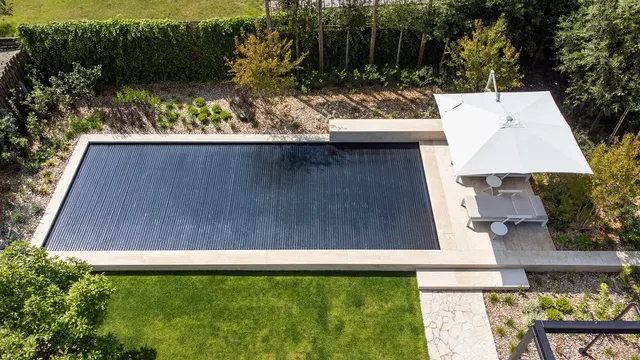
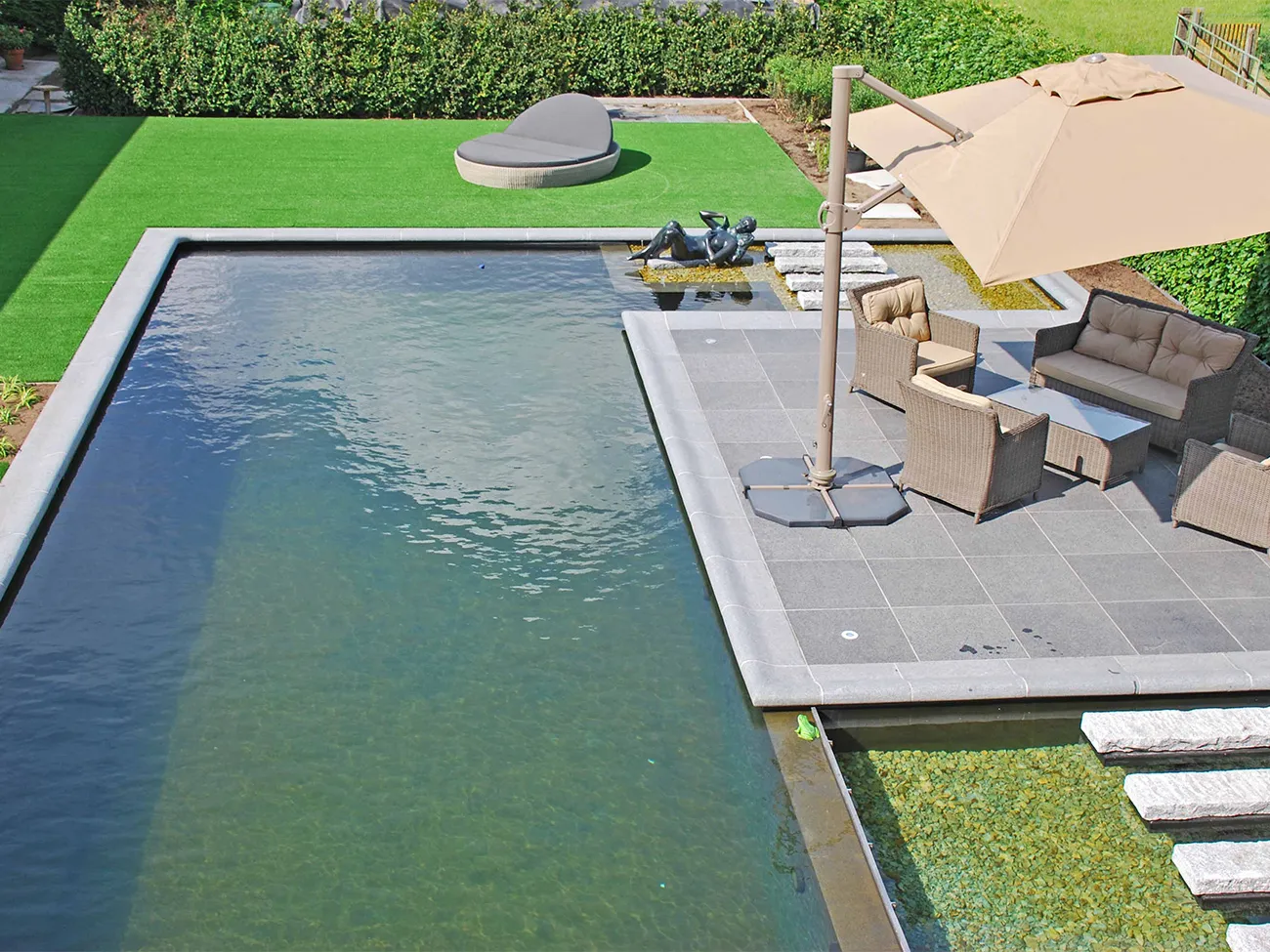
Black is the colour that ‘absorbs the most solar heat’. This means swimming ponds with black waterproofing benefit from free heating from the sun. And that really makes a difference. In summer, the water temperature is 4 to 6 degrees higher than in a pool with light-coloured waterproofing. Even if the end user decides to heat the pool further, for example with a heat pump, this will make a big difference to energy consumption. We all know that energy is very expensive at the moment.
Not all systems are equally ecological
Swimming facilities are often built with concrete or concrete block walls. We also often see complex designs in swimming ponds, with numerous walls, lounging areas, steps... Concrete structures are a major intervention in the garden and have a high environmental impact. A pool floor made of double-reinforced concrete may well be sturdy and durable, but is it necessary?
A swimming pond simply excavated in the garden, with sloping sides, an ecolat edging strip at the top and a laid-out liner for waterproofing, has the lowest negative environmental impact in terms of its basic construction.
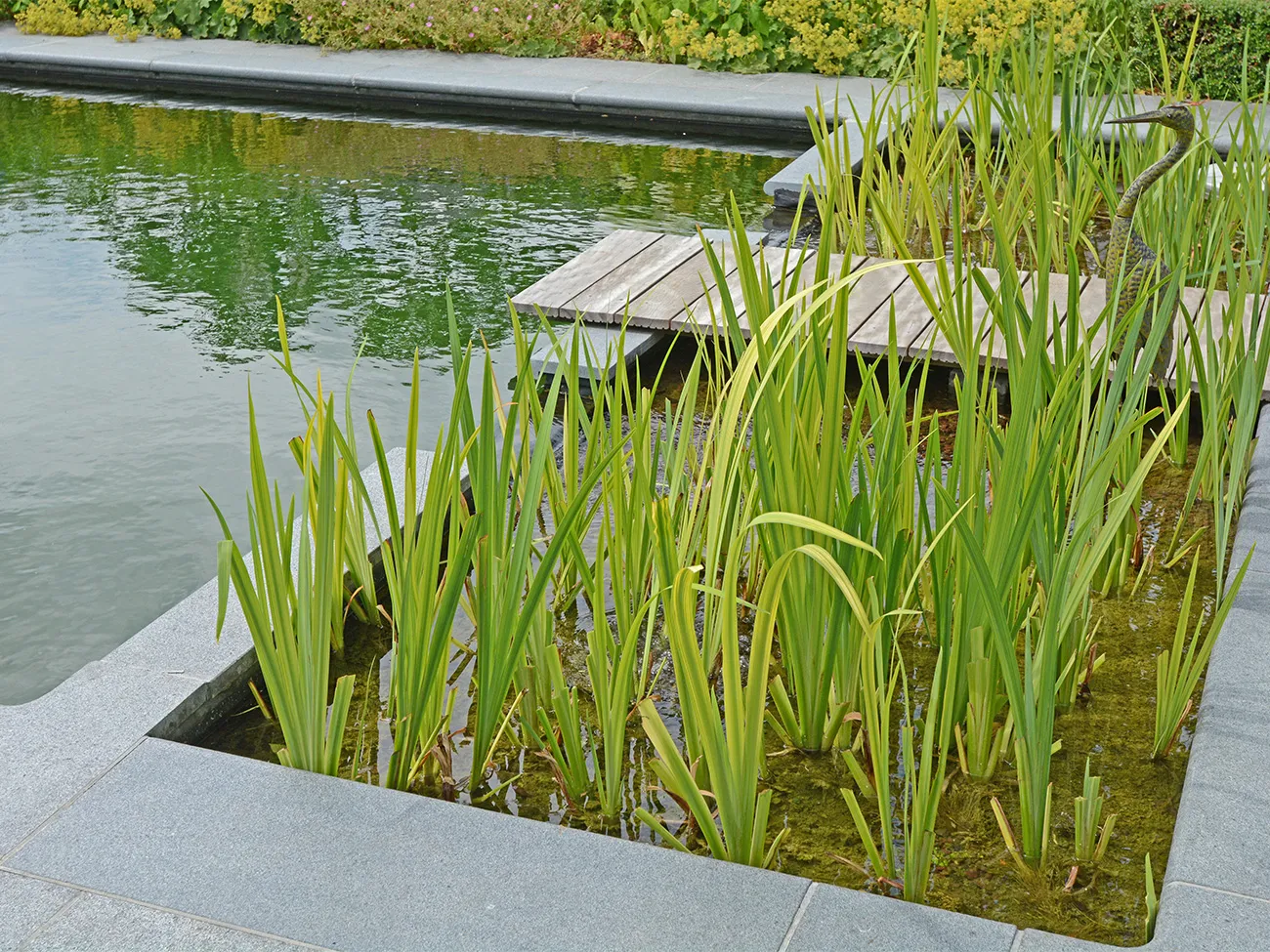
If we rank swimming pond systems from ‘most ecological’ to ‘least ecological’, the list is as follows: downflow marsh bed, upflow marsh bed, marsh bed + multi-chamber filter, drum filter, marsh bed + hydrolysis without salt. One step further is hydrolysis with added salt. But that is no longer a swimming pond, because chlorine is produced, making it a swimming pool. The combination of salt and chlorine also has a significant negative impact on the lifespan of many materials, such as metals and waterproofing.
And what about ‘systems that can be switched over’? They are wrongly compared with hybrid cars, which run on petrol one moment and an electric battery the next. But it is not that simple. It takes several weeks to switch from disinfected pool water to a biologically active filtration system. Conversely, switching from a biological system to a disinfecting pool system requires high doses of disinfectant. So it is not a case of ‘pressing a button and changing systems’.

Wide variation in running costs
The filtration systems commonly used in swimming ponds work both mechanically and biologically. The biofilm (= beneficial micro-organisms) does much of the useful work. This means the water must circulate continuously and the pumps must run day and night, all year round. Using energy-efficient pond pumps rather than energy-hungry swimming pool pumps makes a big difference over the course of a year, often a factor of four.
In the most natural swimming ponds, the pump is the only component that uses energy. More complex systems consume additional energy for hydrolysis, UV, electrolysis and so on. Alongside energy, there are also costs for treatment and replacement parts such as electrodes, probes and lamps... The more ‘technical’ the system, the higher the running costs. It is important to be honest with the customer.
Question about this story? Ask your question
Keep following this
Get an email when a new story is published. No account needed.
- ThemeWater and hard landscaping in the garden
- SubjectSwimming ponds & pools