Tips and tricks for a thriving swimming pond
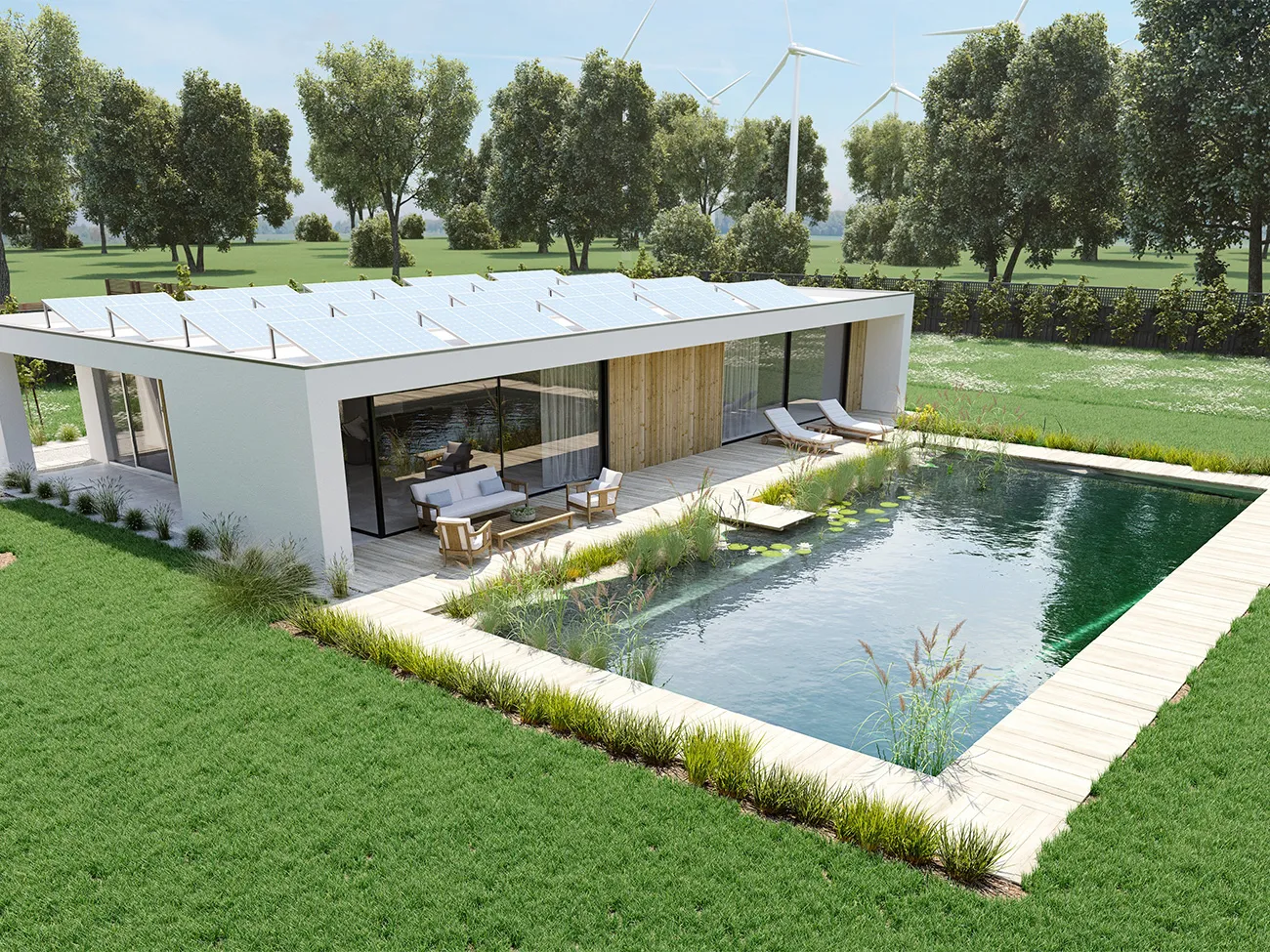
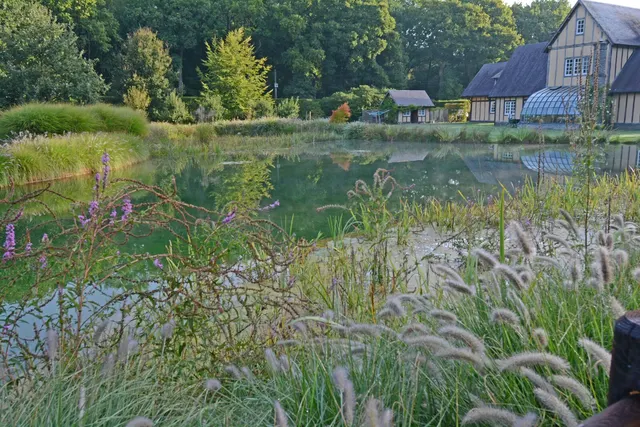
What makes a swimming pond so appealing? Not only is the water purified in a 100% natural way, but the recreational pool also forms part of its surroundings, allowing users to exercise and relax with plants all around them. Today, you can choose from a much wider range of plants than just yellow flag iris to achieve this.
Add colour to the helophyte filter
Ponds and swimming ponds are complex ecosystems in which plants and bacteria work together to keep the water clear and clean. They do this primarily by processing waste substances such as nitrates and phosphates. These are used for plant growth, but in excess they also encourage algae growth. For this reason, helophyte filters in swimming ponds have traditionally been planted mainly with robust, highly purifying species such as yellow flag iris.
Iron sand
“With the traditional construction of a helophyte filter using lava and a fixed depth of around 10 cm, the choice of plants is indeed limited,” says René Verspuij of Waterplantenkwekerij R. Moerings. “However, that changes when you use Bio Korrel or iron sand. Thanks to its high iron concentration, this circular material, a by-product of water treatment, can bind phosphates. A 10 cm top layer of iron sand over the different grades of lava will therefore remove every trace of phosphate from the water throughout the year, then release it to the plants with great efficiency. This also gives plants that do not thrive in lava a chance to grow in the swimming pond.”
Variety in height, colour and form
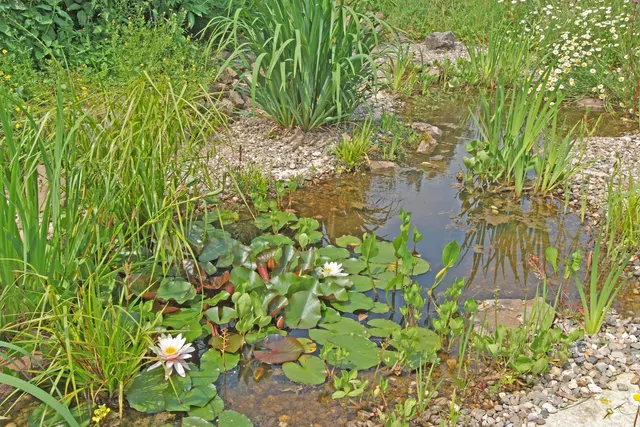
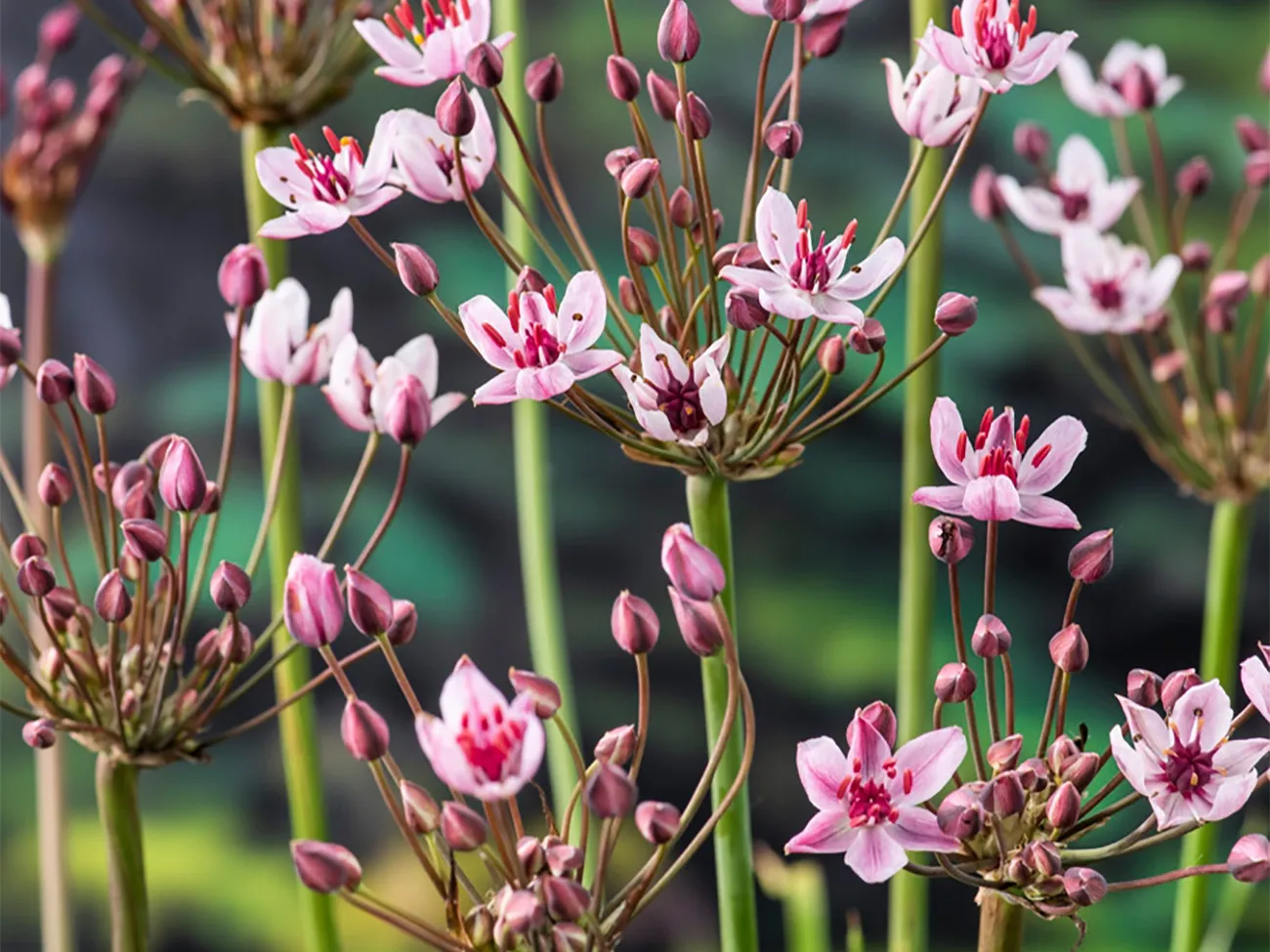
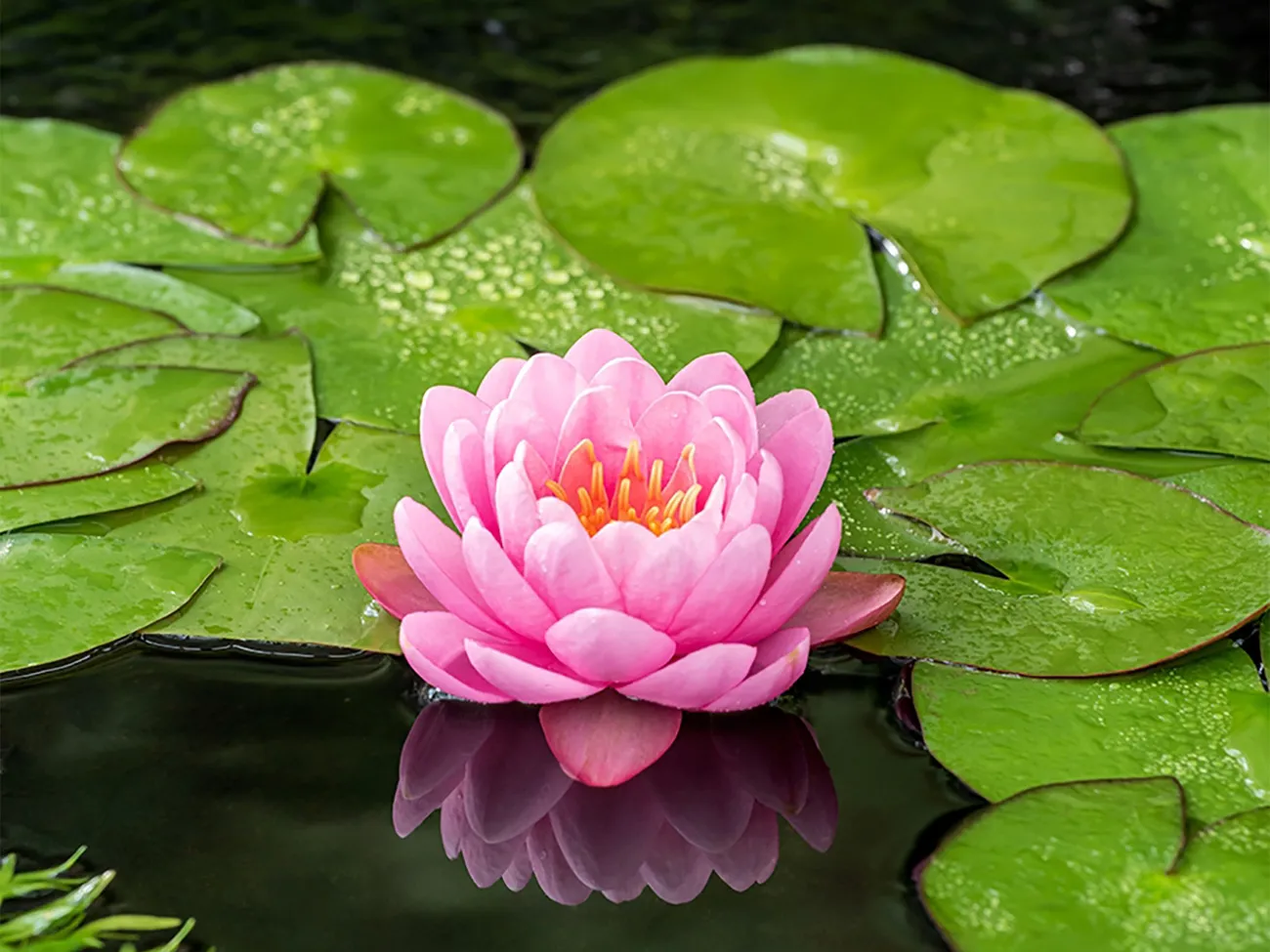
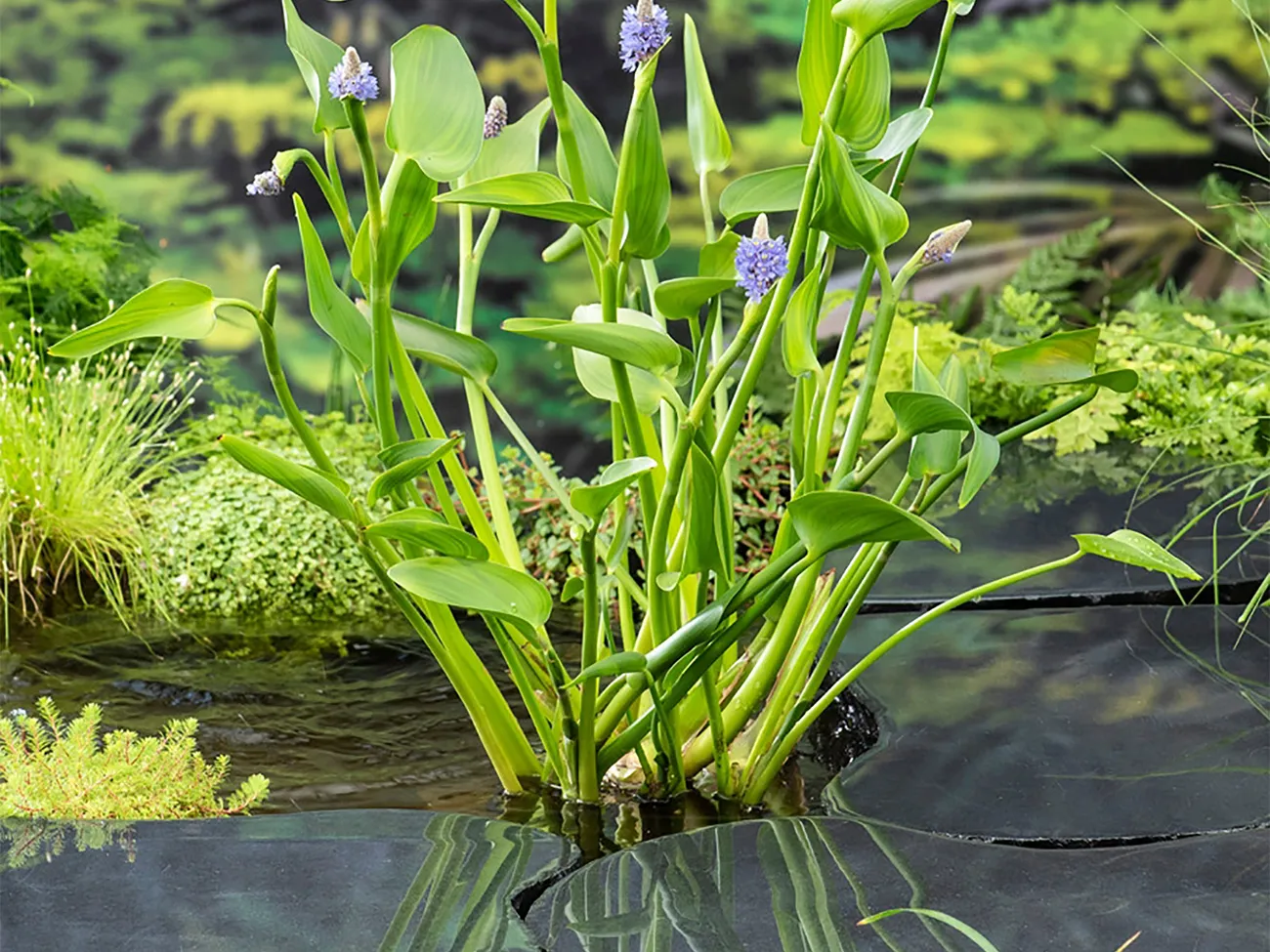
If you also combine Bio Korrel with different heights and depths in the filter zone, it opens up a range of more than 50 plant species, according to Verspuij. “You can use aquatic, marsh and oxygenating plants. This means you can plant not only yellow flag iris, but also purple, white and pink varieties, which prefer to grow higher in the water. Colourful species such as Lythrum, Pontederia, Thalia, Menyanthes and Butomus are also suitable. And what about adding a few water lilies at the boundary between the swimming
and filter zones?”
Verspuij offers a few rules of thumb: the biomass or porous material in the helophyte filter should account for roughly a third of the total swimming pond volume, and around ten plants should be planted per square metre. The greater the diversity of species, the more waste substances will also be filtered out of the water. “From an aesthetic point of view, it is important to introduce variety in colour, form, height and leaf shape. Just as you would in the garden.”
Prune regularly
For users to make the most of a beautifully designed filter zone, the filter construction and plant selection are not the only things to consider. “In the Low Countries, the swimming season usually runs from July to September. By then, the main flowering period is generally already behind us. The trick is to prune plants back as soon as they have finished flowering for the first time. This encourages them to grow again and produce new buds, resulting in a second flowering period.”
This extended growing period is not only good for users, Verspuij adds. “It also means that more waste substances are absorbed from the water. This keeps the balance stable and the water crystal clear.”
Question about this story? Ask your question
Keep following this
Get an email when a new story is published. No account needed.
- ThemeWater and hard landscaping in the garden
- SubjectSwimming ponds & pools