Certified charging cabinets set to become the legal standard
Text Language expertsImage Seefion
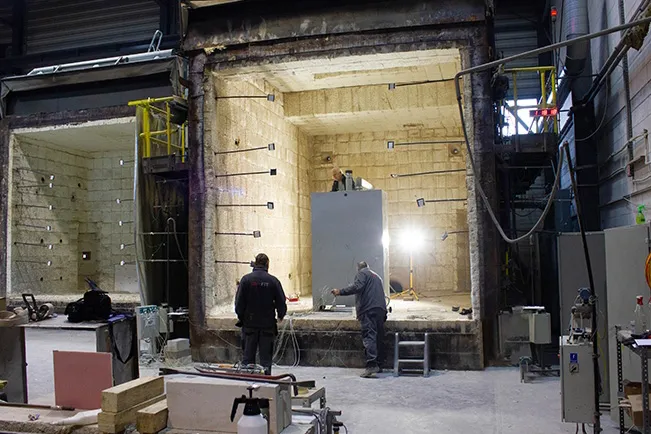
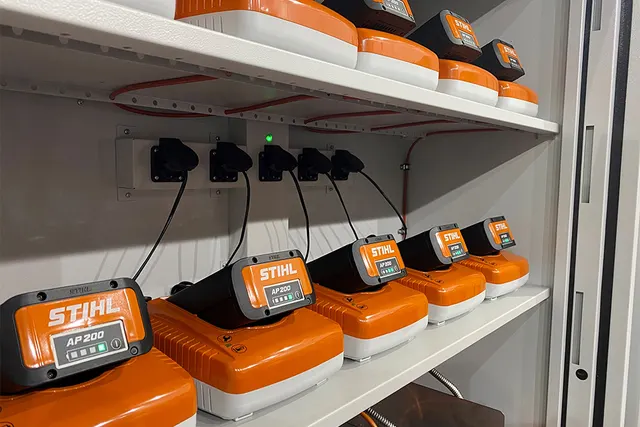
The rapid rise in electrification is also driving a sharp increase in the use of lithium-ion batteries. Users of battery-powered tools are not always clear about the requirements for a safe charging solution. According to Hans Bonsel, this creates risks for business safety and insurability. As chair of safe and secure storage trade association kluizen VGW (Vereniging Geld en Waardeberging), he is part of a European working group in which experts from eight countries are collaborating on a European standard for safe lithium-ion battery cabinets.
VDMA 24994 is being used as the technical basis for the new European standard. These test requirements specify what battery cabinets must meet. They are used to test cabinets for fire, explosion and smoke development while batteries are being charged and stored. “Many insurers now require compliance with VDMA 24994,” says Hans Bonsel. “Those who do not meet the requirements risk problems when making a claim. It is therefore best to ensure that your charging solution already complies with the requirements in the guideline.”
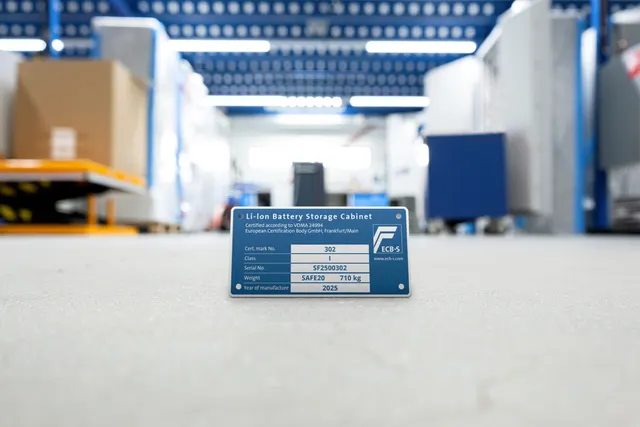
The working group tasked with drawing up the European standard for lithium-ion cabinets (CEN263WG2) includes manufacturers and testing laboratories. “There is a wealth of expertise in the group. Cabinets that meet the VDMA test requirements are now awarded a European ECBS certificate, the familiar blue certification plate inside the cabinet. This is how you recognise a quality product. Seefion’s charging cabinets, among others, meet these stringent safety requirements. Most solutions on the market have not been tested against recognised requirements or independently certified, so their safety in the event of a battery fire cannot be demonstrated,” Bonsel explains.
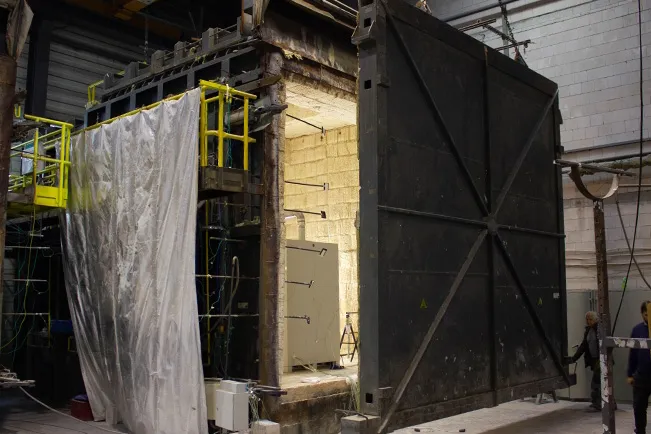
Thorough testing
In short, the cabinet is tested for fire resistance from the inside out and vice versa, including scenarios involving thermal runaway, pressure build-up, smoke gases and heat released into the surroundings. Over the next two years, the working group will thoroughly review all product details and test standards. “This also depends on the types and quantities of batteries placed in the cabinet. If an explosion occurs inside, the fire must remain contained within the cabinet. During testing, there must be absolutely no visible flames or sparks,” says Bonsel.
Providing clarity
Even without a defined legal framework, businesses should already be taking this into account in the interests of business continuity, employee safety and insurability. When buying a charging cabinet, check whether it meets the VDMA test requirements. This is not straightforward, as some cabinets are marketed as suitable for charging and storing lithium-ion batteries but are not safe in the event of a battery fire or explosion. This remains a major challenge for the working group. “Testing is knowing. We will test real batteries and different types of battery cells so that we can provide clarity on the safety of charging cabinets,” Bonsel concludes.
The new European rules are expected to come into force in 2027.
A business enquiry for Seefion B.V.? Get in touch
Companies in this story

Keep following this
Get an email when a new story is published. No account needed.
- SubjectElectrification
- CompanySeefion B.V.