VDMA 24994 sets strict safety requirements for fire-resistant lithium battery cabinets
Text Geert Van CauwenbergeImage Seefion
Lithium-ion batteries are now an essential part of agricultural and horticultural machinery. But incorrect use or charging can create a risk of fire or explosion. Manufacturers, business owners and insurers are therefore looking for solutions that genuinely guarantee safety. The new VDMA 24994 standard provides guidance. Remco van Kuilenburg, managing director of Seefion, explains why this standard is becoming the new benchmark and how his company is already staying ahead of the curve.
“The growing use of lithium-ion batteries in agriculture and horticulture makes safe storage more important than ever,” says Remco Van Kuilenburg. “However, many existing solutions cannot really contain a battery fire. VDMA 24994 changes that. It is the first test standard based on a real-world risk: thermal runaway, in which a battery ignites or explodes spontaneously.”
Not theory, but proven performance
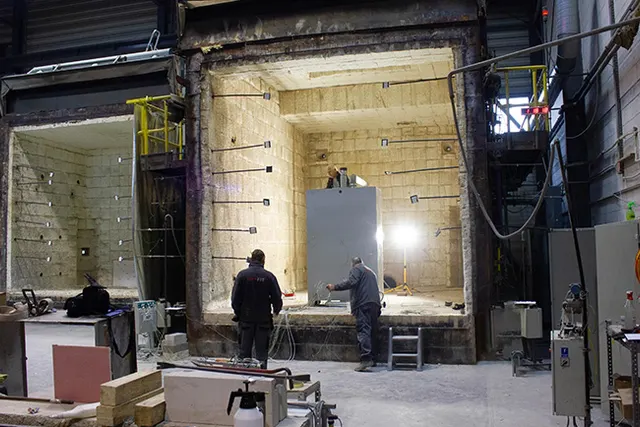
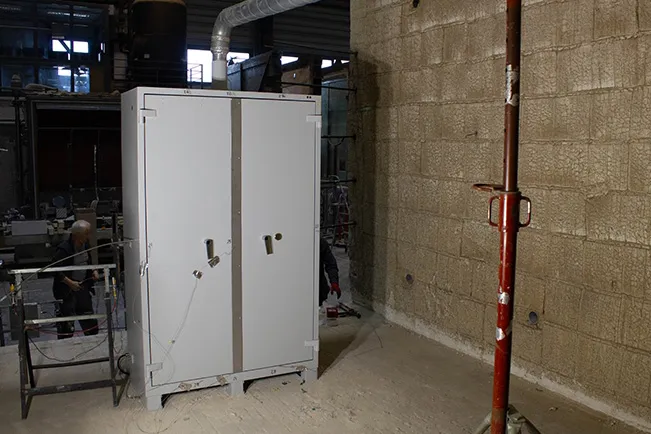
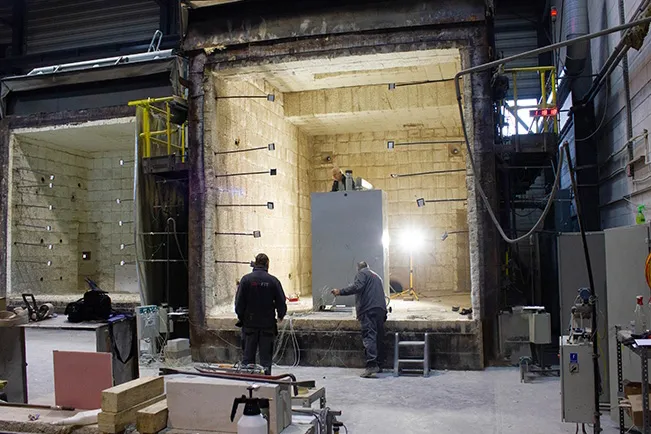
Drawn up by the German VDMA, the standard specifies exactly how battery cabinets must be tested, including what they must withstand, from extreme heat to explosive pressure. “At Seefion, we were involved in developing this test method from the outset,” says Van Kuilenburg. “Our cabinets have been tested at MPA Dresden, among other places, using real lithium batteries in a worst-case scenario. We bring all the cells to ignition at the same time.”
The results speak for themselves. “In one test, a peak pressure of 250 bar was recorded in a closed test rig, 25 times higher than in a test for an ATM. Yet our cabinet remained completely intact: no flames escaping, no smoke, and the outer wall stayed below 150°C. That is the only way to prevent the fire spreading to the surroundings,” says Van Kuilenburg.
High capacity, strict requirements
According to Van Kuilenburg, one important difference is the capacity at which the cabinets are tested. “We test our cabinets up to 7,000 watt-hours, while many competitors stop at lower figures. That may seem like a minor detail, but in practice it makes a world of difference, especially when charging several batteries at once. We base our approach on realistic, modern applications.”
Seefion also subjects cabinets with double doors, which are particularly vulnerable to explosions because of their construction, to maximum-resistance tests. “We don’t want any weak points. Only if a cabinet remains closed under all conditions can you truly talk about safe storage.”
Recognisable certification
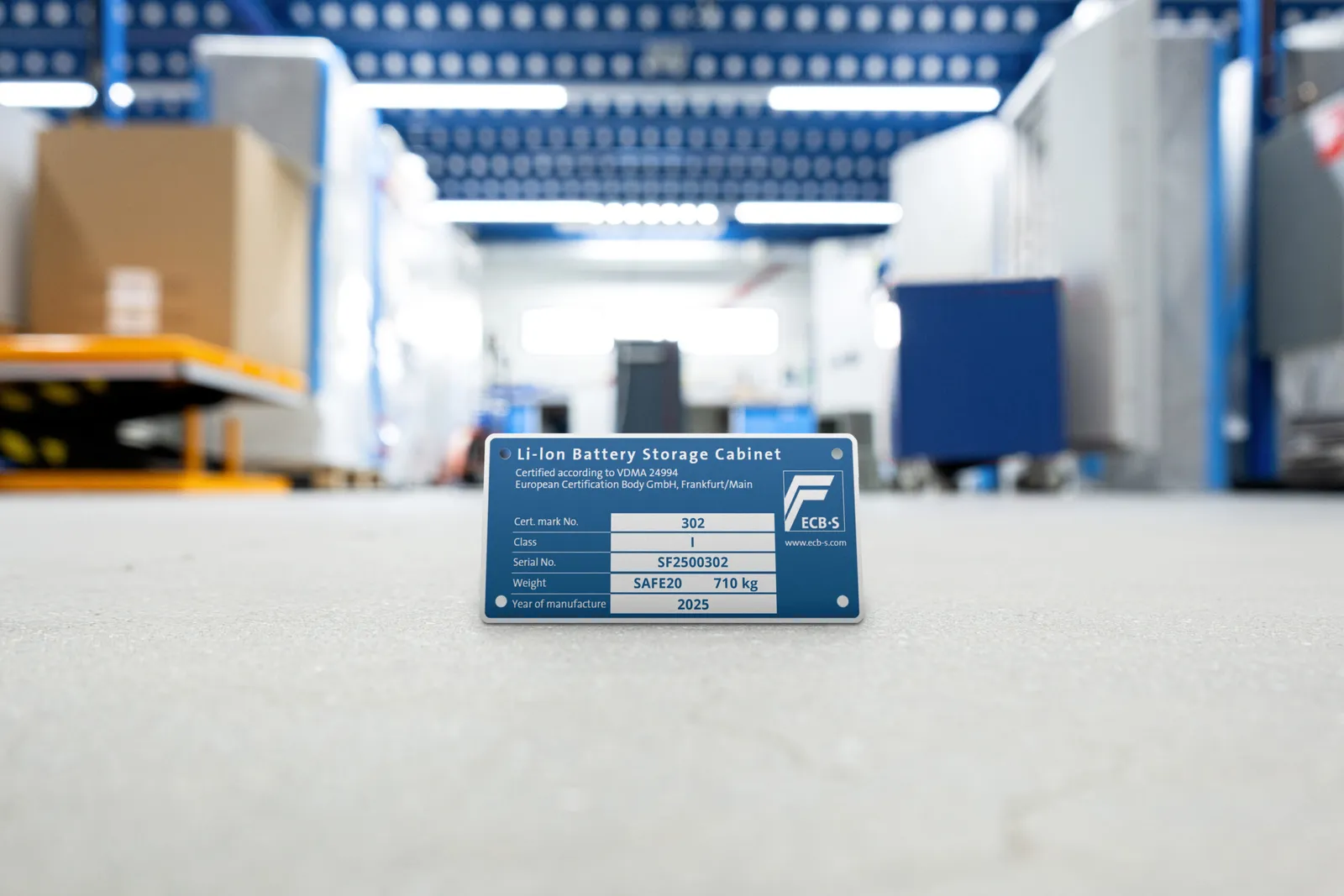
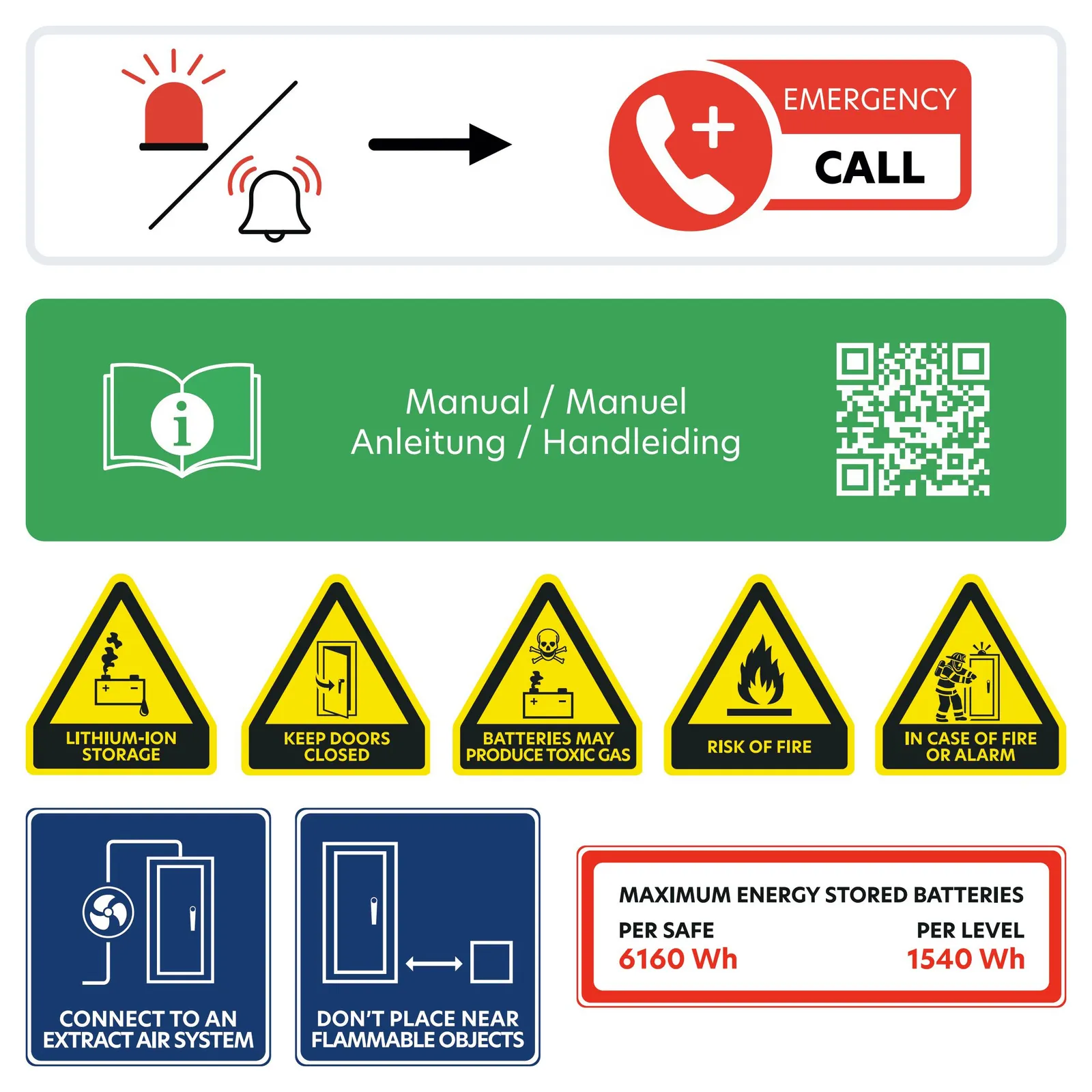
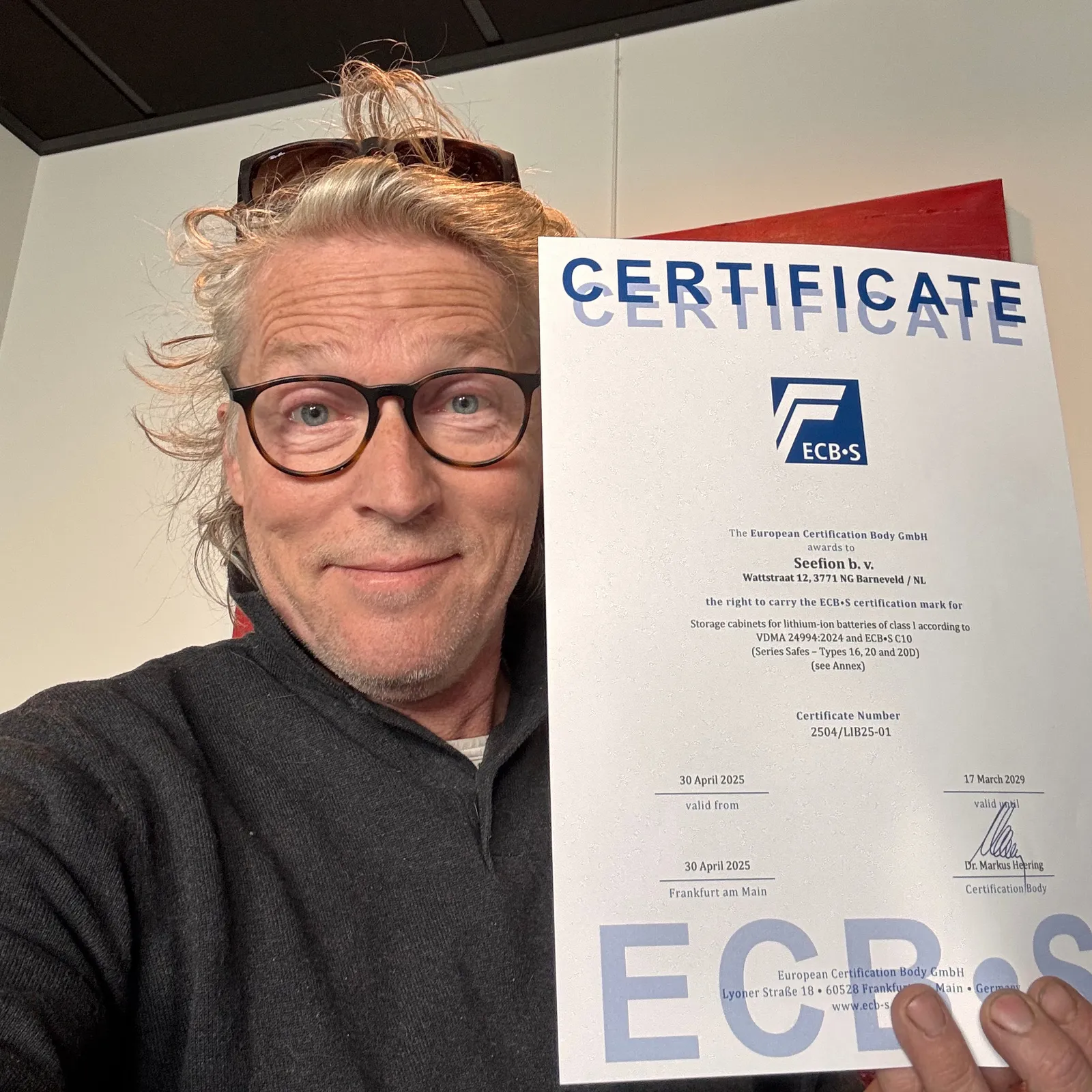
Cabinets that pass the test are fitted with a metal plate on the outside. “The plate is officially issued by ECB-S, the European Certification Body. The certified capacity is also stated on the inside. This tells users exactly what the cabinet can withstand. We consider that transparency essential,” says Van Kuilenburg.
He believes it is only a matter of time before VDMA 24994 is also adopted at European level. “CENELEC, the European Committee for Electrotechnical Standardization, has now set up a working group with nine European countries to implement the standard across the EU. If that happens, VDMA 24994 will become the standard for safe battery cabinets in Europe.”
Insurers raise the bar
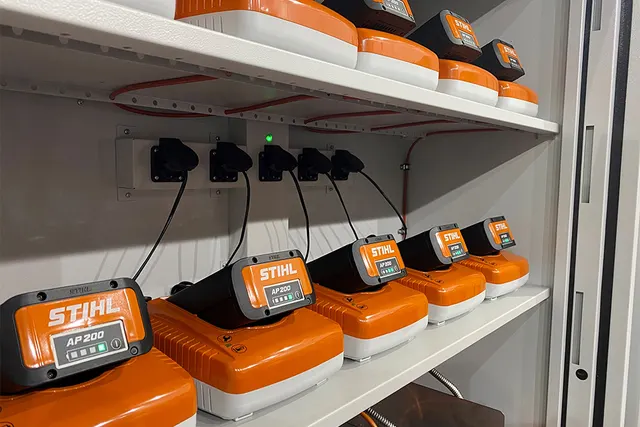
One reason this could happen soon is growing pressure from the insurance sector. “Insurers want certainty,” says Van Kuilenburg. “We are increasingly seeing prevention clauses that explicitly state that batteries may only be charged overnight in certified cabinets. I expect them to refer specifically to VDMA 24994 in the near future.”
A legal requirement is not needed for now, he believes. “The market regulates itself. Manufacturers want certification because customers ask for it. And that is a good thing: self-regulation works faster than legislation.”
A worthwhile investment
Finally, Van Kuilenburg has some clear advice: “Lithium-ion batteries can ignite suddenly and without warning. You often cannot see internal damage from the outside. That is why you should always charge them in a safe, tested cabinet. This is the only way to protect your premises, your employees and your liability. So invest in a cabinet that really contains the fire. It buys you time, protects the surroundings and meets the expectations of both insurers and the fire service.”
A business enquiry for Seefion B.V.? Get in touch
Companies in this story
Keep following this
Get an email when a new story is published. No account needed.
- SubjectElectrification
- CompanySeefion B.V.