Climate-resilient grass is about more than drought tolerance
Text Elise NoyezImage DSV zaden
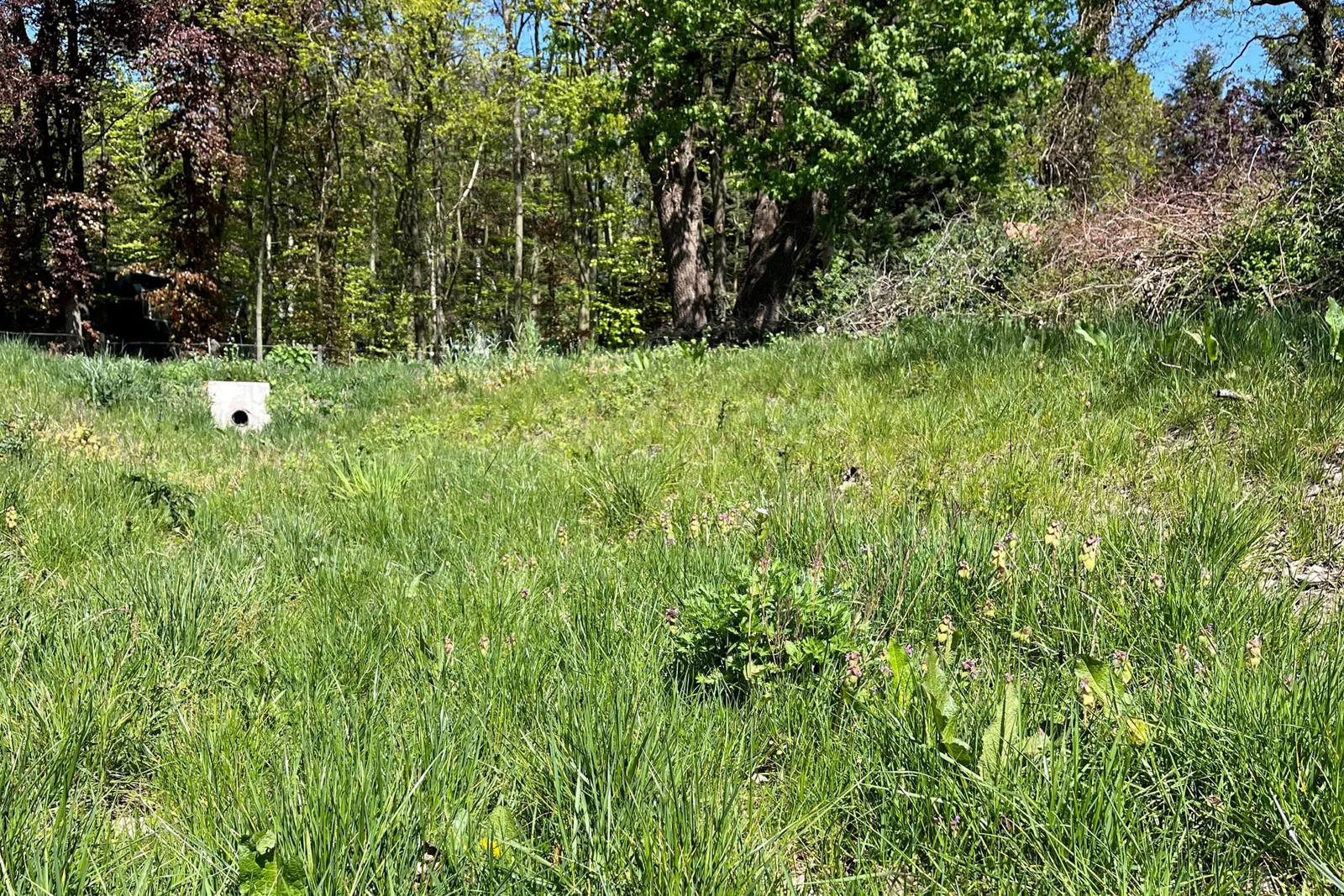
You have probably heard quite enough by now about the: yet again! dry, hot summer. Anyone looking to create a climate-resilient lawn is certainly aware of the importance of drought- and heat-tolerant grasses. Climate change is a double-edged sword. Alongside long periods of extreme heat and drought, it also brings periods of excessive rainfall. Grass in areas where water can remain for extended periods, such as in a swale, must therefore be able to cope with that too.
Natural infiltration features such as swales have become an integral part of public and other large-scale landscaping projects in recent years. They are essential for absorbing peak flows from extreme downpours and allowing the large volumes of water that fall at such times to infiltrate gradually into the soil. But this also requires suitable planting. Thijs Schoenmakers of DSV zaden has seen it happen time and again: a beautiful swale is created, the soil is sown with a standard amenity mix and, after a few months, hardly any of the fine grass plants remain. “The cultivars in those mixes simply are not suited to being underwater for days or weeks,” he explains. “But that is exactly what happens in a swale, cutting off the oxygen supply. Only cultivars with good flooding tolerance can survive in those conditions.”
Flooding tolerance put to the test
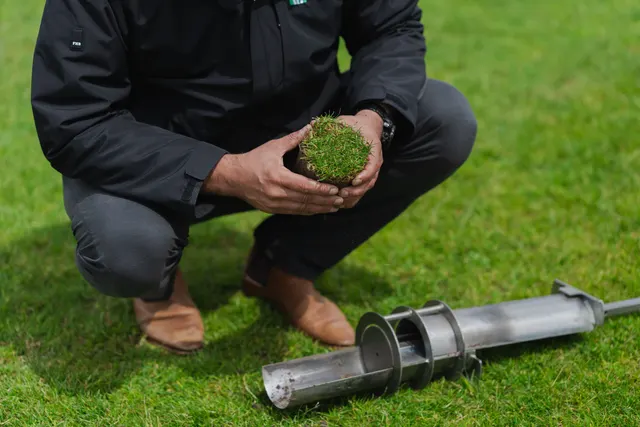
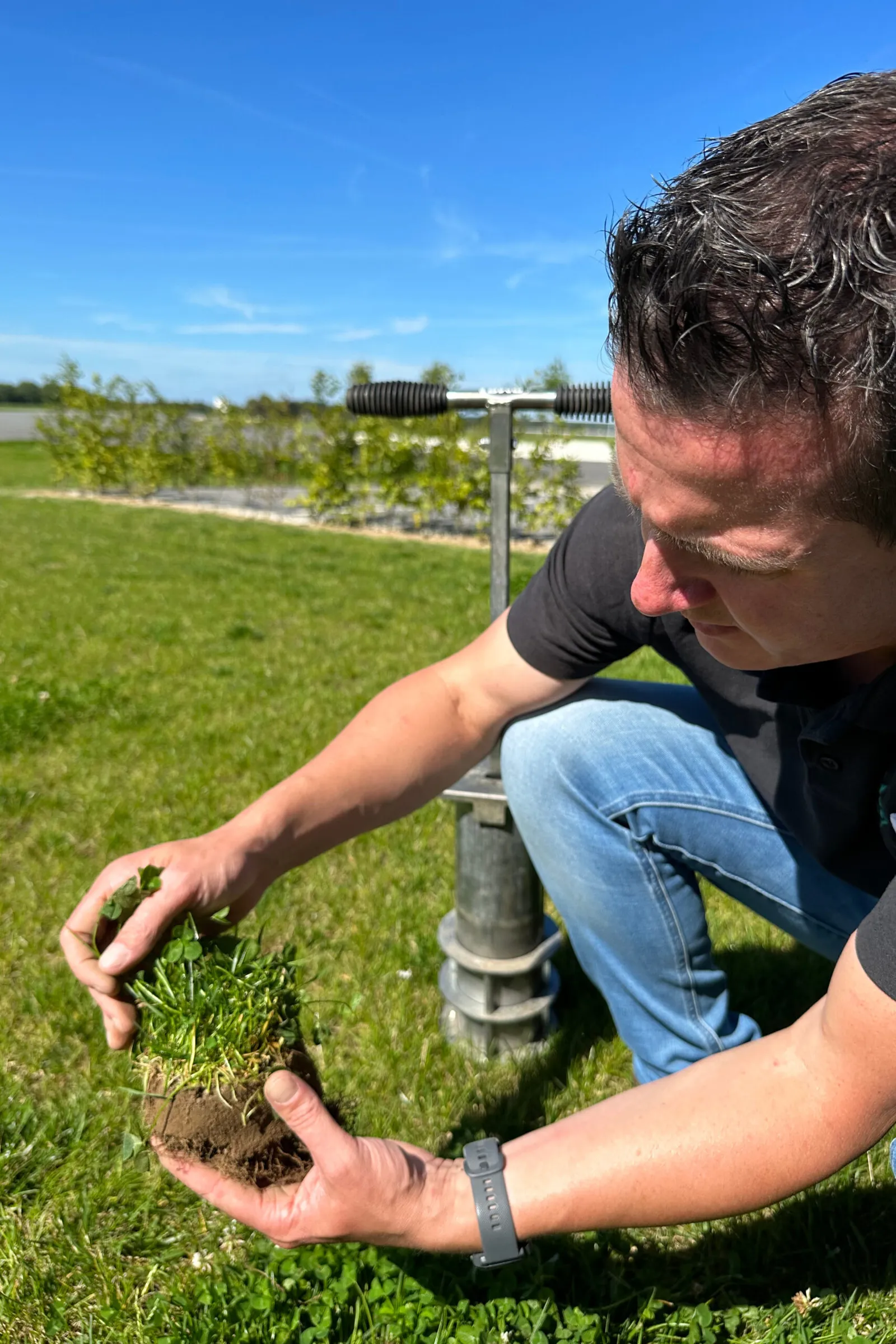
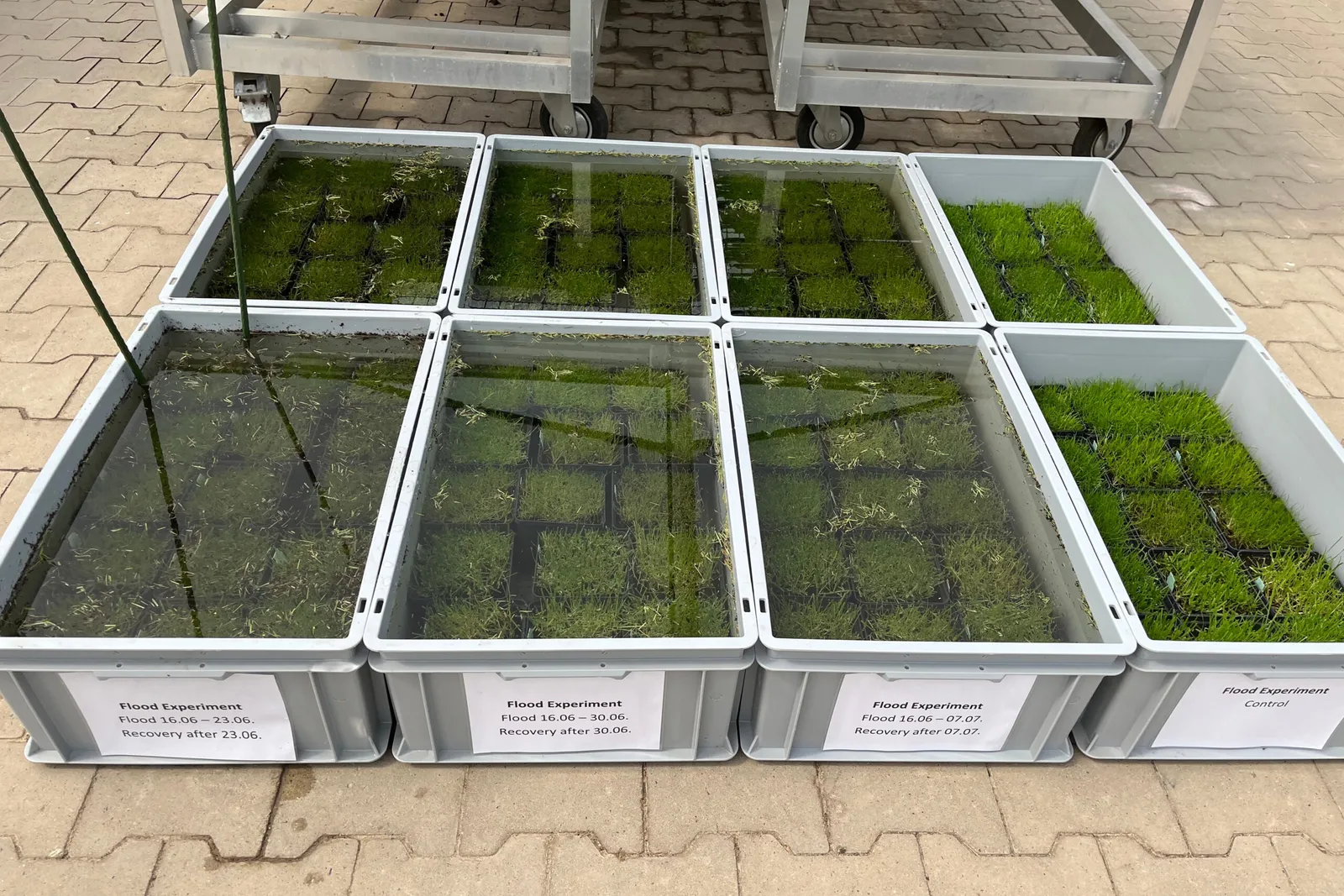
In recent years, DSV has been searching for suitable cultivars. In an extensive trial, different cultivars of perennial ryegrass, smooth-stalked meadow-grass, red fescue, tall fescue, hard fescue and wavy hair-grass were submerged for seven, fourteen and twenty-one days. Tall fescue, and the Regenerate variety in particular, emerged as one of the clear standouts. Not only did it last the longest, it also recovered best. “Tall fescue develops thick, deep roots,” Schoenmakers explains. “This makes the plants excellent conduits for infiltration, while also enabling them to draw nutrients and, during dry periods, moisture from deeper soil layers. The plant can also adapt root growth and oxygen supply to low-oxygen conditions. When oxygen returns to the soil, this, together with the plant’s good carbohydrate reserves, allows the grass to recover and regrow quickly.”
A grass mix for extreme weather conditions
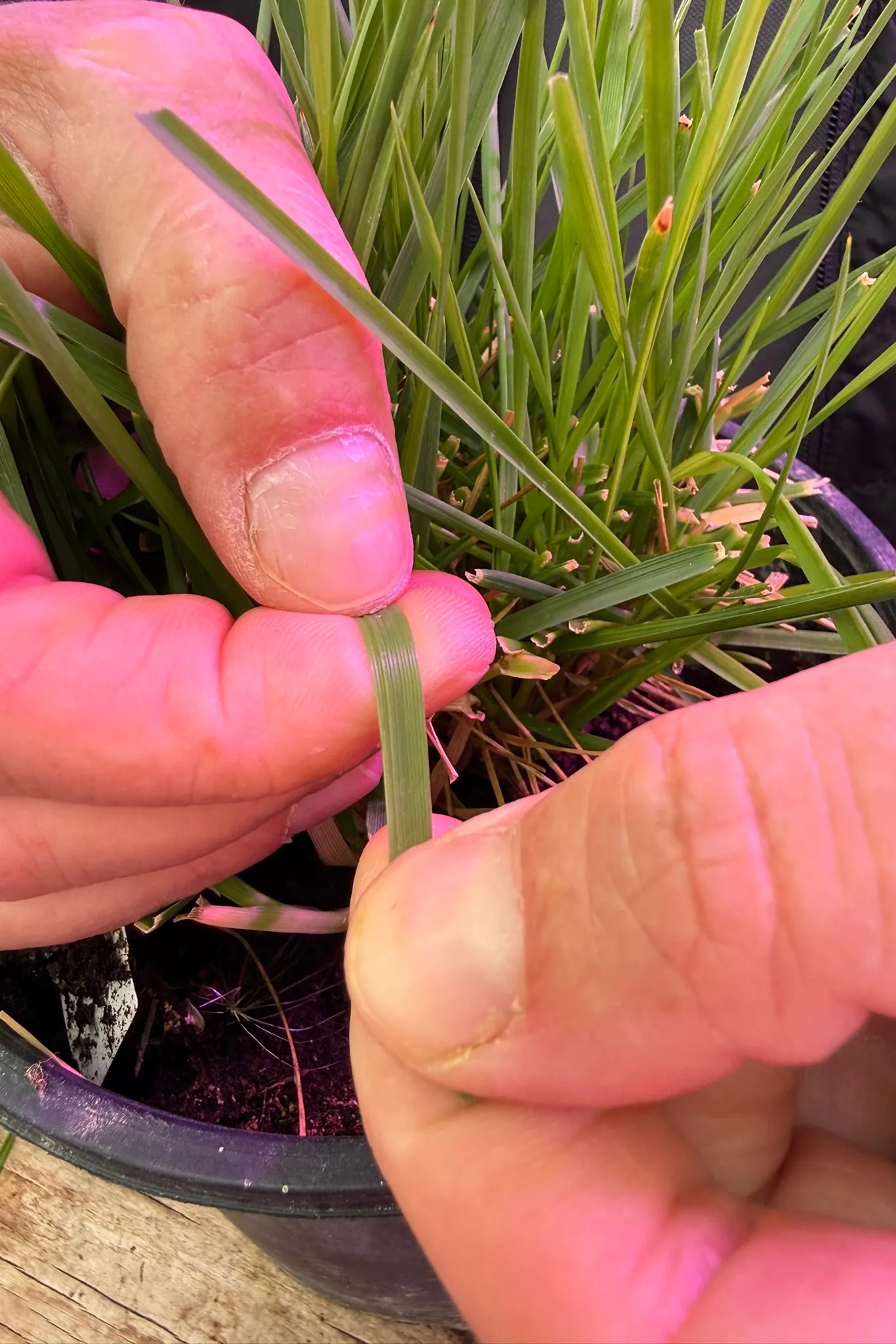
Its excellent flooding tolerance and good drought tolerance, again thanks to its deep roots, make Regenerate tall fescue an exceptionally suitable variety for swales and other soils that regularly swing between drought and waterlogging. It is no coincidence, then, that the variety is the main component of the EUROGRASS Campino mix. “The great thing about Regenerate is that, after years of breeding, it also has a very fine texture. This is no longer the tall fescue found in the meadow mixes of the past, it really feels like a lawn.”
In EUROGRASS Campino, tall fescue is combined with ten per cent perennial ryegrass and ten per cent smooth-stalked meadow-grass. “One provides rapid establishment, while the other brings strength and stability. Over time, and with repeated flooding, these cultivars may well disappear, but that does not necessarily have to be a problem. The tall fescue will persist, leaving room for other, naturally occurring species to grow in between. That fits neatly with the biodiversity and extensive management ethos inherent to a swale.”
Een zakelijke vraag aan DSV zaden? Get in touch
Companies in this story

Keep following this
Get an email when a new story is published. No account needed.
- SubjectTurf management
- CompanyDSV zaden