Lawn mowers: what does the future hold?
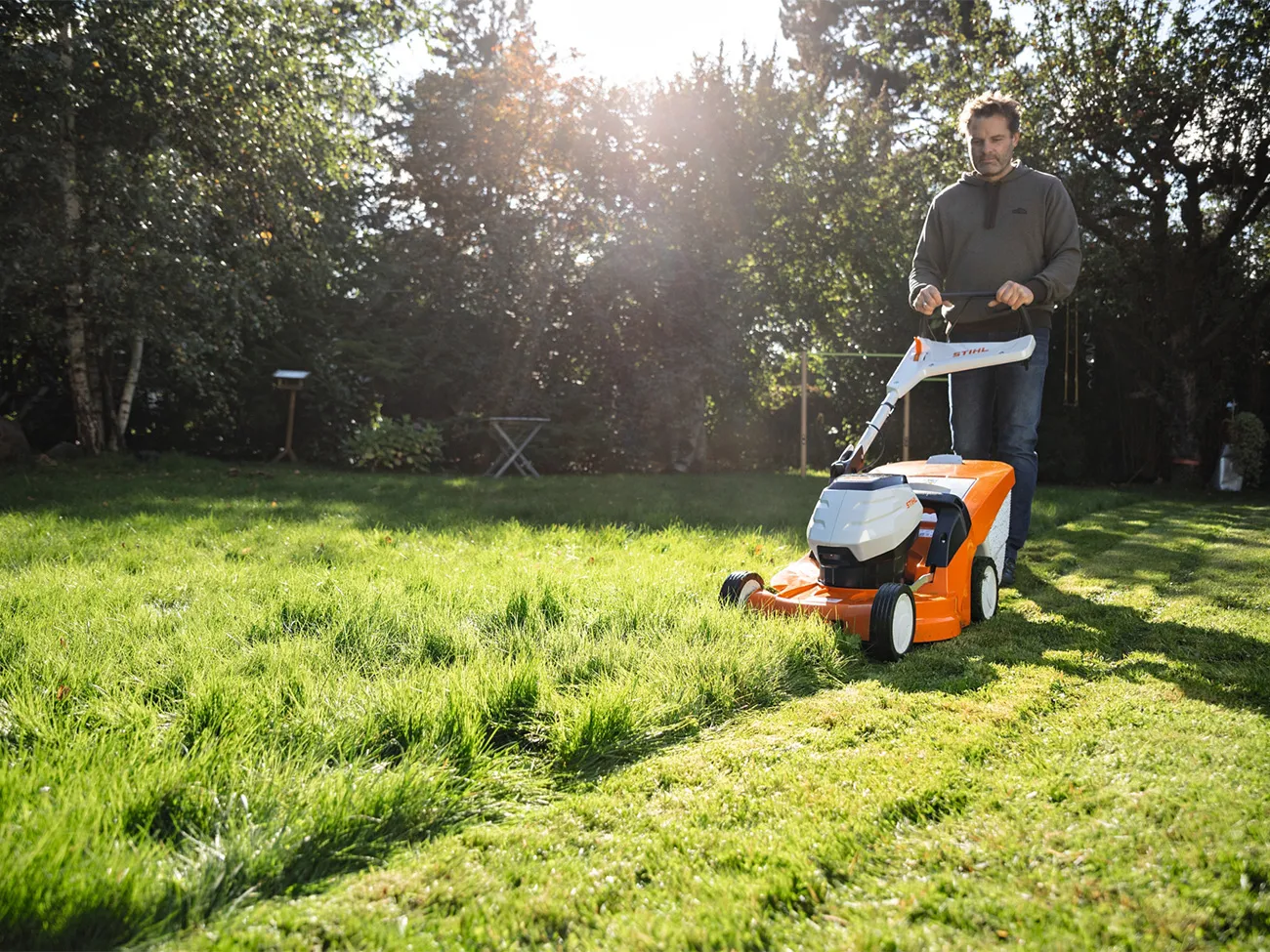
Manufacturers and distributors of (professional) lawn mowers face a host of new trends, developments and challenges. From self-driving mowers to zero emissions, from scarce components to circular applications… How do specialists in the field assess these factors? We asked Jo De Brauwer (Managing Director, Vandaele Konstruktie nv), Lieven Beyl (Group Sales & Marketing Director, Cofabel nv), Luk Hendrickx (Product Manager, Andreas Stihl nv) and Johan Surkyn (Manager Finance, Sales & Administration, The Toro Company) for their views.
A wide range of challenges
Asked about the biggest challenges in the development, production, supply and maintenance of lawn mowers, all four experts agree: shortages of raw materials and components, rising prices, long delivery times and hard-to-fill vacancies are causing considerable headaches in the sector. “An unstable regulatory framework and a lack of a hands-on mentality also make the job more difficult,” confirms Jo De Brauwer.
Alongside these general challenges, Lieven Beyl points to a number of specific issues: “In the professional segment, we’re seeing growing demand for electric machines, although the increase is not as pronounced as in the consumer market. The intensive use of professional mowers still seems to be a barrier to switching to batteries. At the same time, I predict that the growing use of batteries in cars, lorries and other vehicles will put further pressure on raw material supplies and prices for the production of electric lawn mowers. And one final challenge: reducing noise pollution, for example on golf courses, is also a consideration when using mowers professionally.”
A focus on sustainability
As in other sectors, lawn mower manufacturers are making sustainability a top priority.
Jo De Brauwer is first to comment: “For some time now, sustainability has been an absolute priority in the development and optimisation of mower products. We see this agenda, which goes hand in hand with ease of maintenance and low maintenance requirements, as a comprehensive concept, with no compromise on performance or functionality. Direct environmental benefits include converting power as efficiently as possible, using tailored software, choosing biodegradable consumables such as bio-oil, and making wear parts more durable or reducing their use. Indirect environmental benefits include longer mower lifespans, recycling mowers at the end of their life, and using green energy in production.”
Lieven Beyl adds: “For smaller lawn mowers aimed at consumers, we’re seeing an increasingly clear shift towards battery-powered motors. However, I would point out that transporting batteries, which are not always manufactured at the same location as the assembly plants, remains too great a burden on the environment. There is still work to be done in that area.”
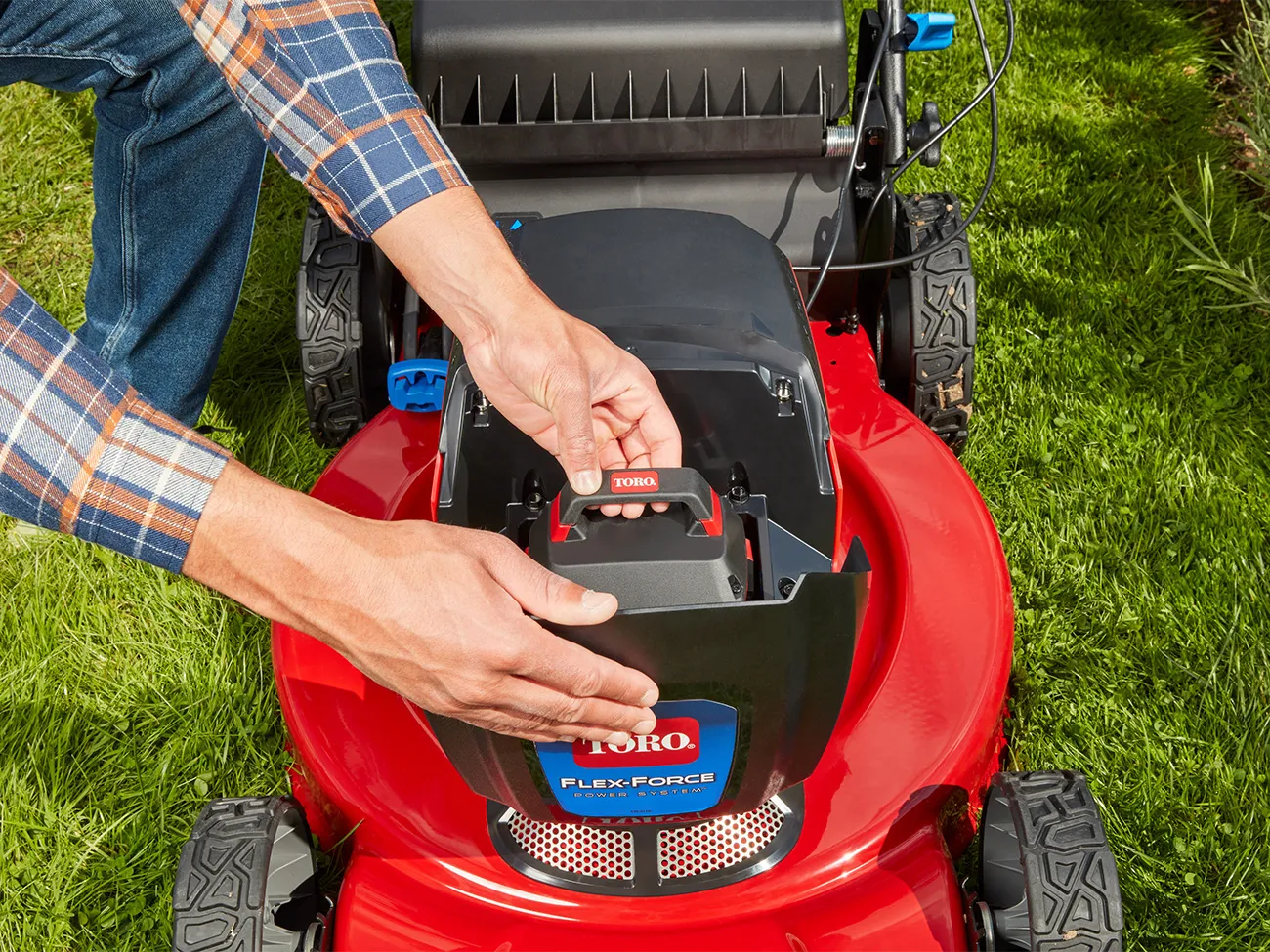
Luk Hendrickx also highlights the shift from petrol mowers to battery-powered and robotic mowers: “CO2 emissions are falling year on year. We’re also working to minimise our environmental footprint in our own production processes. Our factories are being equipped to use less and less energy, or to become self-sufficient. And, as Jo has already pointed out, circularity is the future, both in the production process and in the recycling of mower parts.”
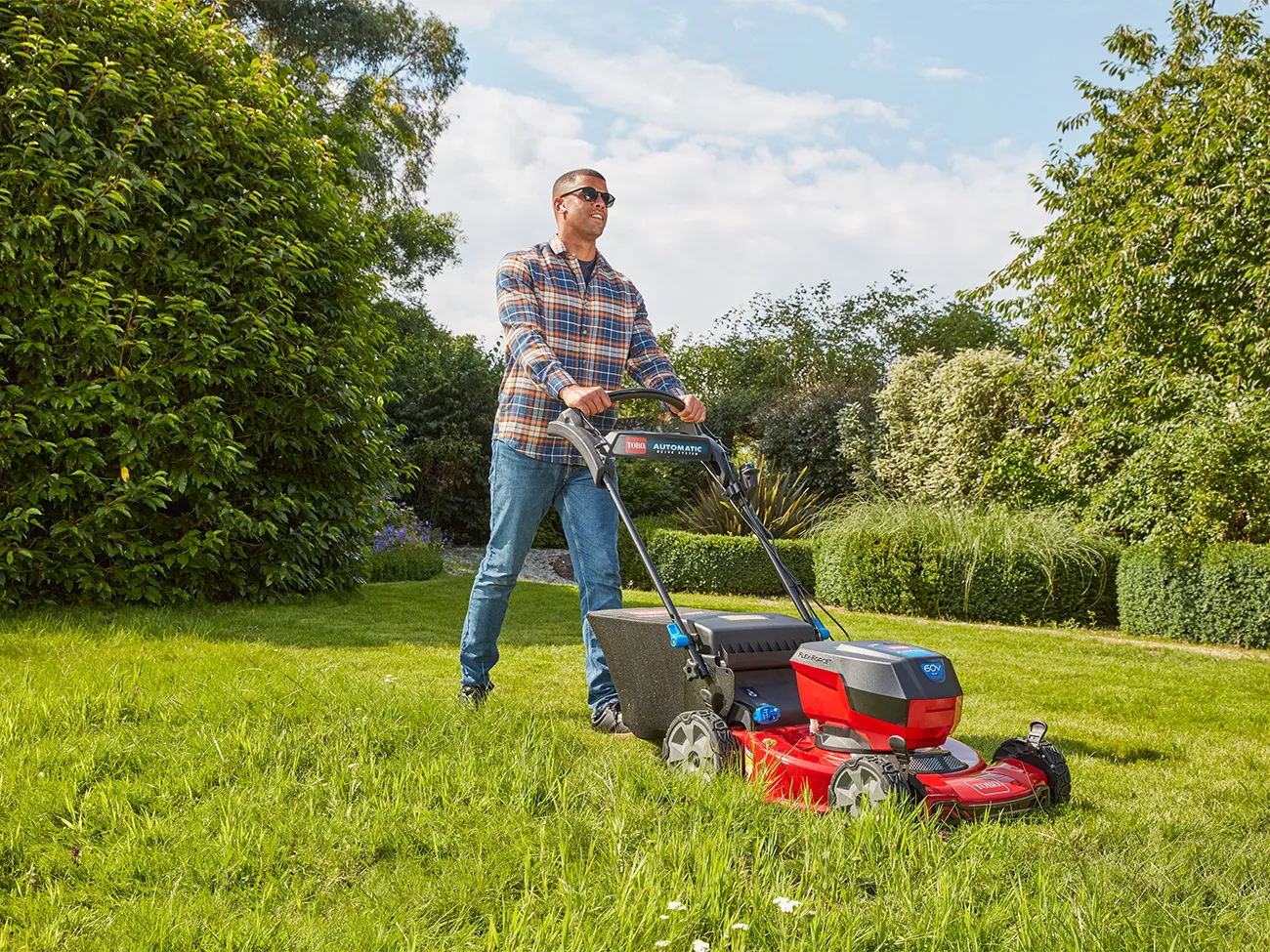
Johan Surkyn endorses these priorities and adds some practical examples from The Toro Company: “Sustainable energy use starts with optimising the amount of energy used for the task a mower is assigned. With our Toro Smart Power Technology, operators can automatically adjust a mower’s engine speed to suit mowing conditions. And with our Toro MyTurf software, we give professional customers the flexibility to adjust their mower fleets when needed.”
The next breakthroughs
Which technical developments does our panel expect to gain further ground in the coming years? Johan Surkyn believes the European Green Deal, combined with national legislation, will help drive the uptake of electric mowers. “Battery use will continue to grow. As more manufacturers enter the market, prices will fall further. I also expect to see more self-driving and remote-controlled professional mowers in use.”
Luk Hendrickx agrees with this prediction (“the decline of petrol mowers is irreversible”) and adds: “There will be more automation, robotics and connectivity, including smarter fleet management and the use of the Internet of Things.”
Lieven Beyl says professional mower users want powerful batteries that are easier to handle and last longer. “Through extensive research and development, we’re moving towards modern, user-friendly batteries that are persuading more and more customers to embrace sustainability. I also see hydrogen as a promising fuel for both professional and consumer mowers. Research into hydrogen is in full swing, and I’m keen to see how it develops.”
“Last but not least, I agree with Johan about the growing popularity of self-driving mowers. These robots are already well established in the consumer market, where sales figures are showing positive trends. But there are also interesting applications in the professional sector, such as mowing larger areas, including golf courses and sports grounds. Self-driving mowers are an ideal solution for preparing pitches overnight or in the morning, ready for recreational use. They can also help address the staff shortages facing sports clubs.”
Zero emissions
Are zero-emission lawn mowers gaining momentum? Absolutely! Our experts explain why.
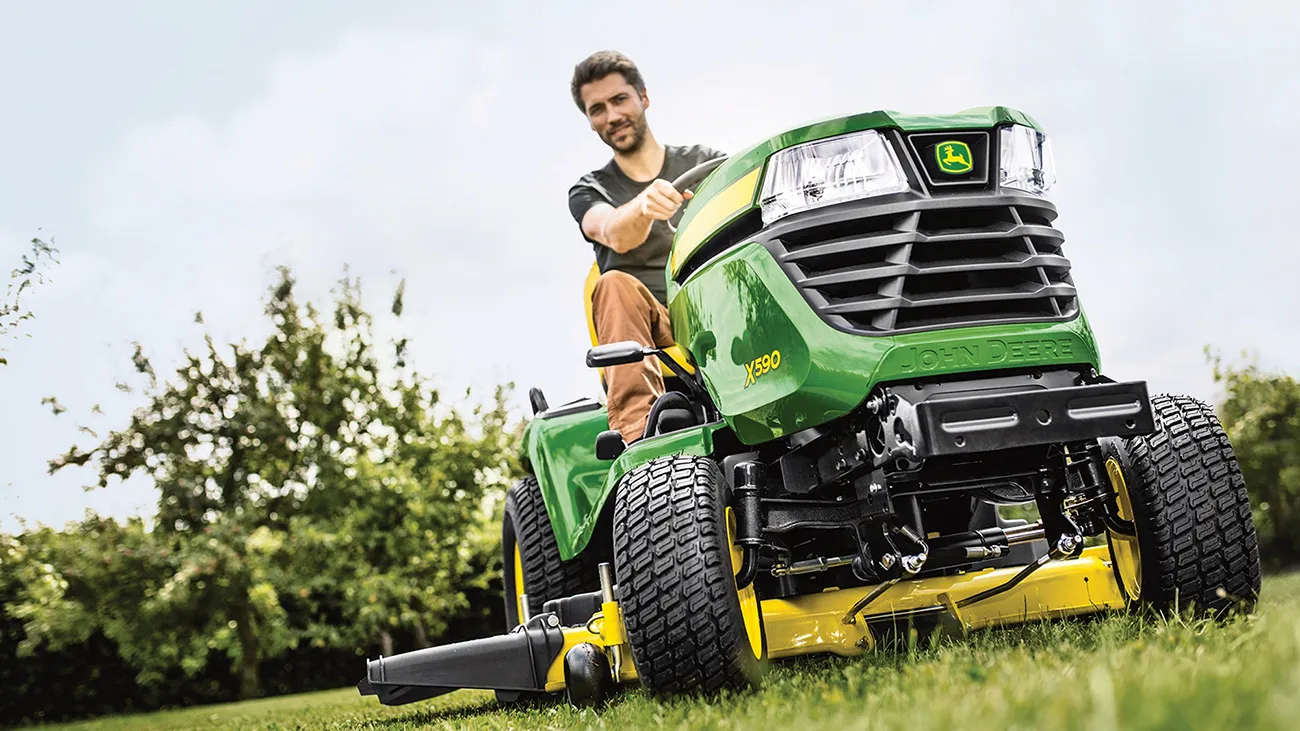
Lieven Beyl: “The green sector has every opportunity to move towards zero emissions. CO2 emissions can be tackled by switching to batteries and hydrogen. For several years, our John Deere factories have been pursuing a zero-emission policy, using solar panels and wind power and continuing to make our production processes greener.”
“The development of ever-larger batteries will allow us as a manufacturer to build larger mowers,” adds Luk Hendrickx. “And with better connectivity, there are also fantastic opportunities to bring fully autonomous mowing systems to market.”
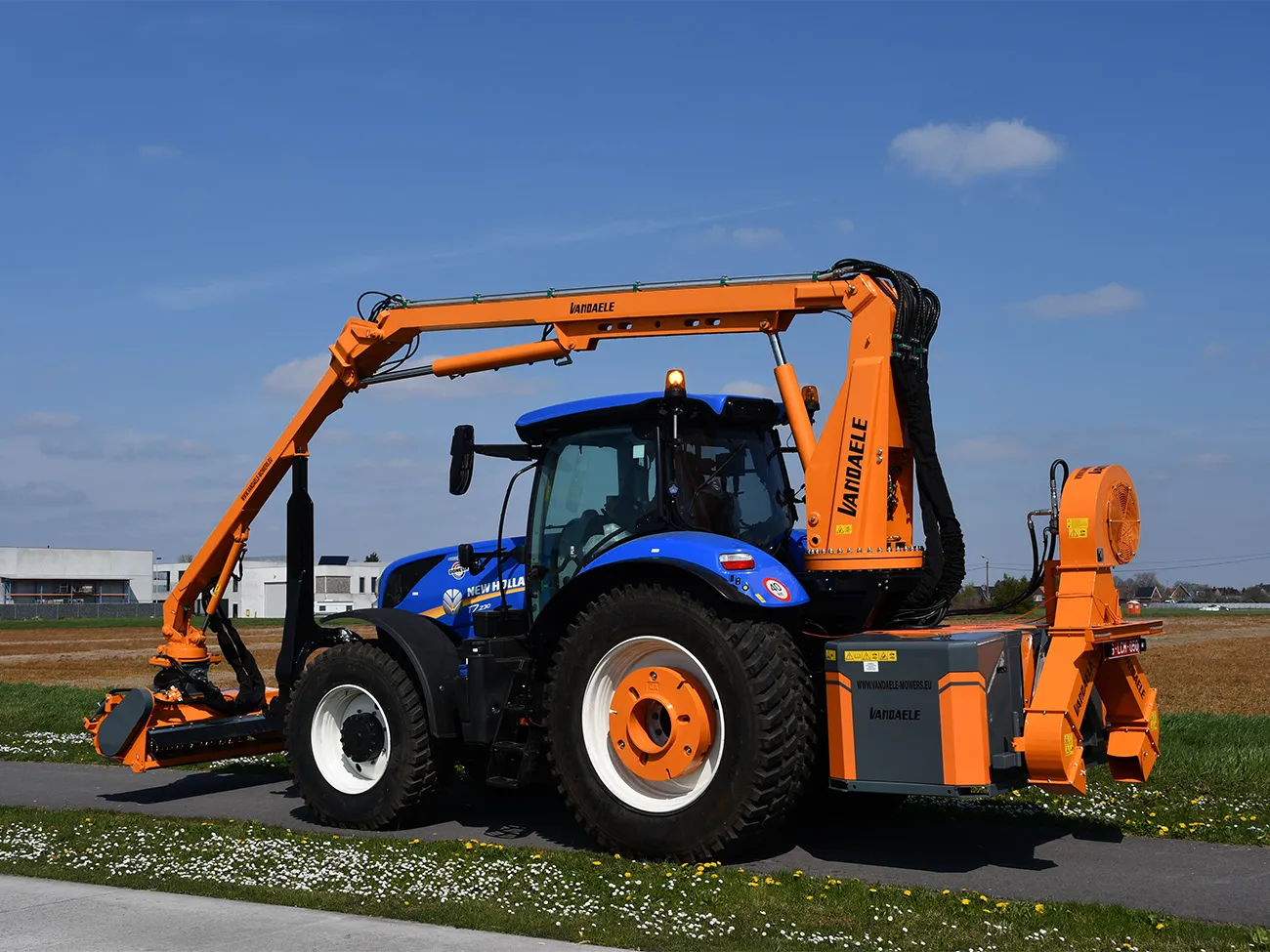
As a manufacturer of verge mowers, Jo De Brauwer is somewhat more cautious in his expectations: “Our mowers depend on the tractor, and always will. Today and in the medium term, I see no alternative power source for the combustion engine, with the possible exception of hydrogen.”
The needs and expectations of professionals
As lawn mower technology evolves at breakneck speed, the needs and expectations of (professional) customers are changing just as rapidly. What are their priorities when using mowers today?
Luk Hendrickx highlights three aspects: “Firstly, we’re seeing growing demand for large, robust machines. There is also a greater need for connectivity and fleet management. Finally, customers want a clear picture of emissions so they can map their own CO2 footprint.”
Jo De Brauwer sees the same priorities: “Powerful, robust machines remain high on the wish list for most of our customers. Yet we’re also seeing growing interest in environmentally friendly machines, for example among public services. These priorities do not have to conflict. At Vandaele Konstruktie, we develop mowers that deliver maximum power efficiency. One customer sees lower fuel consumption as a way to cut costs, while another associates it with less pollution.”
Lieven Beyl, meanwhile, emphasises different priorities: “For professional customers, every minute of working time counts. They want to minimise machine downtime. At Cofabel, we offer a 24/7 service and, for example, provide replacement machines and rapid support. We also see potential in offering wider mower decks and faster machines, helping customers make their working time as productive as possible. Finally, I would again highlight the growing use of self-driving mowers by professional customers, which offers interesting opportunities to reduce labour costs.”
Question about this story? Ask your question
Companies in this story

Keep following this
Get an email when a new story is published. No account needed.
- ThemeHard-wearing turf
- SubjectTurf management
- CompanyAndreas STIHL NV