Tetraploid perennial ryegrass produces a stronger sward
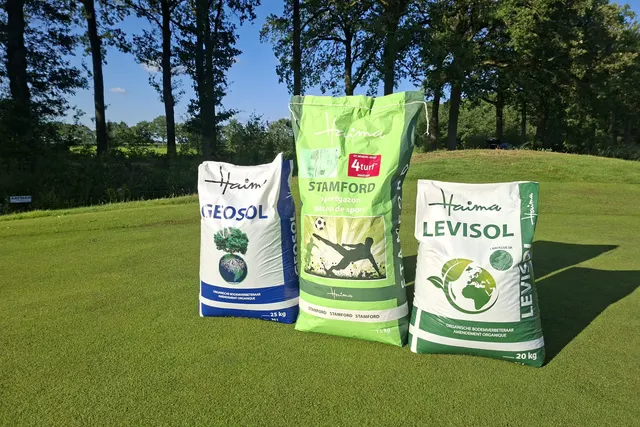
There is no denying that grass is under increasing strain. Everyone remembers the yellowed, scorched verges and lawns of recent summers. As additional maintenance takes a great deal of effort, extra watering is often not an option and climate change cannot simply be switched off, DLF has spent recent decades looking for a solution at the source. That is why the latest generation of 4turf® ryegrasses features in several DLF Masterline grass seed mixtures.
“We’ve been breeding our tetraploid perennial ryegrass 4turf® for decades,” says Thomas van Tetering, DLF product & marketing manager for the Benelux. “It has twice as many chromosomes as traditional diploid perennial ryegrass, which gives it a number of important advantages. For a long time, however, this came at the cost of a coarser, less attractive appearance. Fortunately, continued breeding has now overcome this drawback too, with the result that this powerhouse is now a standard component of many Masterline grass seed mixtures for sports facilities, parks and lawns.”

Unfazed by extremes
As the climate becomes increasingly extreme, even in the traditionally temperate Low Countries, it is important that grass adapts too.
“In this respect, tetraploid perennial ryegrass combines two very important advantages,” says Van Tetering. “First, tetraploid seeds contain greater energy reserves than diploid seeds, and the grass germinates at temperatures as low as 4°C. It gets going much earlier than other grass species. This not only extends the sowing season at both ends, but also improves winter performance and enables the grass to recover more quickly.”
“Second, partly thanks to this rapid germination, tetraploid perennial ryegrass develops stronger rooting and a deeper root system. This allows it to store more water naturally and improves its drought tolerance. The deep root system also enables the plants to make better use of minerals in the soil, reducing the need for fertiliser. This in turn lowers both the environmental impact and maintenance costs.”
Low-maintenance
Van Tetering describes tetraploid perennial ryegrass above all as “a plant that can look after itself”. It is highly resistant not only to extreme weather conditions, but also to diseases and wear, for example.
“Fewer fertilisers and crop protection products are being approved, so high disease resistance is becoming increasingly important too. 4turf® also has exceptional recovery capacity. As long as the damage to the sward is limited, for example, by children playing or a pet digging around in the grass for a while, it will recover on its own. More serious problems can be dealt with quickly using a repair mixture containing 100% 4turf®.”
In other words, because tetraploid perennial ryegrass stays greener and healthier in challenging conditions, the maintenance burden is reduced. “This also applies in coastal areas and other regions where salinity is a problem. Research shows that 4turf® is more resistant to salinity in groundwater too, so it stays green for longer.”
Independent research
To verify the performance of 4turf® under all possible conditions, DLF tested the grass species in Scandinavia and France, among other places. Following independent research by Wageningen University, tetraploid perennial ryegrass was also included in the Dutch Grasgids last year, where it immediately secured a podium place. “It’s wonderful that we have not only succeeded in developing a new grass species, but that it has also been included in the ‘bible’ of grass species and achieved an excellent score,” says Van Tetering with justifiable pride.
The right mixture
As a healthy sward is never a one-man show, 4turf® is primarily used in various Masterline grass seed mixtures. “There is a repair mixture made up of 100% tetraploid perennial ryegrass, but for establishing and overseeding both public green spaces and private lawns, our RecreaMaster grass seed mixture is the main option. It combines diploid and tetraploid perennial ryegrass with red fescues and smooth-stalked meadow-grass, for reliable, versatile use.”
Question about this story? Ask your question
Companies in this story

Keep following this
Get an email when a new story is published. No account needed.
- ThemeHard-wearing turf
- SubjectTurf management
- CompanyDLF BV