Professional approaches to ground cover and water management in challenging times
The global economy is undergoing one of the fastest transformations in recent decades, driven by the pandemic and the war in Ukraine, not to mention the climate crisis. There is no need to panic, however. As always, the sector is responding with agility and flexibility. A good example is the ‘ground cover’ used in paving. GreenPro spoke to some of the pioneers in the field.
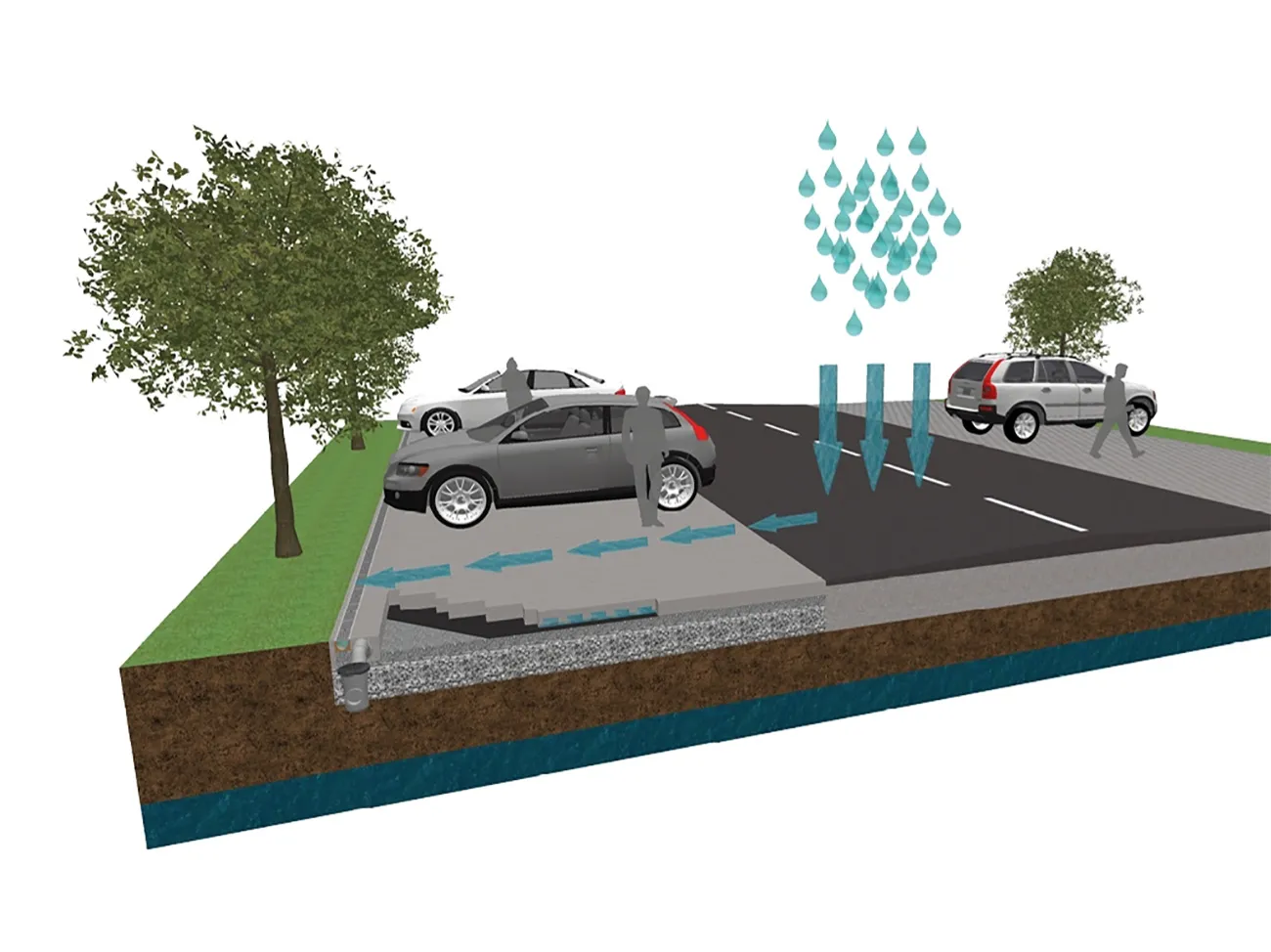
You might think that if your business model involves concreting and paving in all its forms, you would have to think twice now that calls for more green space are growing ever louder. After all, there are a lot of us on this planet. A very lot. And that means paving in every shape and size, from gravel paths to asphalt roads and everything in between. This is of course disastrous for water circulation, because the water has nowhere to go. The result: groundwater shortages. If it does not rain for three days in summer, our taps risk being turned off. But the sector has thought of that too, and is offering suitable solutions…
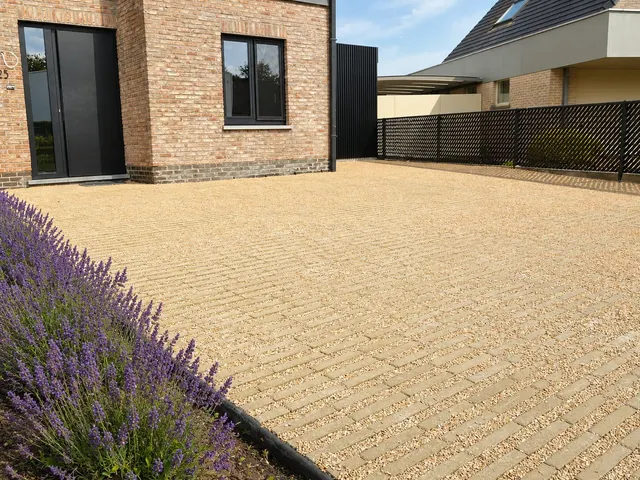
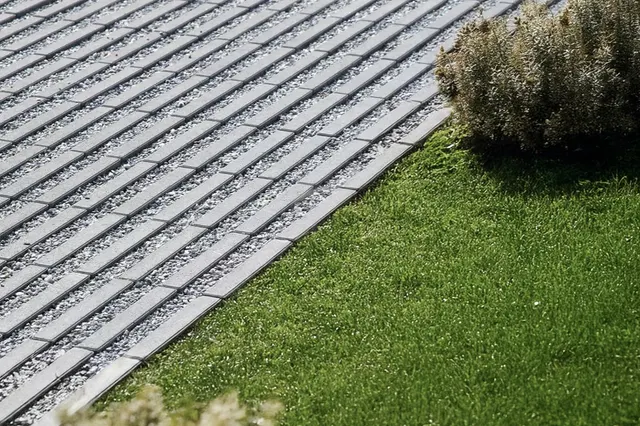
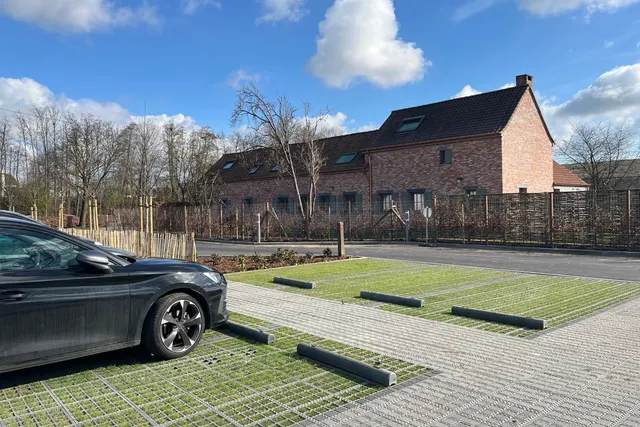
To encourage biodiversity and shape landscape design, a different, more diverse range of ground coverings has been developed. Permeable paving, for example, allows rainwater to infiltrate where it falls. The permeable bedding layer and sub-base carry water down into the ground at a slower rate and can store it temporarily. This reduces the burden on sewers and keeps groundwater levels stable.
Speaking of storage: in some cities, underground water reservoirs are being installed, where residents can pump groundwater to water flowers and, by extension, gardens.
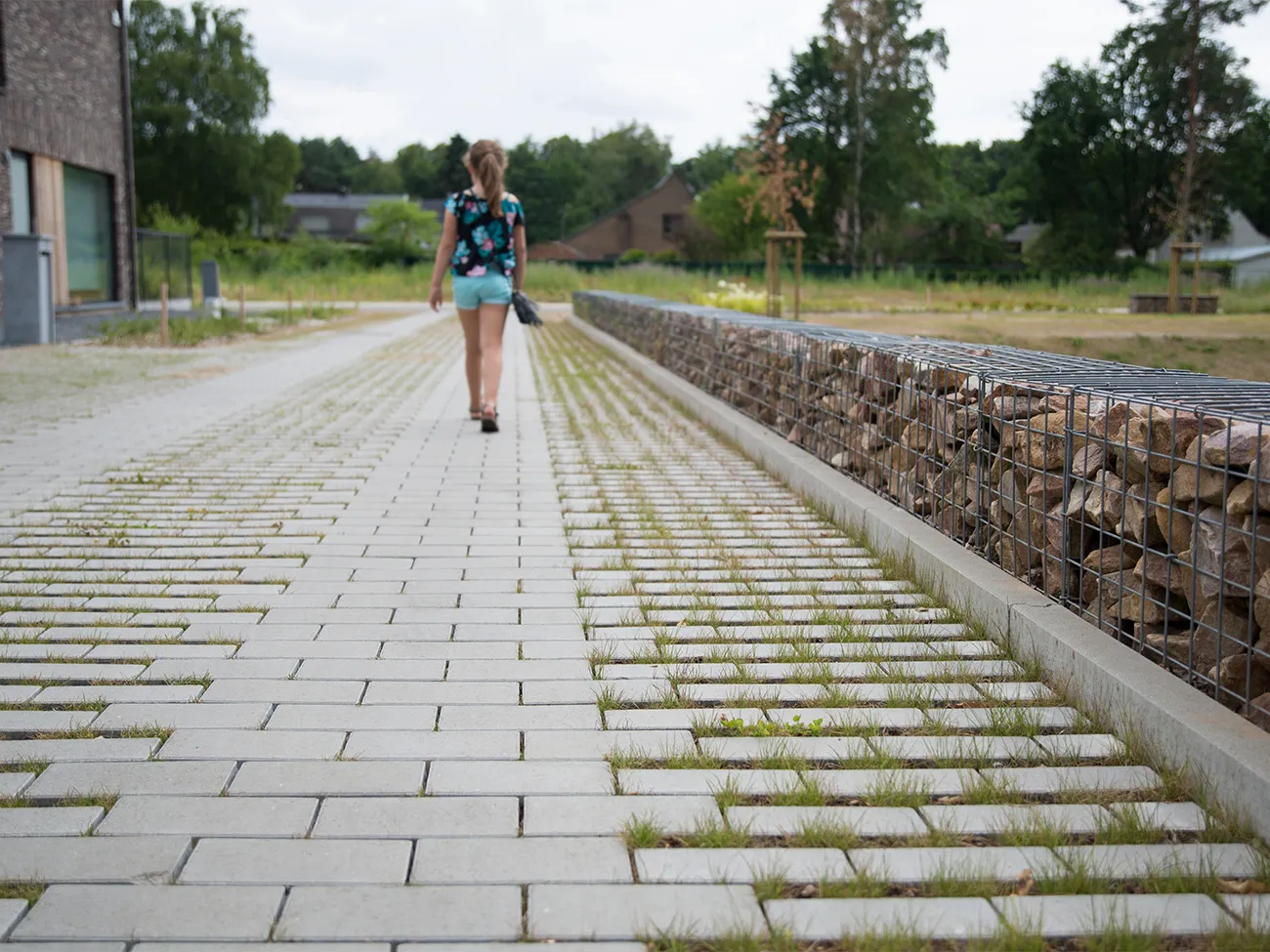
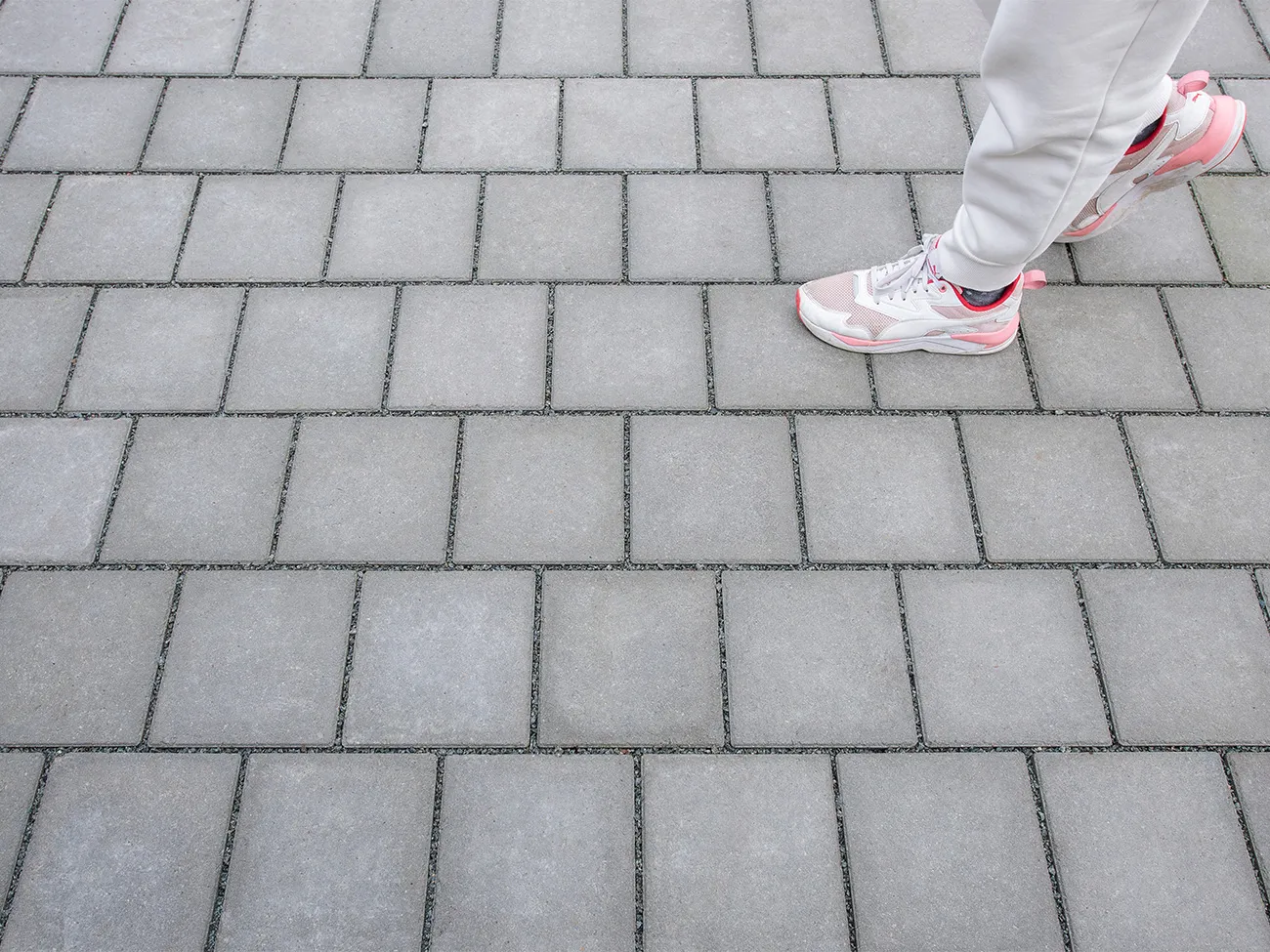
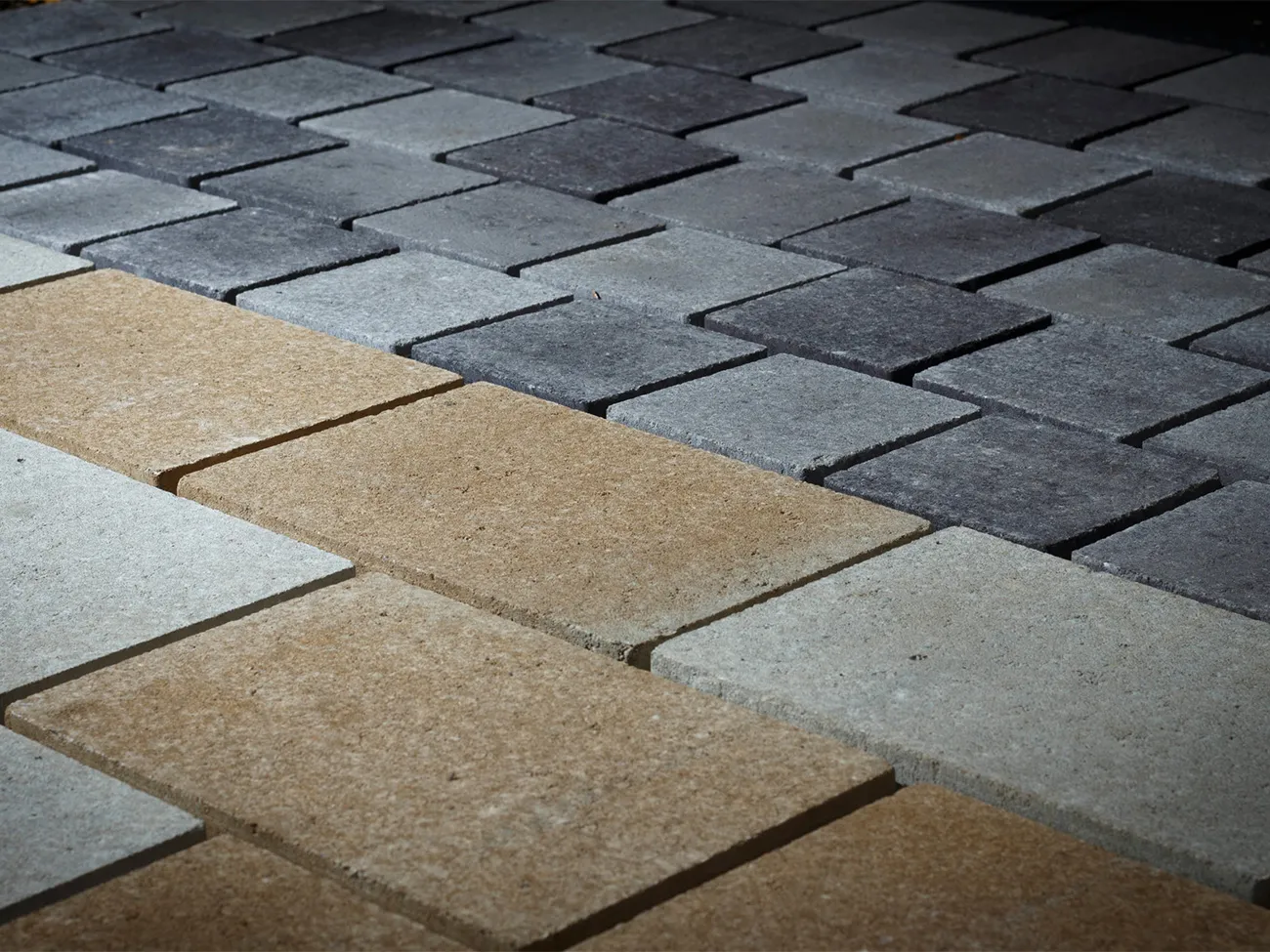
Permeable paving ranges from pavers with a hole for planting trees and shrubs, through small-format paving materials (concrete pavers, clay pavers…) and unbound joints, to almost any combination of creative laying patterns. This creates an organic transition from a solid, closed joint to pavers with wide, permeable joints.
‘Tile flipping’ is currently all the rage among our northern neighbours. Municipalities compete to replace as many tiles as possible with greenery. There are limits to this, of course, as you cannot simply replace all paving with soft, green ground for reasons of comfort. A ‘golden’ middle ground is therefore called for.
Circularity
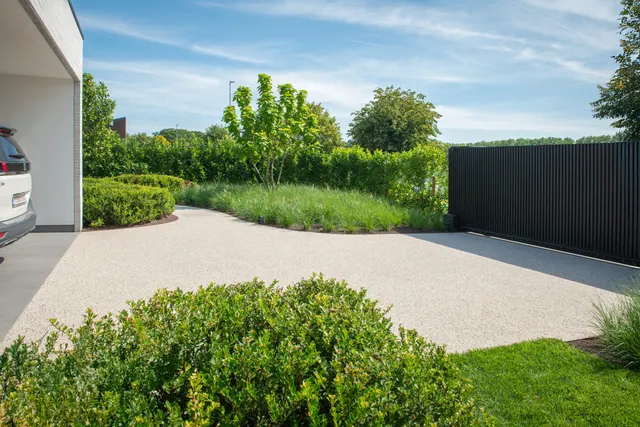
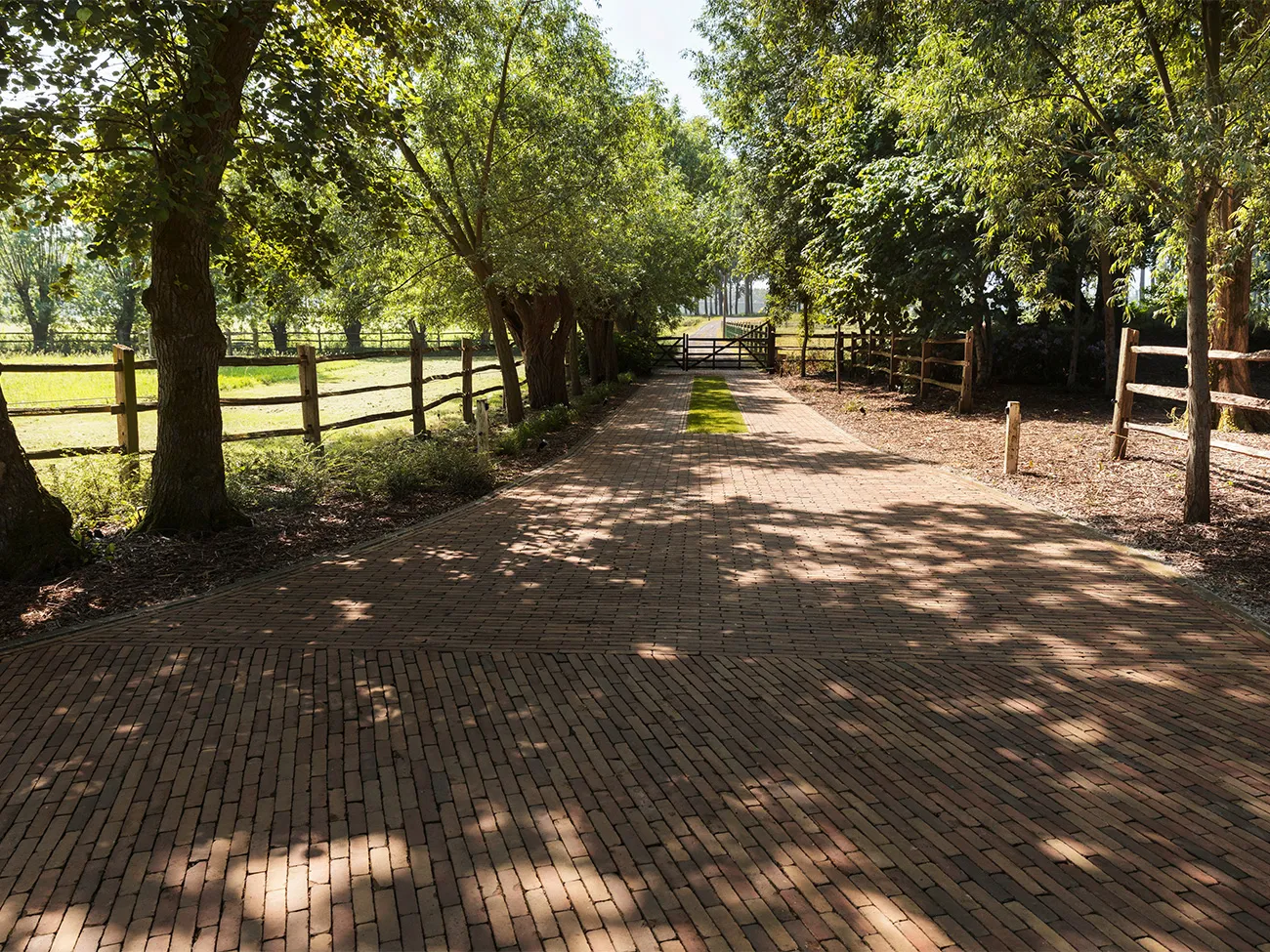
Others swear by gravel and crushed-stone paths in all shapes and sizes. After all, these are inherently permeable. In some cases, recycled material has been used too. Which brings us neatly to the next, extremely important topic: the circular economy.
It is common knowledge that, at present, only a limited proportion of materials in the construction sector are genuinely reused. Some even claim it is no more than 1%. This is said to be due to tighter regulations on insulation and new, faster and more economically viable ways of bonding bricks and other masonry units. The result: more insulation material, all kinds of adhesives and microplastics ending up in the environment, particularly in groundwater.
Yet many products are perfectly suited to a circular construction process. But the whole construction team, architect, manufacturer, contractor and client, needs to start thinking in circular terms. This still happens far too rarely, often because of budget and time pressures. The short-term thinking of various responsible authorities is not helping either. Perhaps the government should do more to encourage that same ‘construction team’ to embrace circularity, rather than burdening it with yet more CO2 taxes and kilometre charges?
Lead times and energy prices
Energy prices have risen more sharply in recent months than they have for a very long time. This cannot help but affect the price paid by the end user. Companies are dealing with this in different ways. Some pass the price rises straight on to their customers. Others are now only signing short-term contracts, because they do not know what the future holds. A third group is waiting to see what happens and trying to ride out this turbulent period, in the hope that things will ‘level out’ soon. Time will tell who was right.
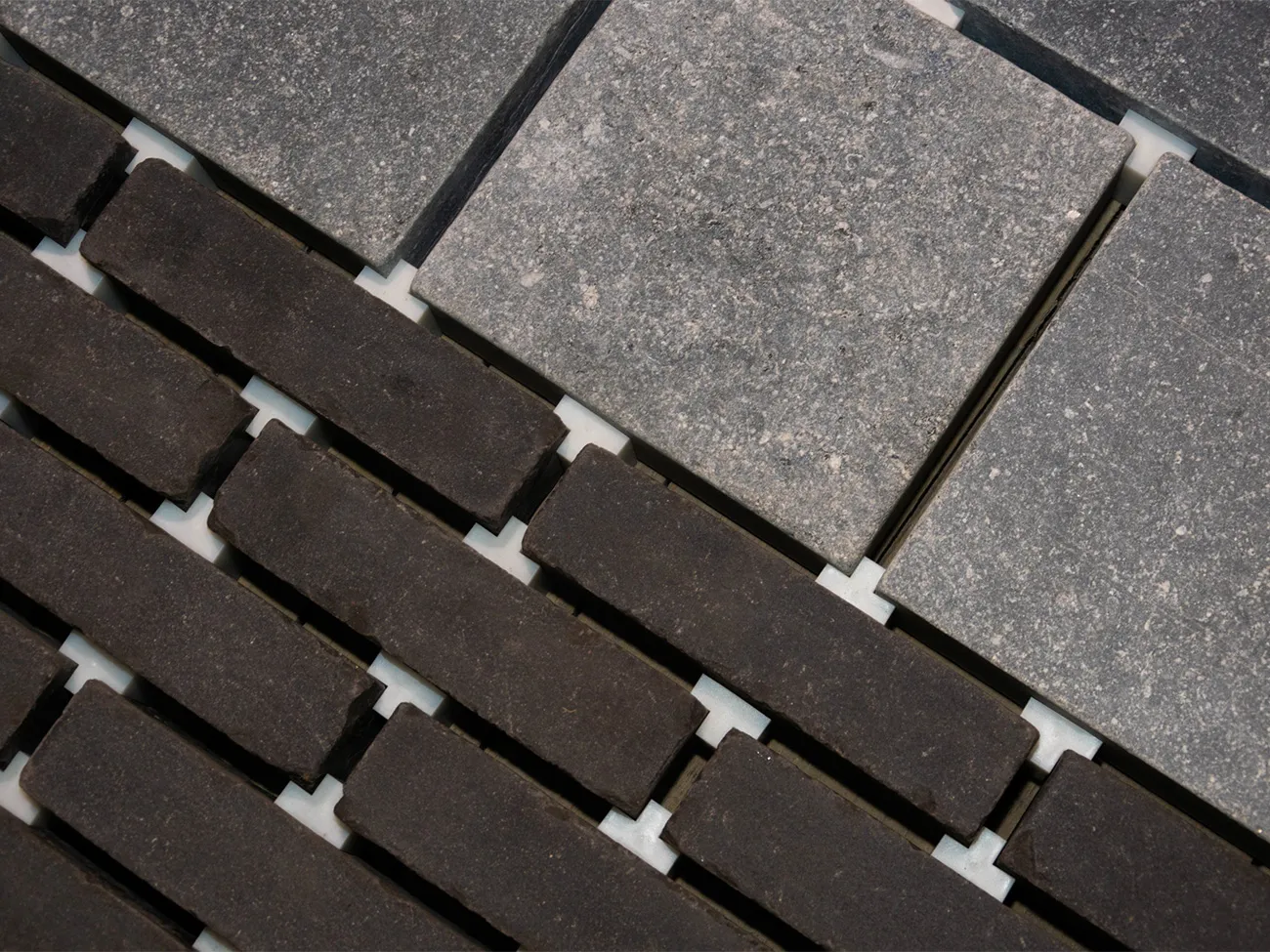
Many players also say there is some scope to rein in runaway globalisation. The construction sector, too, is increasingly adopting a ‘short supply chain’ mindset and working hard to find ways of sourcing certain raw materials and products closer to home, or simply starting to work with different raw materials. This not only helps to reduce lead times and energy costs, but also boosts the circular economy: ‘reduce/reuse/recycle’. Concrete, for example, is a worthy local alternative to ceramics and natural stone, both of which often have to travel halfway around the world to get here. Cutting down trees here, having them made into pallets in China, and then shipping them back here really is no longer of this day and age…
Whatever happens, the sector seems to be gearing up for what lies ahead, whether through creativity, effective solutions or far-reaching changes to its own business model. These are certainly interesting times!
‘The government bears an enormous responsibility. The circular economy is essential. It would be better to encourage companies to embrace it than to come up with yet another tax.’ Luc Schauwvlieghe (SCHAUWVLIEGHE)
‘Finding and implementing creative, sustainable solutions to waterlogging will be the greatest challenge for the near and distant future.’ Laurens Grossard (EBEMA_Stone&Style)
‘Many products are perfectly suited to a circular construction process. But the whole construction team, architect, manufacturer, contractor and client, needs to start thinking in circular terms. This still happens far too rarely, often because of budget and time pressures.’ Filip Melis (VANDE MOORTEL)
‘Concrete is a worthy local alternative to ceramics and natural stone, both of which often have to travel halfway around the world to get here. With energy prices rising sharply, this is becoming increasingly difficult to sustain.’ Neal Van Meeuwen (MARLUX/STRADUS)
Question about this story? Ask your question
Companies in this story
Keep following this
Get an email when a new story is published. No account needed.
- ThemeHealthy soil and smart water management
- SubjectPaving
- CompanyEbema_Stone&Style