Stone flagstones as a sustainable outdoor paving option
Text Trees AccouImage Tim Van De Velde Fotografie
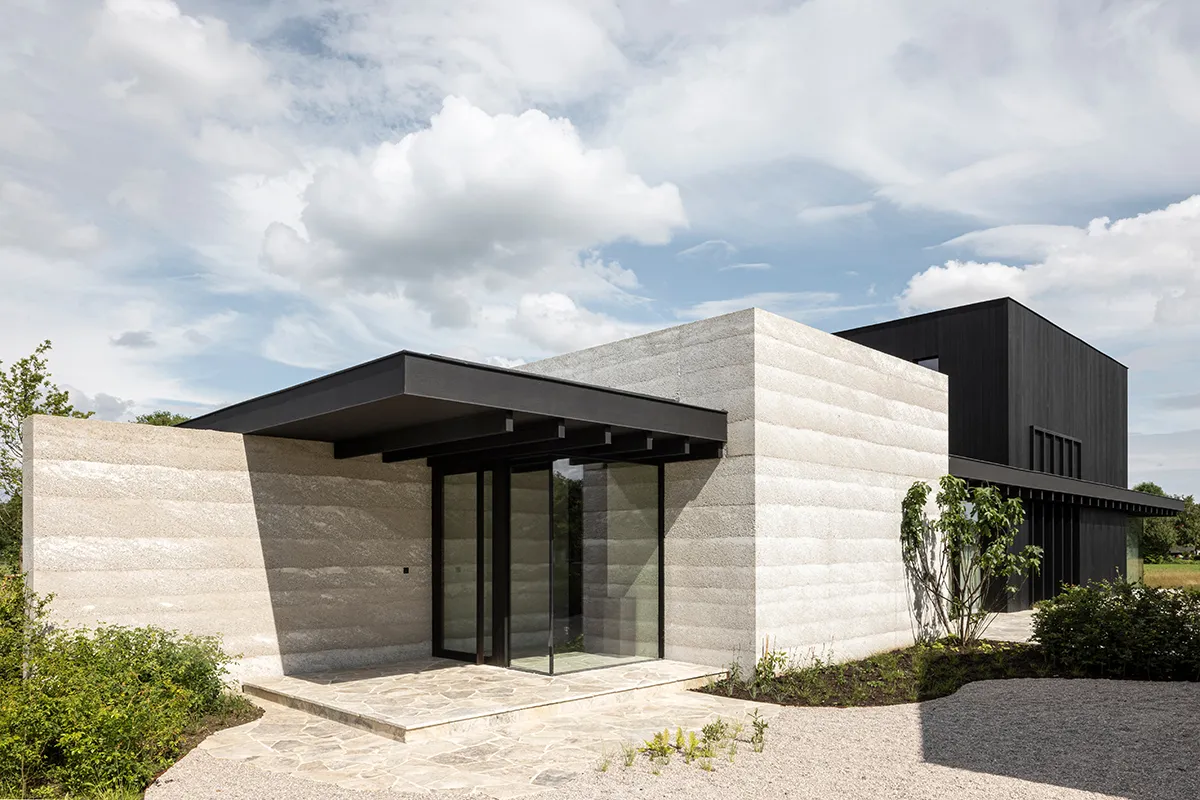
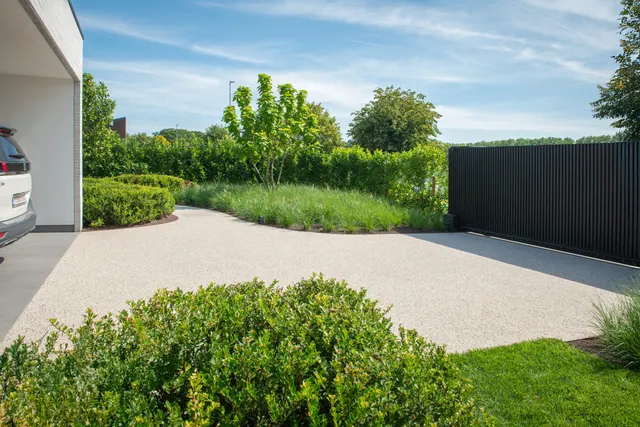
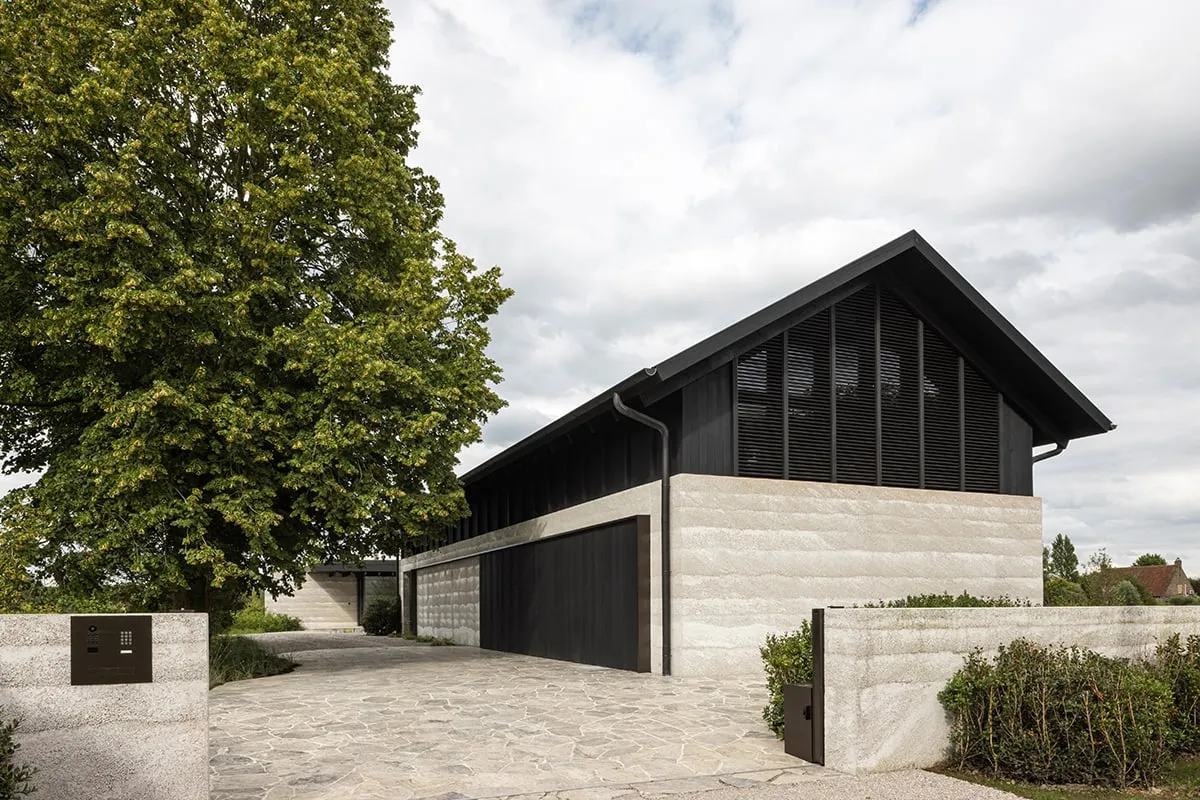
In rural Sint-Martens-Leerne, a front courtyard paved with soft grey flagstones stylishly links two buildings, a villa and a barn. Their organic shapes and subtle colour variations enhance the natural look of the whole. “Flagstones are a sustainable choice that also add significant aesthetic value,” says Kristof T’Sjoen, product and marketing director at Stone.
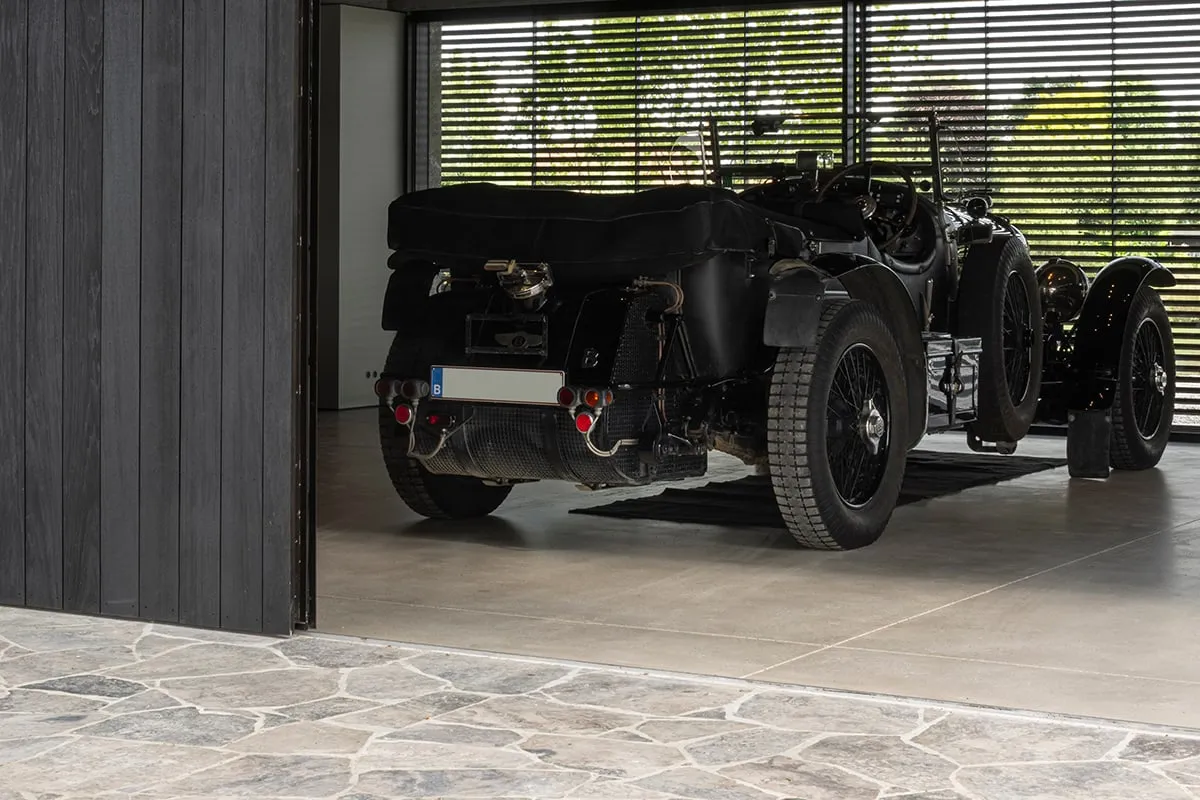
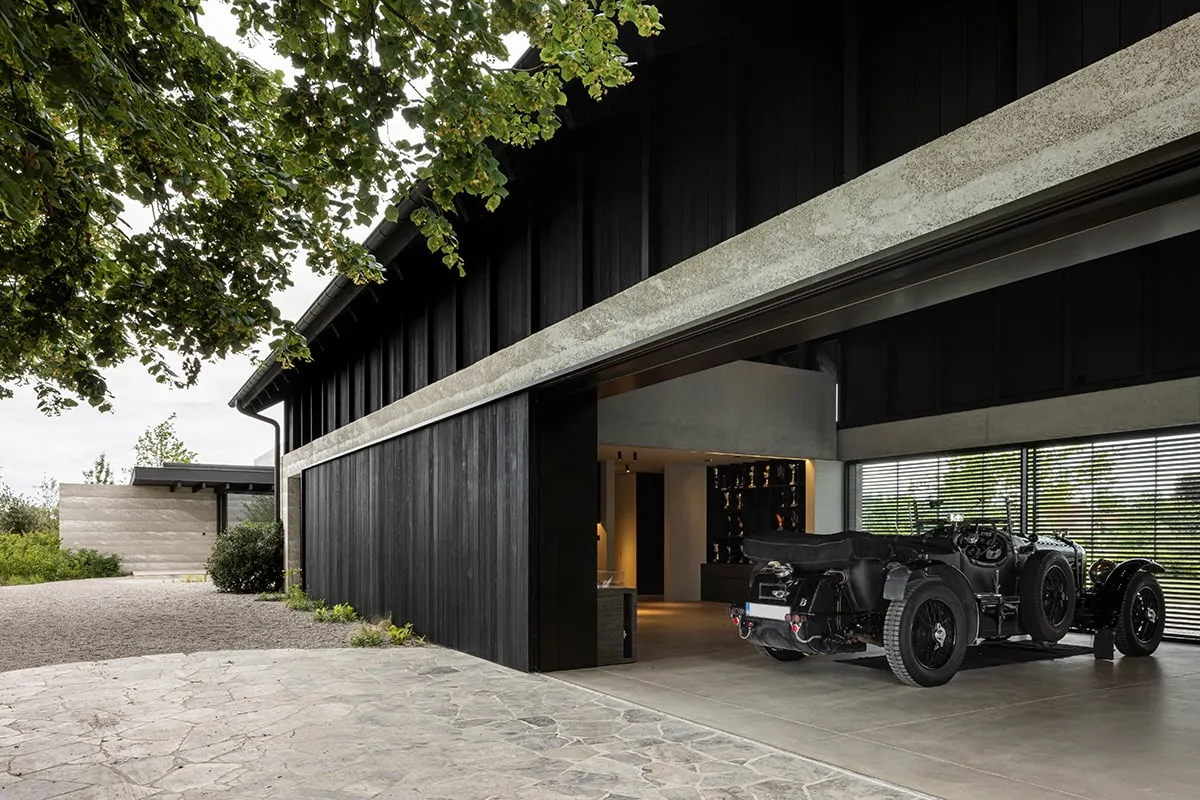
The luxurious villa on an open plot was designed by CAS Architecten and built by ABS Bouwteam. The house and barn are arranged in an L around the front courtyard, but are not directly connected. It is a modern home in a traditional Flemish layout, with materials such as wood, rammed concrete and glass repeated in both buildings. Another material used throughout is grey travertine flagstone, which features in both the front courtyard and the house, linking the indoor and outdoor spaces.
Organic shapes
Travertine continues to grow in popularity as a natural stone. This fashionable limestone is quarried in Turkey and is available in a range of colours. For this project, Stone supplied grey flagstone. “The grey travertine flagstone complements the other materials used in the project,” explains Kristof T’Sjoen, product and marketing director at Stone. “The architect and client opted for natural materials and colours. The stones’ irregular, organic shapes and subtle colour variations suit the rural character of the setting. Using flagstones both inside the house and in the front courtyard creates a seamless transition between indoors and outdoors, without making it feel like a tiled floor.”
Flagstones in a range of colours
Porous travertine has an open structure, which helps prevent patios and garden paths from becoming slippery and gives them a weathered look. Stone offers travertine in beige, pink and grey, with a honed surface. As a natural stone specialist, Stone also supplies flagstones in quartzite, limestone, sandstone and slate. Limestone has a sandblasted surface, while sandstone and split-face materials stand out for their naturally rough upper surface. Stone offers fifteen different colours suitable for both indoor and outdoor use. Kristof says: “For interiors, we recommend the 2-centimetre-thick option. Outdoors, it is better to choose tiles that are 3 centimetres thick. Our flagstones are available in both calibrated and uncalibrated versions. The former are naturally easier to lay.”
A sustainable choice
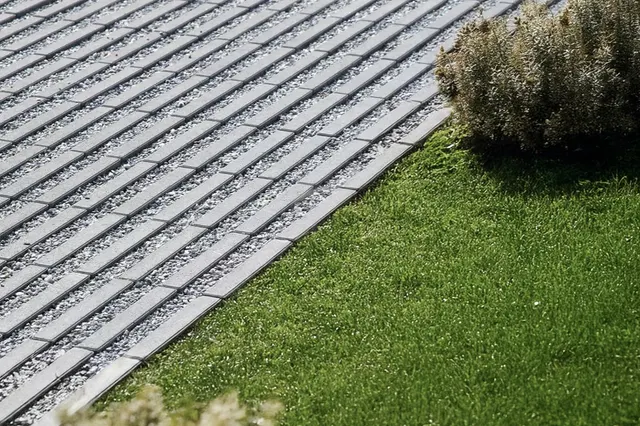
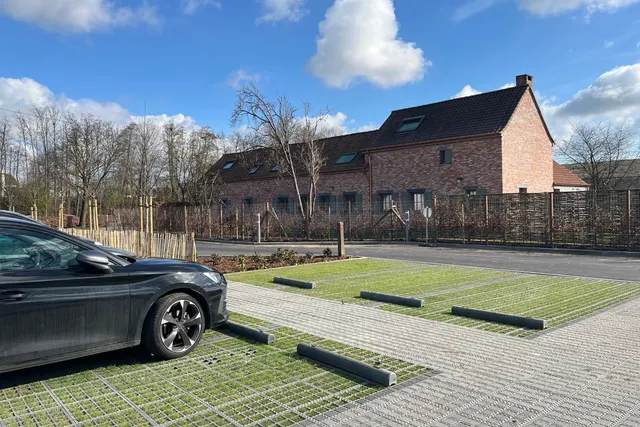
Flagstones are a highly sustainable choice because they are made from residual material from quarries. This by-product can add significant aesthetic value to gardens and interiors. “Another reason flagstones are chosen for their sustainability is that they can be laid with open joints,” Kristof explains. “Regulations governing the proportion of paved surfaces in outdoor spaces are becoming increasingly stringent. By using permeable screed or filling the joints between the flagstones with grass or gravel, you can create a permeable paved surface. Water can drain away, while you still enjoy the benefits of a patio or garden path. Their organic shapes, sustainable source and surprising range of colours make these travertine flagstones an appealing choice for any outdoor project.”
Question about this story? Ask your question
Keep following this
Get an email when a new story is published. No account needed.
- SubjectPaving