Weeds never die. Or do they?
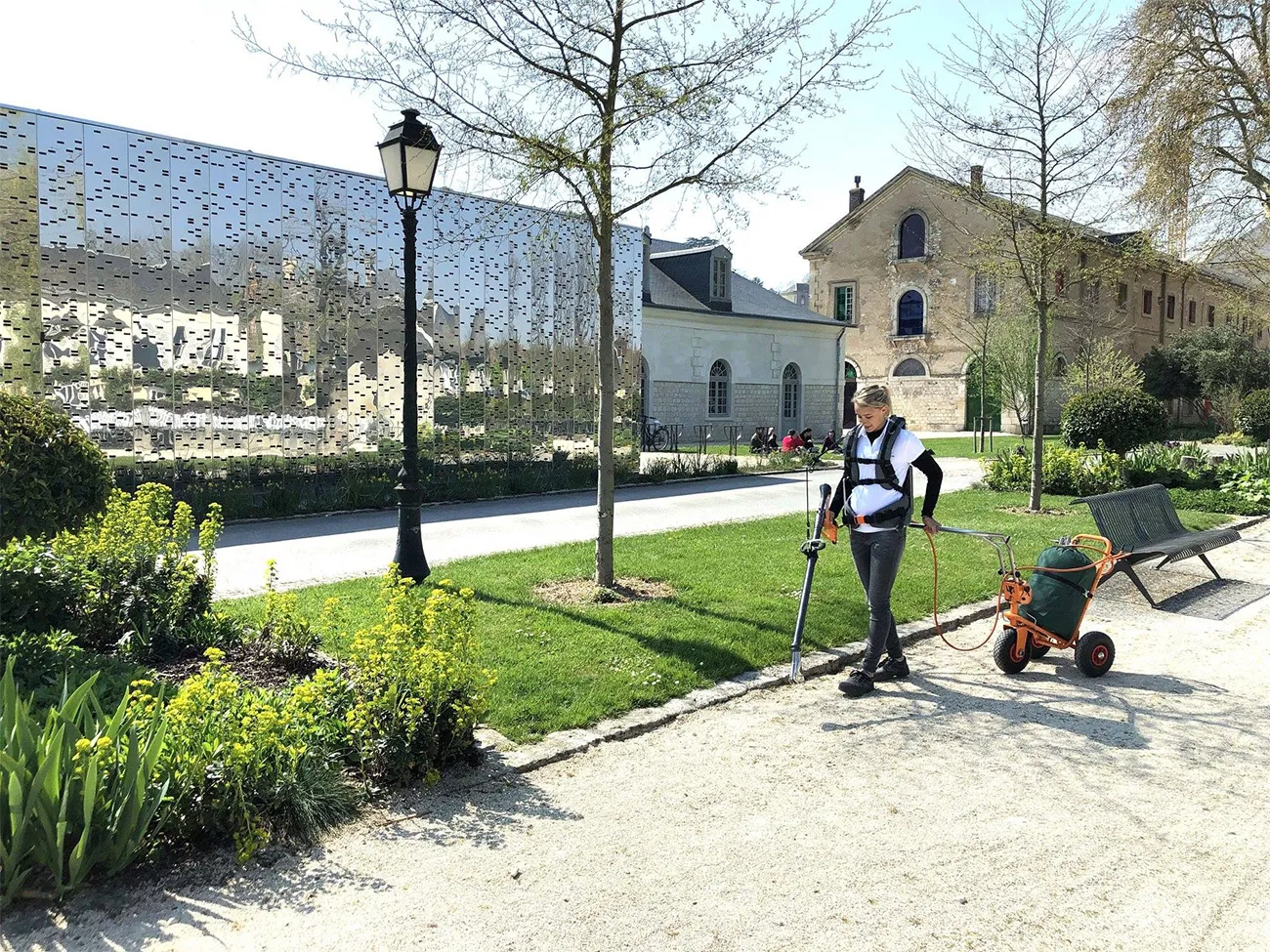
Weeds and weed control are as old as humanity itself. As well as affecting aesthetics, weeds also influence the growth of other plants in their surroundings: they compete for nutrients, soil, water and space. Weeds can also block and hinder the operation of installations and machinery. They also often encourage littering in public spaces.
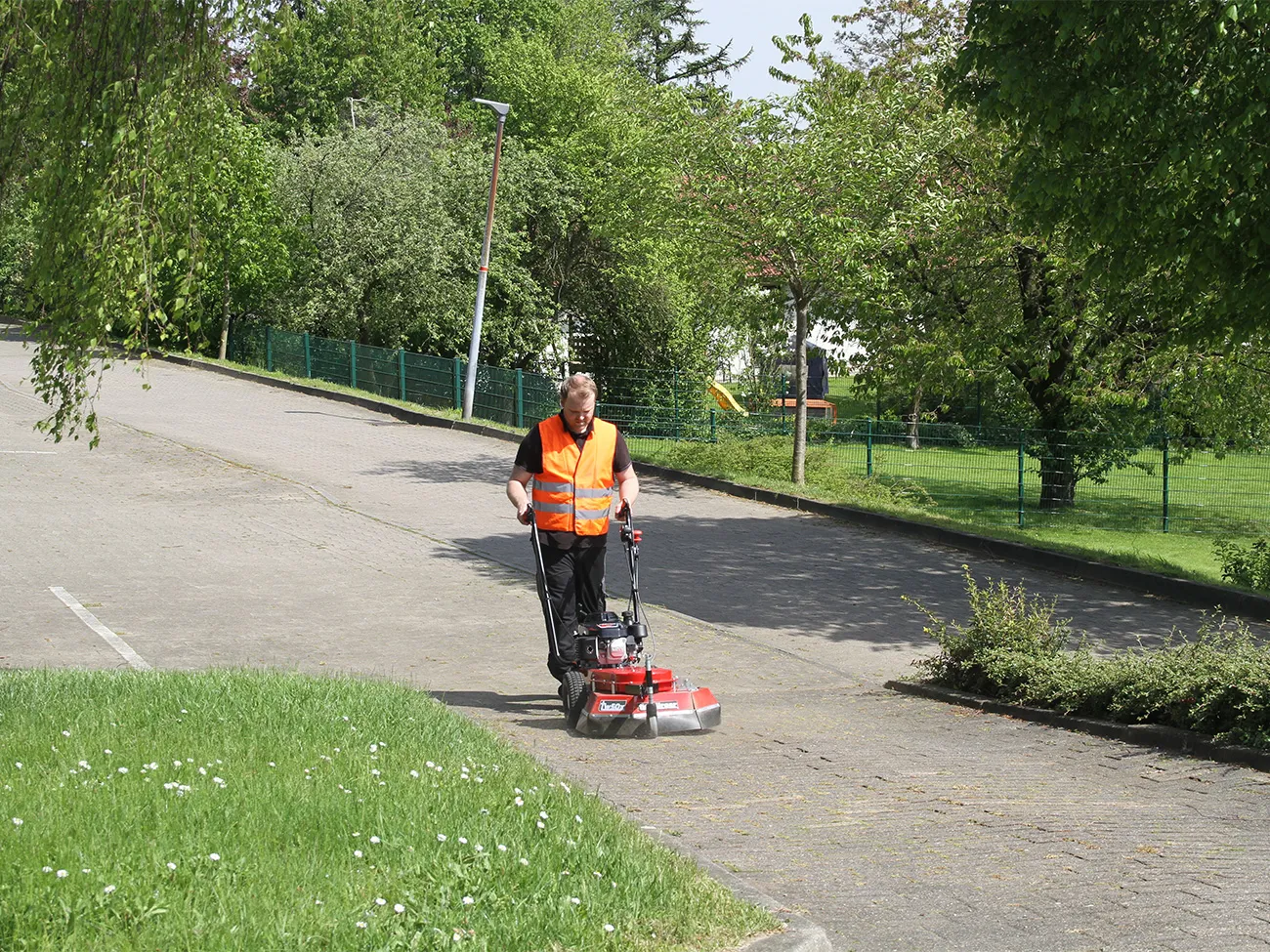
But what is the best way to tackle these persistent plants? The pesticide reduction plan, which required public authorities to reduce chemical substances in groundwater by 10% every year, meant that the sector had to look for new management methods. As a result, people now talk less about weed control and more about weed management and/or prevention. But what are the most widely used and/or most successful methods?
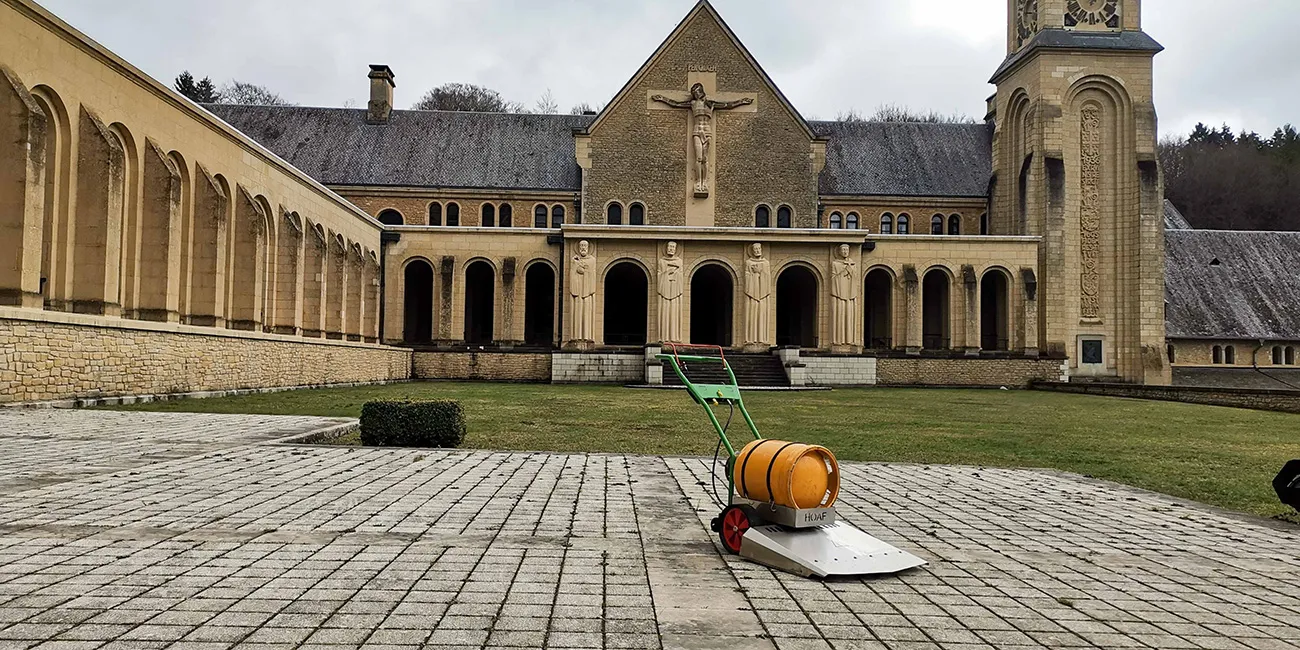
Mechanical: brushing, hoeing and sweeping
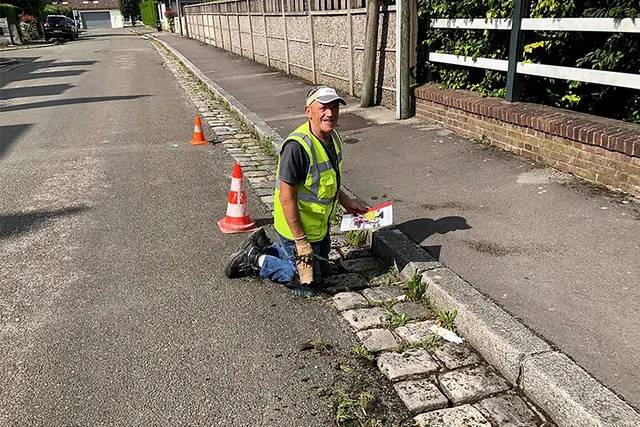
Prevention is crucial to weed management. A rampant weed infestation requires more expensive control methods. Any method that prevents weeds from establishing themselves in a field or on a site is considered preventive weed control. The solution is actually quite simple: sweeping. By regularly sweeping to keep the ground clean, you remove the conditions weeds need to grow. Annual seeds will not germinate either if you regularly sweep hard surfaces with an industrial or non-industrial brush.
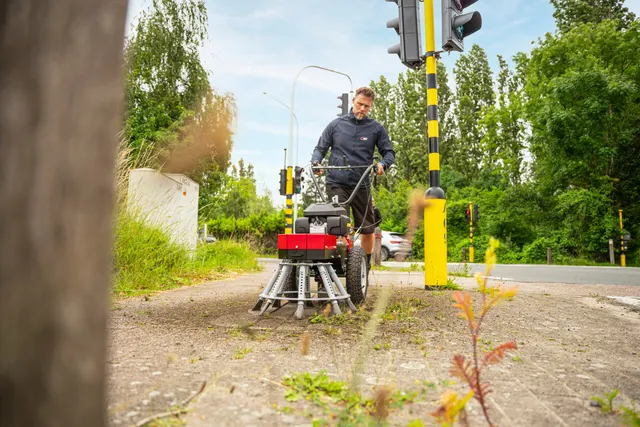
But what if weeds have already taken hold in areas that have gone without maintenance for some time? Weed brushes can deal with this. Unlike preventive sweeping, brushing uproots weeds that have already grown tall. This lets you remove weeds responsibly and, above all, in an environmentally friendly way. The brushes often have special steel or nylon wires, and may be fitted with guards to prevent grit, stones and other projectiles from flying around.
Brushing is ideal for paved surfaces, while a mechanical hoe is a better option for unpaved areas. These machines use a number of rotors fitted with vertical blades or chisels. They rotate through the top layer of soil, loosening the weeds.
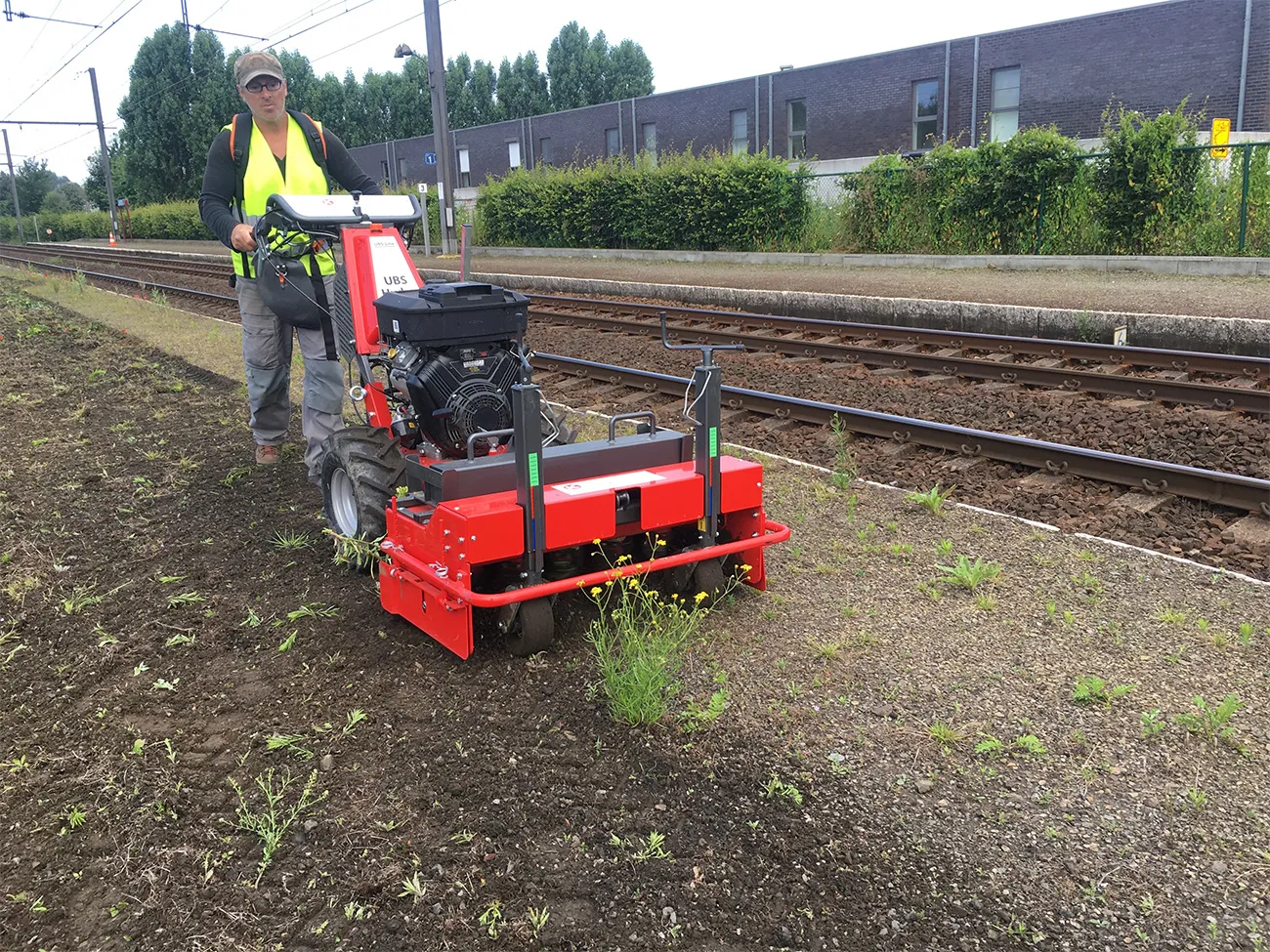
Thermal: hot water and steam
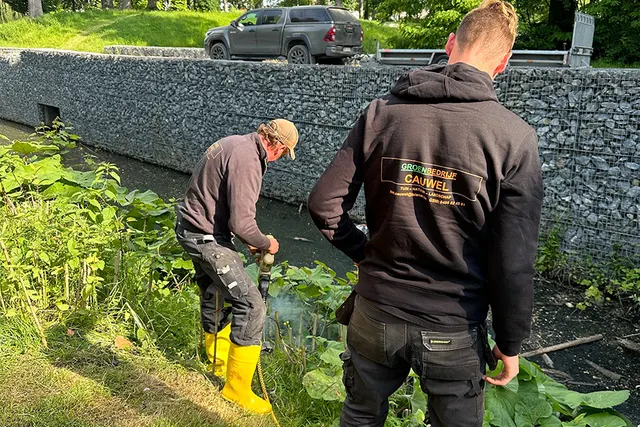
Thermal control uses heat to strongly warm the above-ground parts of the plant and, if necessary, its root collar. This can be done with hot water or steam. It works particularly well on paved surfaces. Steam reaches temperatures of more than 110 degrees, while boiling water is around 99.5 degrees. It is then sprayed onto the weeds. After several treatments, the weeds become depleted. As the plant growing between the paving is depleted, it suffers from a potassium deficiency. Potassium enables osmosis and helps plants stand upright, so without it the plant can no longer stay upright and dies. This method offers efficient, environmentally friendly weed control without any pesticides. The key is how quickly the work is carried out: if you go too slowly, for example, you are simply watering the plants. Good training can prevent this, ensuring the operator can set up the equipment perfectly and use it correctly.
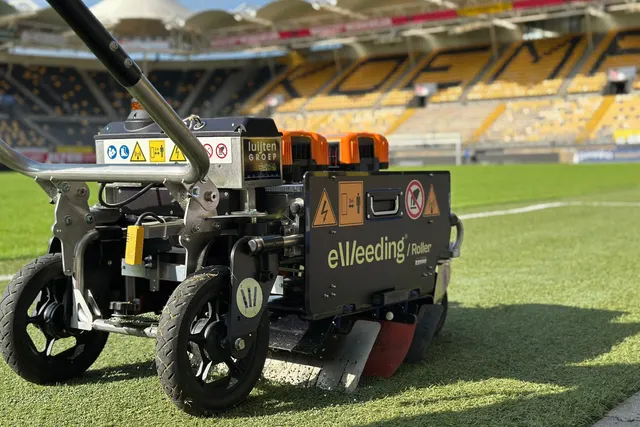
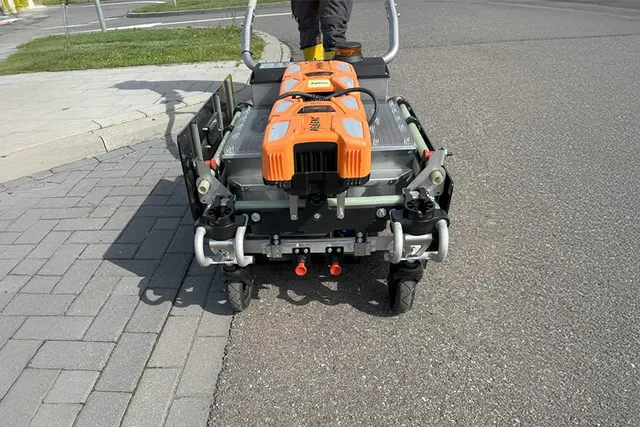
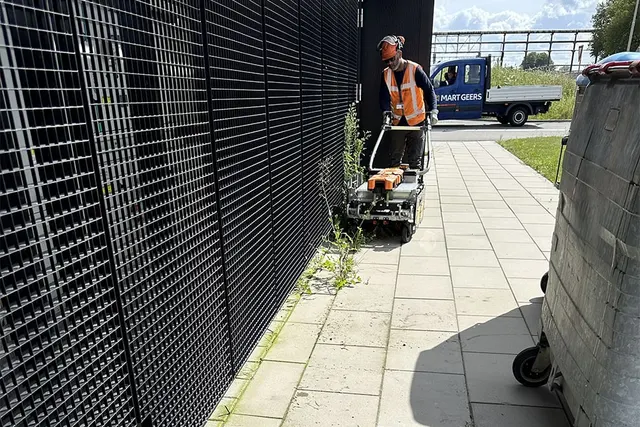
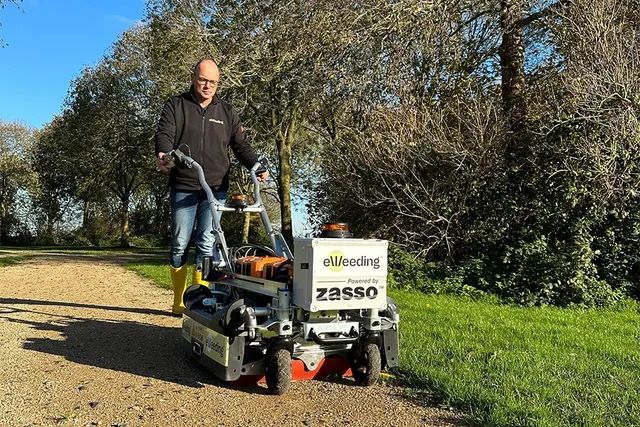
Electricity is also used for thermal weed control. The electricity is applied directly to the plant and penetrates deep into its roots. This boils the weed from the inside out, from the root upwards, effectively killing the plants, including tough invasive species.
With these thermal methods, plants wilt immediately or a few days later. If the treatment is repeated at regular intervals, the vegetation becomes depleted. The seeds also lose their ability to germinate.
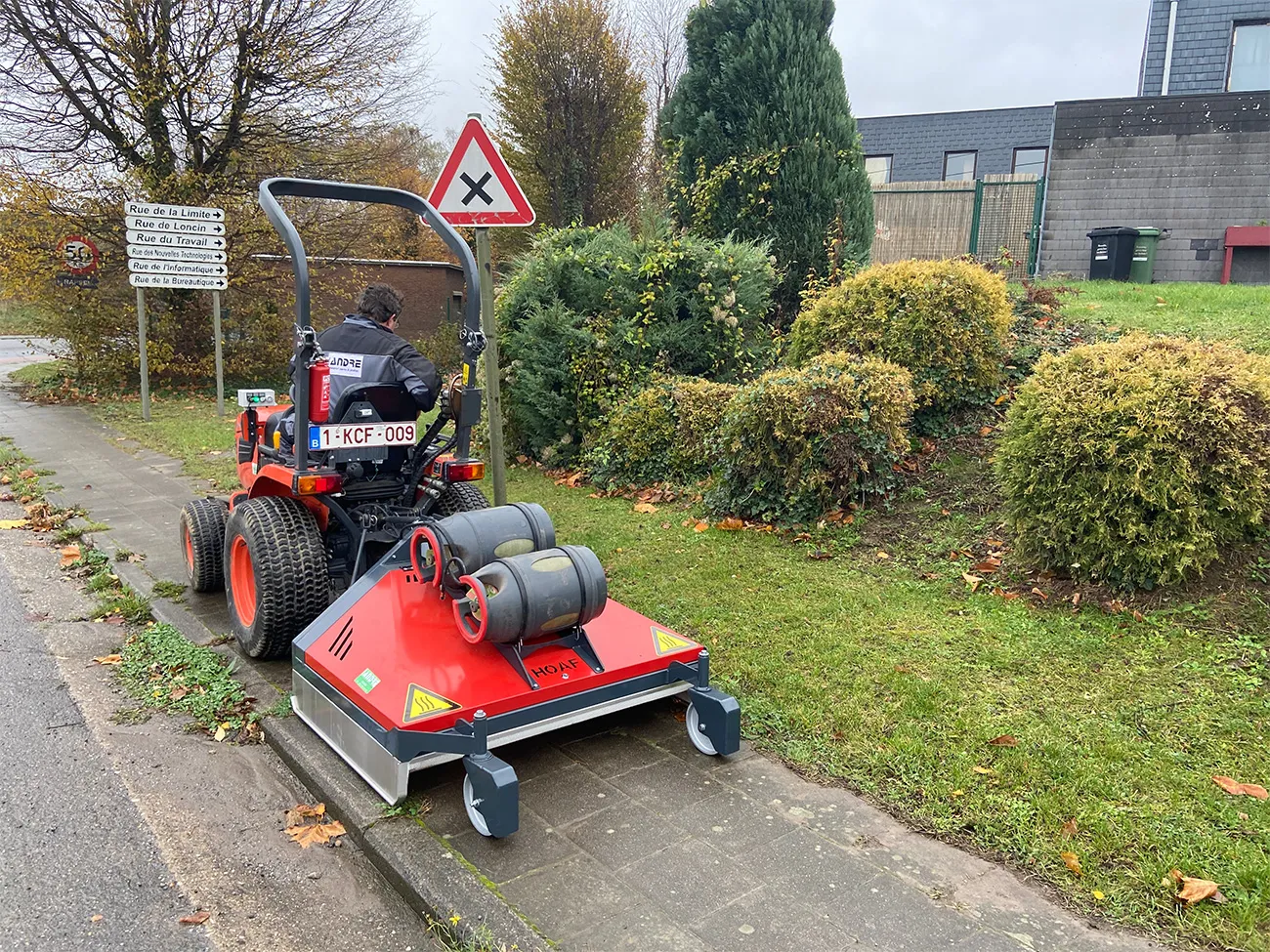
Flame weeding
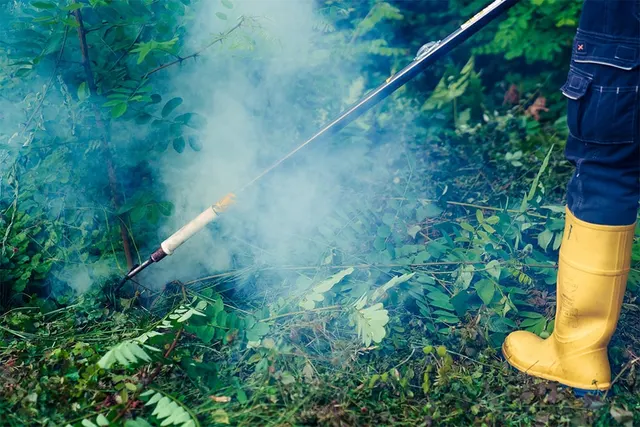
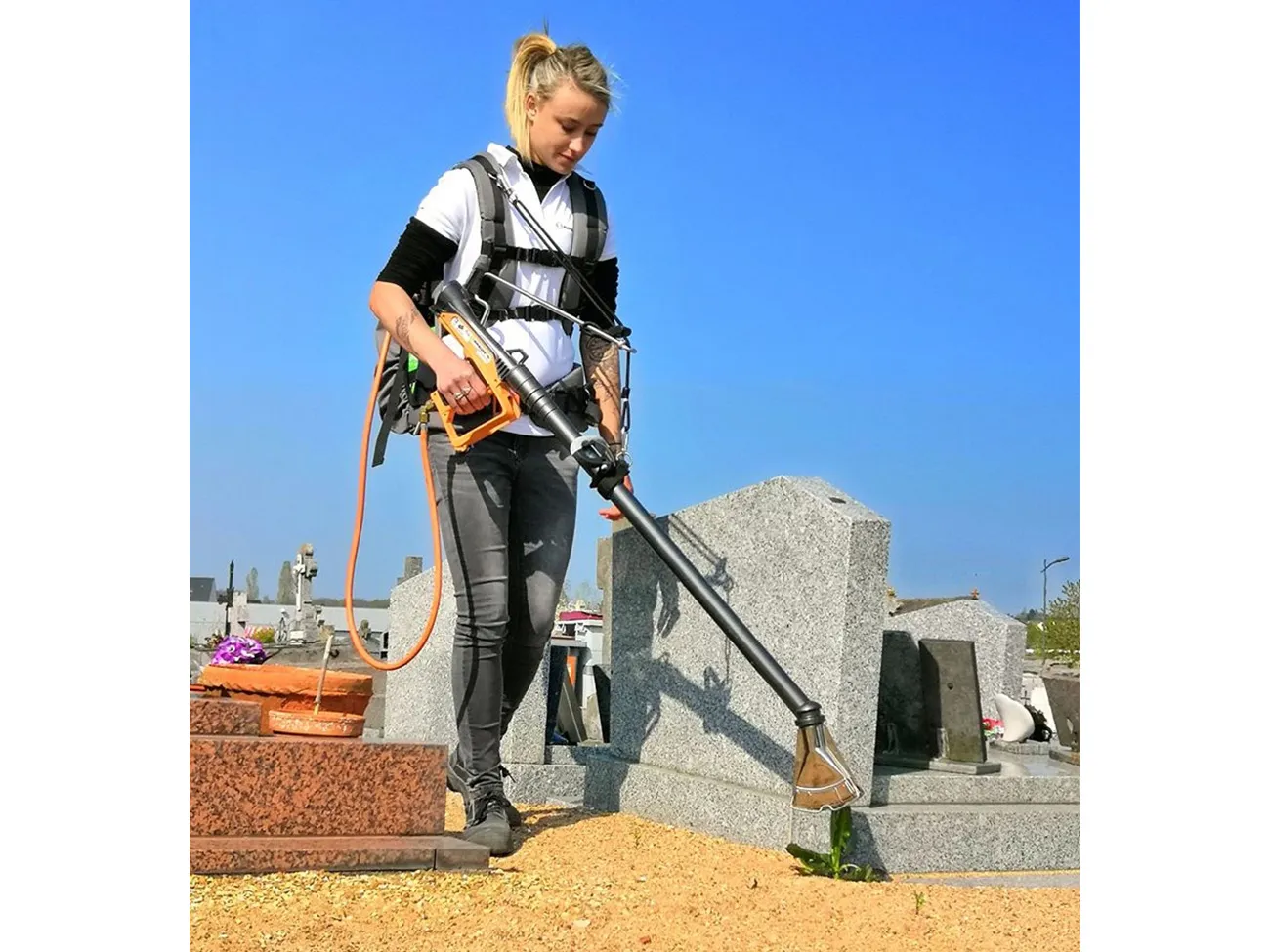
Another method is to burn weeds with an open flame, a technique known as ‘flame weeding’. It is particularly effective on ‘young’ weeds, while the plants are still small. At this stage, burning is almost 100% effective. There is no need to burn the weeds to ash. For the best results, expose weeds to the heat when they are wet with dew. Moisture also reduces the risk of dry waste catching fire.
In any case, be very alert to the risk of nearby fires, involving dry leaves, plastic, oil, fences and so on. Take care around flowers and shrubs, especially evergreens. Conifers are highly flammable and must be avoided at all costs. Avoid poisonous ivy, oak and other poisonous plants: fumes or smoke from burning leaves can cause a rash.
Whatever method is used, the general consensus is that each has its advantages and disadvantages. First, there are the environmental considerations: while we protect groundwater from chemical substances, we create dust and other particles, both from combustion engines used to heat the water and from burning the weeds themselves. And do not forget the economics, as lead times and price fluctuations are playing an increasingly important role here too.
Four authoritative voices on weed management
‘The ideal way to control weeds? Is the surface hard or semi-hard? What type of weed are we dealing with? Does everything really have to go, or can some of it stay? Make sure you get good advice. There is a more or less environmentally and economically viable solution for every maintenance task.’ Philippe Pieters (Pivabo)
‘Everything starts with sweeping, sweeping, sweeping. There have been more than enough studies showing that clean streets are safer streets. Surely that means maintaining public spaces, by removing both litter and organic waste, should be topic #1.’ Danny De Pauw (Kärcher)
‘We are seeing the industry working very hard to find solutions to the current economic turbulence. If a particular engine is not immediately available, we look for models that are. If there is a shortage of chips or batteries, we look for batteries that are available. People are very flexible when it comes to finding solutions.’ Robine Berendsen (Donat van der Horst)
‘To significantly reduce emissions, you can choose an electric water pump. Add a modulating boiler and you prevent too many soot particles from being released.’ Gerrit van Nieuwenhuizen (Ramm)
Question about this story? Ask your question
Companies in this story


Keep following this
Get an email when a new story is published. No account needed.
- ThemeGreen space for everyone
- SubjectWeeds
- CompanyPivabo
- CompanyDonat van der Horst