How can you recognise high-quality compost?
Text PCS – Boomkwekerij
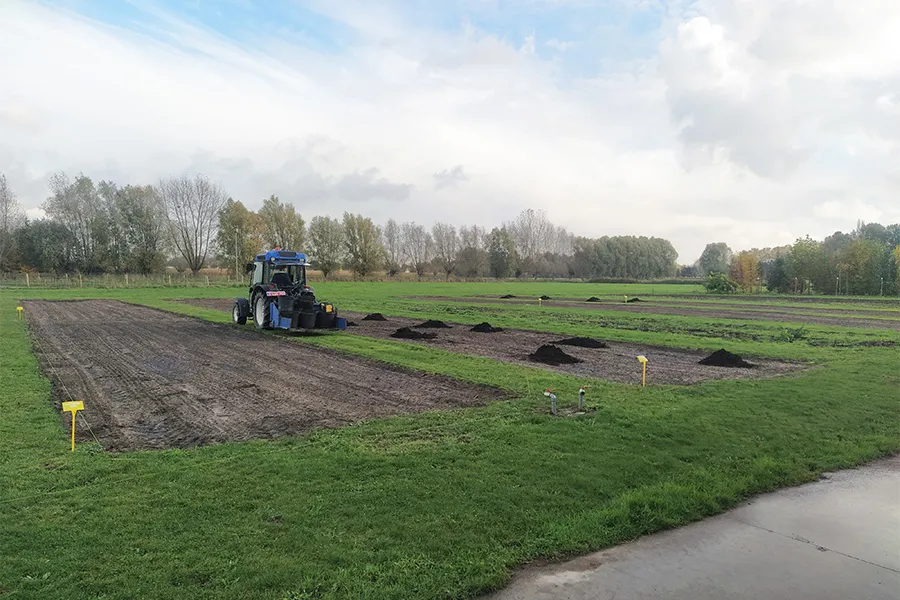
European SoilCom project completed
The European SoilCom project has come to an end after four years. During the project, various compost samples were collected and analysed. The samples came from Flanders, the Netherlands, Germany and Denmark. An extensive analysis by ILVO produced an overview of the main quality indicators for compost.
Not all compost is the same
Compost varies widely in quality and characteristics. These depend, among other things, on the raw materials used to make it and the composting process. Below are some quality indicators, along with how to identify or interpret them.
Use your senses
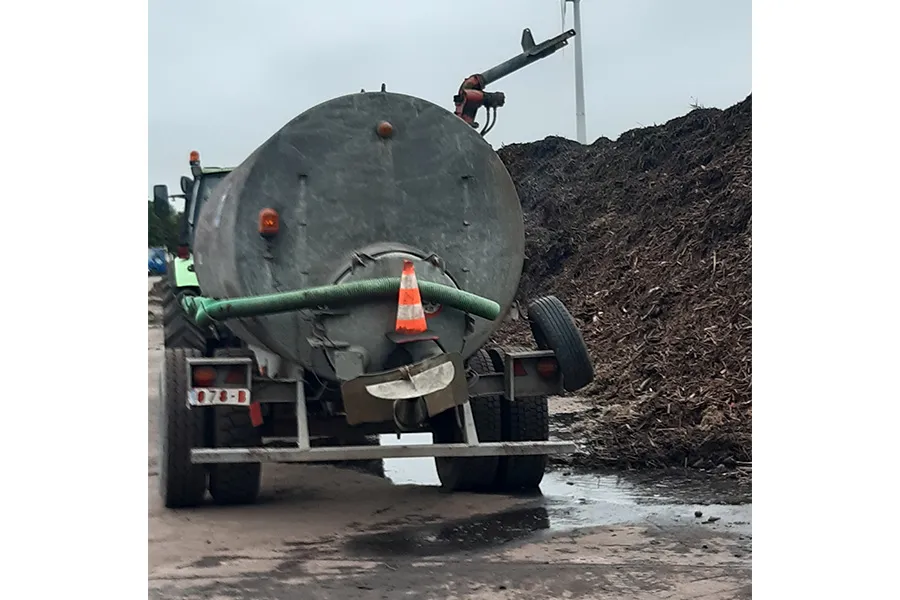
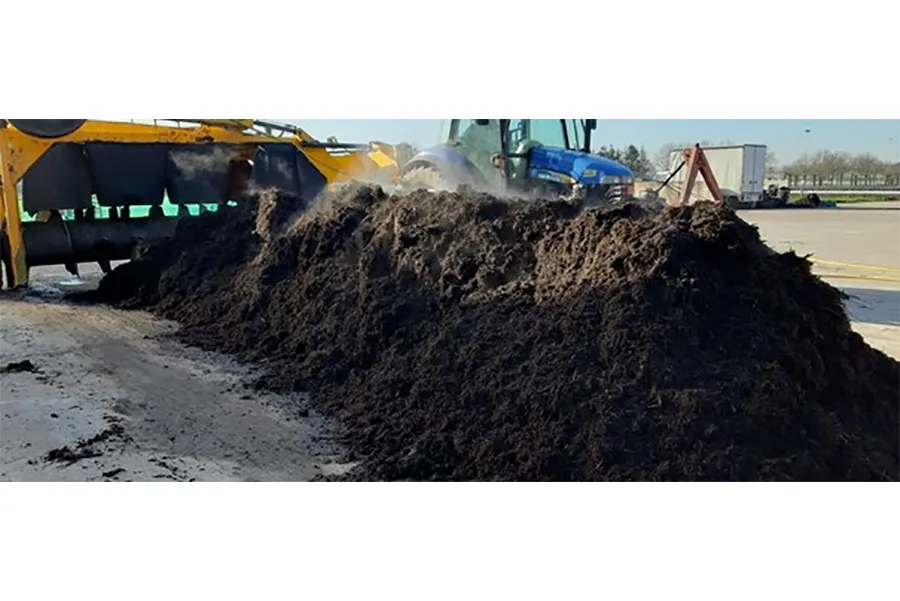
You can learn a lot simply by using your senses. Look at, feel and smell the compost. You can quickly spot impurities such as plastic and metal. Compost colour ranges from light brown to dark brown. If the compost is too dark, the temperature during composting was too high and the compost has burnt. Mature compost should be at a moderate temperature. If the temperature is still very high, decomposition and conversion processes are still taking place in the compost.
Mature compost smells like woodland soil. You certainly do not want an ammonia smell: this indicates that the compost has too low a C/N ratio and that excess N is being released as ammonia. Nor do you want a sulphurous smell: this indicates that the compost did not receive enough oxygen during composting and was not turned often enough. Turning the compost, and thus adding oxygen, can restart the composting process.
You can also assess the structure of the compost yourself. If you can still see plant material such as leaves, grass or small twigs, the composting process is not yet complete. The structure should be crumbly and hold together slightly, with a sufficient moisture content. You can test the moisture content by squeezing the compost in your hand. No water should drip out, but it should feel moist. Compost with too high a moisture content (> 60%) sticks together too much and is difficult to spread evenly. If your compost is too dry (<40%), however, it will be too dusty.
Chemical characteristics
Compost also contains nutrients such as NPK, as well as Ca, Mg, Na and trace elements. These can be used to determine the fertiliser value of the compost and estimate how much to apply. A good compost strategy is based on the nutrient status of your soil and the expected nutrient removal by the crop.
Nitrogen, or N, in compost can be present in mineral or organic form. Mineral forms such as nitrate (NO3-) and ammonium (NH4+) can be taken up directly by plants. Mature compost contains little ammonium (<0,4g/kg). Organic nitrogen is still bound in organic matter and must first be released by micro-organisms as nitrate or ammonium, making this N available to plants.
The pH, or acidity, of compost typically ranges from 6 to 9.5. Fully plant-based composts have a lower pH, while composts made with animal manure as a raw material have a higher pH. The compost pH should be suited to its intended use. For example, compost with a lower pH can be used for acid-loving crops such as rhododendrons and blueberries.
The salt content of compost, or EC (Electrical Conductivity), can also vary widely depending on the raw materials used. Excessively high salt levels (>1500 µS/cm) can induce salt stress, particularly when compost is used in growing media.
Cation exchange capacity (CEC) is an important quality criterion. Applying compost with a high CEC to soil can improve soil fertility by increasing its capacity to bind and exchange nutrients, and reducing the risk of leaching.
Physical characteristics
Dry matter content is determined by drying a quantity of compost at 103°C until a constant weight is reached. The weight loss compared with the fresh compost is entirely due to moisture loss, making it possible to determine both the moisture content and the dry matter content. Most other compost characteristics are expressed on a dry matter basis. Compost should contain at least 50% dry matter.
The bulk density of compost depends on its porosity and moisture content and is usually expressed in kg/m³ or g/l. It is a useful parameter for converting volume into weight. Compost with a high bulk density is either very wet or contains sand or clay. Compost with a low bulk density is generally dry, with a high pore volume and low water-holding capacity. Compost with too low a water-holding capacity is less suitable for use in growing media.
Organic matter or organic carbon content is important if you want to use compost to improve soil health. If the compost has a low organic matter content, mineral raw materials such as sand or clay may have been added. The legal minimum is 16% organic matter on a dry matter basis (%OM/DM). A very high organic matter content, on the other hand, indicates immature compost, which should be left to mature further before use.
Biological characteristics
The term compost stability describes microbial activity and can be determined by measuring the respiration, or “breathing”, of the micro-organisms. When microbial activity is high, the micro-organisms in the compost convert oxygen into CO2, which can be measured in a laboratory. The greater this conversion, the less stable and less mature the compost. In immature, unstable compost, decomposition continues after application, with the active micro-organisms competing with plant roots for nitrogen and oxygen.
For more information about the SoilCom project, visit northsearegion.eu/soilcom/ or sign up for the newsletter at northsearegion.eu/soilcom/soilcom-newsletter/. The full report on compost quality indicators is available at northsearegion.eu/soilcom/news/soilcom-report-compost-quality-indicators/.
Question about this story? Ask your question
Keep following this
Get an email when a new story is published. No account needed.
- Subject(Tree) nurseries