How to give a small garden a landscape character
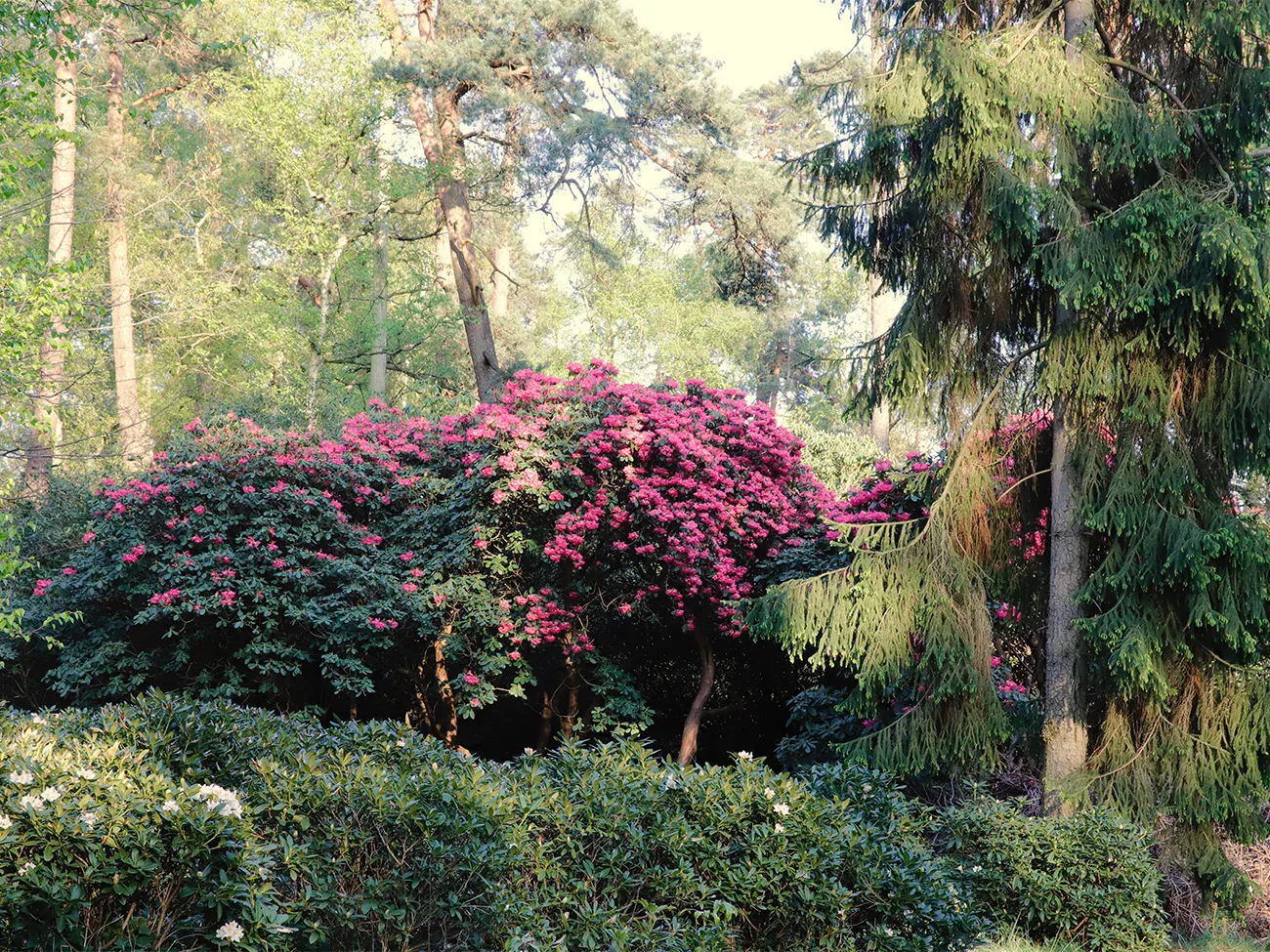
Everyone knows parks and public green spaces where large numbers of rhododendrons are grouped along ponds, lakes, woodland paths or lawns. They create a distinctive landscape scene, which can sometimes seem difficult to replicate in today’s often smaller private gardens. Yet with careful selection and thoughtful planting, the possibilities are endless.
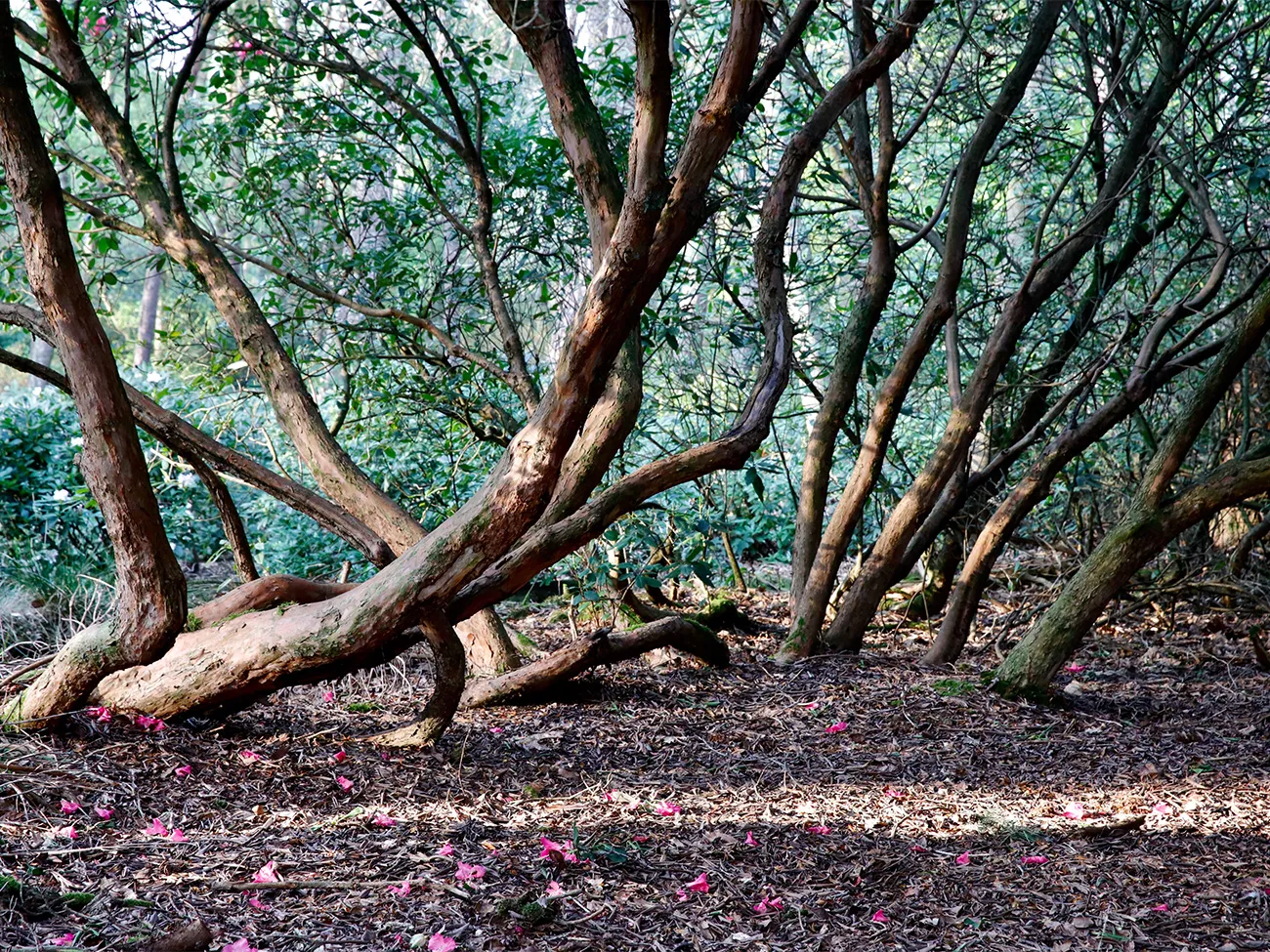
Rhododendrons come in all shapes and sizes, from low-growing ground cover plants to medium-sized shrubs and even tree-sized specimens. Some varieties have a rounded, spherical shape, while others are open and spreading, or have an upright growth habit. This makes the rhododendron an exceptionally versatile plant that can be grown as a specimen, or used in beds, borders or screens, either on its own or alongside other shrubs and plants. One of the most popular uses for rhododendrons is undoubtedly as a larger landscape feature.
A play of colour
Rhododendrons are also versatile thanks to the striking features they bring to the garden throughout the year. Not only the flowers, but also the leaves can vary in colour, shape, texture and size. The undersides of some leaves are covered in silvery hairs, or a yellow-brown or brown coating, which becomes visible when the wind stirs the foliage. Other varieties, such as Anna Rose Witney, have strikingly coloured new leaves, creating dramatic beauty as they unfurl.
Small garden, small rhododendron?
To recreate the character of large rhododendron landscapes in a smaller space, the key is to find a suitable scaled-down version of the plant. However, this does not necessarily mean choosing a smaller-growing variety. A rhododendron with smaller leaves can also provide a finer texture that is better suited to the garden.
The first step in creating a rhododendron landscape in the garden is to select plenty of small-leaved varieties with the same basic leaf shape. Depending on the species and leaf shape, these can then be complemented with evergreen or deciduous azaleas, shrubs or even undergrowth.
Points to consider when planting
To achieve a landscape effect, rhododendrons are generally planted in groups, taking into account plant and leaf size, texture, flower colour, flowering time and other factors. Always choose groups of at least three plants to avoid creating a patchy landscape effect.
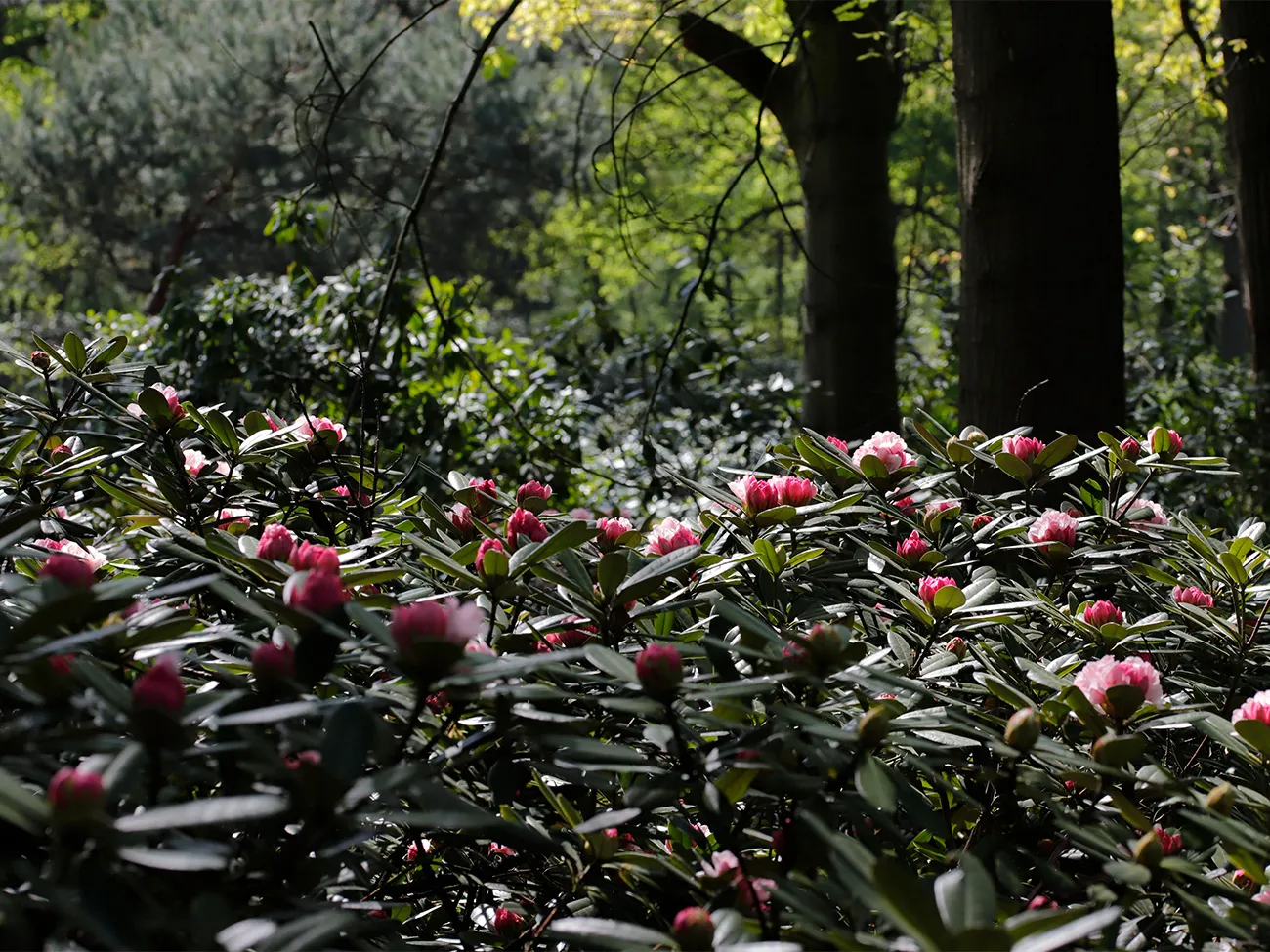
A common misconception is that rhododendrons need to be planted in deep shade. This often results in plants with very few flowers. Light is, after all, the most important factor in stimulating the development of flower buds. Spring-flowering rhododendrons set their buds in late summer to early autumn, and it is essential that they receive enough light as the buds develop. They should therefore be planted where there is sufficient light for flower buds to form, but not so much that the leaves are damaged. Locations with a scattering of trees that filter the light reaching the plants are ideal.
Of course, also take account of the plants’ mature height, so that taller-growing varieties do not eventually shade out smaller specimens. If plants do need to be moved, their shallow, fleshy roots make them relatively easy to transplant.
Question about this story? Ask your question
Keep following this
Get an email when a new story is published. No account needed.
- ThemeTrees and plants of tomorrow
- Subject(Tree) nurseries