Ideas for adding more colour and scent to the next No Mow May
The No Mow May campaign was a great success this year. Local authorities, parks and private gardens all took part in large numbers. This produced plenty of beautiful images of untamed lawns, but unfortunately not everyone achieved an equally attractive and biodiverse result. Here are a few suggestions for improvement.
Much depends, of course, on the seeds already present in the lawn, and sterile lawns need several years before a carpet of flowers appears. Even so, the public’s interest in the project offers plenty of opportunities for landscape contractors and municipal green-space teams.
We can enrich these lawns with flower bulbs, and mowing later also allows us to use other varieties. With help from a few experts, I looked into which flower bulbs are best suited to planting in a lawn.
Crocuses and lookalikes
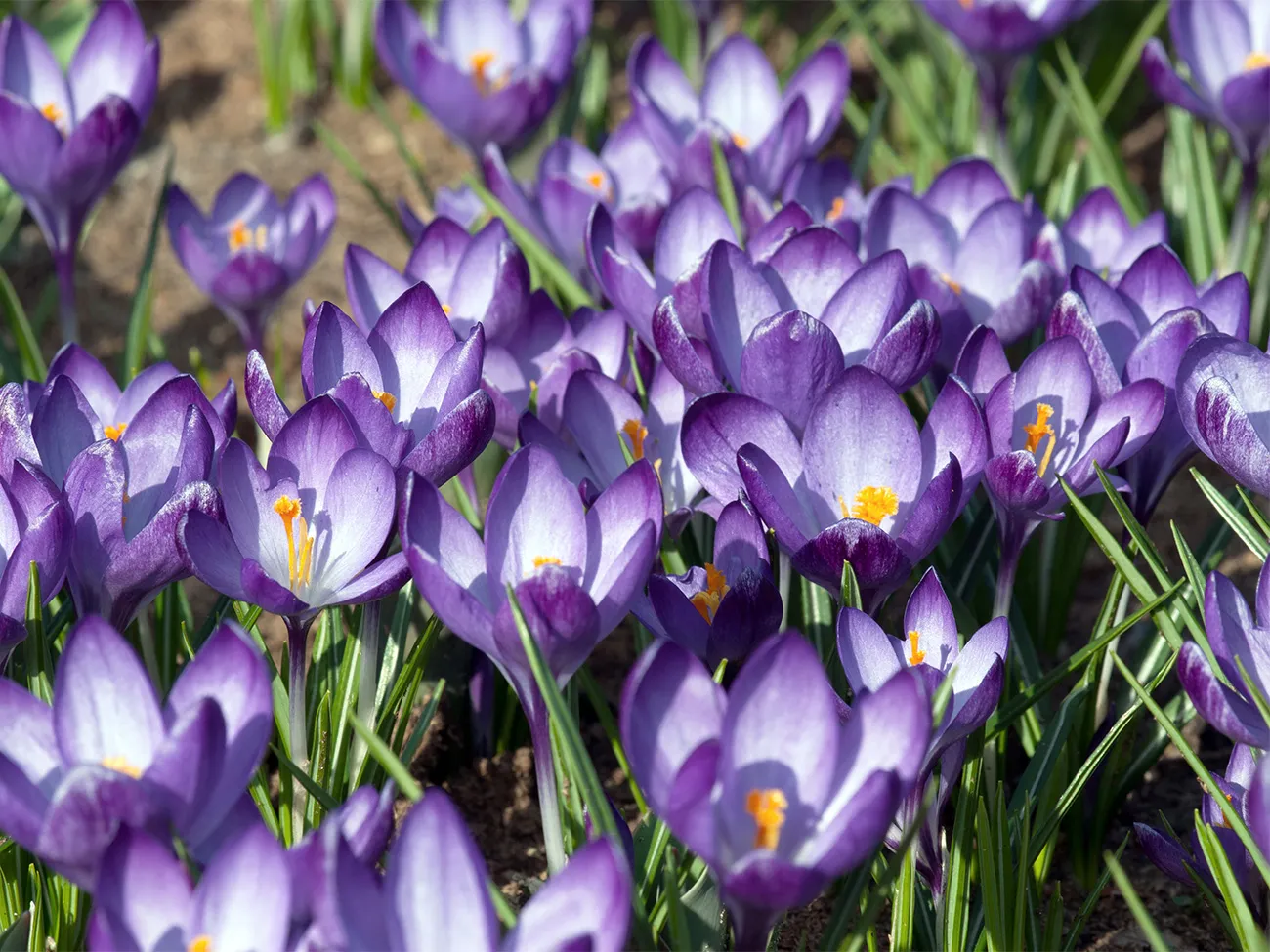
Crocus tommasinianus, the woodland crocus, is a classic crocus and an excellent early source of nectar for bees. It is a naturalising bulb that can spread through lawns, and several cultivars are available on the bulb market. The most popular cultivar is ‘Ruby Giant’. It is beautiful, with its different shades of purple, and naturalises just as readily as the species. ‘Ruby Giant’ grows to 10 centimetres tall and flowers from February to early March.
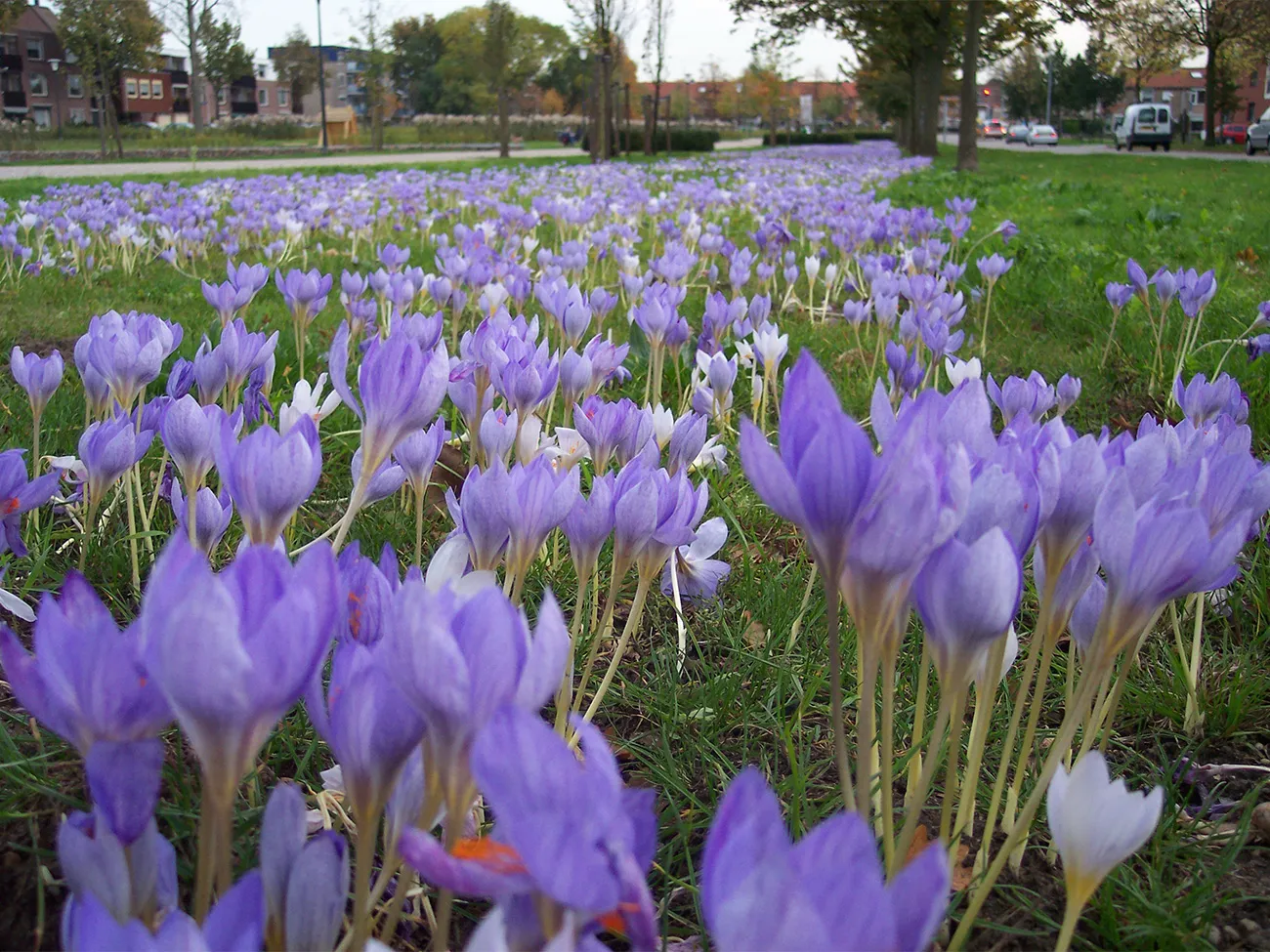
Colchicum, or autumn crocus, which resembles a crocus, is not often considered when planting flower bulbs in a lawn, but it can work perfectly well, especially if you choose late-flowering varieties. Autumn crocus flowers in autumn, from September onwards. This is when we can stop mowing the lawn and enjoy the flowers straight away. The leaves appear after flowering, but remain very small in winter before growing out in spring. With these bulbs, too, it is important not to mow too early in spring, so the corms can build up enough strength to put on a show in autumn.
Narcissus is a must
There are many different daffodil species and cultivars on the market, but not all are suitable for planting in a lawn. We all know the small, early-flowering daffodil ‘Tête-à- Tête’, of course, but the following varieties also deserve a closer look.
Narcissus ‘Jetfire’ is one such variety. It has beautiful bright yellow petals and an orange trumpet. It grows to around 25 centimetres tall and flowers as early as March. This daffodil is resistant to grazing, which is a further advantage for lawns frequented by rabbits or deer. ‘Jetfire’ has won an RHS award and has twice been named Spring Flower of the Year.
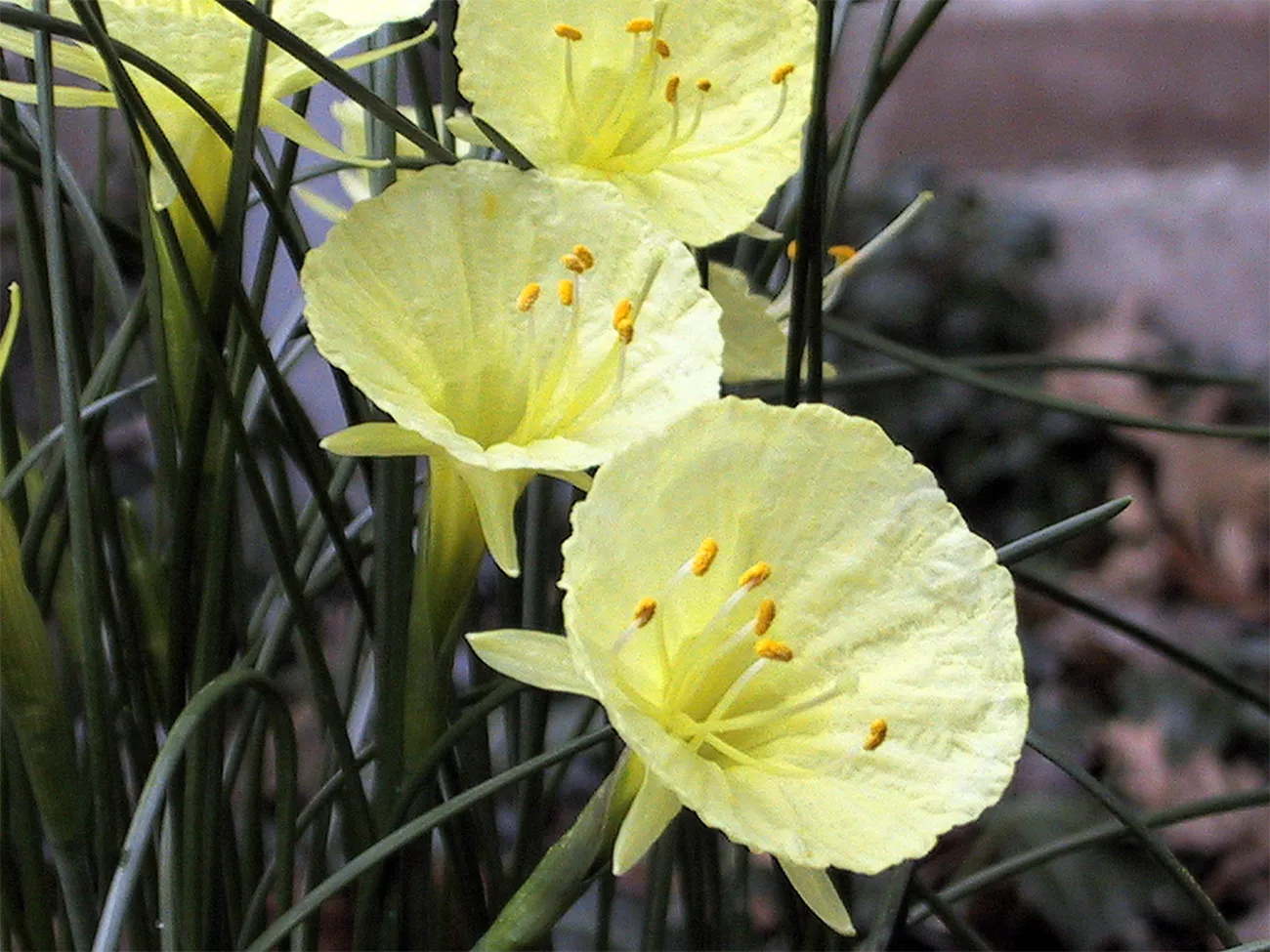
Narcissus bulbocodium, or petticoat daffodil, is less well known, but no less valuable. Its small, charming, rounded flowers rise well above the grass-like foliage. These little bulbs flower very prolifically. The cultivar ‘Oxford gold’ is so prolific that each bulb can produce as many as seven flower stems. It flowers in April and grows to around 15 to 20 centimetres tall.
Narcissus romieuxii is another variety with a particularly distinctive flowering display. The best-known cultivar is ‘Julia Jane’, which produces pale yellow flowers as early as February and March. It may naturalise less readily than the varieties listed above, but is certainly worth trying. As it flowers so early, it is also suitable for lawns that are mown a little earlier than the end of May.
Small but mighty
Grape hyacinths definitely deserve a place on this list. A new, robust and attractive cultivar is Muscari armeniacum ‘Manon’. What makes this Muscari special is its colour. Its shades range from ice blue and pale blue to white, and are visible from the bud stage. It grows to around 15 to 20 centimetres tall and is very hardy.
A slightly more readily available Muscari with pale blue flowers is Muscari ‘Baby Breath’. This one is also suitable for naturalising.
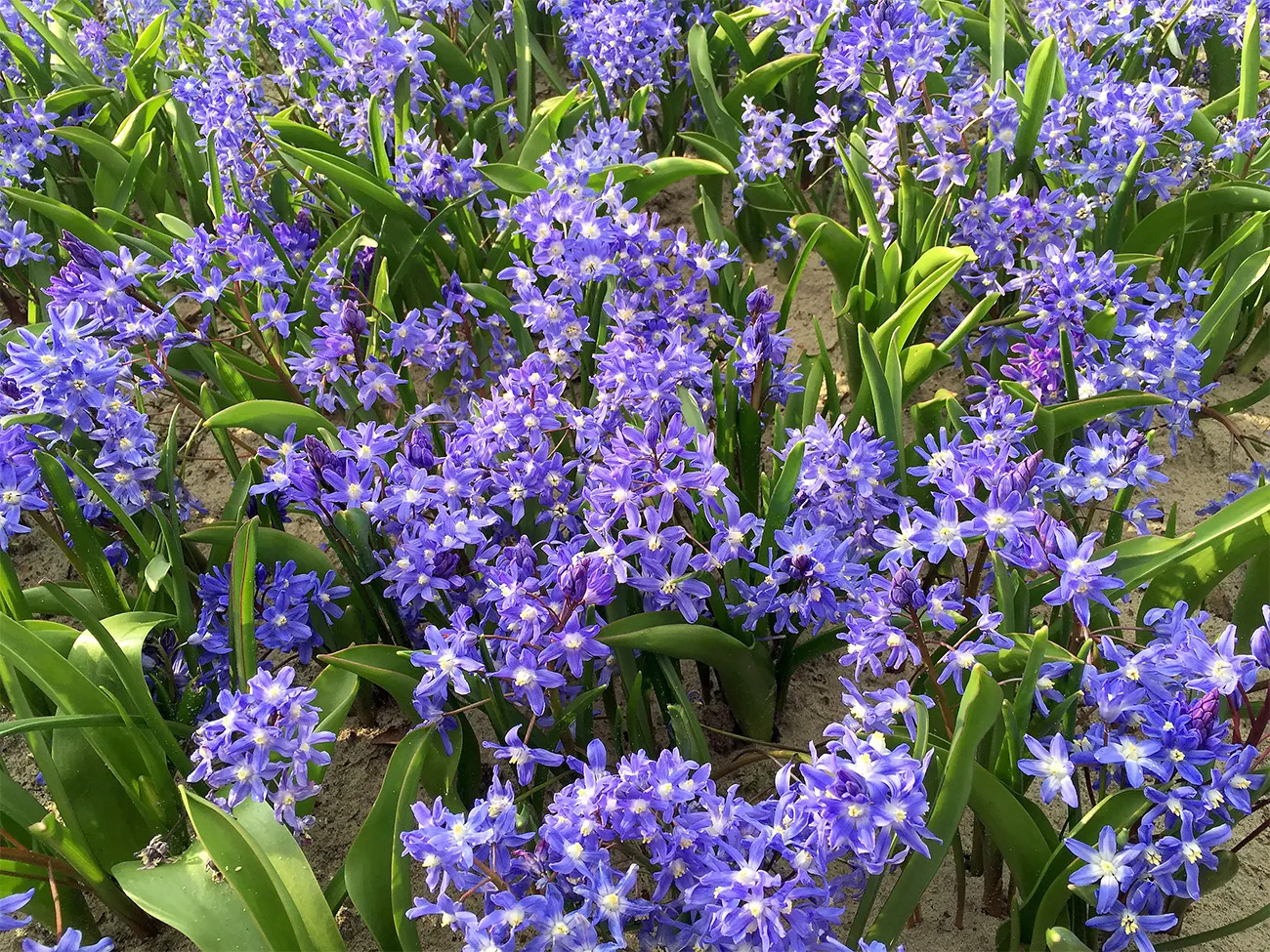
Chionodoxa sardensis is an early-flowering bulb with small, star-shaped blue flowers and a white centre. Glory-of-the-snow flowers in March and April and reaches a flowering height of 10 centimetres. Its flowers look a little like those of Scilla, but this Chionodoxa thrives in lawns. It is also resistant to grazing and excellent for naturalising.
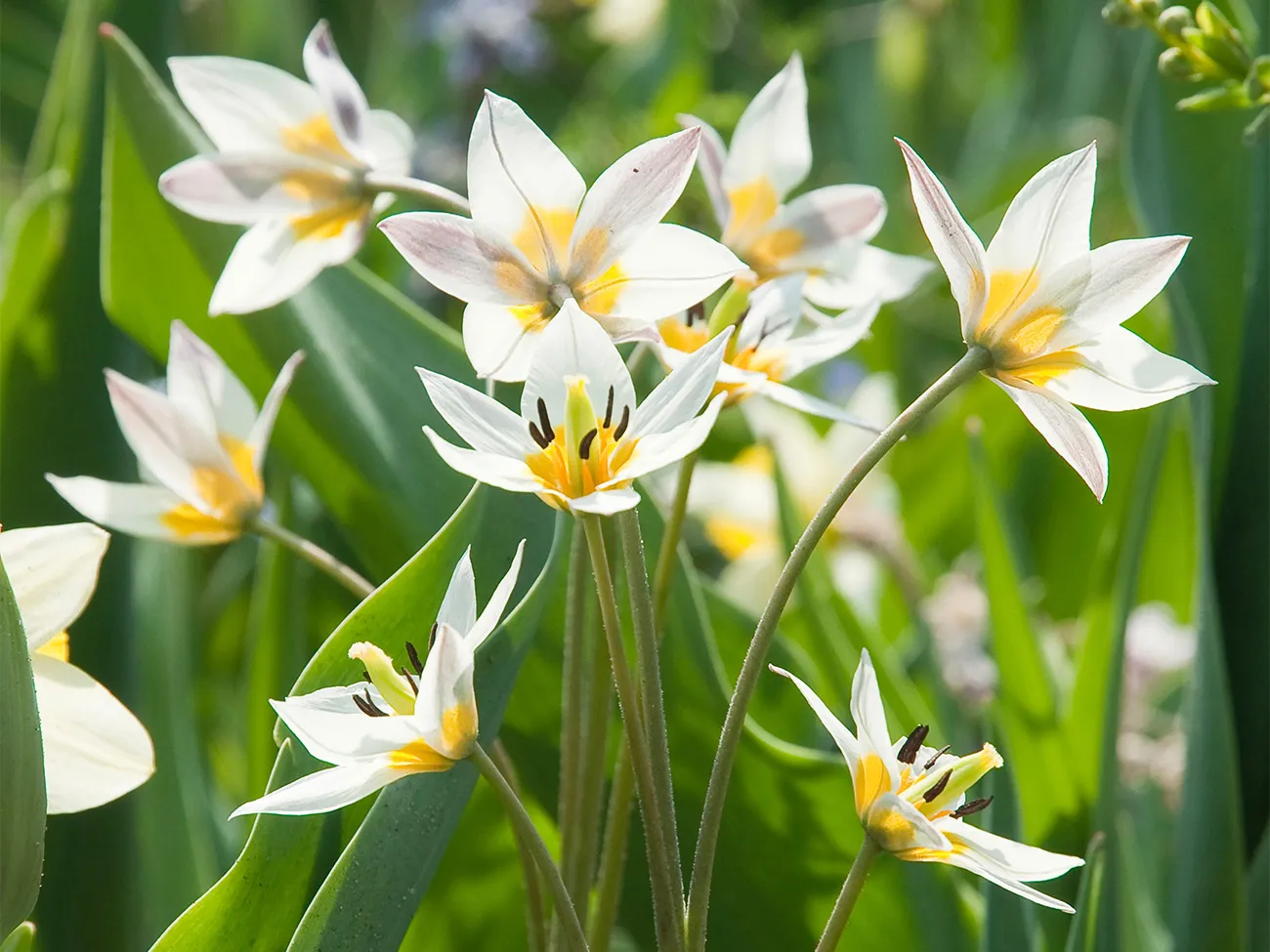
Tulipa turkestanica is a real winner among botanical tulips. It is multi-flowered, with wonderfully scented, ivory-white flowers and a bright yellow centre. It is also a naturalising bulb that readily multiplies. It flowers in early April and, at 20 centimetres tall, is suitable for lawns taking part in the No Mow May campaign.
Galanthus nivalis. Snowdrops naturalise very well in lawns but are not used particularly often. The bulbs need to be planted reasonably ‘fresh’. Once they have dried out completely, the results are often disappointing. You can either plant freshly harvested bulbs in August or wait until the flowering season in January, February or March. You can then buy potted snowdrops in P9 pots from perennial nurseries, which usually gives more reliable results.
Spring snowflake (Leucojum vernum) is also sensitive to drying out, but if the bulbs are of good quality, it can be used just as successfully.
A winner for wet lawns
Frittilaria meleagris. This final bulb is a valuable addition to very wet lawns. The wild snake’s head fritillary can also thrive in somewhat drier soils, but in the wild it is mainly found in wet, peaty or loamy meadows. When it self-seeds, both purple-speckled and white flowers can appear. It is native to Belgium and the Netherlands and grows to around 30 centimetres tall. As it flowers only in April, it is suitable only for lawns that are mown late in spring.
These bulbs are just a selection of what is possible. Various mixes containing several species are available on the market. The bulbs in this article were chosen because they readily multiply on their own, are robust enough to push through the turf and can be mown by the end of May at the latest. You can put together your own mix or look for mixes that include these varieties.
Question about this story? Ask your question
Keep following this
Get an email when a new story is published. No account needed.
- Subject(Tree) nurseries