Thuja Smaragd: a versatile plant
Text Storm WissinkImage Coniplant BV
Demand for conifers is on the rise again
If you are looking for a dense, green hedge plant, a conifer is an obvious choice. And for good reason: conifers are ideal hedge plants. But have you ever considered Thuja Smaragd? Henri Nelissen, business manager at Coniplant BV, explains why Smaragd is such a good option. “We may know Thuja Smaragd more for its ornamental value, but planted in larger numbers, it can make a beautiful, neat hedge.”
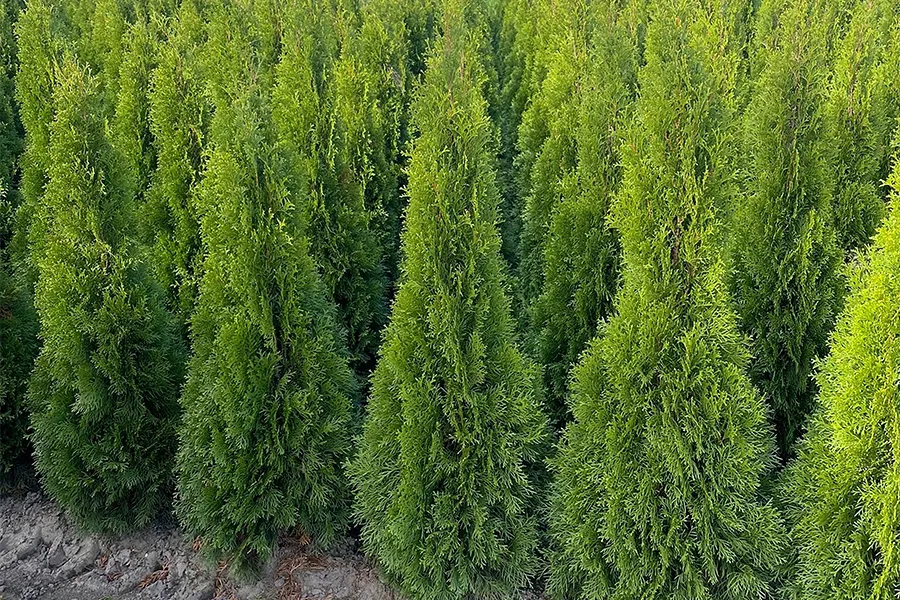
Coniplant BV is a wholesale nursery with a wide range of conifers, hedge plants, turf and perennials. Its range of hedge plants is particularly extensive, including Thuja occidentalis Smaragd, or Thuja Smaragd for short. “It is a plant found mainly in Eastern Europe,” says Nelissen. “It is less common in the Netherlands and Belgium, but Smaragd is becoming increasingly popular here too.”
Smaragd is making a comeback
“Conifers have generally been a little less popular in the Netherlands and Belgium in recent years than they were in the past, when they were hugely popular,” says Nelissen. “Demand is now starting to rise again. They are affordable plants that are also easy to maintain, with few problems. Most conifers are hardy, so in our climate they are unlikely to suffer from frost.” Thuja Smaragd is no exception: it stays beautifully green almost all year round.
According to Nelissen, Thuja Smaragd is therefore an excellent choice for a wide range of situations. “It grows in many soil types, from sandy to clay soil, but it does like to have moisture.” That is also an advantage. “The plant can take up and store a lot of water, so when it rains heavily, water can drain away easily in the garden.” It also looks great. “In autumn it takes on a light winter colour, but in early spring it puts out fresh green growth again.”
For gardens of all sizes
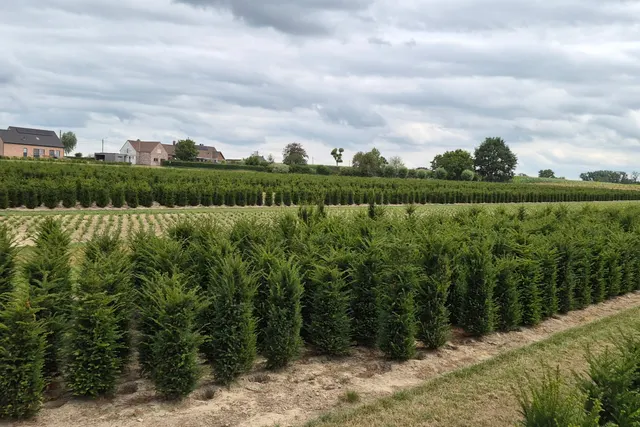
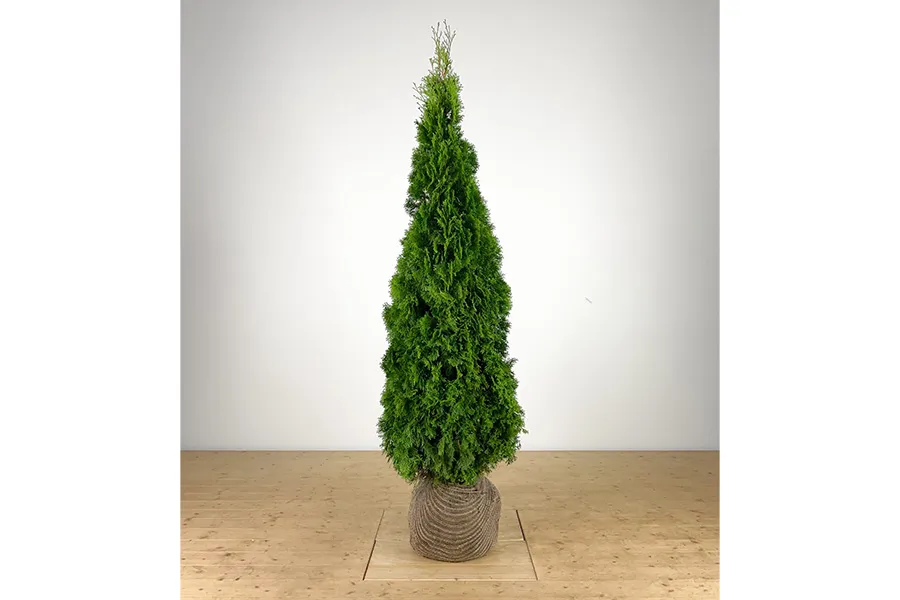
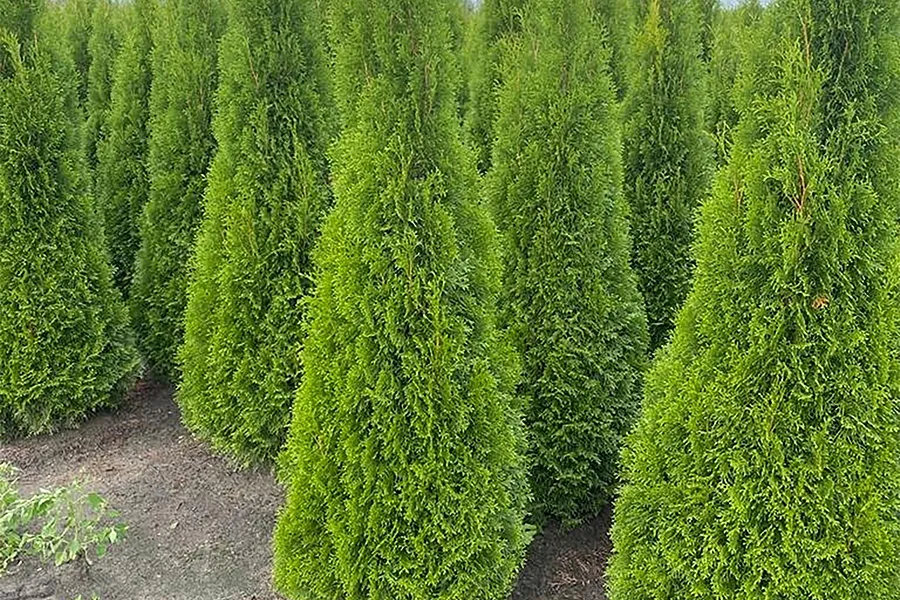
According to Nelissen, this naturally conical plant can be used in all kinds of gardens. “Its conical shape has an elegant quality and gives the plant a certain stature. It looks beautiful as a standalone plant, but plant several next to each other and you get a lovely conical hedge.” The shape also has several advantages. “The plant grows upwards more than outwards. That means you need to prune it less often, as it is easy to keep compact.”
Planting a green hedge, in this case with Thuja Smaragd, can offer many benefits. “A dense green hedge is not only a real eye-catcher, it is also an effective buffer for CO2 and nitrogen,” Nelissen adds. “The plant is very lively, and its density is also good for biodiversity.”
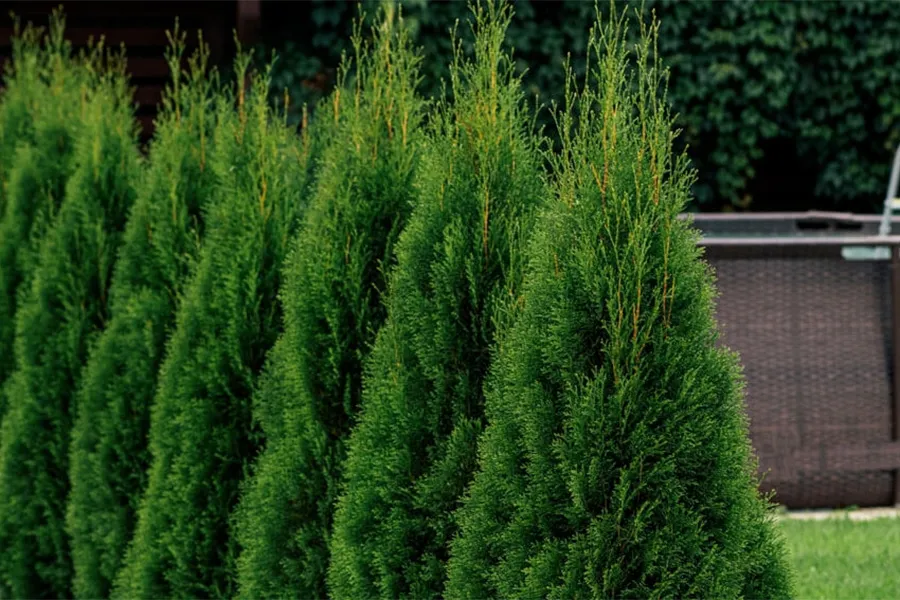
Coniplant is working to bring Thuja Smaragd back to the market. “We always have hedge plants such as Smaragd in stock, from autumn until late spring,” says Nelissen. “We supply both private customers and landscapers, because this plant looks beautiful in any garden.”
Question about this story? Ask your question
Keep following this
Get an email when a new story is published. No account needed.
- ThemeTrees and plants of tomorrow
- Subject(Tree) nurseries